
In This Article
Why Protein and Fiber Meals Are the Easiest Upgrade You’ll Make This Year
You know that 3 p.m. slump where your stomach growls an hour after lunch and the vending machine starts whispering your name? That’s usually not a willpower problem. It’s a plate problem. A meal that’s mostly refined carbs burns fast and leaves you hungry, while protein and fiber meals digest more slowly, keep blood sugar steadier, and help you feel satisfied for hours.
Here’s the catch: most of us know we should eat more beans, lentils, whole grains, and lean protein, but life gets busy. Cooking a lentil stew from scratch on a Tuesday night is a nice idea right up until you get home at 7:40 p.m. That’s exactly why the market for packaged protein and fiber meals has exploded — legume pastas, ready-to-eat lentil pouches, savory instant meals, and nutritionally complete shakes are now a click away on Amazon.
But not every box that shouts “HIGH PROTEIN!” on the front delivers real fiber, and some “high-fiber” products are mostly added chicory root with very little protein. In this guide, we compare seven real products by what’s actually on their Nutrition Facts panels, translate the numbers into everyday meaning, and show you how to turn them into complete meals.
We didn’t personally lab-test these foods. Instead, we compared published nutrition labels, manufacturer formula pages, and aggregated reviews from retailers and independent review sites — then did the math so you don’t have to. Whether you’re a busy parent, a lifter chasing protein targets, or someone simply trying to feel fuller on fewer calories, you’ll find a realistic pick below.
What Are Protein and Fiber Meals?
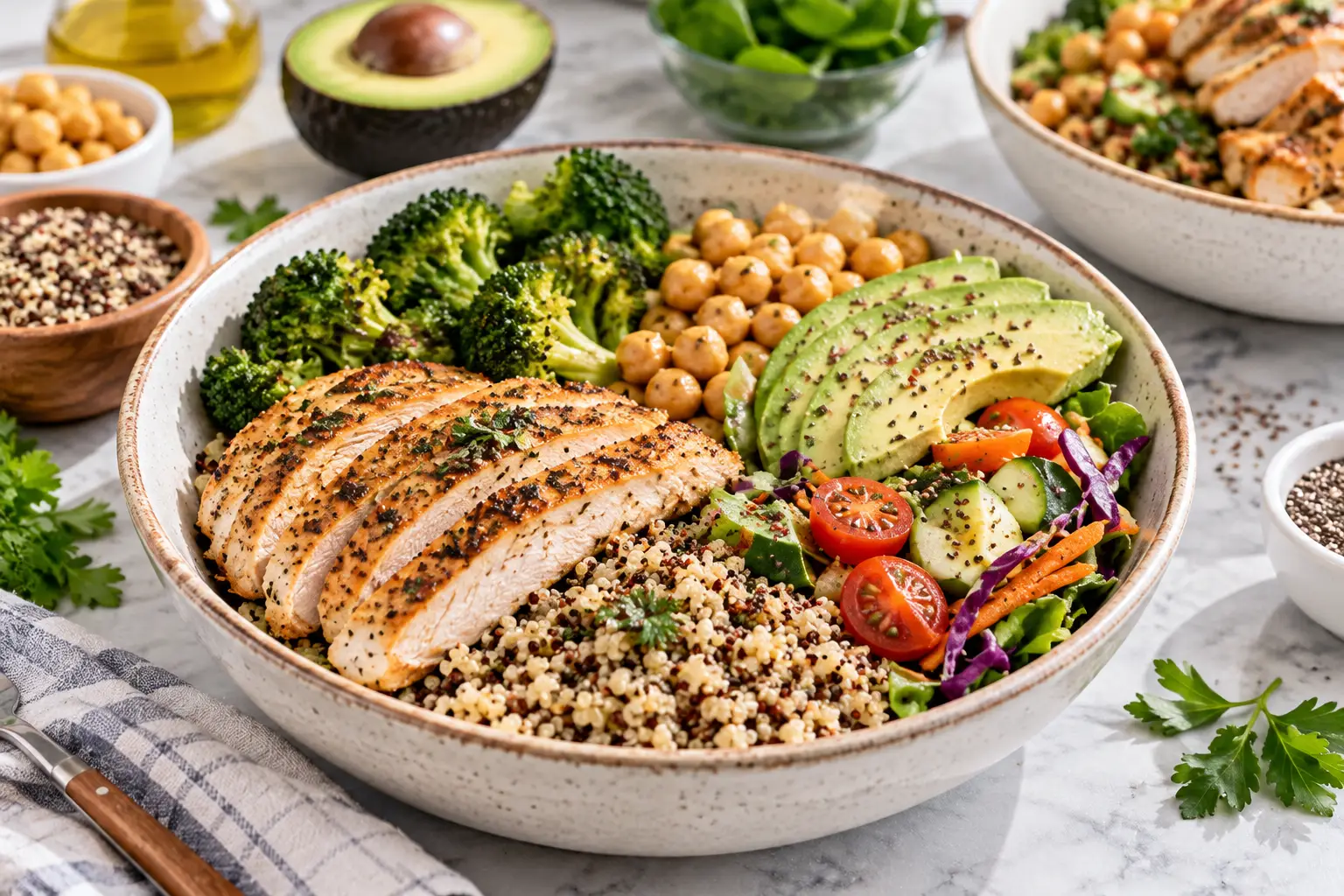
Protein and fiber meals are dishes or ready-made foods that deliver a meaningful amount of both nutrients in one serving — typically 15 grams or more of protein and at least 5–6 grams of fiber. Together, they slow digestion, extend fullness, and support steadier energy than carb-heavy meals.
Why does that pairing matter so much? Protein triggers satiety hormones and supports muscle maintenance. Fiber, meanwhile, is a carbohydrate your body can’t fully digest, so it adds bulk, slows the release of sugar into your bloodstream, and feeds beneficial gut bacteria. According to Harvard’s Nutrition Source guide to dietary fiber, adults need at least 25 to 35 grams of fiber per day, yet most Americans get only about 15. That gap is huge — and it’s exactly where high protein high fiber meals earn their place.
There are two kinds of fiber you’ll see discussed. Soluble fiber (found in oats, beans, lentils, and chia) forms a gel that can help with cholesterol and blood sugar. Insoluble fiber (found in whole grains, legume skins, and vegetables) keeps things moving through your digestive tract. The best protein and fiber meals usually contain both, because they’re built on whole legumes or grains rather than isolated additives.
A quick rule of thumb: if a meal has a protein-to-fiber ratio somewhere around 2:1 to 4:1 and lands in the 300–500 calorie range, it’s probably doing a solid job of keeping you full. If it has 30 grams of protein and 1 gram of fiber, it’s a protein meal, not a protein and fiber meal.
Quick Comparison: The 7 Best Protein and Fiber Meals at a Glance
| Product | Format | Protein (per serving) | Fiber (per serving) | Best for |
|---|---|---|---|---|
| Huel Hot & Savory | Instant savory meal | ~24 g (varies by flavor) | 5–14 g | Huel Hot & Savory: desk lunches |
| Huel Black Edition Ready-to-drink | Bottled shake | 35 g | 6 g+ | Huel Black Edition Ready-to-drink: max protein on the go |
| Ka’Chava All-in-One Nutrition Shake | Powder shake | 25 g | 6 g | Ka’Chava All-in-One Nutrition Shake: superfood breakfasts |
| Explore Cuisine Organic Edamame Spaghetti | Legume pasta | 24 g (2 oz dry) | 13 g | Explore Cuisine Organic Edamame Spaghetti: low-carb dinners |
| Banza Chickpea Pasta (20g Protein & Fiber line) | Legume pasta | 11 g (2 oz dry) | up to 11 g | Banza Chickpea Pasta: family pasta night |
| Tasty Bite Organic 3 Bean Madras Lentils | Ready-to-eat pouch | ~12 g per pouch | ~14 g per pouch | Tasty Bite Organic 3 Bean Madras Lentils: fiber on a budget |
| Kodiak Protein-Packed Oatmeal Cups | Instant oatmeal cup | 14 g | 4 g | Kodiak Protein-Packed Oatmeal Cups: grab-and-go breakfast |
Looking at the table, the Explore Cuisine Organic Edamame Spaghetti and the Tasty Bite Organic 3 Bean Madras Lentils are the fiber heavyweights, while the Huel Black Edition Ready-to-drink wins on raw protein. If you want the most balanced “real meal” feel with minimal effort, the Huel Hot & Savory sits right in the middle. The Kodiak Protein-Packed Oatmeal Cups are the lightest on fiber, so treat them as a breakfast base you’ll top with fruit or seeds.
💬 One click helps other shoppers make an informed choice too! 😊
Top 7 Protein and Fiber Meals: Expert Analysis
1. Huel Hot & Savory — the most complete hot lunch
The Huel Hot & Savory line is built for people who want a real, warm, savory meal without cooking. Each serving lands around 400 calories with roughly 24 grams of plant protein (depending on flavor) from pea protein, pulses, brown rice, and flaxseed. According to Huel’s own formula page, fiber ranges from 5 to 14 grams per serving depending on the variety — a wide spread, so the flavor you choose genuinely matters.
What that means in practice: a single scoop-and-add-hot-water bowl covers about a fifth of a typical 2,000-calorie day while delivering protein comparable to a chicken breast portion. It’s also fortified with essential vitamins and minerals, which makes it a smarter “emergency lunch” than a vending-machine sandwich. It’s ideal for office workers, remote workers, and anyone who eats lunch at their desk.
Independent reviews generally praise the protein density and convenience, while flavor opinions vary noticeably by variety — some are favorites, others are described as bland. Cost per serving is the other recurring talking point.
Pros:
- ✅ Roughly 24 g protein in a warm, savory format
- ✅ Up to 14 g fiber in higher-fiber flavors
- ✅ Fortified with a broad vitamin and mineral profile
Cons:
- ❌ Fiber varies a lot between flavors
- ❌ Texture won’t fool anyone into thinking it’s restaurant food
Expect around $4–$5 per meal at the time of writing (check the current price) — fair value if it replaces a $12 takeout lunch.
2. Huel Black Edition Ready-to-drink — highest protein per bottle
The Huel Black Edition Ready-to-drink is the “I have 90 seconds between meetings” option. Each 500 ml bottle delivers 35 grams of plant protein from pea and faba bean, around 400 calories, and at least 6 grams of fiber from flaxseed and corn fiber, per Huel’s published formula.
Compared to standard ready-to-drink shakes, the Black Edition shifts the macro balance toward protein and fat and away from carbs, which is why it tends to keep people full longer than a typical sugary protein drink. Translation: it’s a legitimate meal, not a snack. It suits lifters, shift workers, commuters, and anyone who reliably skips lunch.
Published reviews commonly highlight satiety and zero prep as the big wins. The common complaints are the premium price and the fact that some drinkers find a full 500 ml bottle more than they want in one sitting.
Pros:
- ✅ 35 g protein with no prep at all
- ✅ Lower carb than most meal shakes
- ✅ Shelf-stable, so it lives happily in a desk drawer
Cons:
- ❌ Fiber is moderate compared with legume-based meals
- ❌ Pricier per meal than cooking legumes yourself
A 12-pack typically falls in the $55–$70 range (prices may vary) — worth it if convenience is your bottleneck.
3. Ka’Chava All-in-One Nutrition Shake — best superfood-style breakfast
The Ka’Chava All-in-One Nutrition Shake is a plant-based meal shake with 25 grams of protein, 6 grams of fiber (21% of the Daily Value), and about 240 calories per two-scoop serving. Its fiber comes from a blend that includes acacia, flaxseed, chia, chicory root, and oat-based ingredients, alongside greens, probiotics, and digestive enzymes.
At 240 calories, it’s lighter than the Huel options, which makes it a smart breakfast — or a full meal for smaller-framed people — especially if you blend it with a banana or a tablespoon of nut butter to round it out. It’s vegan, gluten-free, and soy-free, so it works for many dietary restrictions.
Review sites such as Garage Gym Reviews consistently note the taste and the long ingredient list as positives. The most frequent criticisms are price and that several ingredients sit inside proprietary blends, so you can’t see exact amounts of every superfood.
Pros:
- ✅ 25 g plant protein at only 240 calories
- ✅ Soy-free and gluten-free for sensitive eaters
- ✅ Includes probiotics and prebiotic fiber sources
Cons:
- ❌ One of the pricier shakes per serving
- ❌ Proprietary blends limit ingredient transparency
Expect roughly $4–$5 per serving at full price, with bags in the $60–$75 range — premium, but defensible as a daily breakfast replacement.
4. Explore Cuisine Organic Edamame Spaghetti — the fiber-and-protein champion
The Explore Cuisine Organic Edamame Spaghetti is made from exactly one ingredient: organic edamame bean flour. A 2-ounce dry serving delivers 24 grams of protein and 13 grams of fiber — numbers that look almost fake next to regular wheat pasta, which manages around 7 g of protein and 2 g of fiber in the same portion.
In practice, that means one bowl with marinara and some sautéed spinach easily lands above 25 grams of protein and 15 grams of fiber — nearly half your daily fiber goal in one dinner. Net carbs are low, so it’s popular with low-carb and diabetic-friendly eaters. It cooks in about 3–5 minutes, faster than regular spaghetti.
Customer feedback across retailers is broadly positive on nutrition and satiety. A recurring note is that the texture is firmer and slightly grainy, and that it doesn’t soak up sauce the way wheat pasta does — some love it, others need an adjustment period.
Pros:
- ✅ 24 g protein and 13 g fiber per serving
- ✅ Single-ingredient, organic, and gluten-free
- ✅ Cooks in about five minutes
Cons:
- ❌ Contains soy, so it’s out for soy allergies
- ❌ Distinct bean flavor won’t suit picky eaters
Boxes generally run $5–$7 each, or around $25–$40 for multipacks — excellent value per gram of fiber.
5. Banza Chickpea Pasta — the family-friendly gateway pasta
The Banza Chickpea Pasta is the legume pasta most likely to pass the “kids didn’t notice” test. Its newer 20g Protein & Fiber line — spaghetti, shells, and rigatoni — lists 11 grams of protein and 11 grams of fiber per 2-ounce dry serving at about 190 calories. Some shapes (like rotini) still list around 5 grams of fiber, so read the box.
What that means at the dinner table: you can swap regular pasta one-for-one in mac and cheese, baked ziti, or pasta salad and roughly triple the fiber without changing the recipe. Protein is lower than edamame pasta, so pair it with chicken, turkey meatballs, white beans, or ricotta to build a complete meal.
Grocery retailers show strong average ratings for Banza Chickpea Pasta (around 4.8 out of 5 on several US supermarket sites). The most common complaint in reviews is that it can turn mushy if overcooked, and leftovers firm up in the fridge.
Pros:
- ✅ Up to 11 g fiber in the newer formula
- ✅ Mild taste that families accept easily
- ✅ Gluten-free, vegan, and widely available
Cons:
- ❌ Protein is moderate without a topping
- ❌ Overcooks quickly into a soft texture
Single boxes are usually $3–$5, with 6-packs in the $20–$30 range — strong everyday value.
6. Tasty Bite Organic 3 Bean Madras Lentils — best budget fiber hit
The Tasty Bite Organic 3 Bean Madras Lentils pouch combines black lentils, red kidney beans, chickpeas, and black-eyed beans in a spiced tomato sauce. Each 2/3-cup serving lists 140 calories, 6 grams of protein, and 7 grams of fiber — and the 10-ounce pouch holds about two servings, so eating the whole thing gives you roughly 12 grams of protein and 14 grams of fiber.
The practical upside: it microwaves in about 60 seconds, needs no refrigeration, and is organic and vegan. Spoon it over brown rice or quinoa, or add a fried egg on top, and you’ve got a complete protein and fiber meal for well under $5. The tradeoff is sodium: 400 mg per serving, so about 800 mg per pouch.
On US grocery retailer sites, this pouch averages around 4.4 out of 5 stars. Reviewers frequently praise the flavor and convenience; the more critical ones mention mild spice levels and the sodium content.
Pros:
- ✅ About 14 g fiber per full pouch
- ✅ Ready in roughly 60 seconds
- ✅ Organic, vegan, and gluten-free
Cons:
- ❌ Sodium adds up if you eat the whole pouch
- ❌ Needs a grain or egg to boost protein
Single pouches run about $3–$5, with multipacks in the $15–$25 range — the best fiber-per-dollar pick here.
7. Kodiak Protein-Packed Oatmeal Cups — easiest grab-and-go breakfast
The Kodiak Protein-Packed Oatmeal Cups are whole-grain rolled oats boosted with pea, milk, and whey protein. Each cup lands at 230–250 calories with 14 grams of protein and 4 grams of fiber. You add hot water or milk to the fill line, stir, cover for 3 minutes, and breakfast is done.
Oats bring beta-glucan, a soluble fiber linked to healthier cholesterol, so the 4 grams here are high-quality fiber — just not a lot of it. Mixing with milk instead of water bumps protein toward 20 grams, and stirring in a tablespoon of chia or ground flax adds 3–5 grams of fiber. It’s great for students, early commuters, and kids’ breakfasts.
Ratings on US grocery sites vary by flavor — roughly 3.7 to 4.8 stars — with chocolate chip flavors scoring higher than maple. The recurring criticism is added sugar, which runs about 8–12 grams per cup depending on flavor.
Pros:
- ✅ 14 g protein in a three-minute cup
- ✅ Whole-grain oats with soluble fiber
- ✅ Portable and portion-controlled
Cons:
- ❌ Added sugar is higher than plain oats
- ❌ Lowest fiber in this lineup
Expect around $2–$3 per cup, or about $20–$30 for a 12-pack — good value for a fast breakfast.
✨ Don’t miss these protein and fiber picks!
🔍 Take your meals to the next level with this carefully curated lineup. Click a highlighted item to check current pricing and availability. These picks will help you stay fuller, longer — and make healthy lunches the whole family will enjoy!
Price vs. Nutrition: Which High Protein High Fiber Meals Give You the Most?
| Product | Approx. cost per meal* | Protein per meal | Fiber per meal | Best for |
|---|---|---|---|---|
| Tasty Bite Organic 3 Bean Madras Lentils | $3–$5 (pouch) | ~12 g | ~14 g | Tasty Bite Organic 3 Bean Madras Lentils: budget fiber |
| Banza Chickpea Pasta | ~$1–$1.50 (pasta only) | 11 g | up to 11 g | Banza Chickpea Pasta: families |
| Explore Cuisine Organic Edamame Spaghetti | ~$1.25–$1.75 (pasta only) | 24 g | 13 g | Explore Cuisine Organic Edamame Spaghetti: protein + fiber per dollar |
| Huel Hot & Savory | $4–$5 | ~24 g | 5–14 g | Huel Hot & Savory: zero-cook lunches |
| Huel Black Edition Ready-to-drink | ~$5 | 35 g | 6 g+ | Huel Black Edition Ready-to-drink: maximum protein |
*Estimated from typical multipack price ranges at the time of writing; prices may vary.
The value story is clear: legume pastas deliver by far the most nutrition per dollar, but you still have to cook them and add a sauce. The Explore Cuisine Organic Edamame Spaghetti is the standout if you want both protein and fiber in the base ingredient. You pay a “convenience premium” of roughly three to four times more for the Huel Hot & Savory and Huel Black Edition Ready-to-drink, which makes sense only if those meals replace takeout rather than home cooking.
Getting Started: Your First 30 Days With Protein and Fiber Meals
Switching to high protein and fiber meals overnight sounds great — until your digestive system files a formal complaint. The smartest approach is a gradual ramp-up.
Week 1 — Swap one meal. Replace one lunch or dinner per day with a legume-based option, like Banza Chickpea Pasta or Tasty Bite Organic 3 Bean Madras Lentils. Keep everything else the same so you can see how your body responds.
Week 2 — Add water deliberately. Fiber pulls water into your gut. If you jump fiber without drinking more fluid, bloating and constipation are common. A simple target: an extra glass of water with each high-fiber meal.
Week 3 — Upgrade breakfast. Try Kodiak Protein-Packed Oatmeal Cups made with milk, topped with berries, or a Ka’Chava All-in-One Nutrition Shake blended with fruit. Breakfast is where most Americans fall shortest on both nutrients.
Week 4 — Build a “default meal.” Pick one go-to dinner you can make in 15 minutes — for example, Explore Cuisine Organic Edamame Spaghetti with jarred marinara and frozen broccoli. Defaults beat willpower every time.
Common first-month mistakes:
- ❌ Eating three legume meals on day one (gas and cramping happen)
- ❌ Ignoring sodium in ready-to-eat pouches
- ❌ Assuming a shake replaces vegetables forever
If you want to understand why beans and lentils are so effective here, Harvard’s overview of legumes and pulses explains how they combine plant protein, fiber, and minerals in one package — which is exactly why they anchor most of the products in this guide.
Real-World Scenarios: Matching the Right Meal to Your Life
Scenario 1 — Maya, 29, software developer, eats lunch at her desk. Budget: about $100 a month for lunches. She works hybrid and hates meal prep. Best fit: Huel Hot & Savory on office days (just hot water from the break room) and Tasty Bite Organic 3 Bean Madras Lentils over microwave rice at home. Reasoning: both need under five minutes, both deliver solid fiber, and alternating them keeps costs near her budget while avoiding flavor fatigue.
Scenario 2 — Derek, 41, strength trains four days a week. He aims for roughly 150 grams of protein daily. Best fit: Huel Black Edition Ready-to-drink after training and Explore Cuisine Organic Edamame Spaghetti with lean ground turkey for dinner. Reasoning: those two meals alone cover about 85–90 grams of protein, and the edamame pasta quietly adds 13 grams of fiber that most high-protein diets miss.
Scenario 3 — The Johnson family, two adults and two kids under 10. Weeknight dinners need to be fast, cheap, and kid-approved. Best fit: Banza Chickpea Pasta in mac and cheese or baked ziti, plus Kodiak Protein-Packed Oatmeal Cups for school-morning breakfasts. Reasoning: Banza’s mild taste rarely triggers a mutiny, and the oatmeal cups give kids 14 grams of protein before school instead of a sugary cereal crash.
Notice the pattern? Nobody needs all seven products. The right easy protein and fiber meals depend on your schedule, your appetite, and how much cooking you’re realistically going to do on a Wednesday.
Problem → Solution: Fixing Common High-Fiber, High-Protein Hiccups
Problem 1: “I feel bloated after legume pasta.” Solution: Start with half portions of Banza Chickpea Pasta mixed with regular pasta, then shift the ratio over two weeks. Drink a full glass of water with the meal. Bloating usually settles as gut bacteria adapt.
Problem 2: “Shakes don’t keep me full.” Solution: Blend your Ka’Chava All-in-One Nutrition Shake with ice, half a banana, and a tablespoon of chia seeds rather than shaking it with water. Thicker drinks take longer to finish and add 4–5 grams of extra fiber.
Problem 3: “Ready-meals are too salty.” Solution: Stretch a Tasty Bite Organic 3 Bean Madras Lentils pouch over a cup of plain brown rice and a handful of spinach. You get two portions, halving sodium per serving while increasing fiber.
Problem 4: “My breakfast has protein but no fiber.” Solution: Make Kodiak Protein-Packed Oatmeal Cups with milk and top them with raspberries (about 8 g of fiber per cup of berries) or ground flaxseed.
Problem 5: “Edamame pasta tastes too beany.” Solution: Pair Explore Cuisine Organic Edamame Spaghetti with bold sauces — pesto, peanut-sesame, or spicy arrabbiata. Mild butter-and-parmesan sauces expose the bean flavor; strong ones disguise it.
How to Choose Protein and Fiber Meals
Use these steps to judge any product on the shelf — not just the seven above:
- Check protein per serving first. Aim for at least 15 grams per meal. Below that, plan to add eggs, beans, tofu, or lean meat.
- Then check fiber. Look for 5 grams or more. The FDA’s Daily Value for fiber is 28 grams, so 5 grams equals about 18% DV.
- Read the serving size carefully. Many pouches and pasta boxes list half a package or 2 ounces dry. The FDA’s guide to the Nutrition Facts label explains how to scale nutrients when you eat more than one serving.
- Scan the fiber source. Whole legumes, oats, and seeds beat products that rely mainly on isolated fibers like chicory root inulin, which can cause gas in sensitive people.
- Watch added sugar and sodium. Keep added sugar under about 10 grams and sodium under roughly 600–700 mg per meal when possible.
- Match the format to your routine. Shakes for no-time mornings, pouches for desk lunches, pasta for home cooking.
- Compare cost per meal, not per box. A $5 box of pasta that makes four servings is cheaper than a $3 pouch that’s one lunch.
Common Mistakes to Avoid When Buying High Protein and Fiber Meals
The biggest mistake is trusting the front of the package. “Protein-packed” has no strict legal threshold the way “good source of” and “high in” do for nutrients with a Daily Value, so a product can feature the word “protein” prominently while delivering a modest amount. Always flip the box.
The second mistake is confusing a protein product with a protein and fiber meal. Many popular ready-to-drink shakes deliver 20–30 grams of protein but only 0–3 grams of fiber. They’re fine post-workout but won’t give you the slow, steady fullness that fiber adds. That’s why the Huel Black Edition Ready-to-drink and Ka’Chava All-in-One Nutrition Shake made this list while many pure protein drinks didn’t.
Third: buying in bulk before you know you like it. Edamame pasta in particular is love-it-or-leave-it. Buy a single box of Explore Cuisine Organic Edamame Spaghetti first, then commit to the multipack.
Fourth: ignoring allergens. Explore Cuisine Organic Edamame Spaghetti contains soy; Kodiak Protein-Packed Oatmeal Cups contain milk; Tasty Bite notes its facility also processes several common allergens. If you’re managing allergies, read each label every time, since formulas change.
Finally, don’t overlook net value. A premium product you actually eat is worth more than a cheap one that expires in your pantry.
Packaged Protein and Fiber Meals vs. Cooking From Scratch
| Factor | Packaged meals (pouches, shakes, instant) | Legume pasta + simple sauce | Cooking dried beans/lentils from scratch |
|---|---|---|---|
| Prep time | 1–5 minutes | 10–15 minutes | 30–90 minutes |
| Cost per meal | $3–$5 | $2–$3 | Under $1.50 |
| Fiber control | Fixed by recipe | High, adjustable | Highest, fully adjustable |
| Sodium control | Limited | Good | Full |
| Best for | Huel Hot & Savory, Tasty Bite Organic 3 Bean Madras Lentils users with no time | Banza Chickpea Pasta, Explore Cuisine Organic Edamame Spaghetti fans | Budget meal-preppers |
The honest takeaway: cooking dried lentils from scratch is still the cheapest and most controllable route to high protein high fiber meals. Packaged options win on time, and legume pastas are the sweet spot between the two. Most people do best with a hybrid — packaged meals for the chaotic days, simple home cooking for the rest.
Think of packaged meals as a safety net rather than a lifestyle. Their real value isn’t that they’re better than home cooking — it’s that they’re dramatically better than the drive-thru you’d otherwise hit when you’re tired. A pantry with a few pouches of Tasty Bite Organic 3 Bean Madras Lentils and a box of Banza Chickpea Pasta prevents a lot of bad dinner decisions.
Features That Actually Matter (and Ones That Don’t)
Features that matter:
- Grams of protein and fiber per realistic portion. Not per “serving” if you’ll eat the whole pouch.
- Whole-food fiber sources. Legume flours, oats, and seeds provide a mix of soluble and insoluble fiber, plus minerals like iron and potassium.
- Sodium and added sugar. These quietly decide whether a “healthy” meal stays healthy.
- Format fit. A shake you’ll drink beats a pasta you won’t cook.
Features that matter less than marketing suggests:
- “85+ superfoods.” Long ingredient lists sound impressive, but when ingredients are in proprietary blends, many may be present in small amounts. The core protein and fiber numbers matter more.
- “Keto-friendly” badges. Useful only if you’re actually following keto. For most people, fiber-rich carbs from legumes are a benefit, not a problem.
- Complete-protein claims for single legumes. Soy (as in edamame pasta) is a complete protein; chickpeas are not, but it doesn’t matter much if you eat varied foods across the day.
- Fancy packaging and “clean” buzzwords. Organic certification is real and regulated; vague terms like “clean” are not.
When you strip away the marketing, a simple test remains: does this meal deliver enough protein and fiber, in a portion you’ll actually eat, at a price you’ll keep paying? If yes, it’s a winner.
Long-Term Cost: What a Month of Protein and Fiber Meals Really Costs
Let’s run the numbers for one meal per day over 30 days (estimated ranges, prices may vary):
- Banza Chickpea Pasta with jarred sauce: roughly $60–$90 per month
- Explore Cuisine Organic Edamame Spaghetti with sauce: roughly $70–$100 per month
- Tasty Bite Organic 3 Bean Madras Lentils plus rice: roughly $90–$140 per month
- Huel Hot & Savory: roughly $120–$150 per month
- Huel Black Edition Ready-to-drink: roughly $140–$175 per month
Now compare that with a typical $12–$15 fast-casual lunch, which costs $360–$450 per month. Even the most expensive option here saves a significant amount if it’s genuinely replacing takeout.
There are hidden costs to consider too. Shelf-stable products waste less food than fresh ingredients that wilt in the fridge, which matters for single-person households. On the other hand, subscription discounts on direct-from-brand shake sites can shift prices, so check whether Amazon or the brand’s own store is cheaper at the time you buy.
The best long-term ROI usually comes from a mix: legume pasta for three or four dinners a week, a pouch or instant meal for busy lunches, and a shake only on days when you’d otherwise skip eating entirely.
Protein and Fiber Meal Ideas for Specific Audiences
For beginners: Start with familiar foods. Banza Chickpea Pasta mac and cheese or Kodiak Protein-Packed Oatmeal Cups feel like comfort food, so the transition is painless.
For athletes and lifters: Protein targets are higher, often 1.6 grams per kilogram of body weight or more for people in serious training. Huel Black Edition Ready-to-drink and Explore Cuisine Organic Edamame Spaghetti are the most efficient tools here. For context on protein quality and food sources, Harvard’s protein guide is an excellent primer.
For older adults: Muscle loss with age makes protein especially important, and fiber helps with regularity. Softer options like Tasty Bite Organic 3 Bean Madras Lentils over rice or a blended Ka’Chava All-in-One Nutrition Shake are easy to chew and digest. Anyone with kidney disease should talk with a doctor before significantly increasing protein.
For vegans and vegetarians: Five of the seven picks are plant-based. Huel Hot & Savory, Huel Black Edition Ready-to-drink, Ka’Chava All-in-One Nutrition Shake, Explore Cuisine Organic Edamame Spaghetti, and Banza Chickpea Pasta all fit a vegan pantry. Note that Kodiak Protein-Packed Oatmeal Cups contain dairy proteins.
For people managing blood sugar: Higher-fiber, lower-net-carb choices like Explore Cuisine Organic Edamame Spaghetti are typically the gentlest on glucose, but check with your healthcare provider about what works for your plan.
These protein and fiber meal ideas show that the “best” product depends entirely on who’s eating it.
FAQ: Protein and Fiber Meals
❓ Do high protein high fiber meals help with weight loss?
❓ Can you buy protein and fiber meals on Amazon?
❓ Are chickpea and edamame pastas worth the extra cost?
❓ Is it safe to eat protein and fiber meals every day?
❓ Are packaged protein and fiber meals okay for kids?
Conclusion: Build Your Plate Around Protein and Fiber
Protein and fiber meals aren’t a fad — they’re simply the most reliable way to eat food that keeps you full, steady, and energized. The trick is matching the product to your real life rather than your ideal life.
If you cook at home and want maximum nutrition per dollar, start with Explore Cuisine Organic Edamame Spaghetti or Banza Chickpea Pasta. If your lunches happen at a desk, Huel Hot & Savory and Tasty Bite Organic 3 Bean Madras Lentils are the low-effort heroes. If you need a meal in 30 seconds, the Huel Black Edition Ready-to-drink or Ka’Chava All-in-One Nutrition Shake will cover you, and Kodiak Protein-Packed Oatmeal Cups handle the morning rush.
Remember the essentials: aim for 15+ grams of protein and 5+ grams of fiber per meal, raise fiber gradually, drink more water, and keep an eye on sodium and added sugar. Start with one swap this week, see how you feel, and build from there. Your 3 p.m. self will thank you.
🛒 Ready to feel fuller, longer?
🔍 Click any highlighted product to check current pricing and availability on Amazon — and turn your next busy weekday into one powered by smarter protein and fiber meals!
Recommended for You
- Meal Prep Fridge Guide 2026: 7 Best Picks That Actually Fit
- How Long Does Meal Prep Last in Fridge? 7 Proven Tools (2026)
- How Long Do Meal Prep Meals Last? 7 Proven Picks & Rules (2026)
Disclaimer: This post contains affiliate links. As an Amazon Associate, I earn from qualifying purchases made through these links, at no additional cost to you.
✨ Found this article helpful? Share it with someone who needs it! 💬🤗