
In This Article
Microwave Ready Meals in 2026: Fast Food Without the Drive-Thru
Quick note: this post contains affiliate links. If you buy through them, we may earn a small commission at no extra cost to you.
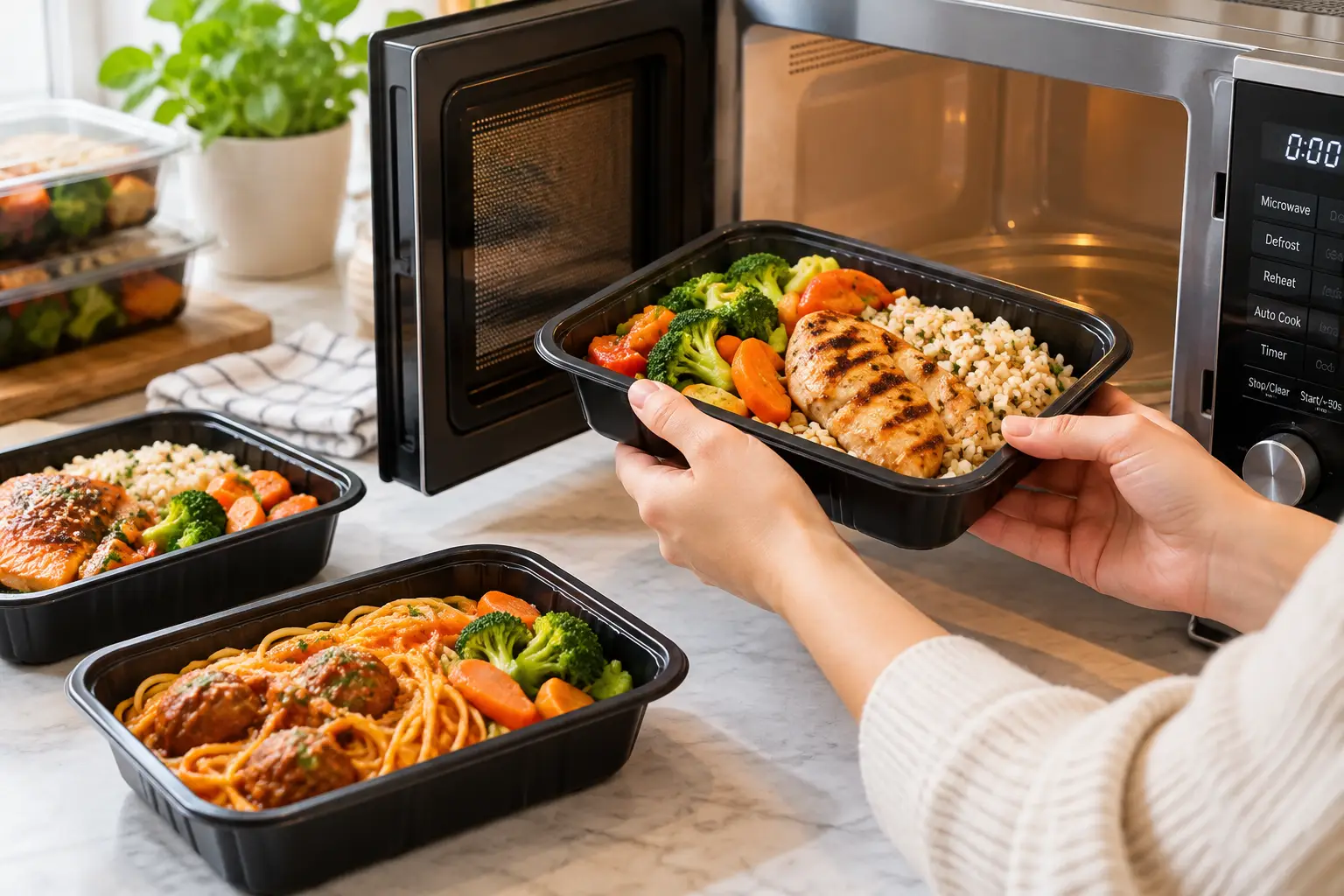
It’s 12:47 p.m., your next meeting starts at 1:00, and the office fridge is a crime scene of unlabeled containers. Sound familiar? That’s exactly the moment microwave ready meals were built for. Peel a corner, press a button, and 60 to 90 seconds later you’re eating something hot that didn’t come from a vending machine.
But here’s the catch: the category is wildly uneven. Some microwave ready meals are genuinely satisfying, protein-forward trays that can replace a sad desk salad. Others are glorified snacks with a sodium count that could cure a ham. And because most of the best options are shelf stable (no fridge, no freezer), the packaging, portion size, and nutrition label matter far more than the photo on the box.
This guide cuts through the noise. Instead of rewriting product listings, we compared real nutrition panels, manufacturer heating instructions, and recurring themes in customer reviews across major US retailers to figure out who each product actually serves. You’ll find seven real picks available on amazon.com, three comparison tables, practical how-to sections, and a buyer framework so you can stock your pantry in one shopping session.
Whether you’re a remote worker, a college student, a caregiver keeping a parent’s cupboard stocked, or someone who simply refuses to cook on Tuesdays, there’s a smart way to use shelf stable microwave meals—and a few traps worth avoiding. Let’s dig in.
What Are Microwave Ready Meals?
Microwave ready meals are fully cooked, single-serve foods sealed in microwave-safe trays, bowls, cups, or pouches that only need reheating—usually 60 seconds to a few minutes. Many are shelf stable, meaning they’re sterilized in their sealed packaging and can sit in a pantry, desk drawer, or locker without refrigeration until opened.
That definition covers more ground than most people expect. Broadly, the category breaks into three families:
- Complete entrées — protein plus a starch and sauce in one tray (think stew, pasta Alfredo, meatloaf with mashed potatoes).
- Meal components — precooked rice, pasta, or lentils in a pouch that you top, mix, or pair.
- Just-add-water cups — dry pasta plus a sauce packet, cooked in the cup itself.
The shelf-stable magic usually comes from heat-sealed packaging that’s processed after filling, similar to the retort pouch technology originally popularized for military and space rations. It’s a close cousin of canning, just in lighter, microwavable packaging. If you want the bigger picture on how these foods fit into the broader world of convenience food, that’s a useful rabbit hole—but for shopping purposes, what matters is this: shelf-stable microwavable meals for adults trade a little texture for a lot of convenience, and the best ones minimize that trade.
Quick Comparison: The 7 Best Microwave Ready Meals at a Glance
| Product | Type | Typical Heat Time | Approx. Price Range (per unit) | Best for |
|---|---|---|---|---|
| Hormel Compleats Microwave Meals | Complete entrée tray | ~60 sec | Around $1.50–$2.50 | Hormel Compleats Microwave Meals: variety-seekers and desk lunches |
| Dinty Moore Beef Stew Microwave Meal | Complete entrée tray | ~60 sec | Around $2–$3 | Dinty Moore Beef Stew Microwave Meal: hearty comfort food |
| Tasty Bite Madras Lentils | Plant-based entrée pouch | 60–90 sec | Around $3–$4 | Tasty Bite Madras Lentils: vegetarians and flavor lovers |
| Campbell’s Chunky Microwavable Bowls | Soup-as-a-meal bowl | ~90 sec | Around $2.50–$3.50 | Campbell’s Chunky Microwavable Bowls: big appetites |
| Barilla Ready Pasta | Meal component pouch | ~60 sec | Around $2–$3 | Barilla Ready Pasta: people who like to customize |
| Ben’s Original Ready Rice | Meal component pouch | ~90 sec | Around $2–$3 | Ben’s Original Ready Rice: building bowls and sides |
| Kraft Mac & Cheese Cups | Just-add-water cup | ~3.5 min | Around $1 (in multipacks) | Kraft Mac & Cheese Cups: kids, snacks, tight budgets |
Prices are approximate at the time of writing and vary by flavor, pack size, and seller—check the current price on Amazon.
Reading this table, the quickest win is obvious: if you want a full meal in one container with zero assembly, Hormel Compleats Microwave Meals and Dinty Moore Beef Stew Microwave Meal lead the pack on convenience. If you’d rather trade 30 extra seconds for more control over flavor and nutrition, the pouch-based options—Barilla Ready Pasta, Ben’s Original Ready Rice, and Tasty Bite Madras Lentils—let you build a better meal than any single tray can. Kraft Mac & Cheese Cups sit apart as the budget snack, not a real lunch replacement.
💬 One click helps other shoppers make an informed choice too! 😊
Top 7 Microwave Ready Meals: Expert Analysis
1. Hormel Compleats Microwave Meals — best all-around entrée variety
If you want one brand that can cover a week of lunches without repeating itself, Hormel Compleats Microwave Meals is the safest starting point. The line spans classics like Chicken Alfredo, Meatloaf & Gravy with Mashed Potatoes, Roast Beef & Mashed Potatoes, and Dumplings & Chicken, in trays that run roughly 7.5 to 10 oz.
The key feature is that these are fully cooked, shelf-stable trays rated for about 60 seconds in the microwave. In practice, that means you can keep a stack in a desk drawer or car emergency kit without worrying about a fridge—genuinely useful for shift workers or anyone without reliable kitchen access. Several varieties advertise protein in the low-to-mid teens per tray, which is respectable for the size.
Based on comparing the nutrition panels across varieties, the honest caveat is sodium: like most shelf-stable entrées, many Compleats flavors are salty, so check the label of the specific flavor you buy. This is a great fit for office workers, caregivers, and anyone stocking an emergency pantry.
Reviews consistently praise the convenience and the “backup meal” role—several caregivers mention keeping them in an older parent’s cupboard for bad-weather days. A common complaint is that lower-wattage microwaves need two to three minutes, not one, and some reviewers find pasta varieties soft.
Pros:
- ✅ Huge flavor range keeps weekly lunches interesting
- ✅ No refrigeration needed until opened
- ✅ Tray doubles as your plate—zero dishes
Cons:
- ❌ Sodium is high in many flavors
- ❌ Pasta textures can turn mushy when overheated
Usually around $1.50–$2.50 per tray in multipacks—excellent value for a complete hot meal.
2. Dinty Moore Beef Stew Microwave Meal — heartiest classic comfort tray
When you want something that eats like actual dinner, the Dinty Moore Beef Stew Microwave Meal delivers the most “home-cooked” impression in this lineup. It’s sold under the Compleats umbrella in a 9 oz microwavable tray, and the ingredient list is refreshingly short: water, potatoes, beef, carrots, plus a few thickeners and seasonings.
According to Hormel’s own SmartLabel data, one tray provides 240 calories and 12 g of protein, and it contains none of the major FDA-listed allergens. That allergen profile matters more than it sounds—if you’re feeding someone with a dairy, wheat, or soy allergy, this is one of the few comfort-food trays that doesn’t force a label scavenger hunt.
Now the hard truth: the same label shows 1,130 mg of sodium per tray, which is roughly half of the daily value. That makes the Dinty Moore Beef Stew Microwave Meal best as an occasional hearty meal, not a daily habit, and ideal for anyone who prioritizes allergen-friendliness and satiety.
Reviews consistently describe the stew as hearty and easy to chew, which explains its popularity with older adults. Some reviewers wish for more beef relative to potatoes.
Pros:
- ✅ Free of the major common food allergens
- ✅ Short, recognizable ingredient list
- ✅ Soft texture works well for older adults
Cons:
- ❌ Roughly half a day’s sodium in one tray
- ❌ Potato-heavy compared to the beef content
Typically around $2–$3 per tray—solid value if comfort and allergen safety are priorities.
3. Tasty Bite Madras Lentils — best plant-based flavor punch
Tasty Bite Madras Lentils proves that shelf-stable doesn’t have to mean bland beige food. It’s an Indian-style dish of black lentils and red kidney beans simmered in a creamy tomato sauce, sold in a 10 oz BPA-free pouch, with an organic version also widely available.
The label lists two servings per pouch, each around 150 calories and 6 g of protein in the original version—so a full pouch lands near 300 calories with plenty of fiber. Here’s what most buyers overlook: because it’s packed as two servings, the sodium (510 mg per serving) roughly doubles if you eat the whole pouch alone. That’s still lower than the stew above, but it’s not a “light” choice.
Our honest read: this is the most flavorful vegetarian option here and the best value as a meal base. Pour it over Ben’s Original Ready Rice and you’ve got a filling, fiber-rich lunch in about three minutes total. Note that the original recipe contains cream and butter, so it’s vegetarian, not vegan.
Customer feedback consistently highlights the taste and convenience; a recurring criticism is that the spice level is mild, and some reviewers flag the per-pouch sodium.
Pros:
- ✅ Bold, genuinely satisfying flavor
- ✅ High fiber from lentils and beans
- ✅ Pairs perfectly with microwave rice pouches
Cons:
- ❌ Spice level is mild for heat lovers
- ❌ Contains dairy, so not vegan
Usually around $3–$4 per pouch—fair value given it stretches across two portions.
4. Campbell’s Chunky Microwavable Bowls — biggest portion for big appetites
If your main complaint about microwave ready meals is “I’m hungry again by 3 p.m.,” Campbell’s Chunky Microwavable Bowls answer with sheer volume. Each bowl holds 15.25 oz—about 50% more food than a typical 10 oz entrée tray—in flavors like Classic Chicken Noodle, Spicy Chicken Noodle, Creamy Chicken & Dumplings, and Spicy Chicken Burrito.
Protein runs about 12–15 g per bowl depending on flavor (Classic Chicken Noodle lists 15 g). The bowl heats in roughly 90 seconds, with Campbell’s suggesting an extra 30 seconds if you like it hotter. In practical terms, soup-as-a-meal fills your stomach with warm liquid, which helps satiety more than a dense, smaller tray.
Based on comparing formats, the trade-off is that soup is less portable: you’re carrying a liquid-filled bowl and you’ll want a spoon and a flat surface. Chunky soups as a line also tend to carry substantial sodium, so check each flavor’s label. It’s ideal for big eaters, construction and warehouse workers, and game-day snacking.
Reviews consistently mention the generous portion size and soft, easy-to-chew ingredients.
Pros:
- ✅ Largest portion in this roundup
- ✅ Up to 15 g protein per bowl
- ✅ Easy-to-chew textures suit all ages
Cons:
- ❌ Liquid bowls are messier to transport
- ❌ Sodium is substantial across most flavors
Generally around $2.50–$3.50 per bowl—strong value per ounce of food.
5. Barilla Ready Pasta — most customizable base for home cooks
Barilla Ready Pasta isn’t a finished meal—and that’s exactly why it earns a spot. Each 7 oz pouch contains fully cooked penne, rotini, or gemelli made with just pasta, water, extra virgin olive oil, and sea salt, and it heats in about 60 seconds.
The practical meaning of that three-ingredient list is control. You decide the sauce, protein, and sodium level, which makes this the most flexible option for people managing blood pressure or following a specific diet. Barilla also notes the pasta is Non-GMO and has no preservatives, and the pouch has labeled “cool touch” zones so you don’t scald your fingers.
Here’s what to weigh: you’ll need a jar of sauce, a pesto pouch, or leftover protein to make it a meal, so it’s better for a home pantry or office with a fridge than for a car or locker. One tip from the packaging that many miss: don’t reuse the pouch to reheat leftovers—transfer them to a dish.
Verifiable aggregated review data for this specific line is thinner than for the bigger brands, so weigh the product on its spec sheet: a fast, neutral, quality pasta base.
Pros:
- ✅ Only four simple ingredients
- ✅ You control sauce, protein, and sodium
- ✅ Doubles as a pasta-salad shortcut
Cons:
- ❌ Needs toppings to become a full meal
- ❌ Plain pasta alone is low in protein
Typically around $2–$3 per pouch—great value as a building block.
6. Ben’s Original Ready Rice — best 90-second meal builder
Ben’s Original Ready Rice is the quiet workhorse of the microwave aisle. Pouches run about 8.5–8.8 oz in flavors from plain Jasmine and Whole Grain Brown to Fried Rice, Red Beans & Rice, and Spanish Style, and every one heats in about 90 seconds.
Two features matter in practice. First, each pouch is labeled as two servings, so it can be a side for two or a base for one big bowl. Second, the BPA-free pouch tears to vent and can also be emptied into a skillet, which lets you crisp it up with an egg for a near-takeout fried rice in under five minutes.
On paper, plain rice won’t fill you on its own. The smartest use is pairing: one pouch of rice plus one pouch of Tasty Bite Madras Lentils, or a flavored rice topped with a can of tuna or chicken. That combo out-performs most single trays on both protein and fiber, especially with the Whole Grain Brown variety.
Reviews consistently praise the speed and texture—many shoppers compare the fried rice to restaurant rice with a splash of sauce—while a few note that flavored varieties can taste salty.
Pros:
- ✅ Huge flavor range, including whole grain
- ✅ Two servings per pouch for flexibility
- ✅ Skillet-friendly for crispier results
Cons:
- ❌ Not a complete meal on its own
- ❌ Flavored versions can run salty
Usually around $2–$3 per pouch—excellent value for how many meals it supports.
7. Kraft Mac & Cheese Cups — cheapest kid-friendly snack meal
Every pantry needs a crowd-pleaser, and Kraft Mac & Cheese Cups are it. Each 2.05 oz cup contains dry macaroni and a sealed cheese sauce packet; you add water to the fill line, microwave for about 3.5 minutes, then stir in the sauce.
That 2.05 oz figure is the key spec, and it’s easy to misread: it’s the dry weight of a single snack-sized serving, not a full adult lunch. Kraft positions it as a snack or side, and that’s the honest framing. On the plus side, the brand states the cups contain no artificial flavors, preservatives, or dyes—a meaningful change for parents who remember the neon-orange era.
Who should buy it? Parents packing after-school snacks, college students on a tight budget, and anyone who wants comfort food in cup form. Adults who want lunch should pair two cups with a protein, or pick an entrée tray instead.
Detailed aggregated review data is harder to verify for the cups specifically, but the product’s longevity speaks to its popularity; the most common caution you’ll see is that the water fill line matters—too much water makes a soupy result.
Pros:
- ✅ Lowest cost per unit in this list
- ✅ No artificial flavors, preservatives, or dyes
- ✅ Kids can make it with minimal help
Cons:
- ❌ Snack-sized portion for adults
- ❌ Longest cook time in the roundup
Around $1 per cup in multipacks—unbeatable for snacks, weak value as a “meal.”
✨ Don’t miss these pantry-stocking picks!
🔍 Take your weekday lunches to the next level with this carefully curated lineup. Click a highlighted item to check current pricing and availability. These picks will help you get hot, satisfying meals in minutes—without a single dirty pot!
Real-World Scenarios: Matching Shelf Stable Microwave Meals to Your Life
Specs are nice, but your situation decides what’s “best.” Here are three common profiles and the reasoning behind each match.
🧑💻 The hybrid office worker (budget: about $25–$35 per week, 5 lunches)
You need lunches that survive in a desk drawer and don’t require a fridge. Stock three or four Hormel Compleats Microwave Meals for variety and keep one Campbell’s Chunky Microwavable Bowls for days when you skip breakfast. The logic: complete trays mean zero assembly at work, and the larger soup bowl covers the “starving at noon” days. Add a piece of fruit or a bag of baby carrots to offset the low vegetable content.
🎓 The college student (budget: tight, dorm microwave only)
Dorm microwaves are often low-wattage, and dorm fridges are tiny. Build a two-pouch system: Ben’s Original Ready Rice plus Tasty Bite Madras Lentils gives you two satisfying meals from one rice pouch and one lentil pouch. Keep Kraft Mac & Cheese Cups for late-night study snacks, not dinners. This approach costs a bit more upfront but delivers better nutrition per dollar than living on cups alone.
👵 The caregiver stocking a parent’s pantry
Priorities here are soft textures, simple opening, allergen clarity, and long pantry life. The Dinty Moore Beef Stew Microwave Meal stands out for its allergen-friendly label and easy-to-chew texture, while Hormel Compleats Microwave Meals like Meatloaf & Mashed Potatoes add variety. If sodium is a medical concern, talk to their doctor and lean toward Barilla Ready Pasta with a low-sodium sauce, which you can portion in advance. Either way, write the best-by dates on the shelf edge so nothing quietly expires.
How to Get the Most Out of Microwave Ready Meals: A First-30-Days Guide
Buying the right products is half the battle. Using them well is the other half—and it’s where most people leave flavor and nutrition on the table.
Week 1: Learn your microwave’s real wattage
Package directions assume a typical full-size microwave. If yours is a compact 700-watt dorm unit, expect to add 30–60 seconds. Check the label inside the door or the manual, then write a sticky note with your adjusted times for each product you buy.
Week 2: Vent, heat, stir, rest
Most failures come from skipping steps. Peel or vent exactly as directed, heat, then stir—soups and stews especially develop hot and cold zones. Let the food stand for a minute before eating; that standing time evens out temperature and finishes the heating.
Week 3: Start “upgrading” every meal
Treat each tray as 80% of a meal. Add a handful of spinach to Hormel Compleats Microwave Meals before heating, stir canned chicken into Barilla Ready Pasta, or top Ben’s Original Ready Rice with a fried egg. Small additions fix the two biggest weaknesses of the category: low vegetables and modest protein.
Week 4: Build a rotation and a restock rule
Pick five to seven favorites and buy them in multipacks. Set a simple rule: when you’re down to three meals, reorder. Rotate older items to the front so you always eat the earliest best-by dates first.
Common first-month mistakes: overheating pasta trays (they turn mushy), ignoring “servings per container,” and storing pouches somewhere hot, like a car trunk in July.
Problem → Solution: Fixing Common Microwave Meal Frustrations
Even good products can disappoint if a small detail goes wrong. Here are the problems shoppers mention most, with practical fixes.
Problem 1: “It’s still cold in the middle.” ✅ Solution: Stir halfway through, then add time in 15-second bursts. Dense trays like the Dinty Moore Beef Stew Microwave Meal benefit most from a mid-heat stir.
Problem 2: “The pasta turned to mush.” ✅ Solution: Heat for the minimum time, then check. Overcooked pasta can’t be rescued, so err short. With Barilla Ready Pasta, a quick skillet toss with olive oil gives better texture than an extra minute in the microwave.
Problem 3: “I’m hungry an hour later.” ✅ Solution: Add protein and fiber. Pair Ben’s Original Ready Rice with Tasty Bite Madras Lentils, or choose a larger format like Campbell’s Chunky Microwavable Bowls.
Problem 4: “Everything tastes too salty.” ✅ Solution: Build your own meal with low-sodium components. Barilla Ready Pasta plus a no-salt-added sauce gives you control; you can also stretch a salty entrée over extra plain rice or steamed vegetables to dilute it.
Problem 5: “The mac and cheese is soupy.” ✅ Solution: Respect the fill line in Kraft Mac & Cheese Cups exactly and let the cup stand a minute after stirring in the sauce—it thickens as it cools.
How to Choose Microwave Ready Meals
Use these seven steps to pick products that fit your life rather than the packaging’s promises:
- Decide: complete meal or building block? Trays and bowls are grab-and-go; pouches need pairing but give you more control.
- Check servings per container. Many pouches list two servings, so multiply the nutrition numbers if you’ll eat the whole thing.
- Look at protein per container. Around 12 g or more helps a single-serve meal actually keep you full.
- Scan sodium as a percentage of Daily Value. Anything at 20% DV or more per serving is considered high.
- Match the format to where you’ll eat it. Desk drawer and car kits favor sealed trays; office kitchens can handle pasta and toppings.
- Confirm storage needs. “Shelf stable” means no fridge until opened—but some similar-looking products are refrigerated or frozen.
- Compare price per meal, not per package. A two-serving pouch at a higher sticker price can be cheaper per meal than a single tray.
Nutrition and Value Comparison of the Top 7
| Product | Size | Protein (per container) | Sodium Snapshot | Best for |
|---|---|---|---|---|
| Hormel Compleats Microwave Meals | 7.5–10 oz tray | Often low-to-mid teens (varies) | Varies; often high | Hormel Compleats Microwave Meals: variety |
| Dinty Moore Beef Stew Microwave Meal | 9 oz tray | 12 g | 1,130 mg (≈49% DV) | Dinty Moore Beef Stew Microwave Meal: allergen-friendly comfort |
| Tasty Bite Madras Lentils | 10 oz pouch (2 servings) | ~12 g if you eat the full pouch | 510 mg per serving | Tasty Bite Madras Lentils: plant-based fiber |
| Campbell’s Chunky Microwavable Bowls | 15.25 oz bowl | 12–15 g | Check flavor label | Campbell’s Chunky Microwavable Bowls: large portion |
| Barilla Ready Pasta | 7 oz pouch | Modest (plain pasta) | Low; you control the sauce | Barilla Ready Pasta: custom meals |
| Ben’s Original Ready Rice | 8.5–8.8 oz pouch (2 servings) | Modest | Varies by flavor | Ben’s Original Ready Rice: bowls and sides |
| Kraft Mac & Cheese Cups | 2.05 oz cup | Snack-level | Check label | Kraft Mac & Cheese Cups: kids and snacks |
Nutrition figures come from manufacturer labels at the time of writing; formulations change, so always confirm on the package.
The standout insight here is that “complete” doesn’t always mean “most nutritious.” The Dinty Moore Beef Stew Microwave Meal is satisfying and allergen-friendly but uses about half a day’s sodium, while a Ben’s Original Ready Rice plus Tasty Bite Madras Lentils combo matches its protein with more fiber. If you need maximum control, Barilla Ready Pasta is the only option where you set the sodium ceiling yourself.
Microwave Ready Meals vs Frozen Dinners vs Meal Kits
Shelf-stable meals aren’t the only shortcut in town. Here’s how they stack up against the two most common alternatives.
| Factor | Shelf-Stable Microwave Meals | Frozen Dinners | Meal Kits |
|---|---|---|---|
| Storage | Pantry, desk, car | Freezer only | Fridge, short window |
| Prep time | ~1–4 min | ~4–8 min | ~20–45 min |
| Portability | Excellent | Poor (must stay frozen) | Poor |
| Texture | Softer | Often better | Best (fresh) |
| Best for | Work, travel, emergencies | Home dinners | Cooking at home |
Frozen dinners usually win on texture because freezing preserves food differently than heat sterilization—vegetables stay firmer and sauces taste fresher. But they’re useless in a desk drawer, a locker, or during a power outage. Meal kits are the gold standard for freshness and nutrition, yet they demand real cooking time and spoil within days.
The practical takeaway: shelf stable microwave meals win whenever location is the constraint—at work, in a dorm, on the road, or in an emergency kit. They’re the only option you can buy months ahead and forget about. Meanwhile, frozen dinners make more sense for evenings at home, and meal kits are for when you actually want to cook. Many households do best with a mix: a pantry shelf of shelf-stable options for unpredictable days, and frozen or fresh food for planned dinners. If you only have space or budget for one, choose based on where you’ll be when hunger hits, not on which food photo looks best.
Healthy Microwave Meals: Reading the Label Like a Pro
“Healthy” is the most abused word on food packaging, so let’s anchor it in numbers you can check yourself.
Sodium is the main event
According to the FDA’s guide to sodium in your diet, the Daily Value for sodium is less than 2,300 mg per day, and Americans average roughly 3,400 mg. The FDA also suggests that 5% DV or less per serving is low and 20% DV or more is high. Apply that to the Dinty Moore Beef Stew Microwave Meal at about 49% DV, and you see why it’s better as an occasional treat than a daily lunch.
Protein and fiber drive fullness
A tray with 12 g or more of protein will hold you longer than one with 6 g. Fiber helps too, which is why lentil- and bean-based options like Tasty Bite Madras Lentils often feel more filling than their calorie count suggests.
Watch the “per serving” trick
Pouches listing two servings can make sodium and calories look half as high as what you’ll actually eat. Do the multiplication before you compare.
Build, don’t just buy
The healthiest microwave meals are often assembled: Ben’s Original Ready Rice in Whole Grain Brown, a pouch of lentils, and a handful of frozen vegetables heated alongside. It takes about three minutes and beats most single trays on nutrition.
Microwave Meals for Seniors and Caregivers
For older adults living independently, microwave meals for seniors solve real problems: limited mobility, fatigue, and the risk of skipped meals. But the selection criteria shift.
Texture and chewing. Soft, moist foods are easier to manage. Reviews of the Dinty Moore Beef Stew Microwave Meal and Campbell’s Chunky Microwavable Bowls repeatedly mention easy-to-chew ingredients, which matters for anyone with dentures or swallowing concerns.
Opening the package. Peel-back film can be tricky with arthritis. Trays with a pull tab are generally easier than pouches you must tear. If grip strength is an issue, a caregiver can pre-vent pouches or keep kitchen scissors nearby.
Sodium and medications. Many seniors manage blood pressure, so sodium deserves extra attention. A doctor or registered dietitian can say how much fits their plan; lower-sodium build-your-own options like Barilla Ready Pasta with a no-salt-added sauce give flexibility.
Pantry safety net. Caregivers often mention keeping shelf-stable meals in a parent’s cupboard for days they can’t visit. Hormel Compleats Microwave Meals work well here because they need no fridge space and offer familiar, homestyle dishes.
Hydration and balance. Pair meals with water, fruit cups, or soft vegetables to fill gaps that trays don’t cover.
🛒 Ready to stock up smarter?
✨ Click any highlighted product above to check the latest options and pack sizes. A well-stocked shelf means no more skipped lunches—for you or someone you care about!
Long-Term Cost: Price per Meal and Pantry Value
Sticker prices mislead. What matters is cost per satisfying meal, plus the hidden value of food that doesn’t spoil.
| Option | Approx. Cost per Meal | Meals per Unit | Value Verdict | Best for |
|---|---|---|---|---|
| Hormel Compleats Microwave Meals | Around $1.50–$2.50 | 1 | High | Hormel Compleats Microwave Meals: everyday lunches |
| Ben’s Original Ready Rice + Tasty Bite Madras Lentils | Around $2.50–$3.50 per combo meal | 2 (if shared or split) | Very high | Ben’s Original Ready Rice + Tasty Bite Madras Lentils: nutrition per dollar |
| Campbell’s Chunky Microwavable Bowls | Around $2.50–$3.50 | 1 | High for big eaters | Campbell’s Chunky Microwavable Bowls: volume |
| Kraft Mac & Cheese Cups | Around $2 (two cups for adults) | 0.5 for adults | Low as a meal | Kraft Mac & Cheese Cups: snacks |
Approximate at the time of writing; prices may vary.
The surprise in this table is that a two-pouch combo can cost about the same as a single premium tray while delivering more fiber and flexibility. Meanwhile, Kraft Mac & Cheese Cups look cheapest per unit but become expensive once an adult needs two cups to feel full.
There’s also an avoided-waste benefit. Fresh groceries bought with good intentions often end up in the trash; shelf-stable meals typically carry long best-by windows, so you only “spend” them when you eat them. Compared with a $12–$15 delivery lunch, even the priciest option here pays for itself in a single week. The smartest money move is buying multipacks of your two or three favorites and using subscription or bulk options when available—just never buy more than you’ll eat before the best-by dates.
Safety, Regulations, and Standards
Microwave ready meals are among the safest convenience foods you can buy, but a few rules keep it that way.
Who regulates them? In the US, the USDA’s Food Safety and Inspection Service oversees most products containing meat and poultry (like beef stew and chicken entrées), while the FDA oversees most other foods, including vegetarian pouches, pasta, and rice. Packaging that touches food must meet FDA food-contact requirements.
Heat evenly. Microwaves can leave cold spots. Extension specialists at Clemson University recommend stirring or rotating food and allowing standing time so heat distributes evenly—see their practical microwave food safety fact sheet for the full checklist.
Use the package as directed—and only once. Several manufacturers explicitly warn against reusing or reheating the original bowl or pouch. Campbell’s Chunky Microwavable Bowls and Barilla Ready Pasta both carry this instruction. Transfer leftovers to a microwave-safe dish.
Inspect before heating. Tasty Bite’s packaging, for example, warns not to consume a pouch that is leaking or swollen. That advice applies to every shelf-stable product: bulging, leaking, or damaged seals are a sign to throw it out.
Respect “once opened” rules. Shelf stable only applies while sealed. After opening, refrigerate leftovers promptly and use them within the timeframe on the label (Barilla, for instance, says within two days).
BPA-free claims. Brands like Ben’s Original Ready Rice and Tasty Bite Madras Lentils advertise BPA-free pouches, a nice reassurance for shoppers who care about packaging chemicals.
Common Mistakes to Avoid When Buying Microwave Ready Meals
A little skepticism at checkout saves money and disappointment.
1. Buying by the box photo. The image shows a garnished, plated meal. The tray holds less. Compare net weight—10 oz versus 15.25 oz is a meaningful difference in fullness.
2. Ignoring servings per container. We keep repeating it because it’s the most common error. A “low-sodium” looking label can double once you eat the full pouch.
3. Assuming all “ready meals” are shelf stable. Some lookalike products in the same online category are frozen or refrigerated. If you need desk-drawer storage, confirm the listing says shelf stable.
4. Buying a giant multipack of an untried flavor. Taste is personal, and texture complaints are common in this category. Try singles or variety packs first, then commit.
5. Treating snacks as meals. Kraft Mac & Cheese Cups are great at what they are, but a 2.05 oz dry cup isn’t an adult lunch. Budget for the real thing.
6. Overlooking allergens. Creamy sauces often contain milk, and pasta contains wheat. If allergies matter, read the label every time—formulations change.
7. Forgetting your microwave. A product that’s “60 seconds” in a 1,100-watt unit may need twice that in a compact model. Factor that in if you’re shopping for a dorm or office.
FAQ About Microwave Ready Meals
❓ Which microwave ready meals have the most protein?
❓ Can I buy shelf stable microwave meals in bulk on Amazon?
❓ Are microwave ready meals good for weight loss?
❓ How long do shelf-stable microwave meals last?
❓ What are the best microwave ready meals for a dorm room?
Conclusion: Stock Smart, Eat Well, Skip the Stress
The best microwave ready meals aren’t the ones with the flashiest box—they’re the ones that match where you eat, how hungry you get, and what your body needs. If you want a one-container answer, Hormel Compleats Microwave Meals offer the widest variety, and the Dinty Moore Beef Stew Microwave Meal delivers allergen-friendly comfort in a tray (just watch the sodium). Big appetites should reach for Campbell’s Chunky Microwavable Bowls.
If you’re willing to spend 30 extra seconds, the building-block approach wins on nutrition and value: Ben’s Original Ready Rice with Tasty Bite Madras Lentils is the best three-minute lunch in this guide, and Barilla Ready Pasta gives you total control over sauce and sodium. Keep Kraft Mac & Cheese Cups in their lane as an affordable snack.
Whatever you choose, remember the three habits that separate satisfying microwave meals from sad ones: read servings per container, stir and rest after heating, and add something fresh when you can. Do that, and your pantry becomes a reliable backup plan rather than a last resort.
🚀 Upgrade your lunch game today!
💡 Click any highlighted product to check current pricing and pack options on Amazon. Build a shelf of go-to meals now, and future-you will thank you every busy weekday!
Recommended for You
- Meal Prep Fridge Guide 2026: 7 Best Picks That Actually Fit
- How Long Does Meal Prep Last in Fridge? 7 Proven Tools (2026)
- How Long Do Meal Prep Meals Last? 7 Proven Picks & Rules (2026)
Disclaimer: This post contains affiliate links. As an Amazon Associate, I earn from qualifying purchases made through these links, at no additional cost to you.
✨ Found this article helpful? Share it with someone who needs it! 💬🤗