
In This Article
Why a Dedicated Meal Prep Fridge Changes Your Whole Week
Sunday prep feels heroic right up until you open the kitchen fridge and realize there’s nowhere to put fourteen containers of chicken, rice, and roasted broccoli. The milk is in the way. The leftover pizza box is in the way. Somebody’s sourdough starter is definitely in the way. That’s exactly the moment most people start searching for a meal prep fridge.
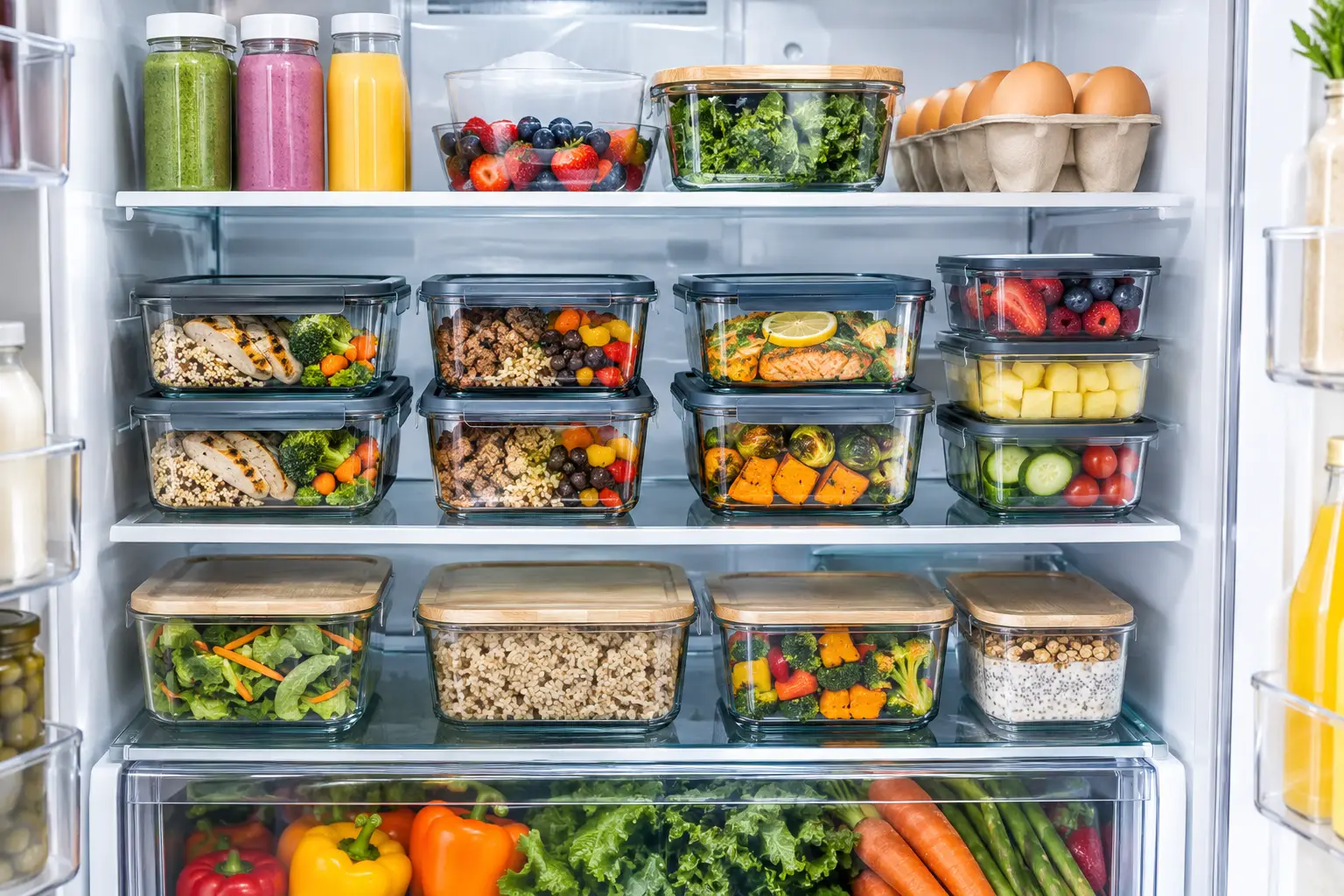
A meal prep fridge is simply a refrigerator — usually a compact or apartment-size model — dedicated to holding your batch-cooked meals, prepped ingredients, and grab-and-go portions so they don’t compete with everyday groceries. It sounds like a luxury. In practice, it’s often the difference between a prep habit that sticks and one that collapses by Wednesday.
Here’s the thing, though: most “best mini fridge” lists are written for dorm sodas, not for stacked glass containers. Shelf spacing, true freezer temperatures, defrost style, and how evenly a unit holds 40°F matter far more when you’re storing four days of cooked protein than when you’re chilling a six-pack.
So this guide takes a different angle. We compared seven real models sold in the US — from a $100-ish 1.6 cu. ft. cube to a 10 cu. ft. retro apartment fridge — using manufacturer spec sheets, ENERGY STAR certification data, and aggregated customer feedback. You won’t find invented test stories here; you’ll find honest analysis of what each spec means for your containers, your electric bill, and your food safety.
By the end, you’ll know which meal prep fridge fits your space, your batch size, and your budget — plus how to set it up so your Thursday lunch tastes as good as your Monday one.
What Is a Meal Prep Fridge?
A meal prep fridge is a secondary refrigerator, typically 1.6 to 10 cubic feet, reserved for pre-portioned meals and prepped ingredients. Its job is to keep cooked food at or below 40°F, give containers flat, well-spaced shelves, and — if it has a real freezer — hold extra portions at 0°F for longer storage.
That definition matters because “mini fridge” covers a lot of very different machines. On one end, you’ll find thermoelectric “skincare coolers” that barely drop 30–40 degrees below room temperature; those are not suitable for cooked food. On the other end, you’ll find compressor-based compact and apartment refrigerators that behave like scaled-down kitchen fridges. Every model in this guide uses a compressor, because cooked rice and chicken need reliable cold, not “pleasantly cool.”
The second distinction is the freezer. Some compact fridges have a small “chiller” compartment inside the main cabinet that may never reach a true 0°F. Others — two-door designs — have a separate, insulated freezer with its own door. If you plan to freeze a week’s worth of soups or burritos, that difference is huge, and we’ll flag it for each pick.
Finally, think of a meal prep refrigerator as a system, not a box. The right size, shelf material, and defrost style determine how easy it is to clean, how often you’ll fight frost buildup, and whether your containers fit flat. Get those three right and the fridge practically runs your meal plan for you.
Quick Comparison: 7 Meal Prep Fridge Picks at a Glance
| Model | Capacity | Freezer type | Annual energy use | Typical price range | Best for |
|---|---|---|---|---|---|
| Midea WHS-65LB1 | 1.6 cu. ft. | Small chiller compartment | 207 kWh | ~$100–$150 | Midea WHS-65LB1: desk/office lunches |
| BLACK+DECKER BCRK32B | 3.2 cu. ft. | Interior freezer compartment | 219 kWh | ~$180–$230 | BLACK+DECKER BCRK32B: solo weekly prep on a budget |
| Midea WHD-113FSS1 | 3.1 cu. ft. | Separate two-door freezer | 270 kWh | ~$150–$230 | Midea WHD-113FSS1: fresh + frozen portions in a small space |
| Danby Designer DAR044A4BDD | 4.4 cu. ft. | None (all-fridge) | 268 kWh | ~$280–$400 | Danby Designer DAR044A4BDD: maximum container space, no frost |
| Frigidaire EFR451 | 4.5 cu. ft. | Separate two-door freezer | ~226–229 kWh (family est.) | ~$250–$350 | Frigidaire EFR451: style-conscious kitchens |
| Danby DPF074B2WDB-6 | 7.4 cu. ft. | Top-mount freezer | 344 kWh | ~$450–$580 | Danby DPF074B2WDB-6: couples and serious batch cooks |
| Galanz GLR10TBKEFR | 10 cu. ft. | Frost-free top freezer | 292 kWh | ~$600–$800 | Galanz GLR10TBKEFR: family-size prep, garage or basement |
Looking at the table above, the most interesting tension is between capacity and efficiency: the Galanz GLR10TBKEFR holds more than six times what the Midea WHS-65LB1 does, yet uses only about 40% more electricity per year. Meanwhile, the Danby Designer DAR044A4BDD trades a freezer for the largest uninterrupted fridge space under 33 inches tall — a smart trade if your prep is mostly “eat within four days.” Budget shoppers who need a real freezer should look hardest at the Midea WHD-113FSS1.
💬 One click helps other shoppers make an informed choice too! 😊
Top 7 Meal Prep Fridge Models: Expert Analysis
1. Midea WHS-65LB1 — smallest footprint for desk-side lunches
If your goal is simply to keep three to five lunches cold at work or next to your home-office desk, the Midea WHS-65LB1 is about as compact as a real compressor fridge gets.
Its 1.6 cu. ft. cabinet measures roughly 19.4 inches tall and 18.6 inches wide, so it slides under most desks or onto a sturdy shelf. It’s ENERGY STAR certified at 207 kWh per year, which works out to roughly $35 annually at around 17 cents per kWh. The catch: the small top compartment is a chiller, not a true freezer — at least one retailer’s listing explicitly warns against storing frozen food in it.
On paper, this is a lunch-locker, not a weekly prep hub. A typical 3-cup rectangular container fits, but expect room for a workweek of lunches plus drinks, not a full week of three meals. It’s ideal for office workers, students, or anyone who preps at home and commutes with portions. Reviews consistently praise how quietly it runs and how stable it stays over years of use, which is why it shows up in so many “best compact fridge” roundups.
Pros:
- ✅ Fits under a standard desk with room to spare
- ✅ ENERGY STAR certified with low annual running cost
- ✅ Widely reviewed as quiet enough for bedrooms
Cons:
- ❌ Chiller compartment can’t replace a real 0°F freezer
- ❌ Manual defrost means periodic frost cleanup
At around $100–$150 at the time of writing, it’s excellent value for portion-level storage — just don’t ask it to hold a whole Sunday’s cooking.
2. BLACK+DECKER BCRK32B — most fridge space per dollar
The BLACK+DECKER BCRK32B doubles the capacity of a cube fridge without doubling the price, which makes it a natural first meal prep fridge for one person.
You get 3.2 cu. ft. total — about 3 cu. ft. of fresh-food space — with two full-width slide-out glass shelves and a crisper drawer with a glass cover. Glass shelves matter more than they sound: spills from a leaky container wipe up in seconds instead of dripping through wire racks onto the next shelf. ENERGY STAR data lists 219 kWh per year, roughly $37 annually.
The freezer is an interior compartment of about 0.2 cu. ft., and one retailer lists the lowest temperature as 32°F, so treat it as ice-and-ice-pack storage rather than a place for a month of frozen chili. Based on comparing the specs, this model is best for solo preppers who cook every three to four days and eat everything fresh. Aggregated customer feedback generally highlights the generous shelf space for the price, while some buyers note the small freezer section is limited.
Pros:
- ✅ Two full-width glass shelves handle spills easily
- ✅ Crisper drawer keeps prepped produce separate
- ✅ Two-year compressor coverage on top of one-year warranty
Cons:
- ❌ Tiny freezer won’t hold frozen meal portions
- ❌ Manual defrost requires emptying the unit occasionally
Typically $180–$230, it delivers the most usable fresh-food space per dollar in this lineup.
3. Midea WHD-113FSS1 — budget pick with a real freezer door
The Midea WHD-113FSS1 is the cheapest way in this guide to get a separate freezer with its own door — a genuine upgrade for anyone who batch-cooks and freezes.
Its 3.1 cu. ft. total splits into roughly 2.2 cu. ft. of fridge and about 0.9 cu. ft. of freezer, in a stainless-look cabinet about 33 inches tall, 18.5 inches wide, and 19.4 inches deep. A separate door means opening the fridge for lunch doesn’t warm your frozen soup portions. ENERGY STAR lists it at 270 kWh per year (around $46), versus a federal standard of 358 kWh.
What most buyers overlook is the trade-off: that freezer is full-width but shallow, and owners describe the freezer door shelf as tiny. This is perfect for a solo prepper who freezes six to ten single portions and keeps three days fresh. Reviews consistently call it quiet and roomy for its footprint, but a recurring complaint is food freezing when pushed against the back wall, and some buyers report plastic bins arriving cracked.
Pros:
- ✅ Separate freezer door protects frozen portions
- ✅ Glass shelves plus a crisper drawer
- ✅ Reversible door fits tight kitchen layouts
Cons:
- ❌ Items against the back wall can freeze
- ❌ Some reports of shipping damage to plastic bins
At roughly $150–$230, it’s the strongest value pick for fresh-plus-frozen prep.
4. Danby Designer DAR044A4BDD — biggest frost-free container zone under counter height
The Danby Designer DAR044A4BDD skips the freezer entirely, and for many meal preppers that’s a feature, not a flaw.
It’s a 4.4 cu. ft. all-refrigerator with automatic defrost, so you never chip ice off a freezer plate. The interior measures about 17.9 inches wide, 16.75 inches deep, and 28.9 inches tall, with two full-width and one half-width adjustable wire shelves. In practice, that width fits two standard rectangular meal prep containers side by side on each shelf, with height left to stack. It’s ENERGY STAR certified at 268 kWh per year.
Here’s what to weigh: no freezer means everything you store should be eaten within about four days, so it suits people who cook twice a week rather than once. It’s also counter-height (about 32.7 inches), so it can double as extra prep surface. Retailer review summaries frequently tag it as quiet, good at holding temperature, and roomy for tall items. One honest drawback: wire shelves let drips fall through, so plan on a shelf liner.
Pros:
- ✅ Automatic defrost means zero frost maintenance
- ✅ Widest open fridge space in the compact class
- ✅ 18-month in-home parts and labor warranty
Cons:
- ❌ No freezer at all for long-term storage
- ❌ Wire shelves let spills drip downward
Usually $280–$400, it’s worth the premium if you prioritize fresh capacity and low upkeep.
5. Frigidaire EFR451 — retro looks with a two-door layout
The Frigidaire EFR451 brings a chrome-trimmed, retro “platinum” design to the two-door compact category, so your meal prep fridge can live in plain sight without looking like dorm leftovers.
It offers about 4.5 cu. ft. total (some listings say 4.6) with a separate freezer door, adjustable shelves, and manual defrost. That extra volume over the Midea WHD-113FSS1 — roughly 1.4 cu. ft. more — translates into an extra shelf’s worth of containers. Frigidaire’s closely related 4.5 cu. ft. two-door models are certified by ENERGY STAR at about 226–229 kWh per year; check the yellow EnergyGuide label on the exact unit you buy.
Based on comparing the specs, this is the pick for open-plan apartments and home bars where appearance matters as much as capacity. Honest caveat: we could not verify a detailed, consistent body of customer reviews for this exact model number, so we’re not summarizing sentiment beyond the general pattern that two-door manual-defrost compacts need regular defrosting to keep the freezer efficient.
Pros:
- ✅ Distinctive retro styling suits visible spaces
- ✅ Separate freezer door for frozen portions
- ✅ More capacity than most 3.1 cu. ft. two-doors
Cons:
- ❌ Manual defrost adds a recurring chore
- ❌ Limited verifiable review data for this model
Expect roughly $250–$350; you’re paying partly for design, which is fair if it sits in your living space.
6. Danby DPF074B2WDB-6 — apartment capacity in a 21-inch footprint
The Danby DPF074B2WDB-6 is where a meal prep fridge stops being “mini” and starts feeling like a real second refrigerator — while staying only about 21.4 inches wide.
Its 7.4 cu. ft. capacity includes two full-width and one half-width glass shelves, a covered crisper, three door shelves with gallon storage, and a top-mount freezer with one wire shelf. The fresh-food interior runs about 17 inches wide, 17.7 inches deep, and nearly 37 inches tall — enough for a full week of lunches and dinners for two. The fridge section defrosts automatically; the freezer is manual. ENERGY STAR lists 344 kWh per year (around $58).
What the spec sheet doesn’t say loudly: 56.3 inches of height means this won’t tuck under a counter, so it’s a corner-of-the-kitchen or laundry-room appliance. It’s ideal for couples or anyone who preps both lunches and dinners. Verified customer review detail for this exact model is limited, so we’re relying on the spec sheet and Danby’s published 32–50°F operating range rather than review claims.
Pros:
- ✅ Holds a full week of meals for two
- ✅ Glass shelves and covered crisper simplify cleanup
- ✅ Automatic defrost in the fresh-food section
Cons:
- ❌ Freezer still requires manual defrosting
- ❌ Too tall to fit under standard counters
Typically $450–$580, it’s the most sensible step up when compacts feel cramped.
7. Galanz GLR10TBKEFR — frost-free family capacity with top-tier efficiency
The Galanz GLR10TBKEFR is the most capable meal prep fridge in this guide, and surprisingly, one of the most efficient for its size.
Its 10 cu. ft. total (ENERGY STAR measures 9.8) splits into about 7.4 cu. ft. of fridge and 2.4 cu. ft. of freezer, with glass shelves, a crisper drawer, and fully frost-free operation in both sections. ENERGY STAR lists it at 292 kWh per year against a 328 kWh federal standard and flags it as “Most Efficient” — notable, since it uses less power than the smaller Danby DPF074B2WDB-6. The 2.4 cu. ft. freezer can hold several weeks of frozen portions for a family.
Here’s what to weigh: it’s about 61.8 inches tall, 23.7 inches wide, and 27.5 inches deep, and it ships at well over 100 pounds, so measure doorways and plan for two people at delivery. It’s built for families, garage or basement prep stations, and anyone who freezes in bulk. A meaningful body of retailer reviews exists, but we couldn’t verify consistent themes in detail, so we’re leaning on specs rather than summarizing sentiment.
Pros:
- ✅ Frost-free fridge and freezer, no defrost chores
- ✅ ENERGY STAR Most Efficient recognition
- ✅ Largest freezer here for bulk batch cooking
Cons:
- ❌ Bulky and heavy to move into place
- ❌ Highest upfront cost in this lineup
At roughly $600–$800, the long-term efficiency and zero-defrost design justify the premium for big households.
✨ Don’t miss these smart picks for your prep day!
🔍 Take your meal prep to the next level with this carefully curated lineup. Click any highlighted fridge to check current pricing and availability. The right pick will help you serve fresher, safer, better-tasting meals all week long!
Capacity, Energy, and Value: The Numbers That Decide It
| Model | Fresh / freezer split | Defrost | Est. yearly energy cost* | Best for |
|---|---|---|---|---|
| Midea WHS-65LB1 | 1.6 cu. ft. total, chiller only | Manual | ~$35 | Midea WHS-65LB1: portion storage |
| BLACK+DECKER BCRK32B | ~3.0 / ~0.2 cu. ft. | Manual | ~$37 | BLACK+DECKER BCRK32B: fresh-only solo prep |
| Midea WHD-113FSS1 | ~2.2 / ~0.9 cu. ft. | Manual freezer | ~$46 | Midea WHD-113FSS1: small fresh + frozen |
| Danby Designer DAR044A4BDD | 4.4 / 0 cu. ft. | Automatic | ~$46 | Danby Designer DAR044A4BDD: low-maintenance fresh |
| Danby DPF074B2WDB-6 | 7.4 cu. ft. total, top freezer | Auto fridge / manual freezer | ~$58 | Danby DPF074B2WDB-6: two-person weekly prep |
| Galanz GLR10TBKEFR | ~7.4 / ~2.4 cu. ft. | Frost-free | ~$50 | Galanz GLR10TBKEFR: families and bulk freezing |
*Estimates use ENERGY STAR annual kWh figures at about 17 cents per kWh; your local rate will differ, so check your utility bill.
Reading the numbers together, the energy gap across all six models is roughly $23 a year — smaller than most people expect. That means you should choose primarily on capacity and defrost style, not running cost. The standout value story is the Galanz GLR10TBKEFR, which costs less to run than the Danby DPF074B2WDB-6 while offering more freezer space and no defrosting, so the higher sticker price partly pays itself back in convenience over a decade.
How to Choose a Meal Prep Fridge
Use these seven steps in order; each one narrows the field fast.
- Count your containers, not your cubic feet. Lay out a full week of filled containers and measure the footprint. A rough rule: a solo lunch-only prepper fits in 1.6–3.2 cu. ft.; two people prepping lunches and dinners need 6–8 cu. ft.
- Decide fresh-only or fresh-plus-frozen. Food-safety guidance says cooked leftovers last 3–4 days chilled, so if you prep once a week, you need a real freezer for the back half.
- Insist on a true freezer if you freeze portions. A chiller compartment inside the fridge door may not reach 0°F, which shortens frozen-food quality.
- Check interior shelf width. Compare inside measurements to your container size; 17–18 inches of interior width typically fits two standard rectangular containers side by side.
- Prefer glass shelves. Glass contains spills and cleans faster than wire, which matters when you’re storing sauces and soups.
- Weigh defrost style honestly. Automatic or frost-free costs more upfront but removes a messy chore you’ll otherwise repeat every few months.
- Measure the space, including ventilation. ENERGY STAR advises leaving a few inches between the fridge and the wall so heat can escape — tight closets choke compressors.
Follow these steps and you’ll rarely need more than two or three models on your shortlist.
Mini Fridge for Meal Prep vs. Simply Reorganizing Your Kitchen Fridge
Before buying anything, it’s fair to ask: could you just reorganize the fridge you already own? Sometimes, yes. But a mini fridge for meal prep solves problems that clever bins can’t.
| Factor | Dedicated meal prep fridge | Reorganized main fridge | Best for |
|---|---|---|---|
| Space for a full week | Reserved and predictable | Competes with groceries | Danby DPF074B2WDB-6 or larger for full weeks |
| Door openings | Fewer, so temps stay stable | Constant traffic | Midea WHD-113FSS1 for separate freezer access |
| Location | Office, garage, bedroom, basement | Kitchen only | Midea WHS-65LB1 for desk-side use |
| Upfront cost | ~$100–$800 | $0–$40 for bins | Reorganizing if budget is zero |
| Household conflict | “Your shelf” is the whole fridge | Ongoing negotiation | BLACK+DECKER BCRK32B for roommates |
The table shows the real advantage isn’t just space; it’s predictability. A dedicated unit is opened only when you grab a meal, so its temperature swings less than a family fridge that gets opened dozens of times a day — useful when you’re keeping cooked rice and poultry for four days. If your household is just one or two people with a half-empty fridge, reorganizing first is the honest, cheaper move; a separate meal prep refrigerator earns its keep once groceries and prep containers genuinely collide.
There’s also a behavioral bonus. When your prepared meals have their own home, you see them first instead of reaching past them for takeout menus. Many people find that visibility alone keeps the habit alive.
Setting Up Your Meal Prep Fridge: A First-Week Game Plan
Unboxing is the easy part. The first 30 days decide whether your new fridge becomes a system or an expensive drink cooler.
Day 0 — Let it settle. If the unit shipped on its side or was tilted, many manufacturers recommend letting it stand upright for several hours before plugging in, so compressor oil can drain back. Check your manual for the exact wait.
Day 1 — Calibrate with a thermometer. Built-in dials say “1 to 7,” not degrees. Put an inexpensive appliance thermometer on the middle shelf, let the fridge run 24 hours, then adjust until it reads between 35°F and 38°F — the range ENERGY STAR recommends — and safely under the 40°F ceiling.
Day 2 — Map your shelves.
- ✅ Top shelf: ready-to-eat meals in the order you’ll eat them
- ✅ Middle shelf: prepped ingredients (chopped veg, cooked grains)
- ✅ Bottom shelf or crisper: raw proteins in sealed containers, so drips can’t contaminate cooked food
- ✅ Freezer: portions labeled with the date and contents
Day 3 — Cool food fast. The USDA’s leftovers and food safety guidance recommends dividing large batches into shallow containers so food chills quickly, and refrigerating within two hours of cooking. A big pot of chili cooling on the counter overnight is the classic beginner mistake.
Week 2 onward — Rotate. Use a simple “first in, first out” line: new containers go to the back, older ones slide forward.
Monthly — Inspect. Check door seals with the dollar-bill test (close the door on a bill; if it slides out easily, the seal may be weak), wipe spills, and, on manual-defrost models, defrost once frost reaches about a quarter inch.
Real-World Scenarios: Matching the Right Fridge to Your Routine
Specs only matter in context, so here are three common prep profiles and the reasoning behind each match.
Scenario 1: The solo commuter on a tight budget
Profile: One person, preps lunches on Sunday and Wednesday, budget under $250, lives in a studio. Match: the BLACK+DECKER BCRK32B. Two prep sessions a week means nothing has to last more than three or four days, so the tiny freezer isn’t a dealbreaker. Its glass shelves and crisper hold eight to ten containers plus prepped produce, and at about $37 a year in electricity, it barely registers on the bill. If you’d rather prep once and freeze half, step up to the Midea WHD-113FSS1 for its separate freezer door.
Scenario 2: The fitness couple prepping 20+ meals a week
Profile: Two people, lunches and dinners, prep once on Sunday, moderate budget, apartment with a laundry nook. Match: the Danby DPF074B2WDB-6. Twenty containers need real shelf area, and the nearly 37-inch-tall fresh section with three glass shelves handles that. Meals for Thursday through Saturday go in the freezer on Sunday and move down to the fridge to thaw the night before — the safest thawing method.
Scenario 3: The family of five batch-cooking monthly
Profile: Two adults, three kids, monthly freezer-cooking marathon, garage or basement space, budget up to $800. Match: the Galanz GLR10TBKEFR. A 2.4 cu. ft. frost-free freezer holds dozens of flat-frozen soup bags and casseroles without frost creep, and the fresh section absorbs school lunches. One caution: many compact and apartment fridges aren’t designed for unheated garages, so check the manual’s operating-temperature range before placing it there.
Problem → Solution: Fixing Common Meal Prep Fridge Headaches
Even the best meal prep fridge throws curveballs. Here are the five most common, with fixes.
Problem 1: Food freezing on the back shelf. This is the most frequent complaint about small compacts, including in feedback on the Midea WHD-113FSS1. Solution: leave an inch of air between containers and the back wall, and nudge the thermostat one notch warmer. Recheck with your thermometer after 24 hours.
Problem 2: Frost building up in the freezer. Manual-defrost units like the BLACK+DECKER BCRK32B and Frigidaire EFR451 accumulate ice, which wastes space and energy. Solution: defrost when frost reaches roughly a quarter inch. Unplug, move frozen portions into a cooler, place towels below, and let it melt — never chip ice with a knife.
Problem 3: Containers don’t fit flat. Solution: measure interior width before you buy containers, not after. If you’re stuck, switch to narrower rectangular containers or stand flat-frozen bags upright like files.
Problem 4: Drips on wire shelves. Wire racks on the Danby Designer DAR044A4BDD let sauce drip down. Solution: add a washable, BPA-free shelf liner and keep raw proteins on the lowest level.
Problem 5: Food “spoils early.” Usually the culprit is slow cooling or a fridge running above 40°F. Solution: chill food in shallow containers, follow the two-hour rule, and verify temperature weekly with an appliance thermometer rather than trusting the dial.
Compact Refrigerator for Meal Prep: Features That Actually Matter (and Ones That Don’t)
Marketing copy on a compact refrigerator for meal prep tends to celebrate can dispensers and color options. Here’s how to cut through it.
Features that genuinely matter
- ⚡ Compressor cooling. Non-negotiable for cooked food; thermoelectric coolers can’t hold 40°F reliably in a warm room.
- 🧊 A separate freezer door. If you freeze portions, a dedicated door protects them from warm air every time you grab lunch.
- 🔄 Defrost type. Frost-free or automatic defrost saves a recurring, messy chore. Over five years, that’s a real quality-of-life difference.
- 🪟 Glass shelves. They contain spills and make weekly wipe-downs fast.
- 📏 Interior width and shelf adjustability. These decide whether your containers fit — far more than total cubic feet.
- 🌱 Low-GWP refrigerant. Several picks here, including the Danby Designer DAR044A4BDD and BLACK+DECKER BCRK32B, use R600a, which ENERGY STAR identifies as a lower global-warming-potential option.
Features that matter less than you’d think
- 🥤 Can dispensers. Handy for soda, useless for containers, and they eat door space.
- 🎨 Color variants. Nice, but they rarely change performance; the Frigidaire EFR451 is the exception only because its styling suits visible rooms.
- 🔢 Huge capacity claims. A 4.4 cu. ft. fridge with smart shelf spacing can out-hold a poorly laid-out larger one.
The short version: prioritize what touches your food (cold, shelves, freezer) over what touches your drinks.
Common Mistakes to Avoid When Buying a Meal Prep Fridge
Most regret comes from a handful of predictable missteps.
Mistake 1: Buying a thermoelectric “mini fridge.” Many inexpensive coolers sold as mini fridges are designed for skincare or drinks. They often can’t keep cooked food at or below 40°F, especially in summer.
Mistake 2: Trusting the chiller to freeze. A small chiller box inside a single-door compact — like the one in the Midea WHS-65LB1 — isn’t a substitute for a freezer. If frozen portions are part of your plan, buy a two-door model.
Mistake 3: Ignoring door swing. A fridge that opens into a wall is a daily annoyance. Most picks here have reversible doors, but check before you commit to a corner.
Mistake 4: Forgetting ventilation. Jamming a compact into a cabinet with no clearance makes the compressor work harder, raising energy use and shortening its life.
Mistake 5: Underbuying capacity. People estimate their prep, not their prep plus condiments, drinks, and fruit that inevitably migrate in. Add 25% to your container estimate.
Mistake 6: Skipping the warranty fine print. Coverage varies widely: the Danby Designer DAR044A4BDD includes 18 months of in-home parts and labor, while the BLACK+DECKER BCRK32B adds two years on the compressor. Those details matter more than a $20 price difference.
Long-Term Cost and Maintenance
The purchase price is only the down payment. Over a typical service life, operating and maintenance costs shape the true value.
Electricity. Based on ENERGY STAR figures and an estimated 17 cents per kWh, the picks here cost roughly $35–$58 a year to run. Over ten years, that’s about $350 for the Midea WHS-65LB1 versus about $500 for the Galanz GLR10TBKEFR — a gap of roughly $150 for six times the capacity. ENERGY STAR notes that certified refrigerators are about 9% more efficient than models built only to the federal minimum, which adds up over a decade.
Maintenance time. Manual-defrost models need a full defrost a few times a year; budget 1–2 hours each time. Frost-free and automatic-defrost designs reduce that to wiping shelves and occasionally vacuuming the condenser area.
Food savings. This is where a meal prep fridge quietly pays off. If proper storage prevents even one or two thrown-out containers of protein a week, the savings can outpace the electricity cost quickly. That’s not a guarantee — it depends on your habits — but organized, visible storage is one of the most practical tools against food waste.
Total cost of ownership snapshot: a budget compact like the BLACK+DECKER BCRK32B lands around $550–$600 over ten years (purchase plus power), while the Galanz GLR10TBKEFR runs roughly $1,100–$1,300. Per cubic foot of storage, the larger unit actually costs less over its life.
Food Safety Standards for Your Meal Prep Refrigerator
A meal prep refrigerator is a food-safety appliance first and a convenience second. These are the standards worth knowing.
The two numbers that matter
The FDA’s guide to storing food safely recommends keeping your refrigerator at or below 40°F and your freezer at 0°F, and it suggests checking both with inexpensive appliance thermometers rather than relying on dials. The same guidance warns against overcrowding — air needs to circulate around containers to keep everything cold.
Storage windows for prepped food
USDA guidance says cooked leftovers keep about 3–4 days in the fridge and 3–4 months in the freezer for best quality. Frozen food remains safe longer at 0°F, but texture and flavor decline. That’s why a once-a-week prep routine really needs a working freezer.
Certifications to look for
- ✅ ENERGY STAR: verifies efficiency; you can confirm any model in the ENERGY STAR refrigerator program and its product finder.
- ✅ UL or ETL listing: indicates the unit has been tested for electrical safety by a nationally recognized lab. Listings for models like the Midea WHD-113FSS1 and Galanz GLR10TBKEFR reference UL.
- ✅ Low-GWP refrigerant (R600a): better for the environment if refrigerant is ever released.
Power outages
According to the FDA, an unopened refrigerator keeps food cold for about four hours, while a full freezer holds temperature for about 48 hours if the door stays closed. Keeping your freezer reasonably full of frozen portions actually helps it ride out an outage.
Frequently Asked Questions About Meal Prep Fridges
❓ What size meal prep fridge do I need for one person?
❓ Is a mini fridge for meal prep worth buying for an office?
❓ Can I store meal prep in a fridge without a freezer?
❓ Are glass meal prep containers too heavy for compact fridge shelves?
❓ Should I buy a meal prep fridge with automatic defrost?
Conclusion: Pick the Fridge That Fits Your Prep Rhythm
The best meal prep fridge isn’t the biggest or the cheapest — it’s the one that matches how often you cook and how long your food needs to last.
If you’re stocking a desk or office, the Midea WHS-65LB1 is a tidy, efficient lunch locker. Solo preppers who cook twice a week get the most fresh space per dollar from the BLACK+DECKER BCRK32B, while anyone who wants to freeze portions on a budget should start with the Midea WHD-113FSS1. Prefer zero frost and maximum container room under counter height? The Danby Designer DAR044A4BDD is your match. Want a two-door compact that looks good in an open room? The Frigidaire EFR451 brings the style.
For serious batch cooking, the math shifts. The Danby DPF074B2WDB-6 comfortably holds a week of meals for two, and the Galanz GLR10TBKEFR delivers family-size, frost-free capacity with standout efficiency — making it the best long-term value per cubic foot in this guide.
Whatever you choose, the habits matter as much as the hardware: calibrate with a thermometer, cool food in shallow containers, label everything, and rotate first in, first out. Do that, and your Sunday effort will still taste like a win on Thursday.
🚀 Ready to make meal prep effortless?
🛒 Find the fridge that fits your kitchen, your schedule, and your goals. Click any highlighted model above to check current pricing and availability, and give your prepped meals the dedicated, reliably cold home they deserve!
Recommended for You
- Glass Containers with Silicone Lids: 7 Best Leak-Proof Picks (2026)
- Plastic Pint Containers: 7 Durable Options for Food Storage
- 1 gallon food container: 7 Best Airtight Picks (2026 Guide)
Disclaimer: This post contains affiliate links. As an Amazon Associate, I earn from qualifying purchases made through these links, at no additional cost to you.
✨ Found this article helpful? Share it with someone who needs it! 💬🤗