
In This Article
Introduction: Why Easy Meal Prep Ideas for Lunch Change Your Whole Week
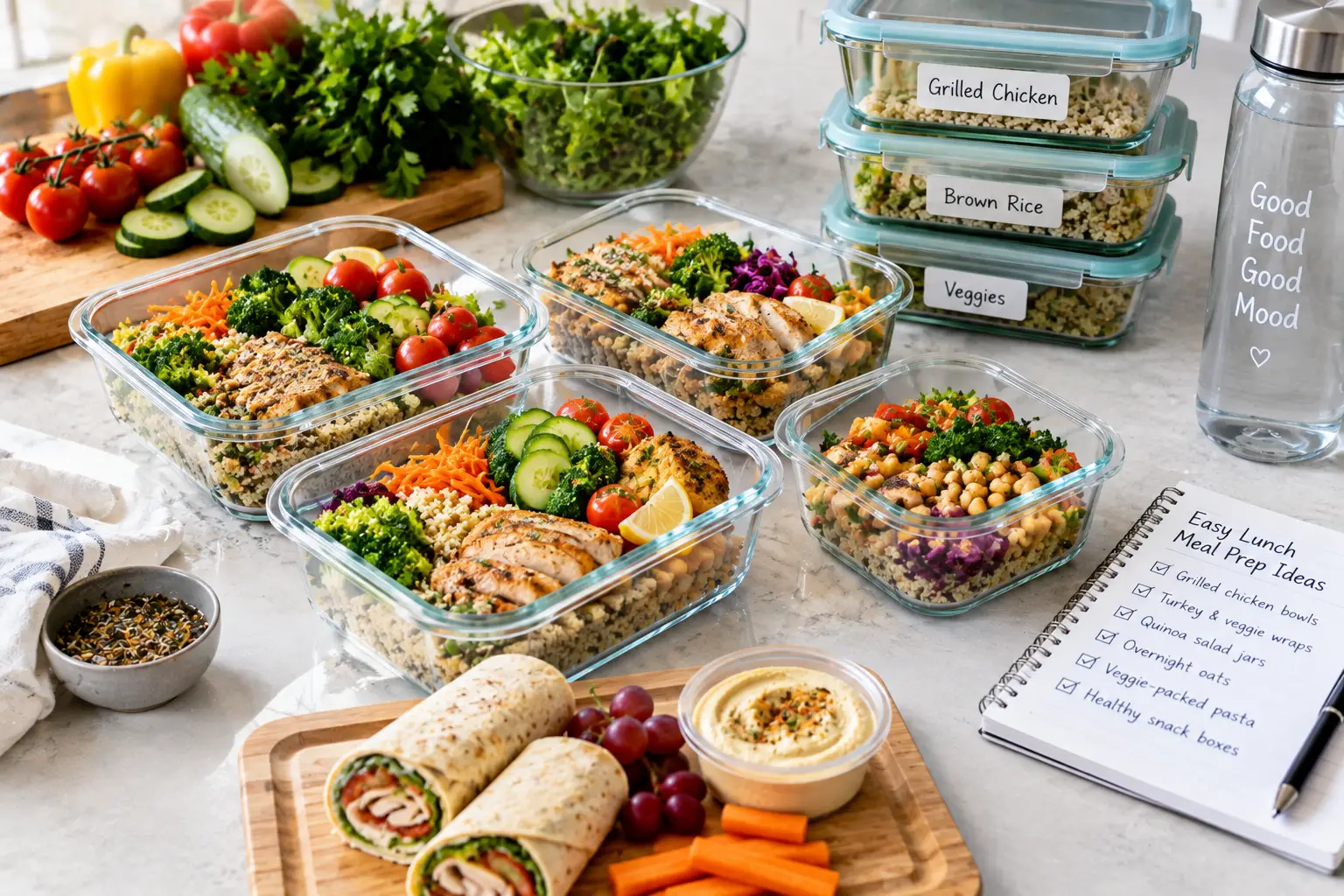
It’s 12:15 on a Wednesday. You’re hungry, slightly cranky, and staring down a $15 sad desk salad — again. Sound familiar? The fix isn’t more willpower. It’s a better system, and that’s exactly what easy meal prep ideas for lunch deliver: ninety focused minutes on Sunday that quietly take care of you from Monday through Thursday.
What is meal prep for lunch? Lunch meal prep is the practice of cooking, portioning, and storing several midday meals in advance — usually in one batch session — so each workday lunch is grab-and-go. Done right, it saves money, cuts decision fatigue, and makes balanced eating the path of least resistance.
The concept isn’t new. Meal preparation has roots in everything from military rations to the bento traditions of Japan, but it exploded in the US when fitness culture and rising takeout prices collided. In 2026, the appeal is simpler: grocery prices remain high, hybrid work schedules are unpredictable, and nobody wants to think about lunch at 11:58 a.m.
Here’s the catch most guides skip: the recipe is only half the equation. A brilliant grain bowl turns into a soggy disappointment if it lives in a container that leaks, stains, or can’t survive the office microwave. That’s why this guide pairs genuinely easy lunch meal prep ideas with an honest, research-based breakdown of seven real tools available on Amazon — from budget plastic sets to a pressure cooker that turns dried beans into a week of lunches.
You’ll get recipe frameworks, a step-by-step Sunday blueprint, food-safety rules straight from federal guidance, buyer profiles, and fixes for the most common meal prep problems. No fluff, no fake “I tried this for 30 days” stories — just analysis you can actually use.
Quick Comparison: The 7 Best Tools for Lunch Meal Prep
| Product | Type | Material | Best For | Price Range |
|---|---|---|---|---|
| Prep Naturals Glass Meal Prep Containers (3-Compartment) | Divided glass containers | Borosilicate glass + snap-lock lid | Reheating at work, oven-to-table meals | ~$30–$45 (5-pack) |
| Rubbermaid Brilliance 2-Compartment Meal Prep Containers | Divided plastic containers | BPA-free Tritan + latching lid | Leakproof commuting | ~$20–$30 (5-pack) |
| Bentgo Prep 3-Compartment (20-Piece) | Budget bulk set | BPA- & PFAS-free polypropylene | Beginners and families | ~$15–$25 |
| Pyrex Simply Store 18-Piece Glass Set | Mixed-size glass storage | Tempered glass + plastic lids | Prepping components separately | ~$30–$50 |
| Ball Wide Mouth Mason Jars (32 oz) | Glass jars | Glass + two-piece metal lid | Mason jar salads, overnight oats | ~$20–$40 (multipack) |
| Thermos Stainless King 16 oz Food Jar | Insulated food jar | 18/8 stainless steel | Hot lunches with no microwave | ~$20–$35 |
| Instant Pot Duo 7-in-1 (6-Quart) | Multi-cooker | Stainless steel inner pot | Batch-cooking grains, beans, proteins | ~$80–$110 |
Reading the table as a whole, the pattern is clear: there’s no single “best” tool — there’s a best combination. Most people get the biggest payoff by pairing one container system (glass if you reheat at work, Tritan if you commute on foot or by bike) with one batch-cooking helper. If you’re starting from zero on a tight budget, the Bentgo Prep set plus a sheet pan you already own covers 80% of what you need.
💬 One click helps other shoppers make an informed choice too! 😊
Top 7 Lunch Meal Prep Tools: Expert Analysis
1. Prep Naturals Glass Meal Prep Containers — best for reheating at the office
The Prep Naturals divided glass set is the “do-everything” container: it goes from freezer to oven to desk without a transfer dish.
The base is borosilicate glass, the same family of glass used in lab equipment, which matters because borosilicate handles sudden temperature swings far better than ordinary soda-lime glass. In practice, that means you can pull a frozen enchilada portion and slide the base (lid off) into a preheated oven — the brand lists heat tolerance well beyond normal oven temperatures. The three compartments keep sauce away from rice, which is the number-one reason prepped lunches go mushy by Thursday.
Based on comparing specs across the category, this is the pick for anyone who reheats in an office microwave and cares about taste and stains. Glass doesn’t absorb curry or tomato color, and it doesn’t hold on to last week’s garlic. The trade-off is weight: five filled glass containers in a tote are noticeably heavy.
Customer reviews consistently praise the sturdy glass and the fact that compartments don’t bleed into each other; a recurring complaint is that the plastic lids wear faster than the glass and eventually need replacing.
Pros:
- ✅ Borosilicate glass resists thermal shock well
- ✅ Oven-safe base doubles as a baking dish
- ✅ Won’t stain or hold odors from sauces
Cons:
- ❌ Heavy to carry when packing several days
- ❌ Lids are the weak link over time
Value verdict: Usually around $30–$45 for a 5-pack (check the current price) — strong long-term value because the glass can outlast several sets of plastic.
2. Rubbermaid Brilliance 2-Compartment Meal Prep Containers — the leakproof commuter’s pick
The Rubbermaid Brilliance line built its reputation on one promise: what goes in stays in, even sideways in a backpack.
The containers are crystal-clear Tritan, a BPA-free copolyester that resists staining far better than standard polypropylene. The lid uses a silicone gasket and four latches, which is what makes it genuinely leakproof for dressings and saucy stir-fries. The 2.85-cup size with two compartments fits a protein-and-grain main plus a side of roasted veg — a realistic adult lunch portion.
If you walk, bike, or take transit to work, this is the container to trust. Glass is safer for reheating, but Rubbermaid Brilliance is lighter and survives drops. One honest caveat: Tritan isn’t for the oven, and it’s smart to vent or remove the lid when microwaving.
It’s one of the most-reviewed meal prep containers on Amazon, and the dominant theme in reviews is reliable leak resistance; the most common criticism is that latches can crack after heavy, long-term use.
Pros:
- ✅ Truly leakproof seal for sauces and dressings
- ✅ Lightweight and drop-resistant for commuting
- ✅ Stays clear and stain-resistant over months
Cons:
- ❌ Not oven-safe, unlike glass bases
- ❌ Latches may crack after years of use
Value verdict: Typically in the $20–$30 range for a 5-pack — excellent value for anyone whose lunch rides in a bag.
3. Bentgo Prep 3-Compartment 20-Piece Set — the smartest budget starter kit
The Bentgo Prep set gives you ten containers and ten lids for roughly the price of two takeout lunches.
These are lightweight polypropylene trays marketed as BPA- and PFAS-free, plus microwave-, freezer-, and dishwasher-safe. Ten matching containers matter more than you’d think: having a full week of uniform boxes means everything stacks neatly in the fridge, and you’re never stuck hunting for a lid that fits. The three-compartment layout pushes you toward balance — protein, starch, vegetable — without counting a single macro.
Here’s what to weigh: these are designed for solid foods. They’re perfect for grain bowls, chicken and veggies, or snack-box lunches, but they aren’t the container for soup. For beginners who aren’t sure meal prep will stick, the low entry cost removes the risk.
Reviews commonly highlight the value, nesting design, and portion-control layout; a frequent note is that the lids snap on rather than lock, so watery foods can seep out if the container tips.
Pros:
- ✅ Ten containers at a low entry price
- ✅ Three compartments encourage balanced plates
- ✅ Stackable, light, and dishwasher-safe
Cons:
- ❌ Not leakproof for soups or saucy dishes
- ❌ Thinner plastic may warp under high heat
Value verdict: Usually around $15–$25 — the best cost-per-container on this list for first-time preppers.
4. Pyrex Simply Store 18-Piece Glass Food Storage Set — best for “component” prepping
The Pyrex Simply Store set is built for a different meal prep style: cooking ingredients separately and mixing them into new lunches all week.
You get nine nesting glass containers in round and rectangular sizes, with matching plastic lids. That variety is the point. Store a batch of quinoa in the large dish, shredded chicken in a medium, pickled onions in a small one — then assemble a burrito bowl Monday, a salad Tuesday, and a wrap Wednesday. The glass is oven-, microwave-, and freezer-safe (the lids are not oven-safe).
One technical note worth knowing: Pyrex consumer glassware sold in the US is tempered soda-lime glass, not borosilicate. It’s tough against bumps, but the brand’s own care guidance warns against sudden temperature changes — so don’t move a dish straight from freezer to hot oven. If that’s your habit, the Prep Naturals set is the better fit.
Aggregated reviews praise the classic Pyrex durability and versatile sizes; the main complaints center on the lids, which some buyers say crack or loosen over time.
Pros:
- ✅ Mixed sizes suit component-style prep
- ✅ Trusted brand with decades of track record
- ✅ Glass nests compactly in cabinets
Cons:
- ❌ Lids are not fully leakproof for travel
- ❌ Tempered glass needs gentler temperature changes
Value verdict: Generally $30–$50 — very good value as the “home base” of a kitchen system, less ideal as a commuter container.
5. Ball Wide Mouth Mason Jars (32 oz) — the secret to crisp salads by Thursday
Ball Wide Mouth Mason Jars solve the oldest meal prep problem in the book: wilted, soggy salad.
The quart-size wide-mouth jar is tall and narrow, which is exactly why “mason jar salads” work. Dressing goes on the bottom, hearty ingredients (chickpeas, cucumbers, carrots) build a barrier, and delicate greens ride on top, never touching the liquid until you shake it out. The wide mouth makes filling and eating easy, and the glass won’t absorb vinaigrette odors.
These are also the best value tool for overnight oats, chia pudding, and soups you plan to freeze — just leave about an inch of headspace, since liquids expand when frozen. Remember that the metal lids aren’t microwave-safe; transfer contents to a bowl or swap in a plastic storage cap.
Reviews consistently note the jars’ durability and versatility well beyond canning; occasional complaints involve chipped rims or breakage in shipping.
Pros:
- ✅ Layering keeps salad greens crisp for days
- ✅ Extremely versatile beyond lunch salads
- ✅ Inexpensive per jar in multipacks
Cons:
- ❌ Metal lids can’t go in the microwave
- ❌ Glass is heavy and can break if dropped
Value verdict: Usually $20–$40 for a multipack — arguably the highest-return purchase for salad lovers.
6. Thermos Stainless King 16 oz Food Jar — hot lunch, zero microwave line
The Thermos Stainless King answers a very real workplace pain: twelve coworkers, one microwave.
Thermos rates this 16 oz jar to keep food hot for up to 9 hours and cold for up to 14 hours, using double-wall vacuum insulation in 18/8 stainless steel. Practically, that means chili packed at 7 a.m. is still pleasantly hot at lunch. The wide mouth makes it easy to fill and clean, and the folding stainless spoon stores inside the lid — one less thing to forget.
This is ideal for field workers, teachers, nurses, drivers, and students — anyone without reliable access to a microwave. A widely shared tip in reviews: “prime” the jar with boiling water for about 10 minutes, dump it out, then add piping-hot food. It makes a real difference.
Customer feedback overwhelmingly praises heat retention and leak resistance; some reviewers find 16 oz a bit small for a big appetite and step up to the 24 oz version.
Pros:
- ✅ Up to 9 hours hot per brand rating
- ✅ Leak-resistant and rugged stainless build
- ✅ Folding spoon stores inside the lid
Cons:
- ❌ 16 oz may be small for large eaters
- ❌ Food must start very hot to stay hot
Value verdict: Generally $20–$35 — fair price for a tool that can last many years of daily use.
7. Instant Pot Duo 7-in-1 (6-Quart) — the batch-cooking engine
The Instant Pot Duo isn’t a container — it’s the machine that fills all the others, fast.
It combines seven functions: pressure cooker, slow cooker, rice cooker, steamer, sauté pan, yogurt maker, and warmer. For lunch prep, pressure cooking is the headline. Dried beans that normally need overnight soaking and hours of simmering finish in under an hour, brown rice cooks hands-off, and tough, cheap cuts like chicken thighs or pork shoulder turn tender enough to shred. The 6-quart size yields roughly a week of lunches for one or two people.
Based on comparing specs and use cases, this is the upgrade that makes meal prep sustainable. It runs unattended while you chop vegetables or roast a sheet pan, essentially giving you a second cook. The stainless steel inner pot is dishwasher-safe, and the built-in safety mechanisms make it far less intimidating than a stovetop pressure cooker.
Reviews consistently credit it with saving real time on grains, beans, and stews; common complaints include the learning curve and the sealing ring absorbing odors.
Pros:
- ✅ Cooks beans, grains, and proteins hands-off
- ✅ Seven functions replace several appliances
- ✅ Dishwasher-safe stainless inner pot
Cons:
- ❌ Pressure-up time adds to stated cook times
- ❌ Silicone ring holds smells; buy a spare
Value verdict: Typically $80–$110 — the priciest item here, but it pays back quickly if it replaces even a few takeout lunches a month.
🍱 Build Your Perfect Lunch Prep Kit Today!
🔍 Take your lunch routine to the next level with this carefully curated lineup. Click a highlighted item to check current pricing and availability. These picks will help you eat better, save money, and finally enjoy a lunch break the whole team will envy!
12 Easy Meal Prep Ideas for Lunch (That Actually Taste Good on Day 4)
The best lunch meal prep ideas share three traits: they reheat well (or taste great cold), they hold texture for 3–4 days, and they use overlapping ingredients so one grocery run feeds the whole week. Here are twelve proven frameworks, grouped by style.
Grain Bowls (Best in Divided Containers)
- Chicken burrito bowl: cumin-spiced chicken, cilantro-lime rice, black beans, corn, and salsa packed separately. Add avocado the morning of.
- Teriyaki salmon bowl: sheet-pan salmon, brown rice, roasted broccoli, and edamame. Salmon is best eaten by day 3.
- Mediterranean quinoa bowl: quinoa, chickpeas, cucumber, tomatoes, olives, feta, and lemon-oregano dressing. Excellent cold.
- Korean-style beef bowl: ground beef with garlic, ginger, and soy, over rice with quick-pickled cucumbers and shredded carrots.
Jar and Cold Lunches (Best in Mason Jars)
- Cobb mason jar salad: dressing, tomatoes, hard-boiled egg, turkey or chicken, bacon, then romaine on top.
- Peanut noodle jar: peanut sauce on the bottom, then shredded cabbage, carrots, edamame, and cooked soba noodles.
- Greek yogurt “adult lunchable”: turkey roll-ups, cheese cubes, whole-grain crackers, grapes, and hummus.
Hot Lunches (Best in a Food Jar or Glass)
- Turkey and white bean chili: freezes beautifully; cook a double batch and freeze half.
- Instant Pot chicken tortilla soup: ready in about 35 minutes total, and the flavors deepen by day two.
- Coconut chickpea curry: pantry-friendly, vegetarian, and arguably better on day three.
Freezer-Friendly Grab-and-Go
- Breakfast-for-lunch burritos: eggs, potatoes, beans, and cheese, wrapped in foil and frozen individually.
- Baked pasta portions: turkey sausage and spinach baked ziti, cut into squares and frozen in glass.
A useful rule from the USDA’s MyPlate guidelines: aim for roughly half your container as vegetables and fruit, a quarter protein, and a quarter grains. Divided containers make that ratio almost automatic.
How to Meal Prep Lunches: A 90-Minute Sunday Blueprint
This is the transformation part — the workflow Amazon listings never tell you. Follow it once and it becomes muscle memory.
Before You Start (5 minutes)
Pick two proteins, two grains or starches, and three vegetables. That’s it. Mixing and matching those seven components produces at least four different-feeling lunches without cooking four recipes.
The Timeline
- 0:00 — Start the longest-cooking item. Load the Instant Pot Duo with rice, quinoa, or dried beans. It works while you do everything else.
- 0:05 — Preheat the oven to 425°F. Toss chopped broccoli, sweet potatoes, and peppers with oil and salt on two sheet pans.
- 0:15 — Season proteins. Chicken thighs on a third pan, or ground turkey in a skillet.
- 0:20–0:50 — Everything roasts. Use this window to wash greens, make one dressing, and hard-boil eggs.
- 0:50 — Cool before you pack. Spread food on pans or shallow dishes for 15–20 minutes. Packing steaming food traps condensation, the root of soggy rice.
- 1:10 — Assemble. Fill divided containers for Monday–Wednesday; keep Thursday’s components separate.
- 1:25 — Label and refrigerate. Masking tape and a marker: the dish and the date.
Your First-30-Days Mistakes to Avoid
- Prepping five days at once before you know which recipes you’ll actually enjoy. Start with three.
- Cooking everything with the same seasoning. Split proteins and season half differently.
- Skipping a “reset” day. Thursday is a great day for leftovers or a planned lunch out.
Real-World Scenarios: Matching Lunch Prep to Your Life
Easy meal prep ideas for lunch only work if they fit your actual week. Here are three common profiles and how to match tools and recipes to each.
Profile 1: The Budget-Conscious Grad Student
Budget: Under $50 for gear. Context: Campus microwave available, eats lunch 5 days a week, cooks in a small shared kitchen.
Start with the Bentgo Prep set and a few Ball Wide Mouth Mason Jars. Lean on cheap, high-volume staples: rice, dried lentils, eggs, frozen vegetables, and chicken thighs. Mason jar lentil salads and chicken-and-rice bowls cost a fraction of campus dining. Because the Bentgo Prep lids aren’t leakproof, keep sauces in the jars and solids in the trays.
Profile 2: The Hybrid Office Worker Who Commutes by Train
Budget: $60–$100. Context: In-office three days a week, crowded office microwave, carries lunch in a backpack.
The Rubbermaid Brilliance containers handle the backpack ride without leaking, and a Thermos Stainless King sidesteps the microwave queue on chili or curry days. Prep only for office days — home days can use leftover components from the fridge.
Profile 3: The Family of Four Packing Multiple Lunches
Budget: $150+. Context: Two adults, two school-age kids, packing 15–20 lunches a week.
The Instant Pot Duo becomes the hero, cooking a week of grains and shredded protein in one go. Pair the Pyrex Simply Store set for bulk components with the Prep Naturals glass containers for adult lunches. Kids get thermos lunches of pasta or soup, which avoids the “cold sandwich again?” complaint.
Common Lunch Meal Prep Problems (and How to Fix Them)
Even well-planned prep hits snags. Here are the five most common problems and precise fixes.
Problem 1: Soggy rice and limp vegetables. Condensation is the culprit. Cool food completely before sealing, and use divided containers like the Prep Naturals set so sauce doesn’t soak into grains. Slightly undercook vegetables — they’ll soften further when reheated.
Problem 2: Lunch fatigue by Wednesday. Eating the same bowl four times in a row is the number-one reason people quit. Use the component method: same chicken, three different sauces (salsa verde, peanut, tzatziki). Ten minutes of sauce-making buys three distinct lunches.
Problem 3: Leaks in your bag. If dressing ends up on your laptop, switch to a gasket-sealed container such as Rubbermaid Brilliance, or move liquids into a small jar. Snap-on lids, like those on the Bentgo Prep set, are meant for solid foods.
Problem 4: Uneven microwave reheating. Cold centers, scorching edges. Spread food into an even layer, add a teaspoon of water over rice, vent the lid, and stir halfway through. Glass heats more evenly and doesn’t warp.
Problem 5: Food going bad before Friday. That’s not bad luck — it’s the safe-storage window closing. Cooked food is only good for 3–4 days in the fridge, so freeze Thursday and Friday portions on Sunday and move them to the fridge the night before.
How to Choose Meal Prep Containers for Lunch
The right container decides whether your system lasts a month or a year. Here are seven criteria, in order of importance.
- Reheating method. If you microwave at work, prioritize glass (Prep Naturals, Pyrex Simply Store). If there’s no microwave, an insulated jar like the Thermos Stainless King is non-negotiable.
- Commute type. Backpacks and bike bags demand gasketed, latching lids. Car commuters can use lighter seals.
- Compartments. Divided containers keep wet and dry foods apart and make portioning effortless. Single-compartment works better for soups and casseroles.
- Size. Roughly 28–36 oz covers a full adult lunch; under 20 oz is snack or side territory.
- Material safety. Look for BPA-free plastics and, increasingly, PFAS-free claims. Glass and stainless steel sidestep the plastics question entirely.
- Freezer-to-heat tolerance. Borosilicate glass handles abrupt temperature swings best; tempered glass needs a gentler transition.
- Quantity. Buy at least one more container than lunches you plan to prep. Having spares is what keeps the habit going when the dishwasher falls behind.
Glass vs. Plastic Meal Prep Containers: Which Is Better?
This is the most debated question in lunch meal prep, and the honest answer is “both, for different jobs.”
| Factor | Glass (Prep Naturals, Pyrex Simply Store) | Plastic (Rubbermaid Brilliance, Bentgo Prep) |
|---|---|---|
| Weight | Heavy | Light |
| Stain/odor resistance | Excellent | Good (Tritan) to fair (polypropylene) |
| Oven-safe | Yes (bases only) | No |
| Drop-resistance | Low | High |
| Lifespan | Many years (lids wear first) | 1–3+ years depending on use |
| Best for | Office reheating, freezer-to-oven | Commuting, kids, bulk prep |
The table shows glass winning on longevity and heat performance, while plastic wins on portability and cost. That’s why the most practical system is hybrid: glass for meals that stay home or ride in a car, and Tritan for anything that travels in a bag. If you only buy one, choose based on your reheating situation — not on price alone.
Beyond the table, think about the microwave itself. Glass doesn’t warp or soften, and many people prefer not to heat food in plastic at all. If you do use plastic, follow the manufacturer’s microwave guidance and vent or remove the lid. Polypropylene sets like Bentgo Prep are labeled microwave-safe, but thin plastic still deforms if you overheat oily foods for long stretches.
Food Safety, Storage Rules, and Standards for Lunch Meal Prep
Meal prep is only “easy” if nobody gets sick. Federal guidance is refreshingly clear here.
The Core Rules
According to the USDA Food Safety and Inspection Service’s guide to leftovers and food safety, cooked leftovers should be refrigerated promptly and eaten within 3–4 days, or frozen. Frozen portions keep best quality for about 3–4 months. The agency also recommends reheating leftovers to an internal temperature of 165°F.
Practical Translation for Lunch Prep
- Prep Sunday, eat through Wednesday. Freeze Thursday and Friday portions right away.
- Keep your fridge at 40°F or below and your freezer at 0°F. An inexpensive appliance thermometer is worth having, since built-in dials can be inaccurate.
- Cool fast in shallow containers. Big pots of chili cool too slowly in the center. Divide into portions before refrigerating.
- Use an ice pack if your lunch sits unrefrigerated for more than two hours.
- Seafood and cut fruit go first. Eat fish-based lunches early in the week.
For specific foods, the federal cold food storage chart at FoodSafety.gov lists refrigerator and freezer times for everything from deli meat to egg salad.
Equipment Standards Worth Checking
For electric cookers like the Instant Pot Duo, look for a recognized safety certification mark (such as UL or ETL) on the listing or the appliance itself. For plastic containers, “BPA-free” is now standard; “PFAS-free” claims, like those on Bentgo Prep, are a newer differentiator for buyers concerned about “forever chemicals.”
Healthy Meal Prep Lunches for Weight Loss and Fitness Goals
Healthy meal prep lunches don’t require bland chicken and broccoli. They require structure, and that’s where divided containers shine.
For Weight Management
The goal is volume and satiety without excess calories. Fill the largest compartment with non-starchy vegetables, add a palm-sized protein portion, and keep grains to a cupped-hand serving. Fiber-rich additions like beans and lentils keep you full through the afternoon slump. Three-compartment containers like the Bentgo Prep and Prep Naturals sets turn portion control into a visual habit rather than a math problem.
For Muscle Gain and Active Lifestyles
Increase protein and starchy carbs. Chicken thighs, lean ground beef, salmon, tofu, and Greek yogurt are reliable; rice, potatoes, and whole-wheat pasta reheat well. The Instant Pot Duo makes cooking large quantities of protein manageable, and 30+ oz containers fit bigger portions.
For Plant-Based Eaters
Lentil curries, chickpea salads, tofu stir-fries, and black bean bowls are among the most fridge-stable lunches there are — many taste better on day three. Pressure-cooked dried beans are also dramatically cheaper than canned over time.
A note of caution: if you’re managing a medical condition, diabetes, or specific calorie targets, a registered dietitian can tailor portions to you. These frameworks are general starting points, not prescriptions.
Long-Term Cost: Is Lunch Meal Prep Really Cheaper?
Short answer: yes, usually by a wide margin. But the real savings depend on what you’re replacing.
| Lunch Option | Typical Cost Per Lunch (estimate) | Time Per Lunch | Best For |
|---|---|---|---|
| Takeout or delivery | ~$12–$20+ | 15–40 min | Occasional treat |
| Cafeteria or grab-and-go | ~$9–$14 | 10–20 min | Busy days with no prep |
| Store-bought frozen meal | ~$4–$7 | 5 min | Backup option |
| Home meal prep | ~$3–$6 | ~20 min (spread over Sunday) | Daily lunches |
These are broad estimates that vary by city and ingredients, but the gap is consistent: home-prepped lunches typically cost a fraction of takeout. Even if you spend around $100 on an Instant Pot Duo and $30 on Rubbermaid Brilliance containers, swapping a few takeout lunches per week for home prep can recover that investment within weeks.
Hidden Costs to Factor In
- Container replacement: budget plastic lids may need replacing every year or two; glass bases last much longer.
- Food waste: over-prepping leads to tossed food. Start with three days.
- Energy: batch cooking is efficient — one oven session for four days beats four separate cooking sessions.
The total-cost-of-ownership winner is a mid-range system: glass or Tritan containers that last years, plus one efficient cooking appliance.
Common Mistakes to Avoid When Starting Lunch Meal Prep
Most people who quit meal prep do so in the first three weeks — and almost always for one of these reasons.
Buying 50 cheap containers on day one. Bulk plastic bundles look like a bargain, but thin lids crack and warp quickly. A smaller set of quality containers beats a cabinet avalanche of mismatched lids.
Choosing recipes that don’t hold up. Fried foods, crispy tacos, and dressed leafy salads collapse in the fridge. Stick to braises, roasted vegetables, grain bowls, and jarred salads.
Ignoring your reheating reality. If your office has one microwave and 40 people, a thermos lunch or a great cold lunch is the smarter plan.
Overcomplicating the menu. Four different recipes means four sets of dishes. Two proteins and a few sauces deliver variety with half the work.
Forgetting texture boosters. Pack a small container of crunchy toppings — toasted nuts, seeds, tortilla strips — and add them right before eating. It instantly makes a day-four lunch feel freshly made.
Skipping labels. “Is this Monday’s or last Thursday’s?” is not a game worth playing with chicken. Date everything.
FAQ: Easy Meal Prep Ideas for Lunch
❓ What are the cheapest easy meal prep ideas for lunch?
❓ What lunches can I meal prep for 5 days?
❓ Which meal prep containers are best for work lunches?
❓ What lunch meal prep ideas don't need to be reheated?
❓ Is it worth buying an Instant Pot for lunch meal prep?
Conclusion: Your Easiest Lunch Week Starts This Sunday
Easy meal prep ideas for lunch aren’t about perfection — they’re about removing the daily lunch decision so good eating happens on autopilot. Start small: pick two proteins, two grains, and three vegetables, and prep three lunches this weekend. Cool everything before packing, label every container, and freeze anything you won’t eat within four days.
When it comes to gear, match the tool to your life rather than chasing the biggest bundle. The Prep Naturals glass containers are the top pick for office microwavers, Rubbermaid Brilliance is the commuter’s leakproof workhorse, and Bentgo Prep is the low-risk starter kit. Salad lovers should grab Ball Wide Mouth Mason Jars, microwave-free workers need the Thermos Stainless King, families get the most from the mixed-size Pyrex Simply Store set, and anyone serious about batch cooking will feel the difference with the Instant Pot Duo.
Within a month, you’ll notice the benefits: more money left at the end of the month, fewer 2 p.m. energy crashes, and lunch breaks that feel like an actual break. That’s a pretty good return on ninety minutes a week.
🚀 Ready to Make Lunch the Easiest Part of Your Day?
🛒 Pick the container system that fits your routine, click a highlighted product to check current pricing and availability, and start your first prep session this weekend. Future-you — the one enjoying a hot, homemade lunch on Wednesday — will thank you!
Recommended for You
- Meal Prep Fridge Guide 2026: 7 Best Picks That Actually Fit
- How Long Does Meal Prep Last in Fridge? 7 Proven Tools (2026)
- How Long Do Meal Prep Meals Last? 7 Proven Picks & Rules (2026)
Disclaimer: This post contains affiliate links. As an Amazon Associate, I earn from qualifying purchases made through these links, at no additional cost to you.
✨ Found this article helpful? Share it with someone who needs it! 💬🤗