
In This Article
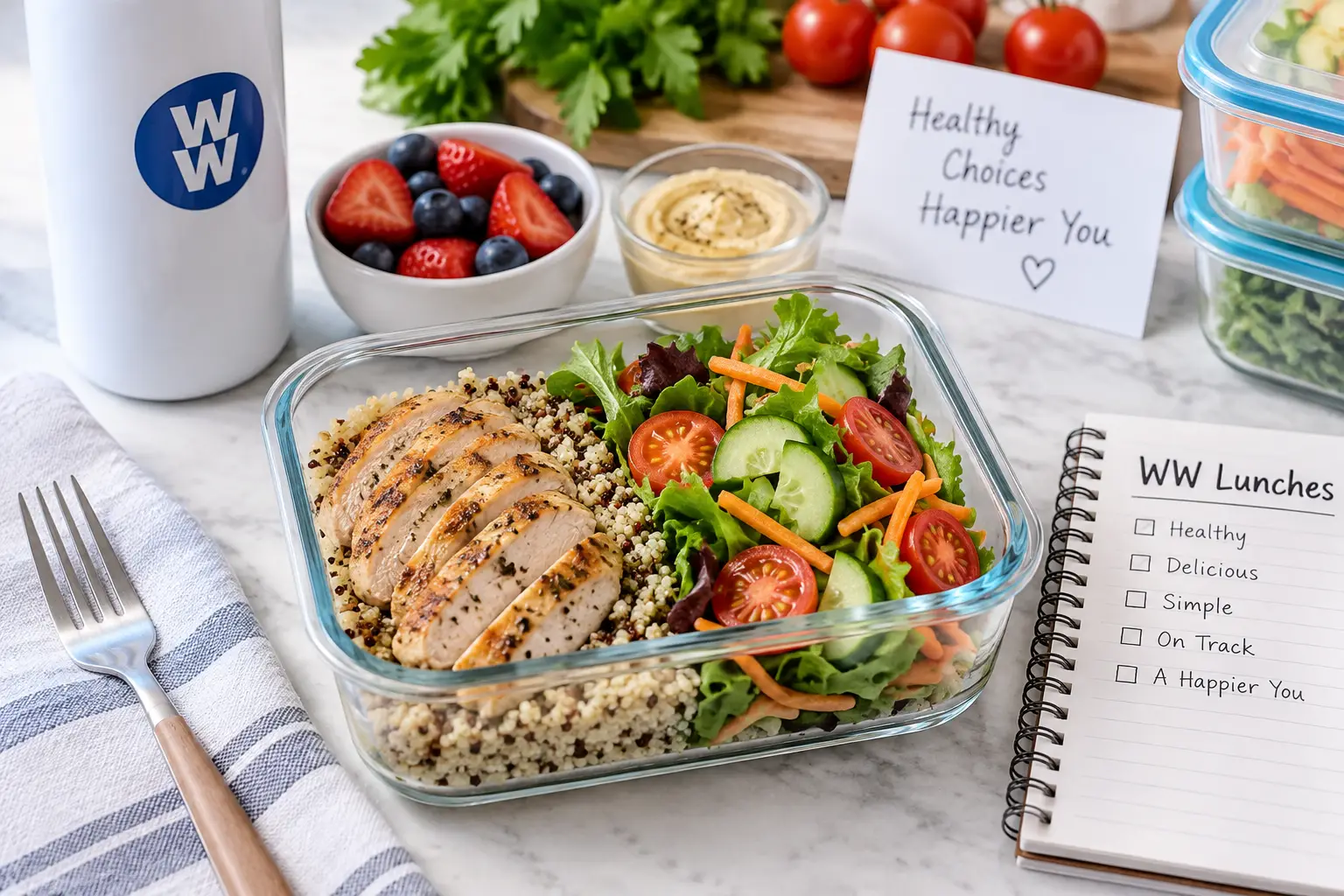
Weight Watchers, now officially branded WW, works on a points system, so ww lunches are really a daily balancing act: enough food to get you through a 2 p.m. slump, without blowing your whole Budget before dinner. ww lunches are simply midday meals planned and portioned around the WW SmartPoints or PersonalPoints system, typically built around lean protein, non-starchy vegetables, and a controlled serving of grains or healthy fats. That sounds simple in theory. In practice, most of the frustration people report isn’t about finding recipes — it’s about gear. Eyeballing a “cup” of pasta, guessing whether your leftover chili will still be warm by noon, or watching a snack bar melt into a shapeless blob in your bag by 11 a.m. are the small annoyances that quietly wreck an otherwise solid week of tracking.
That’s the gap this guide fills. Rather than another recipe roundup, we did the legwork on the actual tools — containers, scales, plates, and a couple of genuinely WW-friendly snack products — that make packing consistent, low-stress ww lunches realistic on a Tuesday morning when you’re already running late. Every recommendation below is a real product currently sold in the US, evaluated against its own spec sheet and aggregated customer reviews, not marketing copy.
We’ll start with a quick side-by-side of our top picks, then break down all seven products in depth, walk through a 15-minute prep routine, match gear to a few common lifestyles, and answer the questions people search most often about building better ww lunches. Whether you’re two weeks into the program or two years in and just tired of soggy sandwiches, there’s something here worth adding to your cart — or at least worth bookmarking for payday.
Quick Comparison: Top WW Lunches Picks at a Glance
Before diving into the full reviews, here’s how the seven products stack up on the fundamentals that matter most for ww lunches: portion accuracy, temperature control, and day-to-day convenience.
| Product | Best For | Price Range | Rating |
|---|---|---|---|
| Etekcity Digital Food Kitchen Scale | Precise point tracking | Under $15 | 4.6★ |
| Bentgo Prep 2-Compartment Containers | Weekly batch meal prep | $20–$28 | 4.5★ |
| PackIt Freezable Lunch Bag | No-fuss cold storage | $24–$30 | 4.6★ |
| Thermos Stainless King Food Jar | Hot soups and stews | $28–$35 | 4.6★ |
| Precise Portions Travel Plate Set | On-the-go portion control | $25–$35 | 4.4★ |
Looking at the table, a clear pattern emerges: the cheapest item here, the Etekcity Digital Food Kitchen Scale, isn’t a corner-cutting choice — it’s arguably the single highest-leverage purchase on this list, since accurate weighing affects how correctly you’re logging every other lunch. The Thermos Stainless King Food Jar and PackIt Freezable Lunch Bag solve opposite problems (hot food versus cold food) and are worth owning together rather than choosing between. If you only buy one item this month, pair a portioning tool (scale or plate) with a temperature-control tool (jar or bag); that combination does more for consistent ww lunches than any single “best” product ever could.
💬 One click helps other shoppers make an informed choice too! 😊
Top 7 WW Lunches Essentials: Expert Picks and Analysis
We evaluated dozens of products against three criteria: does it genuinely simplify point tracking or portioning, is it backed by real, verifiable customer feedback, and does it hold up under daily use. These seven made the cut, ranging from a $10 kitchen tool to a premium insulated jar.
1. Etekcity Digital Food Kitchen Scale — most accurate way to weigh points
Before any container or bag matters, you need to know what “one serving” actually weighs, and that’s exactly what this scale solves. It uses four load-cell sensors to measure in 1-gram increments up to 11 pounds, switching instantly between grams, ounces, and milliliters. In practice, that precision matters more than it sounds: a WW SmartPoints value for something like rice or pasta can shift noticeably between a “close enough” scoop and an actual measured 1/2 cup, and over a week that difference adds up to a meaningfully different points total. The tare function is the real workhorse feature here — it zeroes out the weight of your container so you’re weighing food, not food plus Tupperware. Based on comparing this to pricier smart scales, what most buyers overlook is that you don’t need Bluetooth syncing to track WW lunches accurately; you need a reliable number, and this delivers one for a fraction of the cost. With more than 130,000 cumulative reviews across retailers, sentiment is overwhelmingly positive, though a recurring theme in customer feedback is that the tare and unit buttons sit close together, which can be mildly annoying if you’re weighing multiple ingredients in a row.
Pros:
- ✅ Four precision sensors weigh in 1-gram increments
- ✅ Tare function subtracts container weight instantly
- ✅ Compact enough to store in a drawer daily
Cons:
- ❌ Button placement makes rapid taring a bit fiddly
- ❌ No memory feature to recall previous weigh-ins
This scale typically runs under $15, and at that price it’s genuinely difficult to argue with the value — accurate points logging starts here, and everything else on this list works better because of it.
2. WW Chocolate Caramel Mini Bar (12-Count) — zero-guesswork WW-branded snack
If you want a snack where the points math is already done for you, this is about as direct as it gets: it’s an official WW Reimagined product, meaning the SmartPoints value is printed right on the box. Each mini bar layers real dark chocolate over a soft caramel center and delivers 3 grams of fiber, which helps it feel more substantial than its small size suggests. What’s worth noting here, based on the brand’s own formulation, is that it’s kosher and free of artificial flavors, colors, or preservatives — details that matter if you’re trying to keep your WW lunches closer to whole-food territory even for the “treat” portion of the meal. Reviews are mixed but instructive: aggregated customer feedback skews positive on the chocolate layer specifically, while a recurring complaint centers on the caramel texture reading as artificial to some palates. That’s a useful data point rather than a dealbreaker — if you’re sensitive to sugar-substitute mouthfeel, sample one bar before committing to a full box for your weekly lunch rotation.
Pros:
- ✅ Points value pre-calculated and printed on the box
- ✅ Kosher, egg-free, with no artificial preservatives
- ✅ Individually wrapped for easy grab-and-go portioning
Cons:
- ❌ Some reviewers describe the caramel as artificial-tasting
- ❌ Small serving size may not satisfy bigger appetites
Expect to pay somewhere in the $8 to $12 range for a box of twelve, making the per-bar cost genuinely reasonable for a shelf-stable, pre-portioned option.
3. Bentgo Prep 2-Compartment Meal Prep Containers (20-Piece) — best for weekly batch prep
For anyone who preps ww lunches once on Sunday and coasts through the week, this is the container set to build around. The 20-piece set includes ten two-compartment trays with matching lids, each holding roughly 3 to 4 cups total with embossed measurement lines molded directly into the plastic — a small design touch that turns “about a cup” into an actual visual reference every time you fill it. The trays are freezer, microwave, and top-rack dishwasher safe, and Bentgo has reportedly held the top spot among Amazon’s meal-prep container category, according to the brand’s own sales data. What that popularity signals in practice is a design that’s been refined against real user feedback: stackable lids that don’t warp in the freezer, and a shape that fits neatly into most insulated bags. The two-compartment layout is deliberately simple — protein plus one side — which works well for straightforward WW lunches like grilled chicken and roasted vegetables, though it does mean three-part meals (protein, grain, vegetable) need a slightly larger container elsewhere in your rotation.
Pros:
- ✅ Embossed measurement lines simplify portion control
- ✅ Microwave, freezer, and dishwasher safe
- ✅ PFAS- and BPA-free stackable construction
Cons:
- ❌ Two compartments limit variety compared to three-section trays
- ❌ Tomato-based sauces can stain the plastic over repeated use
Pricing generally falls between $20 and $28 for the full 20-piece set, which works out to roughly $1 to $1.50 per container — solid value for something you’ll use most weekdays.
4. PackIt Freezable Lunch Bag — no-ice-pack cold lunch solution
This bag solves a specific annoyance: forgetting the ice pack. Its walls contain built-in, non-toxic gel that you freeze overnight — the whole bag goes flat into the freezer for about 12 hours — so by morning it functions like a portable mini-fridge with zero loose ice packs to lose or forget. What most buyers overlook, based on comparing it against standard insulated totes, is that the gel-wall design also means there’s no bulky foam insert taking up interior space, so the bag holds a surprising amount for its footprint: a sandwich, a Bentgo container, and a drink comfortably fit. USDA guidance on packed lunches specifically recommends using an insulated lunch bag with reliable cold sources to keep perishable items below 40°F, and this bag’s built-in gel technically counts as two cold sources in one. Aggregated reviews are strongly positive on cold retention, with a meaningful share of reviewers reporting several hours of chill even in warm environments; the most common criticism relates to the Velcro closure loosening its grip after months of daily use.
Pros:
- ✅ Built-in gel walls eliminate loose ice packs
- ✅ Folds flat for compact overnight freezer storage
- ✅ Wipe-clean, leak-proof interior lining
Cons:
- ❌ Needs a full overnight freeze to activate properly
- ❌ Velcro closure can wear out faster than a zipper
Prices typically land between $24 and $30 depending on color and print, which is competitive against other insulated totes that require separate ice packs.
5. Kodiak Cakes Protein-Packed Power Cups — fastest protein-forward lunch add-on
When your ww lunches run light on protein — say, a big salad that needs backup — this is the fastest fix in the lineup. It’s a just-add-hot-water cup that’s ready in roughly 60 to 90 seconds, delivering around 14 grams of protein without requiring a fridge, a microwave-safe container, or any prep the night before. Based on comparing it to traditional instant oatmeal cups, the practical difference is protein density: most instant oatmeal cups lean heavily on carbohydrates with minimal protein, while this format was specifically built to close that gap, making it a smart pairing with a lighter, vegetable-forward main dish. It’s become a popular pantry swap among people tracking points who want convenience without sacrificing satiety — reviewers consistently cite the quick prep time and filling texture as standout features, while some note the sweetness level runs higher than a savory-lunch mindset might prefer.
Pros:
- ✅ Around 14 grams of protein per cup
- ✅ Ready in under 90 seconds with hot water
- ✅ No refrigeration needed before or after opening
Cons:
- ❌ Higher calorie count than most standalone WW snacks
- ❌ Some flavors read sweeter than a typical lunch item
A multi-pack generally runs between $15 and $20, which breaks down to a few dollars per cup — reasonable for a shelf-stable protein boost you can keep in a desk drawer for weeks.
6. Precise Portions Go-Healthy Travel Portion Control Plate Set — dietitian-designed portioning on the go
This set takes the “half plate vegetables, quarter plate protein, quarter plate grains” concept and turns it into a physical, portable template. Each compartment is molded to reflect standard serving sizes, so instead of eyeballing your grain portion, you fill the section and you’re done — a design philosophy that echoes the USDA’s MyPlate framework for balanced meals. The plates are BPA-free, dishwasher- and microwave-safe, and include leak-proof lids designed specifically for transport, which sets them apart from a standard divided plate you’d only use at home. What’s genuinely useful here, based on the product’s design intent, is that it removes the mental math entirely: you’re not calculating “is this a cup of rice,” you’re just filling a labeled section. Reviewers consistently flag it as one of the more convenient on-the-go portioning tools available, with the main critiques centering on limited color options and occasional lid slippage during transport in a bag with other items.
Pros:
- ✅ Dietitian-designed sections mirror standard serving sizes
- ✅ Leak-proof lids built specifically for travel
- ✅ Dishwasher and microwave safe for daily reuse
Cons:
- ❌ Only available in one color option
- ❌ Lids can loosen slightly during transport
Expect to pay in the $25 to $35 range, positioning it as a mid-to-premium pick that earns its price through genuinely reducing decision fatigue at lunchtime.
7. Thermos Stainless King Vacuum Insulated Food Jar (24oz) — best for hot soups and stews
For anyone whose ww lunches lean toward soup, chili, or stew, this jar is the standout pick in the category, and it’s worth the higher price tag. Vacuum insulation keeps contents hot for roughly nine hours or cold for up to fourteen, which comfortably covers a morning prep-to-noon-lunch window with room to spare. The wide mouth makes both filling and cleaning genuinely easy — a detail that sounds minor until you’ve tried scraping the last of a chili out of a narrow-necked thermos — and a folding spoon clips into the lid, so there’s no separate utensil to remember or lose. USDA food-safety guidance specifically recommends pre-heating an insulated container with boiling water before adding hot food to maximize heat retention, a tip that applies directly to getting the most out of this jar. Aggregated reviews are consistently strong, with parents and office workers alike citing soup staying “very hot” four or more hours after packing; the trade-off is that it’s noticeably bulkier than a standard water bottle and sits at the premium end of this list price-wise.
Pros:
- ✅ Keeps soups and stews hot for up to nine hours
- ✅ Wide mouth simplifies filling and cleanup
- ✅ Built-in folding spoon means one less item to pack
Cons:
- ❌ Bulkier than a standard water bottle in a bag
- ❌ Sits at the premium end of the price range
Pricing typically runs between $28 and $35, and for anyone who regularly packs hot ww lunches, it’s arguably the highest-value item on this list simply because there’s no comparable substitute for genuine heat retention.
How to Build WW-Friendly Lunches in 15 Minutes or Less
The biggest myth about ww lunches meal prep is that it requires hours in the kitchen every Sunday. In reality, a repeatable 15-minute routine beats an ambitious four-hour prep session you’ll abandon by week three. Start by choosing one protein (grilled chicken, canned tuna, or tofu), one starchy component (brown rice, quinoa, or a small potato), and two non-starchy vegetables you can roast or steam in bulk — these three categories map directly onto the WW plate model and take the guesswork out of what to actually cook. Batch-cook the protein and starch for the week in one pass, since both reheat well, while prepping vegetables fresh every two to three days keeps texture from going mushy in the fridge.
Weigh your protein portion with a digital scale before dividing it across containers; this single step does more for point accuracy than almost anything else in the process. Fill your Bentgo Prep trays or Precise Portions plate using the embossed lines as your guide rather than measuring cups, since it’s faster and just as accurate. A common first-30-days mistake is over-portioning “free” vegetables out of habit — while many are zero points on WW, oils, dressings, and cheese toppings are not, so weigh those specifically even if you’re eyeballing the vegetables themselves. Finally, build a five-minute end-of-week habit: wash and dry containers immediately after unpacking your bag each evening rather than letting them pile up, which is the single biggest reason people abandon meal prep systems by month two.
✨ Don’t miss these exclusive deals! 🔍 Take your lunch routine to the next level with this carefully curated lineup — click a highlighted item to check current pricing and availability, and start packing lunches the whole week will actually look forward to!
Real-Life WW Lunch Scenarios: Matching Gear to Your Day
Not every WW member has the same lunch routine, so here’s how three common profiles might approach their gear choices.
The Office Commuter (budget: moderate, packs lunch 4-5 days a week): This person’s biggest enemy is the mid-morning meeting that runs long, leaving lunch sitting in a bag for hours. The PackIt Freezable Lunch Bag paired with Bentgo Prep containers is the natural fit — cold retention without remembering ice packs, plus pre-portioned trays that survive a rough commute. Total setup cost lands around $50, which amortizes to pennies per lunch over a year of use.
The Soup-and-Stew Person (budget: slightly higher, prioritizes hot meals): For someone who meal-preps a big pot of chili or vegetable soup every Sunday, the Thermos Stainless King Food Jar is worth prioritizing over container sets entirely. Paired with the Etekcity Scale to weigh out consistent 12-to-16-ounce servings before freezing individual portions, this setup keeps points consistent from batch to batch even when the recipe itself varies slightly each week.
The Grab-and-Go Minimalist (budget: lower, limited prep time): For someone who genuinely doesn’t have 15 minutes most mornings, the Precise Portions Travel Plate Set combined with the WW Chocolate Caramel Mini Bar and Kodiak Cakes Power Cups creates a no-cook lunch: pre-portioned deli protein or hummus and vegetables in the plate, a protein cup as backup, and a pre-calculated snack for dessert. It’s the lowest-effort setup on this list and still keeps points fully accounted for.
Common WW Lunch Problems—And How to Solve Them
Problem: Your points estimate never matches what the app calculates. This almost always traces back to unweighed portions. Solution: weigh your protein and starch specifically — those two categories cause the most point drift — using a scale like the Etekcity Digital Food Kitchen Scale, and you’ll typically see your logged totals stabilize within a week.
Problem: Lunch is cold and unappetizing by the time you eat it. Solution: swap a standard container for a genuinely insulated option. The Thermos Stainless King Food Jar solves this specifically for soups, chilis, and grain bowls that taste better warm.
Problem: You keep forgetting to pack a snack, then overeat at your desk. Solution: keep a shelf-stable, pre-portioned snack like the WW Chocolate Caramel Mini Bar in your bag or desk drawer permanently, so there’s always a points-accounted option available without planning ahead.
Problem: Meal prep containers stack unevenly and take over your fridge. Solution: the Bentgo Prep set is specifically designed with a uniform footprint for stacking, which noticeably reduces the fridge-Tetris problem compared to mismatched containers accumulated from takeout.
Problem: You’re bored of the same three lunches. Solution: keep the container and portioning system constant, but rotate proteins and sauces weekly — the Precise Portions plate’s labeled sections make it easy to swap what goes in each section without rethinking your whole approach.
How to Choose the Right Gear for WW Lunches
Here’s a practical framework for prioritizing purchases if you’re building a lunch system from scratch:
- Start with a scale, not a container. Accurate portioning affects every other decision downstream, so this is the highest-leverage first purchase.
- Identify whether your lunches run hot or cold. This determines whether a jar or a freezable bag deserves priority — most people benefit from owning both eventually, but choose based on your current go-to meals.
- Count your weekly prep days. If you prep once and eat all week, invest in a full container set. If you prep daily, a single reusable container may suffice.
- Check for BPA-free, dishwasher-safe materials. These aren’t just convenience features — they affect how long the product lasts under daily washing.
- Consider portion-labeled designs over plain containers. Products with embossed measurement lines or dietitian-designed sections remove decision fatigue at pack time.
- Match snack choices to pre-calculated point values when possible. Official WW-branded snacks remove one layer of daily math.
- Budget for the full system, not one item. A scale, a container set, and a temperature-control solution together typically run $60 to $90 total — a one-time cost that pays off within a few weeks of consistent use.
WW Lunch Meal Prep vs. Traditional Diet Meal Prep
Traditional diet meal prep often centers on calorie counting alone, with portions estimated by eye or loosely by cup measurements. WW lunches meal prep differs in a meaningful way: because the points system weights foods differently based on protein, sugar, and saturated fat content rather than calories alone, precision on specific ingredients — oils, cheese, sauces — matters more than it does under a straightforward calorie-counting approach.
| Approach | Portion Method | Best Tool | Learning Curve |
|---|---|---|---|
| Traditional calorie prep | Cup measurements, rough estimates | Measuring cups | Low |
| WW lunches prep | Weighed grams for high-impact foods | Digital scale | Moderate |
| Bariatric/medical prep | Strict weighed portions, all foods | Scale + portion plate | High |
The practical takeaway from this comparison is that ww lunches meal prep rewards precision specifically on the foods that carry the most points — oils, added sugars, and higher-fat proteins — while zero-point foods like most vegetables can genuinely be eyeballed without meaningfully affecting your daily total. That’s a more targeted approach than blanket calorie counting, and it’s exactly why a scale outperforms measuring cups for this particular system.
Common Mistakes to Avoid When Packing WW Lunches
The most common mistake, by a wide margin, is treating “zero-point” foods as truly unlimited without accounting for how they’re prepared — a plain grilled chicken breast and one pan-fried in oil are not the same points value, even though both technically qualify as lean protein. A second frequent misstep is packing lunch the morning of, rather than the night before; USDA guidance specifically notes that lunches assembled and refrigerated the night before stay colder longer, since everything starts at refrigerator temperature rather than room temperature. Third, many people underestimate how much snack points accumulate across a week when snacks aren’t pre-portioned — a family-size bag of anything, even a relatively low-point food, invites larger-than-intended servings compared to an individually packaged option. Finally, a subtler mistake is container mismatch: using containers that are too large for the actual meal tends to encourage over-filling simply because empty space feels wasteful, whereas a properly sized container like the Bentgo Prep trays naturally caps the portion at a reasonable size.
Long-Term Cost and Maintenance of Your WW Lunch Kit
A full starter kit — scale, container set, insulated bag or jar, and a portion plate — typically totals somewhere between $85 and $130 depending on which combination you choose, which sounds significant until it’s measured against the cost of buying lunch out. At a conservative average of $12 per takeout lunch, packing just three lunches a week instead saves roughly $150 a month, meaning most gear pays for itself within the first month of consistent use.
| Item | Approximate Lifespan | Maintenance |
|---|---|---|
| Bentgo Prep containers | 2–3 years | Top-rack dishwasher, hand-wash lids |
| PackIt Lunch Bag | 2–4 years | Wipe clean, air dry |
| Thermos Food Jar | 3–5 years | Hand wash, dishwasher-safe top rack |
| Etekcity Scale | 3+ years | Wipe surface, replace batteries yearly |
Looking at the maintenance table, the pattern that stands out is that hand-washing lids and gaskets — rather than the main body — is what extends lifespan across nearly every product here; lids are almost always the first failure point on insulated gear. Budgeting a replacement lid or bag every few years, rather than the entire product, keeps the long-term cost of maintaining a ww lunches system meaningfully lower than most people initially assume.
Food Safety, Standards, and Certifications for WW Lunches
Food safety matters just as much as points math, particularly for anything involving dairy, eggs, or meat sitting unrefrigerated for several hours. USDA guidance recommends keeping perishable items out of the “Danger Zone” between 40°F and 140°F, which is exactly what an insulated bag with two cold sources, or a preheated food jar, is designed to prevent. Look for BPA-free labeling on any plastic container — every product in this guide meets that standard — since it indicates compliance with FDA regulations on food-contact materials. Dishwasher-safe ratings matter too, not just for convenience but because proper high-temperature washing reduces bacterial buildup in ways hand-washing alone sometimes misses. For anyone managing weight loss goals alongside food safety, it’s also worth understanding appropriate portion sizes from a health standpoint, since portion control tools work best when paired with a basic understanding of what a reasonable serving actually looks like across food groups. None of the products reviewed here carry specific NSF or UL food-safety certifications beyond standard FDA food-contact compliance, which is typical for consumer-grade kitchenware in this price range.
FAQs
❓ What are good WW lunches for work?
❓ How many points should a WW lunch be?
❓ What's the best container for ww lunches meal prep?
❓ Can I meal prep ww lunches for the whole week?
❓ Are frozen WW lunches available at the grocery store?
Conclusion
Building a system for ww lunches doesn’t require an elaborate kitchen overhaul — it requires the right handful of tools used consistently. A digital scale removes the single biggest source of point-tracking error. A properly insulated bag or jar keeps food safe and genuinely appetizing by noon. Portion-labeled containers and plates cut the daily decision fatigue that causes most meal-prep habits to quietly fall apart by week three. None of the seven products covered here are flashy, and that’s rather the point — they’re quietly reliable tools that make a repeatable weekday habit easier to sustain, whether you’re two weeks into WW or several years in and just looking to simplify.
Start with whichever gap matches your current routine most closely, whether that’s inconsistent portioning, cold food, or snack-time decision fatigue, and build outward from there. Small, boring consistency tends to beat an ambitious system you abandon within a month.
✨ Ready to upgrade your lunch routine? 🍱 Check current prices on today’s picks and start packing ww lunches you’ll actually look forward to eating!
Recommended for You
- Take Out Trays: 7 Best Picks for 2026 (Pros & Cons)
- 7 Best Togo Container Picks for 2026 (Reusable & Disposable)
- Square Canning Jars: 7 Best Picks for Smart Pantry Storage (2026)
Disclaimer: This post contains affiliate links. As an Amazon Associate, I earn from qualifying purchases made through these links, at no additional cost to you.
✨ Found this article helpful? Share it with someone who needs it! 💬🤗