
In This Article
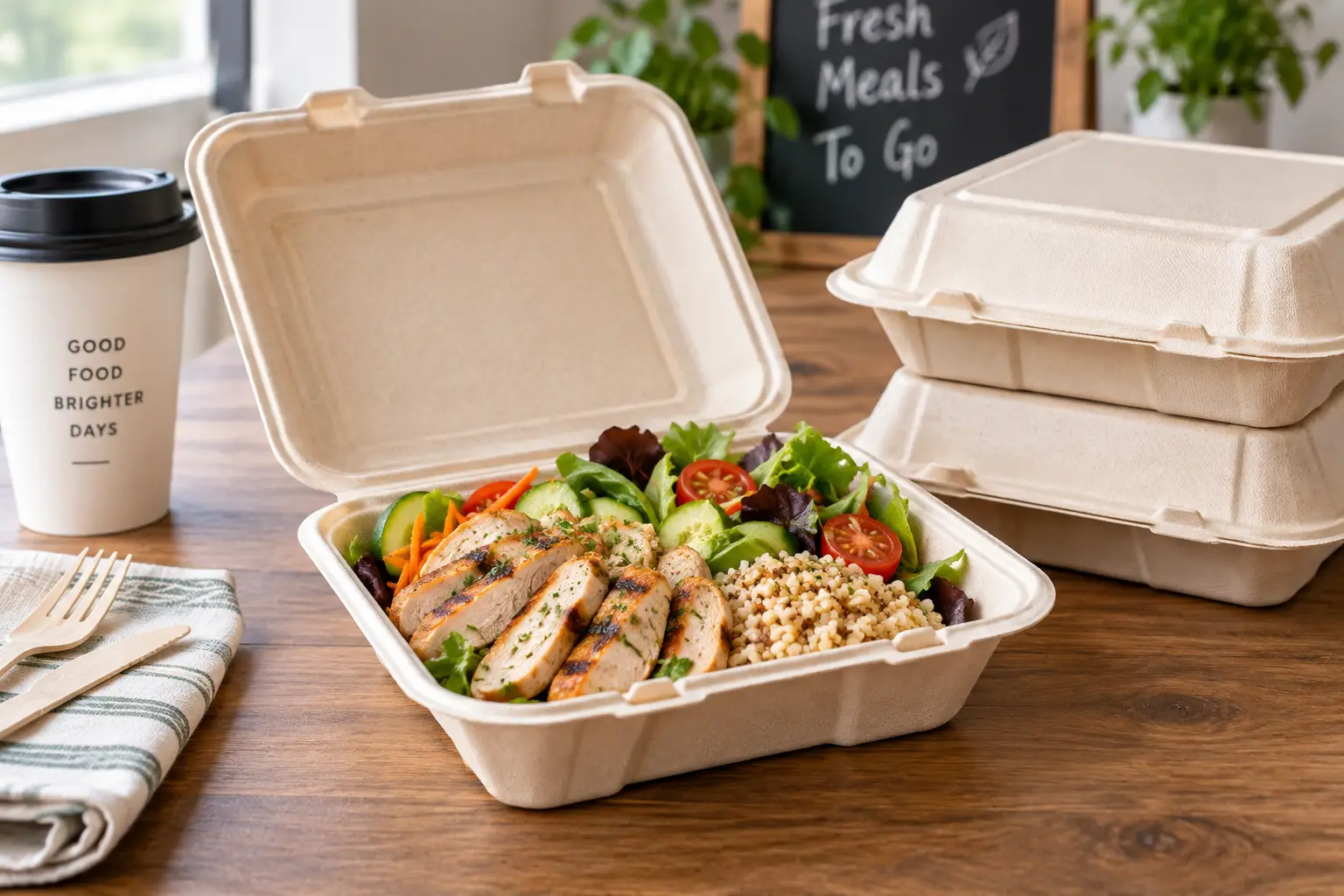
Grab any random drawer in an American kitchen and you’ll probably find a graveyard of mismatched lids, a cracked bowl or two, and at least one container that no longer seals. A togo container sounds like a simple thing — a box that holds food — but the category is actually surprisingly wide: leakproof glass sets for weekly meal prep, divided plastic bowls for portion control, insulated bowls for the commute, and bulk disposable boxes for restaurants and food trucks. What is a togo container? In plain terms, it’s any reusable or single-use vessel designed to hold prepared food safely for transport, storage, and reheating, typically with a fitted lid rated for the fridge, freezer, or microwave.
Picking the right one matters more than it looks. The wrong material warps in the microwave, the wrong seal leaks marinara through your work bag, and the wrong bulk order leaves a small restaurant burning cash on containers that don’t stack right in a cooler. This guide walks through seven real, currently available products — covering budget plastic staples, mid-range leakproof sets, glass options that go from freezer to oven, a premium lifestyle bowl, and a bulk disposable case built for commercial to go container use — plus the practical buying criteria, common mistakes, and maintenance habits that actually separate a container you’ll use every week from one that ends up in the donation pile. Whether you’re meal-prepping Sunday dinners, packing school lunches, or stocking a deli counter, there’s a togo container built for that specific job, and by the end of this article you’ll know exactly which one fits yours.
Quick Comparison: Togo Container Options at a Glance
| Container Type | Material | Best For | Price Range |
|---|---|---|---|
| Rubbermaid TakeAlongs | BPA-free plastic | Everyday budget storage | Under $20 |
| Rubbermaid Brilliance | Tritan plastic | Leakproof, no-stain lunches | Around $20–$30 |
| OXO Prep & Go | BPA-free plastic | Portion-controlled meals | Around $15–$20 |
| Pyrex Simply Store | Tempered glass | Long-term, oven-safe storage | Around $30–$45 |
| W&P Porter Bowl | Ceramic or plastic | Premium daily commuting | Around $30–$55 |
| EcoQuality bulk to go containers | Disposable plastic/bagasse | Restaurants, food trucks, events | Around $20–$50 per case |
Looking at the table above, the split really comes down to how often you’ll wash and reuse a container versus how many mouths you need to feed in a single event. The Rubbermaid TakeAlongs and OXO Prep & Go cover daily personal use on a tight budget, while the EcoQuality bulk to go containers exist for an entirely different job — one-and-done food service at scale. If longevity and a glass-clean feel matter more than price, the Pyrex Simply Store and W&P Porter Bowl justify their higher cost with years of use instead of months.
💬 Ready to stock your kitchen (or your food truck) the right way? Keep reading to see exactly which togo container fits your routine. 😊
Top 7 Togo Containers: Expert Analysis
1. Rubbermaid TakeAlongs On The Go Food Storage Containers — cheapest reliable everyday pick
The Rubbermaid TakeAlongs line has been a pantry staple for decades, and the current “On The Go” sets keep that same no-frills reliability at a genuinely low price point. These are BPA-free, stackable containers with a Quik Clik or Twist & Seal lid design that clicks audibly into place — a small detail that matters when you’re rushing out the door and need to trust the seal without double-checking it. The interlocking sizes mean a 4-cup rectangle and a 6.2-cup bowl share the same lid family, so you’re not hunting through a drawer for the one matching top.
What most buyers overlook with this line is that it isn’t trying to be a premium glass alternative — it’s built for high turnover, moderate heat, and casual reheating, and it does that job well. Based on comparing the specs against pricier competitors, the trade-off is durability over time rather than day-one performance: the plastic base can develop faint staining from tomato-based sauces after repeated use, a pattern echoed consistently in customer feedback. Reviews consistently report that the lids seal reliably even after months of dishwasher cycles, though a subset of buyers note the plastic can eventually warp if left too close to a hot stovetop or run through repeated high-heat wash cycles.
This is the togo container to buy if you want to fully stock a kitchen without a big investment, or if you go through containers fast enough that occasional replacement doesn’t sting. Pricing typically falls under $20 for a large multi-piece set, and given the piece count, the value-for-money is hard to beat for anyone just starting a meal-prep habit.
Pros:
- ✅ Very low cost per container in bulk sets
- ✅ Audible click-seal lids reduce leak anxiety
- ✅ Interlocking sizes simplify lid storage
Cons:
- ❌ Prone to staining from tomato-based sauces
- ❌ Less durable long-term than Tritan or glass options
2. GoodCook Meal Prep Containers, Single Compartment 10-Pack — best for bulk weekly meal prep
The GoodCook Meal Prep Containers set targets a very specific shopper: someone who wants to batch-cook a full week of lunches every Sunday without babysitting a dozen different lid shapes. Ten identical single-compartment containers with matching lids means uniform stacking in the fridge and freezer, and the BPA-free construction is rated for microwave, freezer, and dishwasher use. Each container holds roughly four cups, which lines up well with a standard protein-plus-two-sides lunch portion.
What the spec sheet doesn’t say, but reviews reveal, is that this uniformity is the real selling point over flashier divided containers — when every lid fits every base, you cut the daily friction of meal prep dramatically. Here’s what to weigh: single-compartment design means no built-in portion control, so foods that need separation (like a wet protein next to a crunchy side) will mix together in transit unless you plan your meals around that limitation. Reviews aggregated across major retailers put this set consistently in the mid-4-star range, with recurring praise for stackability and recurring criticism that the lids, while leak-resistant, aren’t fully leakproof under pressure (think a packed bag being tossed around, not a stationary fridge shelf).
At well under $20 for the full 10-pack, this is arguably the best value-per-container togo container on this list for anyone whose primary use case is home meal prep rather than travel-heavy commuting.
Pros:
- ✅ Uniform lids simplify batch meal prep
- ✅ Freezer, microwave, and dishwasher safe
- ✅ Strong value at roughly $1.50–$2 per container
Cons:
- ❌ No divided compartments for portion separation
- ❌ Lids are leak-resistant, not fully leakproof under jostling
3. Rubbermaid Brilliance Leak-Proof Food Storage Containers — best for genuinely leakproof transport
If the Rubbermaid TakeAlongs line is the budget everyday option, the Rubbermaid Brilliance set is its upgraded sibling built specifically to solve the leaking problem. The crystal-clear Tritan plastic construction gives it a glass-like appearance without the weight or breakage risk, and the two-latch lid design creates a genuinely airtight seal rather than a loose snap-fit. Built-in vents under the latches allow splatter-resistant microwaving with the lid still on, a small feature that saves a dish and a few minutes of cleanup.
Based on comparing the specs against the rest of this lineup, the stain- and odor-resistant material is the standout upgrade: unlike the base TakeAlongs line, Brilliance containers are specifically engineered to resist the tomato-sauce staining that plagues cheaper plastics. Reviews consistently report thousands of five-star ratings citing the “100% leak-proof” claim as accurate even for liquids like soup and salad dressing, which is a meaningfully higher bar than most togo container competitors clear. A smaller but recurring complaint in aggregated reviews involves the latches becoming brittle after a year or more of daily use, occasionally snapping off at the hinge.
This is the pick for anyone who’s been burned (literally, by a leaking soup container) in the past. Expect to pay somewhere in the $20–$30 range for a multi-piece set, and factor in the lifetime warranty some retailers list, which offsets the risk of a broken latch down the line.
Pros:
- ✅ Genuinely leakproof two-latch lid design
- ✅ Stain- and odor-resistant Tritan material
- ✅ Vented lids allow splatter-free microwaving
Cons:
- ❌ Latches can become brittle after a year of heavy use
- ❌ Pricier per container than basic plastic sets
4. OXO Good Grips Prep & Go Divided Container — best for portion control and bento-style meals
The OXO Prep & Go Divided Container solves a problem the single-compartment options on this list don’t: keeping wet and dry, hot and cold, or simply separate foods from touching each other during transport. Available in 2-cup (two compartments) and 4.1-cup (three compartments) sizes, each compartment seals individually via silicone gaskets and locking clips, so a soup-and-crackers combo or a grilled-chicken-and-veggies plate stays exactly as packed until you open it.
What most buyers overlook with divided containers in general is how much they change eating habits — several reviewers specifically credit the built-in portion boundaries with helping them stick to smaller serving sizes without needing to measure. The stay-cool handles on the base are a thoughtful touch for anyone microwaving straight from the container at a desk. On paper, this means less cross-contamination of flavors and textures, which matters more than it sounds for anyone who finds soggy crackers or watery rice a genuine mealtime letdown. Aggregated reviews sit in a strong range, with the most common complaint being that the silicone gaskets require careful reseating after washing, or a small gap can let liquid seep between compartments.
Priced in the neighborhood of $15–$20 depending on size and retailer promotions, this is one of the more feature-dense togo container options here relative to its cost, particularly for anyone doing bento-style lunches for themselves or kids.
Pros:
- ✅ True compartment separation with individual seals
- ✅ Stay-cool handles safe for microwave-to-hand transport
- ✅ Encourages natural portion control
Cons:
- ❌ Gaskets need careful reseating after each wash
- ❌ Smaller total capacity than single-compartment alternatives
5. Pyrex Simply Store Glass Food Storage Set — best for long-term, oven-safe storage
For anyone who’s grown tired of replacing warped or stained plastic every year or two, the Pyrex Simply Store glass sets are the most durable togo container option on this list by a wide margin. Made from tempered glass with BPA-free plastic snap-lids, these containers are rated for the freezer, microwave, dishwasher, and — unlike every plastic option here — a preheated conventional or convection oven, which means you can genuinely go from freezer to oven to table in one dish.
Here’s what to weigh: glass doesn’t absorb odors or stain from tomato sauce, curry, or berries the way plastic eventually does, and it holds its shape and clarity indefinitely, which is exactly why Pyrex backs these sets with a two-year limited warranty. Reviews consistently report high satisfaction with the “true glass” feel and the peace of mind of knowing nothing is leaching from the container during reheating, a concern that comes up repeatedly in customer feedback around plastic alternatives. The trade-off, and it’s a real one, is weight and breakability — glass containers add noticeably more heft to a lunch bag and will shatter if dropped on a hard floor, which plastic simply won’t.
Multi-piece sets typically run in the $30–$45 range depending on piece count, positioning this as a mid-to-premium investment that pays off over a much longer usable lifespan than budget plastic.
Pros:
- ✅ Oven-safe in addition to microwave, freezer, dishwasher
- ✅ Doesn’t stain or absorb food odors over time
- ✅ Two-year limited warranty on most sets
Cons:
- ❌ Heavier and less travel-friendly than plastic
- ❌ Breaks if dropped, unlike shatterproof plastic options
6. W&P Porter Bowl — best premium option for daily commuters
The W&P Porter Bowl takes a different approach entirely: rather than a multi-piece set, it’s a single, design-forward lunch bowl meant to replace daily disposable takeout packaging altogether. Available in a durable BPA-free plastic version or a ceramic version with a protective silicone wrap, the 34-ounce bowl comes with a rigid lid and a snap-tight silicone strap for a secure, spill-resistant seal during transit.
Based on comparing the specs against mass-market alternatives, the W&P Porter Bowl is aimed squarely at someone who eats from the same vessel daily and wants it to feel less like disposable kitchenware and more like a piece of gear they’re proud to carry. The company states the bowl can eliminate roughly 200 days’ worth of single-use plastic takeout packaging per year for a regular user, a meaningful sustainability angle for anyone trying to cut down on restaurant clamshells. Reviews are largely positive on the design and the silicone strap’s grip, though a recurring theme in aggregated customer feedback flags that some ceramic lids are not fully dishwasher-safe despite marketing claims, with a handful of buyers reporting lid warping after top-rack washing.
At roughly $30–$55 depending on material and retailer, this sits at the premium end of the personal-use togo container spectrum — worth it for daily use and gifting, less so if you only need occasional to-go storage.
Pros:
- ✅ Design-forward build meant for daily reuse
- ✅ Snap-tight silicone strap improves seal security
- ✅ Reduces reliance on single-use takeout packaging
Cons:
- ❌ Premium price relative to functional plastic sets
- ❌ Some reported lid warping from dishwasher use
7. EcoQuality Bulk Disposable To Go Containers — best for restaurants, food trucks, and events
The EcoQuality bulk containers shift the conversation entirely, from personal meal prep to commercial food service. Sold in cases ranging from 25 to 600+ pieces, these microwavable plastic containers (with a compostable sugarcane bagasse option also available) are built for restaurants, delis, food trucks, and caterers that need a genuinely disposable togo container by the hundreds, not a handful of reusable pieces. The plastic line withstands temperatures from -40°F to 250°F, and the bagasse option is BPI-certified compostable, giving businesses a choice between cost efficiency and environmental positioning.
What most buyers overlook with bulk disposable options is how much the per-unit price drops at scale — a 600-piece case brings the cost down to roughly $0.30–$0.35 per container, which matters enormously to a business margin in a way it never would for a household. Reviews from small business owners consistently report that the leak-resistant lids hold up well for soups, salads, and noodle dishes, and that the stackable shape saves real cooler and shelf space during a busy service. The most common critique in aggregated feedback is that, like most disposable plastic, these aren’t meant for repeated reuse — treating them as such shortens their functional lifespan and defeats their cost advantage.
Price ranges from around $20 for a small 25-piece box up to $50+ for a 600-piece bulk case, making this the clear pick for any commercial to go container need rather than personal kitchen storage.
Pros:
- ✅ Extremely low per-unit cost at bulk quantities
- ✅ Compostable bagasse option available for eco-conscious businesses
- ✅ Stackable design saves cooler and shelf space
Cons:
- ❌ Not designed for long-term reuse like the rest of this list
- ❌ Compostable option depends on local composting access
Full Product Comparison Table
| Product | Material | Capacity Range | Leakproof Rating | Best For | Price Range |
|---|---|---|---|---|---|
| Rubbermaid TakeAlongs | Plastic | 2.9–6.2 cups | Moderate | Budget everyday use | Under $20 |
| GoodCook Meal Prep | Plastic | ~4 cups | Leak-resistant | Weekly batch meal prep | Under $20 |
| Rubbermaid Brilliance | Tritan plastic | 1.3–9.6 cups | High (2-latch seal) | Soups, sauces, travel | $20–$30 |
| OXO Prep & Go | Plastic | 2–4.1 cups | High per compartment | Portion-controlled meals | $15–$20 |
| Pyrex Simply Store | Glass | 1–11 cups | High (snap lid) | Long-term, oven-safe storage | $30–$45 |
| W&P Porter Bowl | Ceramic/plastic | 34 oz | High (silicone strap) | Daily premium commuting | $30–$55 |
| EcoQuality bulk containers | Plastic/bagasse | 12–29 oz | Moderate to high | Restaurants, events, food trucks | $20–$50/case |
The table above makes the split obvious once you look at “Best For” side by side: this isn’t really seven competitors fighting for the same buyer, it’s roughly three separate shopping decisions — daily personal use, long-term glass storage, and commercial bulk supply. If you’re comparing Rubbermaid Brilliance against Pyrex Simply Store, the real question isn’t which is “better” in the abstract, it’s whether you value the lighter weight and lower price of Tritan plastic or the odor-resistance and oven safety of glass. For a business owner, none of the personal-use picks even compete with the EcoQuality bulk containers on a per-unit cost basis.
💬 One click helps other shoppers make an informed choice too! 😊
How to Choose the Right Togo Container
Picking a togo container gets a lot easier once you break the decision into a short checklist instead of eyeballing options on a store shelf.
- Start with your use case, not the material. Daily commuting, weekly batch meal prep, and commercial food service each favor a completely different product category — decide which one describes you before comparing brands.
- Match the seal type to what you’ll actually carry. A snap lid is fine for a stationary fridge shelf; a latch-and-gasket seal is worth the extra cost if the container is going in a bag that gets tossed around.
- Decide how much you care about staining and odor. Plastic is lighter and cheaper but will eventually stain from tomato sauce and curry; glass costs more upfront but stays clean-looking indefinitely.
- Check the temperature ratings before you buy. Not every togo container is oven-safe, and reheating plastic that isn’t rated for high heat is where chemical leaching concerns actually apply.
- Think in cost-per-use, not sticker price. A $45 glass set that lasts five years is cheaper per meal than a $15 plastic set replaced three times over the same period.
- For businesses, calculate cost per unit at your real order volume. Bulk disposable pricing drops sharply at higher case sizes, so a slightly larger order can meaningfully improve your margins.
- Confirm dishwasher and microwave compatibility on the actual product page, not the category default. Some lids, especially ceramic-lid hybrids, aren’t safe for top-rack washing despite general marketing claims.
Building a Container System That Actually Works
Most people don’t fail at meal prep because of the food — they fail because the container system falls apart within a month. A workable system starts with buying one lid-and-base family per use case instead of mixing random sets, since uniform lids are the single biggest time-saver during a busy week. Store containers with lids nested separately from bases; stacking a sealed lid onto its base for storage traps moisture and encourages the musty smell that eventually ruins an otherwise good container.
In the first 30 days, the most common mistake is running plastic through a dishwasher’s heated-dry cycle, which is the single biggest cause of warping in budget plastic sets — switch to air-dry or a low-heat cycle if your containers start losing their shape. It’s also worth labeling a rotating “retirement” spot in a drawer for any container with a stained interior, a cracked corner, or a lid that no longer clicks; using warped or degraded plastic for hot food storage is exactly the scenario food-safety researchers flag as a risk for chemical migration, and Michigan State University Extension specifically recommends retiring plastic containers once they no longer hold their shape or seal properly. A simple monthly check — lids on, container upside down over the sink — catches failing seals before they ruin a work lunch.
Real-World Scenarios: Matching the Container to Your Life
Consider a college student commuting to a part-time job with a packed lunch four days a week on a tight budget. That profile points squarely at the GoodCook Meal Prep Containers or Rubbermaid TakeAlongs — low upfront cost, uniform lids for fast batch prep on a Sunday night, and a forgiving replacement cost if one gets left behind in a shared fridge.
Now consider a parent packing two kids’ lunches daily who wants to cut down on liquid leaks ruining backpacks. The OXO Prep & Go divided containers solve that directly, keeping wet and dry foods separated with individually sealed compartments, while the stay-cool handles make it safe for a kid to open straight from a lunch-warming sleeve.
Finally, consider a small food truck owner serving 150 orders on a busy weekend. Reusable containers simply don’t scale for that volume — the EcoQuality bulk containers, purchased at the 300- or 600-piece case size, bring per-unit costs down enough to protect thin margins, while the stackable shape keeps a cramped truck kitchen organized during peak service.
Common Togo Container Problems (and How to Fix Them)
Problem: The lid won’t seal anymore. This is almost always a worn gasket or a latch that’s lost its tension, not a defect in the base — check whether the specific brand sells replacement lids or gaskets before replacing the whole container, which several manufacturers, including OXO, do offer.
Problem: Persistent tomato-sauce staining. Spray the interior with a thin layer of cooking oil before adding sauce-heavy leftovers, or soak stained plastic in a baking-soda-and-water paste for an hour before washing; glass containers avoid this problem entirely.
Problem: A musty smell that won’t wash out. Fill the container with a mix of water and white vinegar and let it sit overnight, then air-dry completely with the lid off — sealing a damp container is what causes the smell to return.
Problem: Warped bases after the dishwasher. Switch to a low-heat or air-dry cycle for plastic, and reserve the heated-dry setting for glass and Tritan sets that are explicitly rated for it.
Problem: Running out of matching lids. Standardize on one or two container families for your household rather than accumulating mismatched sets from gift sets and takeout leftovers — this single habit change eliminates most lid-hunting frustration.
Togo Containers vs. Single-Use Takeout Packaging
It’s worth pausing on why a dedicated togo container is usually the better choice over reusing the clamshells and cups that restaurant delivery already provides. Single-use takeout packaging is engineered for a one-way trip: thin walls, minimal insulation, and lids that are designed to survive one closed trip, not repeated opening and washing.
| Factor | Reusable Togo Container | Single-Use Takeout Packaging |
|---|---|---|
| Cost over one year | Lower (one-time purchase) | Higher (ongoing packaging cost) |
| Leak resistance | High on quality sets | Inconsistent, thin seams |
| Microwave safety | Rated and tested | Often not intended for reheating |
| Environmental impact | Lower with reuse | Higher, especially with non-recyclable plastics |
A reusable set from this list, even a budget one like the Rubbermaid TakeAlongs, will outlast a stack of single-use containers within a few weeks of regular use, and the cost savings compound from there. The main exception is genuinely high-volume food service, where the calculus flips back toward disposable options like the EcoQuality bulk containers simply because reusable washing infrastructure at that scale isn’t practical for every operation.
Features That Actually Matter (and Ones That Don’t)
Not every spec on a product listing translates into a meaningfully better everyday experience. Leakproof latch design, genuine BPA-free certification, and stackability for fridge and cooler space are the three features worth paying extra for — they solve real, recurring frustrations. A leakproof design in particular is worth the upcharge if you regularly transport soups, sauces, or dressings, since a single ruined bag is usually more expensive in cleanup and replaced items than the price difference between tiers.
On the other hand, decorative color-coding, “premium” branding without a functional backing, and oversized capacity you’ll rarely fill are features that look good on a packaging photo but rarely change how a container performs in daily use. The EPA’s data on plastic packaging and containers shows containers and packaging make up the largest share of plastic waste in the U.S. municipal stream, which is a good reason to prioritize durability and reuse over chasing novelty designs that end up discarded within a year.
Safety, Regulations, and Standards
Food-grade plastic containers sold in the U.S. fall under FDA regulation for food-contact materials, and the agency’s current position is that BPA exposure from approved food containers and packaging remains within safe limits based on its ongoing scientific review — a stance you can read directly from the FDA’s overview page on bisphenol A in food contact applications. That said, most name-brand containers on this list, including every product covered here, are explicitly manufactured as BPA-free regardless of the regulatory baseline, reflecting where consumer demand has pushed the market.
For businesses labeling containers as “compostable” or “recyclable,” the Federal Trade Commission’s Green Guides set the legal standard for what those claims can mean in marketing, requiring that compostable claims be substantiated and that recyclability claims reflect actual access to recycling infrastructure in the areas where a product is sold. A restaurant or food truck advertising the EcoQuality bagasse containers as compostable should confirm local composting access actually exists for customers, in line with FTC guidance on environmental marketing claims. On the microwave-safety side, always check for the microwave-safe symbol on the container base — a symbol that only appears on containers actually tested against FDA-aligned standards for food-contact heat exposure, rather than assuming any plastic container is automatically safe to reheat in.
Long-Term Cost and Maintenance
The sticker price on a togo container tells you almost nothing about its real cost over time. A $15 budget set that needs full replacement every eight months works out to roughly $22.50 per year, while a $40 Pyrex Simply Store set that lasts five or more years averages closer to $8 per year — a meaningfully better deal despite the higher upfront number. Maintenance habits shift that math further: air-drying instead of heat-drying plastic, hand-washing latch mechanisms instead of letting them bake in a dishwasher, and retiring stained or warped pieces before they become a food-safety concern all extend usable life well beyond the “eventually cracks or stains” timeline typical of neglected containers.
For commercial buyers, the maintenance question doesn’t apply in the same way, since disposable containers like the EcoQuality bulk containers are priced and used as consumables from day one — the cost lever there is entirely about order volume and choosing plastic versus compostable bagasse based on what actually gets used (and disposed of properly) in your specific market.
Togo Containers for Busy Families
Families juggling multiple lunch boxes, after-school snacks, and batch-cooked dinners benefit most from standardizing on two container families rather than one: a divided option like the OXO Prep & Go for kids’ lunches where mixing foods is a dealbreaker, and a larger single-compartment set like the GoodCook Meal Prep Containers for adult portions and dinner leftovers. Buying in matched multiples — enough for every school and workday in a week, plus a few spares for the inevitable one left at school — removes the daily scramble to find a clean, matching lid. Color-coding by family member, while not a functional necessity, does meaningfully cut down on lunch-box mix-ups in households with more than two kids.
Frequently Asked Questions
❓ What's the difference between a togo container and regular food storage?
❓ Are plastic togo containers safe to reheat in the microwave?
❓ How many togo containers does a typical household need?
❓ What's the most cost-effective togo container for a small restaurant?
❓ Can I put a togo container directly in the freezer?
Conclusion
There’s no single “best” togo container, because the category covers genuinely different jobs. For a tight budget and daily reliability, the Rubbermaid TakeAlongs and GoodCook Meal Prep Containers cover the basics without overpaying. If leaks or staining have been a recurring frustration, the Rubbermaid Brilliance set solves that directly, while the OXO Prep & Go earns its place for anyone who needs real portion separation. For buyers who’d rather invest once and stop replacing containers every year, the Pyrex Simply Store glass set and the W&P Porter Bowl both deliver on durability and daily-carry design, just at different price points and material trade-offs. And for restaurants, food trucks, or catering operations, none of the personal-use picks come close to the per-unit economics of the EcoQuality bulk containers.
Match the container to the actual job — commuting, batch meal prep, or commercial service — rather than chasing the single “top-rated” option, and you’ll end up with something that survives in your kitchen drawer instead of the donation bin.
✨ Don’t miss these exclusive deals!
🔍 Take your kitchen storage to the next level with this carefully curated lineup. Click a highlighted item to check current pricing and availability. These picks will help you get organized, leakproof meals the whole family will enjoy!
Recommended for You
- 7 Best Square Food Containers for 2026: Smarter Storage, Less Wasted Space
- Small Dipping Bowls: 7 Best Picks for 2026 (Ceramic vs Glass)
- 7 Best Potato Container Picks for 2026 (Stop Sprouting Fast)
Disclaimer: This post contains affiliate links. As an Amazon Associate, I earn from qualifying purchases made through these links, at no additional cost to you.
✨ Found this article helpful? Share it with someone who needs it! 💬🤗