
In This Article
Introduction: Why Meal Prep Meat Is the Weekly Habit That Pays You Back
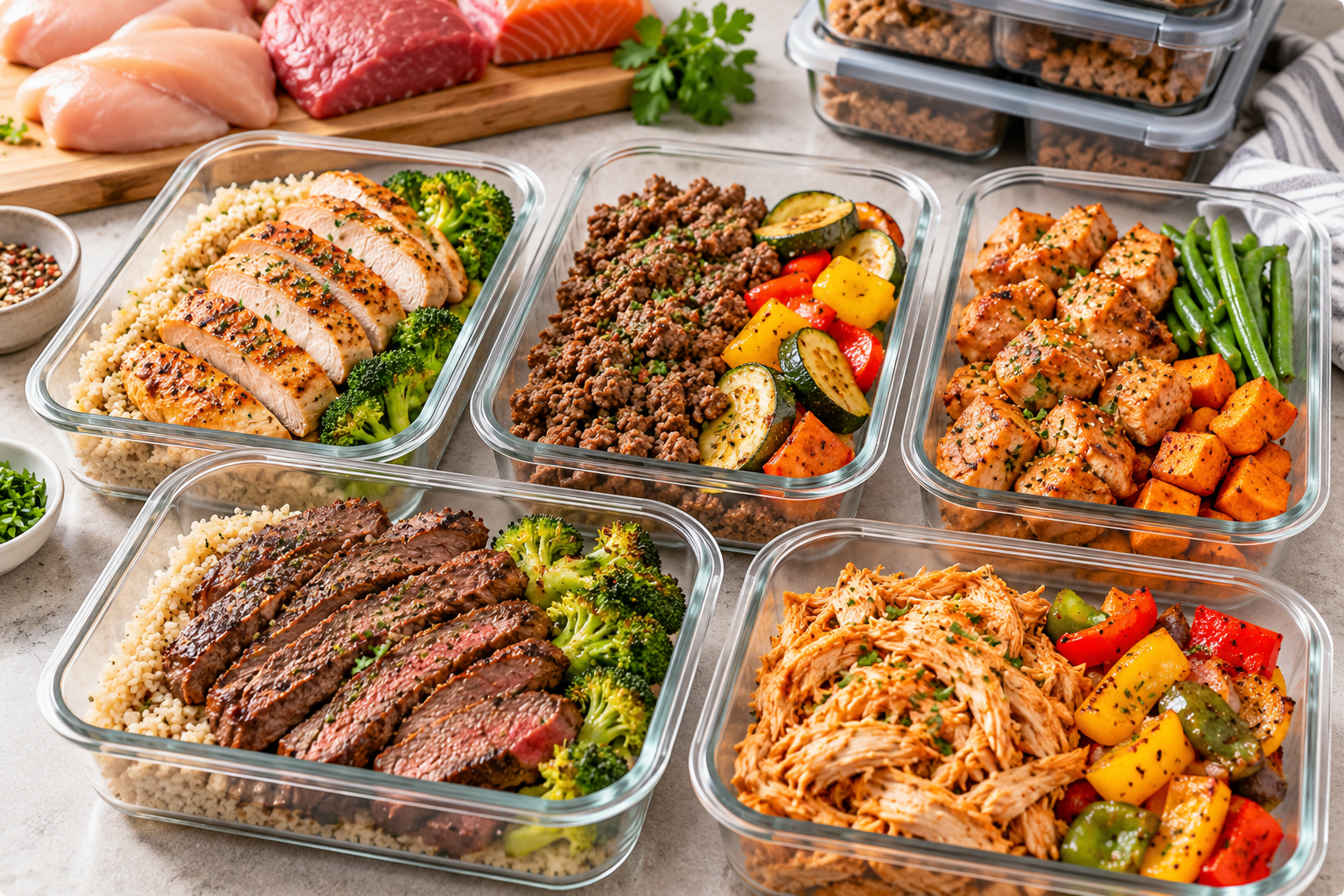
It’s 7:40 p.m. on a Wednesday. You’re hungry, tired, and staring into a fridge that holds half an onion and a sense of regret. Sound familiar? This is exactly the moment meal prep meat was invented to fix. When the protein is already cooked, portioned, and waiting, dinner becomes a five-minute assembly job instead of a nightly negotiation with a delivery app.
Here’s the thing, though: meat is the trickiest part of any meal prep routine. Vegetables forgive you. Rice forgives you. Meat does not. Cook chicken breast two minutes too long and it turns into drywall by Thursday. Store ground beef carelessly and it becomes a food-safety gamble. Freeze a pork shoulder without protection and you’ll meet freezer burn, the gray, leathery ghost of good intentions.
That’s why the right gear matters so much. A reliable thermometer tells you when meat is safe without overcooking it. A slow cooker or pressure cooker turns cheap, tough cuts into tender, shreddable protein. A vacuum sealer stretches freezer life and protects texture. And good containers keep everything fresh and easy to reheat.
In this guide, you’ll find seven real, Amazon-available tools that cover every stage of meal prep meat, from cooking to shredding to sealing and storing. Every recommendation is grounded in published specs, aggregated customer review themes, and official U.S. food-safety guidance, not invented test stories. You’ll also get a practical step-by-step workflow, buyer scenarios, troubleshooting fixes, storage timelines, and an honest cost analysis. By the end, you’ll know exactly which setup fits your kitchen, your budget, and your week.
Quick Comparison: The 7 Best Meal Prep Meat Tools at a Glance
| Product | Category | What It Solves | Best for |
|---|---|---|---|
| ThermoPro TP19H | Instant-read thermometer | Safe temps without overcooking | ThermoPro TP19H: every meal prepper, especially beginners |
| Crock-Pot 7-Quart Manual Slow Cooker | Slow cooker | Big, hands-off batches of tough cuts | Crock-Pot 7-Quart Manual Slow Cooker: families and budget preppers |
| Instant Pot Duo 6-Quart | Multi-cooker / pressure cooker | Fast shredded chicken and roasts | Instant Pot Duo 6-Quart: busy weeknight preppers |
| Anova Precision Cooker 3.0 | Sous vide circulator | Juicy chicken breast and steak all week | Anova Precision Cooker 3.0: texture-obsessed preppers |
| Nesco VS-12 Deluxe | Vacuum sealer | Longer freezer quality, no freezer burn | Nesco VS-12 Deluxe: bulk buyers and freezer stockers |
| Prep Naturals Glass Meal Prep Containers | Storage containers | Airtight storage and easy reheating | Prep Naturals Glass Meal Prep Containers: grab-and-go lunches |
| Bear Paws Meat Shredder Claws | Shredding tool | Fast pulled pork and shredded chicken | Bear Paws Meat Shredder Claws: anyone cooking big roasts |
Reading the table as a system rather than a shopping list is the smartest move. The ThermoPro TP19H is the one tool that every setup needs, because no cooking method is safe or consistent without it. From there, pick one primary cooker based on your schedule: the Crock-Pot 7-Quart Manual Slow Cooker if you’re home all day or cook overnight, the Instant Pot Duo 6-Quart if you need protein in under an hour, or the Anova Precision Cooker 3.0 if texture matters most. The storage trio, the Nesco VS-12 Deluxe, the Prep Naturals Glass Meal Prep Containers, and the Bear Paws Meat Shredder Claws, decides how well your cooked meat survives the week.
💬 One click helps other shoppers make an informed choice too! 😊
What Is Meal Prep Meat?
Meal prep meat is protein, such as chicken, beef, pork, or turkey, cooked in a batch ahead of time, then portioned and stored in the refrigerator or freezer so it can be reheated or added to meals throughout the week. Done right, it saves time, money, and daily decision fatigue while keeping food safe.
The “done right” part is where most people stumble. Safe meal prep meat depends on two numbers: the internal temperature you cook to and how long the cooked meat sits in storage. The USDA’s safe minimum internal temperature chart sets the baseline: 165°F for all poultry, 160°F for ground meats, and 145°F with a three-minute rest for whole cuts of beef, pork, veal, and lamb. Leftovers should be reheated to 165°F.
What does that mean in practice? It means color is not a doneness test. Pink pork can be perfectly safe at 145°F, while browned ground beef can still be underdone in the center. A thermometer is the only way to know, which is why it sits at the top of this list. It also means meal prep meat has a natural rhythm: cook on one day, eat over the next three to four, and freeze anything beyond that.
Top 7 Meal Prep Meat Tools: Expert Analysis
1. ThermoPro TP19H — the cheapest insurance in your kitchen
If you buy only one item from this list, make it this one, because it protects every other purchase. The ThermoPro TP19H (newer units may arrive under the brand name TempPro, following the company’s rebrand) is a folding instant-read thermometer with a 4.3-inch food-grade stainless steel probe, a 2-inch auto-rotating backlit display, and IP65 splash resistance.
In practice, that auto-rotating screen means left-handed cooks read it just as easily as right-handed ones, and the backlight helps when you’re checking a sheet pan in a dim oven. The lock button holds the reading after you pull the probe out, so you’re not squinting at a screen while your knuckles hover over a 400°F pan. Note that older listings quote a 3-4 second response time, while current TempPro listings claim about 1 second, so expect “fast” either way.
Based on comparing the specs, this is the right pick for beginners and budget preppers who want USDA-level confidence without paying premium prices. The calibration function also matters more than people think: a thermometer drifting by 3°F can turn a safe chicken breast into an unsafe one.
Customer reviews consistently praise the readable display, the magnetic back that sticks to the fridge, and the speed. The recurring caution is that IP65 means rinse-safe, not submersible.
Pros:
- ✅ Ambidextrous auto-rotating display is easy to read
- ✅ Lock and calibration functions improve accuracy and safety
- ✅ Magnetic back keeps it within reach
Cons:
- ❌ Splash-resistant only, so never submerge it
- ❌ Not designed to stay in meat during cooking
Typically priced under $35, it’s the best value-for-money item on this entire list.
2. Crock-Pot 7-Quart Manual Slow Cooker — biggest batches for the smallest budget
This oval workhorse (model SCV700-S-BR, also sold as SCV700-SS) is the classic answer to “how do I cook five pounds of meat without babysitting it?” Its 7-quart stoneware fits a roughly 7-pound roast, and it runs on three simple settings: High, Low, and Warm.
Why does that simplicity matter for meal prep meat? Because tough, cheap cuts like pork shoulder, chuck roast, and chicken thighs need low, slow heat to break down connective tissue into tender, shreddable meat. A manual dial means no menus, no error codes, and nothing to program at 6 a.m. The removable stoneware and glass lid are dishwasher safe, and the stoneware is oven-safe up to 400°F, which lets you crisp carnitas right in the insert.
Based on the specs and review data, this is best for families, budget-conscious preppers, and anyone who cooks overnight or while at work. It’s the most cost-effective way to produce a full week of protein in one go.
Aggregated reviews highlight the generous size, ease of use, and suitability for meal prepping. Common complaints mention the heavy stoneware, the lack of a browning function, and a High setting that runs hot. Some long-time buyers note that the practical working capacity feels closer to 6 quarts once you leave headroom.
Pros:
- ✅ Huge capacity handles family-size batches easily
- ✅ Dead-simple manual controls with no learning curve
- ✅ Stoneware and lid are dishwasher safe
Cons:
- ❌ No sear or sauté function for browning
- ❌ No timer, so it won’t switch itself off
Usually found in the $30 to $50 range, it delivers outstanding value for high-volume cooks.
3. Instant Pot Duo 6-Quart — fastest route from frozen chicken to shredded protein
When Sunday gets away from you, this is the tool that saves meal prep. The Duo 7-in-1 combines a pressure cooker, slow cooker, rice cooker, steamer, sauté pan, yogurt maker, and warmer in a single 6-quart, 1,000-watt unit.
The pressure function is the headline. It raises the boiling point inside the pot, which drives heat into dense meat dramatically faster than a stovetop simmer. On paper, that means a pork shoulder that takes 8-10 hours in a slow cooker can be fork-tender in roughly an hour and a half including pressure build and release. The sauté setting lets you brown meat first, adding flavor that slow cookers can’t create on their own. And because it can cook chicken breasts from frozen, it rescues weeks when you forgot to thaw anything.
Based on comparing the specs, this is the right pick for busy professionals and anyone with a small kitchen who wants one appliance to do several jobs. It’s also the fastest way to make meal prep chicken in bulk.
Reviews consistently praise the speed and versatility. Common frustrations include a learning curve with release methods, the silicone sealing ring holding onto odors (many owners keep a second ring for savory dishes), and a “burn” warning when there isn’t enough thin liquid.
Pros:
- ✅ Pressure cooks tough cuts in a fraction of the time
- ✅ Built-in sauté adds browning and flavor
- ✅ Replaces several appliances in one footprint
Cons:
- ❌ Sealing ring can absorb strong food odors
- ❌ Learning curve for pressure release and liquid ratios
Generally priced between $70 and $100, it’s excellent value if speed is your top priority.
4. Anova Precision Cooker 3.0 — restaurant-juicy chicken breast every single time
If dry, chalky chicken is the reason you hate meal prep, this is your fix. The Anova Precision Cooker 3.0 is a sous vide immersion circulator that clips onto a pot and holds water at an exact temperature, with 1,100 watts of heating power, an 8-liter-per-minute flow rate, a 32°F-197°F range, and a two-line touch screen plus dual-band Wi-Fi.
What does that mean for meal prep meat? Sous vide cooks food in a sealed bag in a temperature-controlled water bath, so the meat can’t overshoot its target. Steaks come out edge-to-edge medium rare, and chicken breast stays moist even after three days in the fridge. The extra wattage over Anova’s smaller Nano model means faster heat-up of large water baths, which matters when you’re cooking a dozen portions at once.
Based on the specs, this suits texture-focused preppers, fitness-focused eaters who live on lean protein, and anyone pairing it with a vacuum sealer. One honest caveat: food safety at lower sous vide temperatures depends on hold time, so follow established time-and-temperature tables rather than guessing.
Reviews praise how quickly it reaches temperature and how quietly it runs. The main complaints involve Anova moving some app features behind a subscription for newer users, though the on-device manual controls still work without it.
Pros:
- ✅ Precise temperature control prevents overcooked meat
- ✅ Powerful heater handles large batch water baths
- ✅ Water-resistant build with a removable, cleanable skirt
Cons:
- ❌ Some app features may require a paid subscription
- ❌ Requires bags plus a separate pot or container
Usually in the $150 to $200 range, it’s worth it if texture is your deal-breaker.
5. Nesco VS-12 Deluxe — the freezer-burn killer for bulk buyers
This is the tool that turns a Costco haul into months of quality protein. The Nesco VS-12 Deluxe uses a 130-watt double vacuum pump, offers dry, moist, and double-seal modes, includes a built-in bag cutter and roll storage, and locks with a one-handed handle.
Why do those features matter? Freezer burn happens when air touches frozen food and pulls moisture out of its surface. Removing that air protects texture and flavor, which is exactly what you want when freezing cooked meat or raw bulk packs. The moist setting is important for marinated or cooked meat, and the double seal adds a second line of defense against slow leaks during long freezer storage. Independent testers at ShouldIt measured strong suction and rated it among the easiest sealers to use.
Based on comparing the specs and testing data, this fits bulk buyers, hunters, sous vide cooks, and anyone who freezes more than a week’s worth of meat at a time. It also works with most standard embossed vacuum bags, so you’re not locked into one brand.
Reviews consistently praise the sturdy build and simple controls. The recurring trade-offs are size, weight, and noise, and some testers needed more than one attempt to seal very wet items.
Pros:
- ✅ Strong double pump removes air efficiently
- ✅ Moist and double-seal modes suit cooked meat
- ✅ Built-in roll storage and cutter save time
Cons:
- ❌ Larger and heavier than compact sealers
- ❌ Noticeably loud during the vacuum cycle
Typically found between $100 and $150, it pays for itself fastest for frequent bulk buyers.
6. Prep Naturals Glass Meal Prep Containers — oven-to-desk portions without plastic worries
This is where your cooked meat actually lives during the week. The 5-pack of 30-ounce containers is made of borosilicate glass with snap-lock, airtight lids, and the glass is rated safe for the freezer, microwave, oven, and dishwasher.
In practice, borosilicate glass resists stains and odors far better than plastic, which matters when you’re storing chili, curry, or barbecue sauce. The airtight seal slows moisture loss, so meat doesn’t dry out by day three. And because you can reheat directly in the glass, you skip the extra dish. Single-compartment versions suit saucy proteins, while divided versions keep meat away from vegetables that would otherwise go soggy.
Based on reviews and specs, these are best for office lunches, gym-goers who track portions, and anyone moving away from plastic. One important caution: the lids are not microwave- or oven-safe, so always remove them before heating.
Reviews consistently praise tight-fitting, leak-resistant lids and a sturdy feel. Some buyers warn against moving glass straight from the fridge into a hot oven because of thermal shock, and recommend stacking with lids on rather than nesting the glass.
Pros:
- ✅ Borosilicate glass resists stains and odors
- ✅ Airtight snap-lock lids keep meat moist
- ✅ Reheat directly in the container
Cons:
- ❌ Lids must be removed before microwaving
- ❌ Heavier to carry than plastic containers
Usually in the $25 to $40 range, they’re a smart long-term replacement for disposable plastic.
7. Bear Paws Meat Shredder Claws — shred five pounds of pork in minutes
These look like something a wrestler would wear, and that’s half the fun. The Bear Paws Meat Shredder Claws are one-piece claws made from BPA-free nylon that’s heat resistant to 475°F and dishwasher safe on the top rack, and they’re made in the USA.
Why do they matter? Shredding a big roast with two forks is slow, tiring, and uneven. Claws let you grip, lift, and pull apart large cuts quickly, which gives you more consistent shreds that reheat evenly. They also double as lifters, helping you move a hot pork shoulder from the slow cooker to a cutting board without stabbing it or burning your fingers.
Based on comparing review themes, they’re best for anyone cooking pulled pork, brisket, or whole chickens regularly, especially when paired with the Crock-Pot 7-Quart Manual Slow Cooker or Instant Pot Duo 6-Quart. For small amounts of chicken breast, though, a hand mixer or two forks can be just as fast.
Customer reviews consistently describe them as a big time-saver for slow cooker meal prep, with many owners mentioning they finish shredding jobs in just a few minutes. A minority of reviewers feel they have too few tines for small, fine shredding jobs.
Pros:
- ✅ Shreds large roasts far faster than forks
- ✅ Heat resistant to 475°F and BPA-free
- ✅ Doubles as a safe lifting tool
Cons:
- ❌ Fewer tines than some competitors for fine shredding
- ❌ Less useful for small portions
At roughly $10 to $15, they’re the cheapest upgrade on this list with an outsized payoff.
✨ Don’t miss these exclusive deals!
🔍 Take your meal prep meat routine to the next level with this carefully curated lineup. Click a highlighted item to check current pricing and availability. These picks will help you get juicy, safe, ready-to-eat protein the whole family will enjoy!
How to Meal Prep Meat: A Step-by-Step Weekly Workflow
Knowing how to meal prep meat is less about recipes and more about rhythm. Here’s a workflow that turns two hours on Sunday into four or five days of ready protein.
Step 1: Plan Two Proteins, Not Five
Pick one “fast” protein (chicken breast or ground turkey) and one “slow” protein (pork shoulder or chuck roast). This gives variety without overwhelming your schedule or fridge.
Step 2: Start the Slow Cut First
Load the Crock-Pot 7-Quart Manual Slow Cooker in the morning or the night before. Season generously, because flavor fades a little over several days of storage.
Step 3: Cook the Fast Protein While You Prep Everything Else
Use the Instant Pot Duo 6-Quart for chicken breasts or a sheet pan for ground meat. Check every batch with the ThermoPro TP19H: 165°F for poultry, 160°F for ground meat.
Step 4: Cool Quickly
Spread cooked meat into shallow containers so it chills fast. Large, deep piles hold heat in the center, which keeps meat in the bacterial “danger zone” longer.
Step 5: Portion and Label
Divide meat into the Prep Naturals Glass Meal Prep Containers for the next three to four days. Write the cook date on a piece of masking tape.
Step 6: Freeze the Rest Immediately
Anything you won’t eat by day four goes straight into vacuum bags with the Nesco VS-12 Deluxe, flattened for faster freezing and thawing.
Common mistakes in the first 30 days: cooking too much variety, skipping the cool-down step, and seasoning too lightly. Fix those three and your meal prep meat will taste better on Thursday than most takeout.
Real-World Scenarios: Matching the Right Setup to Your Life
Theory is nice, but your schedule decides what actually works. Here are three common profiles and the setups that make the most sense for each.
Scenario 1: The Busy Professional Cooking for One
Picture a remote worker or commuter with a tight budget, around $150, who preps once a week and eats the same lunch four days running. The best combo is the Instant Pot Duo 6-Quart, the ThermoPro TP19H, and the Prep Naturals Glass Meal Prep Containers. Why? Speed matters more than volume here. The pressure cooker produces two pounds of shredded chicken in under an hour, and five containers line up neatly with a five-day workweek.
Scenario 2: The Family of Five on a Tight Grocery Budget
This household buys family packs, cooks twice a week, and needs to stretch every dollar. The ideal setup is the Crock-Pot 7-Quart Manual Slow Cooker, the Bear Paws Meat Shredder Claws, and the Nesco VS-12 Deluxe, with the ThermoPro TP19H as non-negotiable. A seven-pound pork shoulder becomes tacos, sandwiches, and fried rice across the week, and the sealer freezes the surplus without freezer burn. Total investment sits roughly in the $160 to $250 range, which a family can recoup quickly through fewer takeout nights.
Scenario 3: The Fitness-Focused Lean-Protein Eater
This person eats chicken breast or lean steak almost daily and hates dry meat. The best fit is the Anova Precision Cooker 3.0 plus the Nesco VS-12 Deluxe and glass containers. Sous vide keeps lean protein moist even on day four, which is the difference between sticking to a nutrition plan and abandoning it by Wednesday.
Problem → Solution: Fixing the Most Common Meal Prep Meat Headaches
Even experienced preppers hit snags. Here are five frequent problems and precise ways to fix them.
Problem 1: Chicken Turns Dry by Day Three
Solution: Stop cooking past the target. Pull chicken right at 165°F using the ThermoPro TP19H, or switch to thighs, which tolerate reheating better. For breast meat, the Anova Precision Cooker 3.0 is the most reliable fix. Store with a spoonful of broth or sauce to protect moisture.
Problem 2: Frozen Meat Tastes Like the Freezer
Solution: That’s freezer burn and odor transfer. Vacuum seal with the Nesco VS-12 Deluxe and keep your freezer at 0°F or below.
Problem 3: Reheated Meat Is Rubbery
Solution: Reheat gently with a splash of liquid and a cover, rather than blasting it at full microwave power. Shredded meat reheats more evenly than thick slices, which is another reason the Bear Paws Meat Shredder Claws earn their spot.
Problem 4: Containers Smell Like Last Week’s Curry
Solution: Plastic absorbs odors. Borosilicate glass, like the Prep Naturals Glass Meal Prep Containers, does not. For the Instant Pot Duo 6-Quart, keep a separate sealing ring for strongly spiced dishes.
Problem 5: Bland Food by Midweek
Solution: Season the meat lightly and neutrally, then add sauces fresh each day. One pot of plain shredded chicken can become Mexican, Asian, and Mediterranean meals with three different sauces.
How to Choose the Right Meal Prep Meat Tools
Before buying anything, run through these seven criteria. They’ll save you from the most common buyer’s regret.
- Start with safety. A reliable thermometer comes first, because every other tool depends on cooking to the right temperature.
- Match the cooker to your schedule. If you’re home all day, a slow cooker wins. If you need dinner in an hour, choose a pressure cooker.
- Match the cooker to your cuts. Tough, fatty cuts love slow cookers and pressure cookers. Lean cuts like chicken breast and pork tenderloin shine with sous vide.
- Size for your household. A single person rarely needs a 7-quart pot. A family of five will outgrow a 3-quart unit in a week.
- Think about freezing. If you buy in bulk, a vacuum sealer protects your investment. If you only prep for four days, quality containers may be enough.
- Check the cleanup. Removable, dishwasher-safe parts make the difference between a weekly habit and a quickly abandoned one.
- Count your counter space. A multi-cooker replaces several gadgets, which matters in an apartment kitchen.
What most buyers overlook is the interaction between tools. A sous vide cooker without a vacuum sealer means constant bag workarounds. A slow cooker without shredding claws means tired forearms. Building a small, compatible system beats buying the single most expensive gadget.
Best Meat for Meal Prep: Which Cuts Hold Up All Week?
Not every cut survives four days in the fridge with its dignity intact. The best meat for meal prep shares three traits: it stays moist when reheated, it tolerates slight overcooking, and it’s affordable in bulk.
Chicken Thighs
Thighs are the MVP. Their higher fat content keeps them juicy through reheating, and they’re more forgiving than breasts. They work in the slow cooker, pressure cooker, or oven.
Pork Shoulder
Pork shoulder (sometimes sold as “pork butt”) is cheap, flavorful, and nearly impossible to ruin in a slow cooker. One shoulder can feed a family for days as pulled pork.
Ground Turkey and Lean Ground Beef
Ground meat cooks in minutes and reheats evenly. It’s ideal for burrito bowls, pasta sauces, and lettuce wraps. Just remember the 160°F target, and for ground poultry, 165°F.
Chuck Roast
Chuck has plenty of connective tissue, which melts into rich, tender meat after a long, slow cook. Shred it for tacos or keep it in chunks for stews.
Chicken Breast
Chicken breast is the most popular but least forgiving option. It’s excellent when cooked precisely, which is why sous vide or careful thermometer use makes such a difference.
The cuts that struggle most are thin steaks and pork chops, which tend to toughen when reheated. If you love steak, cook it sous vide, store it whole, and slice it just before eating.
Meal Prep Chicken: Getting Juicy Results All Week
Meal prep chicken deserves its own section because it’s the most-prepped protein in America and the most frequently ruined. The goal is simple: safe at 165°F, but not one degree drier than necessary.
Three Reliable Methods
Pressure-cooked and shredded. Add chicken breasts or thighs and about a cup of broth to the Instant Pot Duo 6-Quart. Cook under pressure, let the pressure release naturally for a while, then shred. Natural release keeps the meat from seizing and tightening.
Slow-cooked and pulled. In the Crock-Pot 7-Quart Manual Slow Cooker, chicken thighs on Low become shreddable after several hours. Breasts dry out faster, so check them earlier with the ThermoPro TP19H.
Sous vide and sliced. With the Anova Precision Cooker 3.0, chicken breast holds its juiciness better than any other method. Chill the sealed bags in an ice bath, refrigerate, and slice portions as needed.
Storage Tips for Chicken
Keep chicken in airtight containers with a little of its cooking liquid. Eat refrigerated portions within three to four days, and freeze extras right away. When reheating, cover the container to trap steam and protect moisture.
A useful cross-reference: thighs stay great even in the microwave, while breast meat often benefits from being added to warm sauces or soups instead of reheated plain.
Freezing Cooked Meat: Storage Times and Food Safety
Freezing cooked meat is the secret weapon that turns one big cook into a month of easy dinners. But the clock is real, so it helps to know the official numbers. The following figures come from the federal cold food storage chart at FoodSafety.gov.
| Food | Refrigerator (40°F or below) | Freezer (0°F or below) | Best for |
|---|---|---|---|
| Cooked meat or poultry leftovers | 3 to 4 days | 2 to 6 months | Weekly meal prep portions |
| Soups and stews with meat | 3 to 4 days | 2 to 3 months | Chili and stew batches |
| Raw ground meats | 1 to 2 days | 3 to 4 months | Bulk buys you’ll cook later |
| Raw steaks and chops | 3 to 5 days | 4 to 12 months | Bulk packs for sous vide |
The big takeaway is that the refrigerator window for cooked meat is short, three to four days, no matter how well you seal it. Freezer times, by contrast, are about quality rather than safety, since food kept continuously at 0°F stays safe indefinitely. That’s why the Nesco VS-12 Deluxe earns its price: it protects quality toward the upper end of those freezer ranges instead of the lower end.
Practical Freezing Tips
- ✅ Cool meat completely before sealing to avoid ice crystals.
- ✅ Freeze flat in bags so portions stack and thaw faster.
- ✅ Label everything with the cook date and contents.
- ✅ Thaw in the refrigerator, not on the counter.
Common Mistakes to Avoid When You Meal Prep Meat
Most meal prep failures come from a handful of predictable errors. Avoid these and you’re ahead of most beginners.
Mistake 1: Judging Doneness by Color
The USDA is clear that color doesn’t confirm safety. A thermometer like the ThermoPro TP19H removes the guesswork completely.
Mistake 2: Prepping Seven Days of Fridge Food
Cooked meat is good for three to four days in the fridge. Prep two batches per week or freeze the second half on day one.
Mistake 3: Putting a Hot Pot Straight in the Fridge
A full slow cooker insert can take hours to cool in the middle. Divide it into shallow containers first.
Mistake 4: Overfilling the Pressure Cooker
The Instant Pot Duo 6-Quart needs headroom to build pressure safely. Respect the max-fill line, especially with foamy or starchy ingredients.
Mistake 5: Buying Gadgets Before a Thermometer
People often buy a sous vide cooker before a $25 thermometer. Reverse that order.
Mistake 6: Reusing Raw-Meat Utensils
Keep separate boards and tongs for raw and cooked meat. Cross-contamination is one of the most common causes of foodborne illness at home.
Slow Cooker vs. Pressure Cooker vs. Sous Vide: Advantages Over Traditional Stovetop Cooking
Most people start meal prep with a skillet and an oven. That works, but dedicated tools solve problems that stovetop cooking simply can’t. Here’s how the three main methods compare to the traditional approach.
| Method | Hands-On Time | Total Cook Time (large roast) | Texture Consistency | Best for |
|---|---|---|---|---|
| Stovetop / oven (traditional) | High | Varies | Moderate, easy to overcook | Small batches, quick sears |
| Crock-Pot 7-Quart Manual Slow Cooker | Very low | 6-10 hours | Very tender for tough cuts | Crock-Pot 7-Quart Manual Slow Cooker: big, cheap batches |
| Instant Pot Duo 6-Quart | Low | About 1-2 hours | Tender, slightly less rich | Instant Pot Duo 6-Quart: last-minute prep |
| Anova Precision Cooker 3.0 | Low | 1-4 hours for most cuts | Most consistent, hardest to overcook | Anova Precision Cooker 3.0: lean proteins |
The comparison shows why no single method wins everything. The slow cooker trades time for the lowest effort and cost, the pressure cooker trades a bit of depth of flavor for speed, and sous vide trades setup complexity for precision. For most households, one appliance plus a thermometer covers 90% of meal prep meat needs, and a second appliance only makes sense once you know which bottleneck bothers you most.
If you’re curious about the science behind precise water-bath cooking, the Wikipedia overview of sous vide explains how low, controlled temperatures and longer hold times work together.
Long-Term Cost and Value: Does the Gear Pay for Itself?
Here’s a fair question: will these tools actually save money, or just fill a cabinet? Let’s look at total cost of ownership.
| Product | Approx. Price Range | Ongoing Costs | Expected Value | Best for |
|---|---|---|---|---|
| ThermoPro TP19H | Under $35 | Occasional battery | Very high | ThermoPro TP19H: everyone |
| Crock-Pot 7-Quart Manual Slow Cooker | $30-$50 | Minimal | Very high | Crock-Pot 7-Quart Manual Slow Cooker: families |
| Instant Pot Duo 6-Quart | $70-$100 | Spare sealing rings | High | Instant Pot Duo 6-Quart: time-strapped cooks |
| Anova Precision Cooker 3.0 | $150-$200 | Bags, possible app subscription | Medium-high | Anova Precision Cooker 3.0: lean-protein eaters |
| Nesco VS-12 Deluxe | $100-$150 | Vacuum bags and rolls | High for bulk buyers | Nesco VS-12 Deluxe: bulk shoppers |
| Prep Naturals Glass Meal Prep Containers | $25-$40 | Replacement lids eventually | High | Prep Naturals Glass Meal Prep Containers: daily lunches |
| Bear Paws Meat Shredder Claws | $10-$15 | None | High | Bear Paws Meat Shredder Claws: roast lovers |
Prices may vary, so check the current price before buying. The math favors cheap, high-use items first: the ThermoPro TP19H, the Crock-Pot 7-Quart Manual Slow Cooker, and the Bear Paws Meat Shredder Claws together cost less than a few takeout dinners. The Nesco VS-12 Deluxe only pays off if you actually buy in bulk, because its value comes from preserving discounted family packs and reducing waste, and you’ll keep buying bags.
The biggest savings don’t come from the gear itself. They come from replacing impulse food spending. If a solid meal prep routine prevents even one or two takeout orders per week, a full starter kit can pay for itself within a couple of months.
Features That Actually Matter (and Ones That Don’t)
Marketing loves feature lists. Your kitchen doesn’t care about most of them.
Features That Matter
- ✅ Thermometer accuracy and calibration. A few degrees separate safe from unsafe and juicy from dry.
- ✅ Removable, dishwasher-safe parts. Easy cleanup keeps the habit alive.
- ✅ Sauté or sear functions. Browning builds flavor that lasts through storage.
- ✅ Moist-food settings on vacuum sealers. Essential for cooked or marinated meat.
- ✅ Borosilicate glass. It resists odors, stains, and temperature swings better than standard glass.
Features That Matter Less Than You Think
- ❌ Dozens of preset programs. Most people use two or three settings.
- ❌ App connectivity for basic cooking. Nice to have, but manual controls do the same job.
- ❌ Extreme speed claims. A one-second versus three-second thermometer read rarely changes your results.
The pattern is simple: features that affect safety, flavor, and cleanup deserve your money. Features that only add convenience on paper usually don’t.
Safety, Regulations, and Standards for Home Meal Prep
Meal prep meat is safe when you respect a few federal guidelines and check basic product certifications.
Follow the Four Core Food-Safety Steps
The USDA’s food-safety guidance boils safe handling down to four habits: clean, separate, cook, and chill. You can read the full breakdown in the USDA’s steps to keep food safe. In practice, that means washing hands and boards, keeping raw meat away from ready-to-eat food, cooking to safe temperatures, and refrigerating cooked meat promptly.
Keep Your Appliances at the Right Temperature
Your fridge should hold 40°F or below, and your freezer 0°F or below. An inexpensive appliance thermometer confirms this, because built-in dials are often inaccurate.
Check Electrical Safety Listings
For plug-in appliances like slow cookers, pressure cookers, sous vide circulators, and vacuum sealers, look for a recognized safety certification mark such as UL or ETL on the product or packaging. These marks indicate the product has been tested against established electrical safety standards.
Choose Food-Safe Materials
Look for BPA-free plastics and food-grade materials. The Bear Paws Meat Shredder Claws are made from BPA-free nylon, and the Prep Naturals Glass Meal Prep Containers use borosilicate glass, both good signs for food contact.
Reheat Properly
All leftovers should be reheated to 165°F. Stir midway when microwaving, because microwaves heat unevenly and leave cold spots.
FAQ: Meal Prep Meat Questions Answered
❓ How long does meal prep meat last in the fridge?
❓ Can you meal prep meat for 7 days?
❓ Is it better to freeze meat raw or cooked for meal prep?
❓ What is the cheapest meat to meal prep?
❓ Should I buy a slow cooker or an Instant Pot for meal prep?
Conclusion: Build a Meal Prep Meat Setup That Fits Your Week
The best meal prep meat routine isn’t the one with the most gadgets. It’s the one you’ll actually repeat every week. Start with the foundation: a reliable thermometer like the ThermoPro TP19H, because safe, juicy protein depends on hitting the right temperature without overshooting it.
From there, choose one primary cooking tool based on your real life. The Crock-Pot 7-Quart Manual Slow Cooker is unbeatable for big, cheap, hands-off batches. The Instant Pot Duo 6-Quart rescues busy weeks with fast, tender results. The Anova Precision Cooker 3.0 is the answer if dry chicken breast is ruining your plans.
Then protect what you cook. The Prep Naturals Glass Meal Prep Containers keep weekday portions fresh and easy to reheat, the Nesco VS-12 Deluxe keeps your freezer stash tasting like it was cooked yesterday, and the Bear Paws Meat Shredder Claws turn a giant roast into ready-to-use protein in minutes.
Keep the rules simple: cook to USDA temperatures, eat refrigerated portions within three to four days, freeze extras right away, and reheat to 165°F. Follow that rhythm, and you’ll trade nightly dinner stress for a fridge full of options.
🔥 Ready to transform your weeknight dinners?
🍗 Pick the meal prep meat tool that matches your schedule, click a highlighted product to check current pricing and availability, and start your first batch this weekend. Your future self, the hungry one at 7:40 p.m. on a Wednesday, will thank you!
Recommended for You
- 16 ounce plastic containers with lids: 7 Best Leakproof Picks (2026)
- Plastic To Go Containers With Lids: 7 Best Leakproof Picks (2026)
- Rectangle Food Container Guide: 7 Best Leakproof Picks for 2026
Disclaimer: This post contains affiliate links. As an Amazon Associate, I earn from qualifying purchases made through these links, at no additional cost to you.
✨ Found this article helpful? Share it with someone who needs it! 💬🤗