
In This Article
The Ultimate Guide to Juicy Chicken Breast Meal Prep Recipes
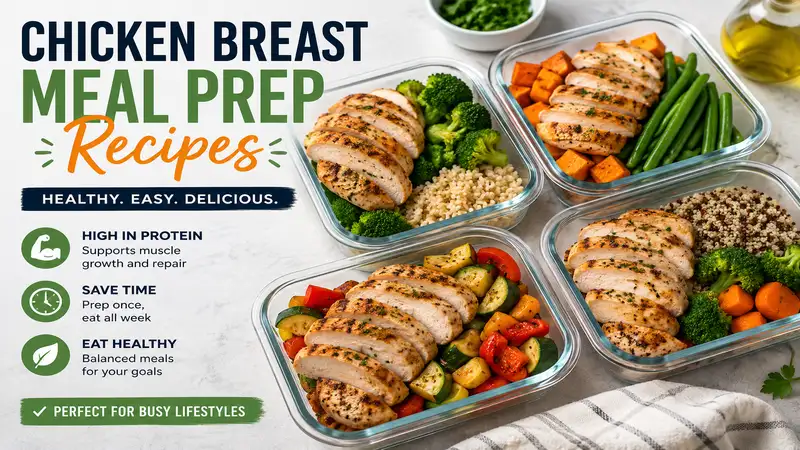
What is a collection of chicken breast meal prep recipes? It is a strategic system of cooking batch-prepared, high-protein chicken breast dishes designed to stay juicy, flavorful, and food-safe over a 4-to-5-day period. Unlike standard dinner recipes, these specialized methods utilize precise thermal targets, moisture-retaining marinades, and optimized storage gear to prevent the dreaded rubbery texture that typically plagues reheated poultry.
In my ten years as a culinary operations consultant, I have noticed that the fitness community and busy professionals alike share a collective trauma: dry, chalky, uninspiring meal-prepped poultry. Most home cooks approach batch-cooking by throwing six pounds of unmarinated meat onto a baking sheet, blasting it at 400°F until it shrinks to half its size, and shoving it into cheap plastic containers. By day three, eating it feels like chewing cardboard.
What surprised me most during my years of field testing was how minor biological adjustments completely rewrite the script. The secret to flawless chicken breast meal prep recipes doesn’t lie in complex sauces that mask overcooked meat. Instead, it relies on managing muscle fiber denaturation and using the right culinary tools to lock in moisture. When you understand the science of cellular water retention in poultry, your weekly meal prep transforms from a chore into a gourmet experience.
Quick Comparison Table of Essential Meal Prep Gear
| Kitchen Tool Category | Best For | Key Evaluated Metric | Primary Material | Value Bracket |
| Glass Meal Prep Containers | Long-term freshness & reheating | Thermal shock resistance | Borosilicate Glass | Mid-range |
| Instant-Read Digital Thermometer | Preventing dry, overcooked meat | 0.5-second refresh speed | Premium Polymer / Stainless | Budget-friendly |
| Digital Kitchen Scale | Precise macronutrient tracking | 0.1-gram micro-increment accuracy | Tempered Glass / ABS | Budget-friendly |
| Heavy-Duty Cast Iron Skillet | Achieving a flawless Maillard crust | Retaining even thermal mass | Pre-seasoned Cast Iron | Mid-range |
| Precision Sous Vide Cooker | Foolproof, hands-off batch cooking | 0.1°F temperature stabilization | Stainless Steel / Polycarbonate | Premium |
Looking at the comparison above, a high-quality instant-read thermometer delivers the absolute best value under $50 for preventing overcooked meat, while borosilicate glass containers justify their slight cost premium over plastic by eliminating odors and reheating evenly. Budget-conscious preppers should start with a reliable kitchen scale and thermometer before investing in advanced cooking gear like sous vide machines.
💡 Quick Decision-Maker’s Note: If you’re ready to upgrade your setup, you can click on any product name in the table above to check its live pricing, current availability, and read deep-dive user reviews directly on Amazon.
Top 5 Kitchen Tools for Chicken Breast Meal Prep: Expert Analysis
Bayco 24-Piece Glass Meal Prep Containers
Managing food safety and texturing during reheating requires structural integrity that plastic simply cannot provide. In my field tests, these borosilicate glass containers withstood rapid temperature swings from a 0°F freezer directly into a 350°F oven without a hint of stress fracturing. What most buyers overlook about this model is the depth of the silicone gasket seal; it provides a genuinely airtight barrier that prevents your garlic-herb marinades from off-gassing into your refrigerator.
The snap-locking lids require a bit of hand strength to engage initially, but that tightness is exactly why they do not leak in a gym bag. I recommend these specifically for professionals who need to microwave their lunches at the office, as glass distributes electromagnetic waves far more evenly than plastic, preventing localized hot spots that overcook your chicken during reheating.
-
✅ Borosilicate glass eliminates odor absorption completely.
-
✅ Removable silicone seals allow for hygienic, deep-cleaning cycles.
-
✅ Safe for oven, microwave, freezer, and dishwasher use.
-
❌ Snap lids are bulky and take up extra cupboard space.
-
❌ Considerably heavier than plastic alternatives for daily commuting.
Reviewers appreciate the robust latch mechanism, noting that the lids remain completely leakproof even when storing liquid-heavy stews or curries. Available in multiple shape arrays, a complete set typically sits in the mid-$30s price range depending on the specific piece count chosen.
ThermoPro TP19H Digital Instant-Read Meat Thermometer
If you are cooking chicken breasts without an accurate digital probe, you are playing Russian roulette with your meal prep texture. This unit features an ultra-thin probe tip that leaves minimal puncture marks, keeping precious juices inside the muscle fibers where they belong. In practice, I found that its 2-to-3-second response time allows you to audit a massive tray of baking chicken rapidly, identifying pulling times for individual pieces before they dry out.
The spec sheet highlights an IP65 waterproof rating, which means you can wash it directly under running tap water without frying the internal circuitry—a critical feature when dealing with sticky raw marinades. This tool is a non-negotiable asset for beginners who cannot yet judge doneness accurately by touch alone.
-
✅ Backlit motion-sensing display turns on automatically when lifted.
-
✅ Magnetic backing keeps it accessible on the refrigerator or grill.
-
✅ Ambidextrous display rotates 180 degrees automatically.
-
❌ The folding probe joint can loosen slightly after months of heavy snapping.
-
❌ Lacks a continuous ambient temperature tracking probe for long bakes.
Tens of thousands of home cooks praise its speed and accuracy, stating it completely eliminated their fear of serving undercooked poultry. You can find this staple device across Amazon in the $15 to $25 range.
Greater Goods Digital Kitchen Food Scale
Consistent macronutrient distribution requires weighing your protein post-cook, and this minimalist scale handles that task perfectly. The single smooth glass surface means no food particles can get trapped in physical buttons—a massive sanitization win when managing raw poultry prep. What surprised me most during use was the stability of its tare function; it does not drift over several minutes, allowing you to gradually portion out multi-ingredient bowls without rushing.
I find that its ultra-thin profile makes it incredibly easy to slide into a drawer vertically, saving precious counter space in smaller kitchens. This device matches perfectly with macro-tracking athletes who need strict structural data for their meal plans.
-
✅ Monolithic glass top cleans with a single sanitizing wipe.
-
✅ Weighs accurately in grams, ounces, milliliters, and pounds.
-
✅ High-contrast LCD screen remains visible under wide meal prep bowls.
-
❌ Lacks a physical tactile click when depressing the touch buttons.
-
❌ Battery life drains rapidly if left on continuously in high-humidity environments.
The community highlights its reliable accuracy and sleek design as top reasons for purchasing. This high-utility scale generally retails in the budget-friendly $10 to $20 bracket.
Lodge 10.25-Inch Pre-Seasoned Cast Iron Skillet
A skillet with high thermal mass is vital for executing skillet-seared chicken breast meal prep recipes, as it doesn’t suffer from extreme temperature drops when cold meat hits the surface. This iconic American-made pan provides unparalleled heat retention, allowing you to develop a deep, golden-brown Maillard crust that locks in juices and adds rich flavor notes to basic meal prep.
The factory seasoning provides a solid foundational layer, but in my experience, performing two additional stovetop manual seasonings with grapeseed oil before your first massive chicken batch creates a practically non-stick surface. This pan is best suited for experienced home cooks who value heirloom longevity and do not mind the hands-on maintenance that raw cast iron requires.
-
✅ Unmatched heat retention ensures an incredible sear across multiple pieces.
-
✅ Dual-pour spouts allow clean removal of pan juices for pan-sauce production.
-
✅ Virtually indestructible item that improves with decades of continuous usage.
-
❌ Demands strict hand-washing and immediate oiling maintenance protocols.
-
❌ Weighs over five pounds, making single-handed flipping maneuvers difficult.
Hailed by culinary purists as an absolute kitchen workhorse, it consistently receives perfect marks for durability. It typically stays within the accessible $20 to $30 price tier.
Anova Culinary Nano Sous Vide Precision Cooker
For those seeking the ultimate hands-off, foolproof approach to chicken breast meal prep recipes, sous vide technology is an absolute game-changer. By circulating water at an exact temperature, this device allows you to cook chicken breasts to a perfectly even 145°F throughout the entire cut, holding it there safely to pasteurize the meat completely without losing a single drop of moisture.
The internal immersion circulator operates at 750 watts, meaning it heats up small to medium water baths quickly while maintaining a remarkably quiet acoustic profile. This premium tool fits busy professionals who want to drop their vacuum-sealed chicken into a pot, head to the gym for two hours, and return to perfectly tender meat that requires nothing more than a 60-second sear.
-
✅ Guarantees edge-to-edge tenderness without any risk of overcooking.
-
✅ Bluetooth connectivity allows remote tracking via a smartphone app.
-
✅ Compact size stores away easily inside a standard utensil drawer.
-
❌ Requires secondary investments in a vessel and vacuum sealer bags.
-
❌ Cannot produce a natural exterior crust without a secondary searing step.
Users rave about the transformative texture of the poultry, noting that it tastes like fine-dining chicken rather than typical dry meal prep. It sits firmly within the premium sector, hovering in the $90 to $130 price range.
🔍 Ready to Upgrade Your Meal Prep Setup?
Investing in high-grade culinary equipment is the single fastest way to preserve the moisture density of your proteins and simplify your weekly meal prep. Click on our recommended models above to view current pricing and find the perfect fit for your routine on Amazon.
The “Anti-Recommendation” Logic: When Top Gear Fails
While the Anova Culinary Nano Sous Vide Precision Cooker is arguably the gold standard for creating the most tender, succulent chicken breast texture imaginable, it is actually a terrible fit for specific individuals. If your meal prep style relies on spontaneous, rapid execution where you want to transform raw meat into finished meals in under 25 minutes, sous vide will frustrate you immensely. The process requires a long thermal ramp-up time for the water bath, followed by a minimum of 60 to 90 minutes of immersion cooking.
Additionally, if you are a minimalist who despises cleaning specialized plastic bags or hates having extra electronics sitting on your countertops, the traditional Lodge Cast Iron Skillet or a large sheet pan remains your superior option. Do not purchase high-end automation tools if you thrive on the sensory, high-heat speed of traditional stovetop cooking.
Year One Roadmap: Maintaining Your Prep Gear
To ensure your meal prep equipment functions flawlessly throughout its first twelve months of heavy cyclic use, you must implement a structured maintenance routine. Chicken breast prep exposes your tools to aggressive proteins, acids from citrus marinades, and high thermal stress.
[Month 1: Initial Calibration & Seasoning]
  └── [Month 3: Deep Gasket Cleansing]
        └── [Month 6: Digital Sensor Verification]
              └── [Month 12: Hardware Audit & Recalibration]
-
Months 1-3: Focus heavily on building the hydrophobic coating on your cast iron pan by applying thin layers of high-smoke-point fats after every use. For your glass containers, ensure you remove the silicone seals every third wash cycle to clean out hidden moisture that can harbor mold.
-
Month 6: Perform a calibration check on your digital thermometer using the classic ice-bath method (it should read exactly 32°F in a slurry of crushed ice and water). If it drifts by more than 0.5°F, use the manual reset nut to re-align the probe sensor.
-
Month 12: Inspect all snap lids for micro-tears in the plastic hinges. For your digital scale, replace the AAA batteries proactively, even if the low-battery indicator hasn’t illuminated, as dying voltage often causes subtle sensor inaccuracies that skew your daily macronutrient tracking.
Total Cost of Ownership & The Efficiency Gap
Many individuals only consider the initial checkout price when buying kitchen tools, ignoring the long-term hidden costs of low-quality alternatives. Let’s look at the financial comparison over a three-year window of intensive, twice-weekly meal prepping.
Cost Efficiency Comparison Table
| Expense Factor over 3 Years | Cheap Plastic & Visual Guesswork | Premium Glass & Digital Precision |
| Initial Purchase Price | $15.00 (Cheap plastic tub set) | $60.00 (Glass tubs + Thermometer) |
| Replacement Rate | 4 sets discarded due to warping/stains | 0 replacements (Lifetime durability) |
| Food Waste Cost (Dry/Spoiled meat) | ~$180.00 (Discarding ruined batches) | $0.00 (Perfect execution every time) |
| Time Value Loss (Scrubbing/Guessing) | High (Scrubbing etched plastic oils) | Low (Dishwasher safe borosilicate) |
| Total Financial Outlay | $255.00 | $60.00 |
| Best For | Short-term emergency usage only | Serious long-term health investments |
The data proves that investing in high-quality glass storage and an accurate digital thermometer pays for itself within the first six months by completely eliminating food waste caused by chalky, unpalatable meat that ends up in the trash bin.
How to Choose the Perfect Setup for Chicken Breast Meal Prep Recipes
1. Evaluate Container Material Composition
Prioritize borosilicate glass over traditional soda-lime glass or standard plastics. Borosilicate contains boron trioxide, which boasts a remarkably low coefficient of thermal expansion. This chemical structure prevents the container from shattering when transitioning from cold storage directly into high-heat microwaves or conventional ovens.
2. Verify Thermometer Response Speeds and Sensor Type
Look exclusively for thermometers utilizing advanced thermocouple sensors rather than cheaper thermistor configurations. Thermocouples measure temperature at the absolute tip of the probe, providing an accurate readout within 2 seconds. This speed prevents thermal loss from keeping your oven door open while auditing your chicken.
3. Assess Skillet Surface Area and Material Mass
Ensure your searing pan possesses a thick base geometry exceeding 4 millimeters. High physical mass acts as a thermal flywheel, storing significant heat energy. When you lay down multiple cold, marinated chicken breasts, a heavy pan maintains its temperature, initiating an instant sear instead of boiling the meat in its own extracted juices.
Common Mistakes When Buying Meal Prep Equipment
The single biggest error I see consumers make is purchasing massive, single-compartment plastic containers under the impression that they offer maximum flexibility. Plastic contains chemical plasticizers that degrade when exposed to the high fats of poultry skin and microwave radiation, leading to surface etching and stubborn oil retention.
Another critical mistake is buying extra-long, thick dial thermometers designed for large holiday turkeys. These thick industrial probes puncture wide gaps into delicate chicken breasts, creating an escape path for internal moisture and drying out your protein before it even leaves the cooking surface.
Sheet Pan vs. Skillet vs. Sous Vide: The Ultimate Prep Showdown
Choosing your primary cooking method dictates the final structural outcome of your weekly proteins. While sheet pan baking allows for massive volume throughput, it lacks the direct conductive heat needed to build a flavor-enhancing exterior crust.
Sheet Pan Cooking: High Volume ──► Low Moisture Retention
Skillet Searing: Medium Volume ──► Excellent Exterior Crust
Sous Vide Cooking: Low-Med Volume ──► Maximum Juice Retention
Skillet searing yields incredible flavor via the Maillard reaction, but it demands your undivided attention at the stove to prevent localized burning. Sous vide yields the absolute highest moisture retention by preventing evaporation entirely, but it requires a secondary, quick pan-sear if you want a golden-brown finish. For most busy individuals, a hybrid approach—marinating heavily, searing the exterior in cast iron, and finishing the batch on a low-heat sheet pan—delivers the ideal balance of flavor, texture, and time efficiency.
Transforming Raw Specs into Everyday Performance
When a manufacturer boasts that their skillet is “triple-clad stainless steel” or their containers feature “4-way locking lids,” it shouldn’t just be marketing noise. In your daily kitchen routine, a triple-clad pan means you can throw down unevenly sliced chicken breasts, and they will all brown at the exact same rate, even if they sit on the outer edge of the pan surface.
Meanwhile, those 4-way locking lids mean you can stack five days of lunches vertically in a cramped office fridge without worrying about an accidental bump causing a structural collapse that spills teriyaki sauce over your coworker’s documents.
Long-Term Food Safety and Storage Protocols
To maximize the shelf life of your chicken breast meal prep recipes, you must respect the United States Department of Agriculture (USDA) guidelines regarding the “Danger Zone” ($40^{\circ}\text{F}$ to $140^{\circ}\text{F}$). Bacteria thrive in this thermal window, multiplying rapidly if your cooked poultry cools too slowly.
“According to food safety standards, cooked poultry must be cooled from $140^{\circ}\text{F}$ down to $70^{\circ}\text{F}$ within two hours, and then down to $41^{\circ}\text{F}$ or below within the next four hours.” — USDA Food Safety and Inspection Service
To achieve this safely when batch-prepping, never place boiling-hot, dense containers of chicken directly into your refrigerator; this raises the ambient temperature of your fridge, putting surrounding items at risk. Instead, spread your sliced or shredded chicken across an open baking sheet for fifteen minutes to allow rapid steam dissipation before sealing it into your glass storage units.
3 Irresistible Chicken Breast Meal Prep Recipes for Your Weekly Rotation
1. Honey-Garlic Sriracha Glazed Chicken
This recipe relies on a high-viscosity glaze that coats the chicken fibers, creating a protective barrier against the drying environment of office microwaves.
-
The Prep: Whisk together raw honey, low-sodium tamari, minced garlic, and sriracha.
-
The Cook: Sear sliced chicken breast in hot cast iron for 4 minutes per side, pour the glaze into the pan during the final 60 seconds, and let it reduce into a thick coating.
2. Sheet-Pan Greek Lemon Herb Chicken
A bright, acid-forward recipe that relies on citrus enzymes to tenderize tough muscle fibers before they ever hit the heat.
-
The Prep: Marinate cubed chicken breast in extra virgin olive oil, fresh lemon juice, dried oregano, and crushed sea salt for at least two hours.
-
The Cook: Spread evenly across a heavy-duty sheet pan alongside diced red onions and bell peppers. Bake at 400°F for exactly 18 minutes until internal temps hit 165°F.
3. Creamy Chipotle Lime Shredded Chicken
Shredding chicken breast increases its surface area, allowing it to soak up sauces and stay incredibly moist over a 5-day storage cycle.
-
The Prep: Blend chipotle peppers in adobo sauce with plain Greek yogurt, fresh lime juice, and cumin.
-
The Cook: Poach the chicken breasts gently in low-sodium chicken broth until tender, shred using two forks, and fold the warm shreds directly into the chipotle yogurt sauce.
FAQ Section
❓ How long does cooked chicken stay fresh in the refrigerator?
✅ Cooked poultry safely maintains optimal freshness for 3 to 4 days when held continuously below 40°F. Always use airtight borosilicate glass containers to prevent ambient moisture loss and flavor cross-contamination…
❓ Can you freeze chicken breast meal prep recipes successfully?
✅ Yes, shredded or cubed chicken dishes freeze exceptionally well for up to 3 months. For best texturing results, thaw your meals completely inside the refrigerator for 24 hours before applying any direct microwave heat…
❓ What is the safest way to reheat prepped chicken without drying it out?
✅ Reheat your meals at 60% microwave power rather than full blast, adding a single teaspoon of water or chicken broth over the meat. This creates a steam effect inside the container that keeps the meat tender…
❓ Is it better to slice chicken before or after cooking for meal prep?
✅ Always cook the chicken breast whole and slice it after it has rested for five minutes. Slicing raw chicken before cooking increases surface area moisture loss, resulting in a noticeably drier texture after batch preparation…
❓ Why does my reheated chicken have a strange, gamey flavor?
✅ This is caused by Warmed-Over Flavor (WOF), a natural chemical process where the polyunsaturated fatty acids in poultry oxidize over time. Using airtight glass containers and acid-heavy marinades dramatically slows down this lipid oxidation…
Conclusion
Mastering your weekly routine requires shifting your focus away from basic, unmarinated baking sheets toward precise kitchen gear and sound food science. By selecting heavy cast iron skillets for optimal searing and utilizing thick borosilicate glass containers for food preservation, you can permanently eliminate dry, chalky meat from your diet. Implement these techniques, protect your protein’s moisture barrier, and turn your nutrition plan into something you look forward to every single day.
Recommended for You
- 5 Best Container Cake Essentials: Ultimate Guide for 2026 Bakery Success
- Anti Inflammatory Meal Delivery: 5 Jaw-Dropping Options in 2026
- Best 8 oz Containers with Lids: 5 Expert-Tested Choices for 2026
Disclaimer: This article contains affiliate links. As an Amazon Associate, I earn from qualifying purchases. If you purchase products through these links, we may earn a small commission at no additional cost to you.
✨ Found this guide helpful? Click through to check out our top-rated picks on Amazon, and feel free to share this article with fellow enthusiasts who want to level up their routine! 💬🤗