
In This Article
Introduction: Why Separated Lunch Containers Changed How America Packs Lunch
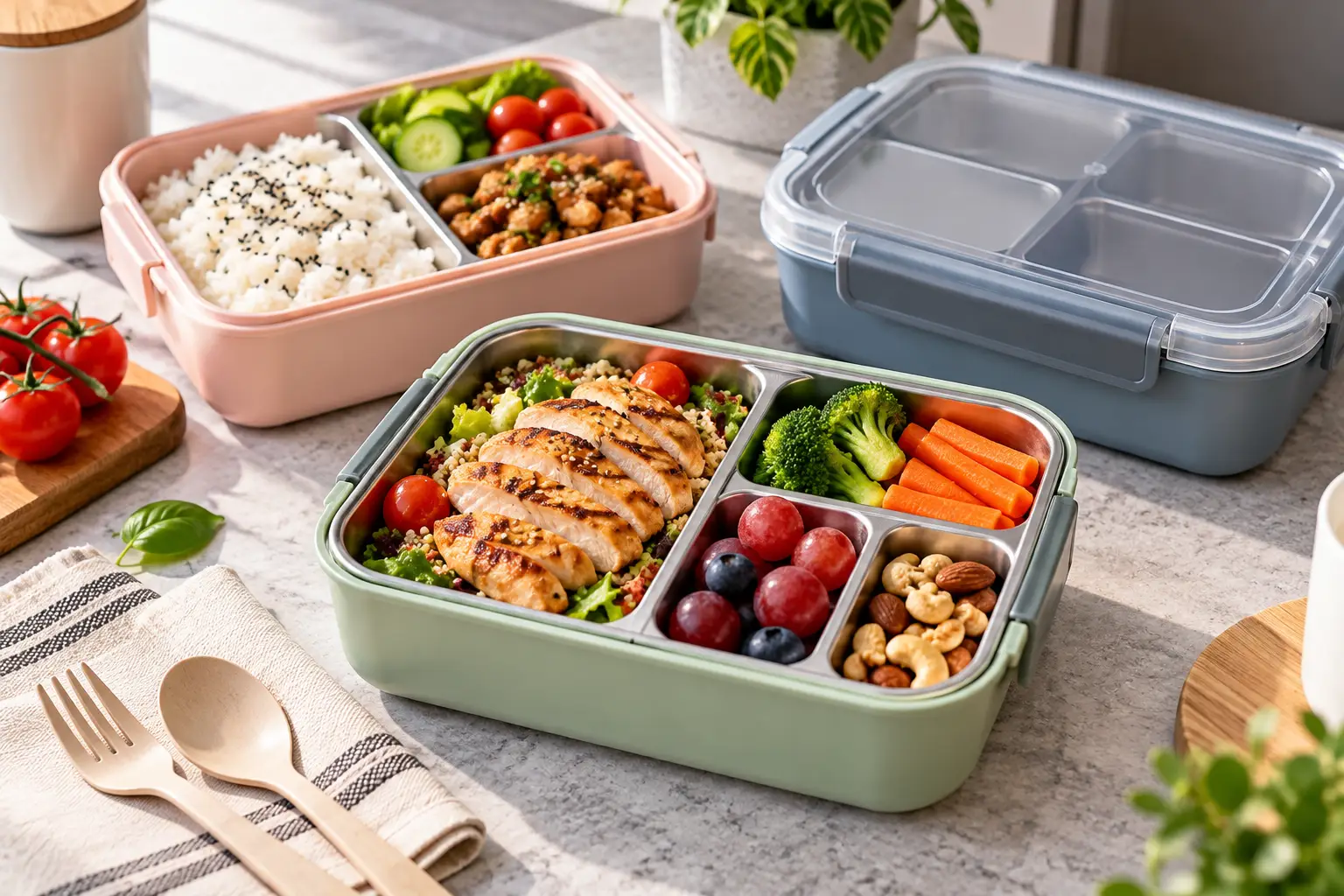
Separated lunch containers are reusable boxes with two or more built-in compartments that keep foods apart, so your crackers stay crisp, your dressing stays put, and your rice never drinks your curry. Most use plastic, glass, or stainless steel, and many add silicone seals to stop wet foods from migrating between sections.
If that definition sounds simple, the shopping experience is anything but. Search Amazon for separated lunch containers and you’ll get thousands of results that look nearly identical in photos but behave very differently at 11:45 a.m. in a backpack. Some seal each compartment individually. Others only seal the outer rim, which means your yogurt can wander into your grapes the moment the box tips sideways. Some go in the microwave; some would set off sparks if you tried.
The concept itself isn’t new. The Japanese bento tradition has organized single-portion meals into neat sections for centuries, and modern divided lunch containers borrow that logic while adding dishwasher-safe materials, locking clips, and leak-proof gaskets.
This guide cuts through the noise. We compared spec sheets, manufacturer care instructions, and the aggregated customer feedback we could actually verify for seven real products sold in the US, spanning budget multi-packs to premium stainless steel. You won’t find invented reviews or fake “I tested this” stories here. Instead, you’ll get honest analysis of what each feature means in daily use, who each box suits, and where each one falls short.
Whether you’re packing a toddler’s snack spread, a teenager’s oversized lunch, or your own office meal prep, the right separated lunch containers will save you money, cut down on disposable bags, and make lunch something you actually look forward to. Let’s find yours. 🍱
Quick Comparison: The Best Separated Lunch Containers at a Glance
Here’s the short version before we dig into the details. Price ranges reflect what we saw at the time of writing; prices may vary, so always check the current price.
| Product | Material | Compartments | Leak Protection | Approx. Price | Best for |
|---|---|---|---|---|---|
| Bentgo Classic | BPA-free plastic | 3 (stacked) | Not leakproof | $15–$20 | Budget adults, dry foods |
| Bentgo Fresh | BPA-free plastic | 3–4 | Leak-proof tray | $20–$30 | Everyday adult lunches |
| Bentgo Glass | Glass + plastic lid | 3 | Leak-proof all-around | $20–$30 | Plastic-free reheating |
| Freshware 3-Compartment Containers | Polypropylene | 3 | Leak-resistant | $15–$25 per multi-pack | Weekly meal prep |
| Yumbox Original | Tritan tray + silicone lid | 6 | Seals each section | $30–$40 | Preschool to early grade school |
| PlanetBox Rover | 18/8 stainless steel | 5 | Not leakproof (dippers for wet foods) | $55–$70 | Buy-it-once durability |
| OmieBox | Plastic + stainless thermos | 3 + thermos | Thermos leak-proof; sides light-duty | $40–$50 | Hot and cold in one box |
Looking at the table, the biggest dividing line isn’t price but leak protection. The Bentgo Fresh, Bentgo Glass, and Yumbox Original genuinely isolate wet foods, while the Bentgo Classic and PlanetBox Rover expect you to pack drier meals or use accessories. If your lunches include sauces, dips, or juicy fruit, that single column should narrow your shortlist faster than any other.
💬 One click helps other shoppers make an informed choice too! 😊
Top 7 Separated Lunch Containers: Expert Analysis
Each pick below includes what the specs mean in practice, who it suits, what verified reviews tend to say, and an honest value verdict.
1. Bentgo Classic — the budget-friendly all-in-one starter
The Bentgo Classic packs a surprising amount of convenience into a low-cost, stackable package that’s ideal for testing whether bento-style lunches suit you.
It uses two stacked containers: a full entrée tray on the bottom and a two-section tray on top, held together by a nylon strap, with a plastic utensil set built in. In practice, that means you never forget a fork, and you can bring just one tier on light-appetite days. It’s top-rack dishwasher safe and marketed as odor- and stain-resistant, which matters if you pack tomato sauces often.
Here’s what to weigh: Bentgo states clearly that the Bentgo Classic is not leakproof, recommending you keep it upright when packing dressing or juicy fruit. That makes it a strong match for sandwiches, wraps, crackers, and cut veggies, but a poor match for soup lovers or anyone who tosses a bag around.
Customer reviews consistently praise the all-in-one design, though a recurring complaint is that the compartments feel smaller than product photos suggest, and some buyers mention they can’t trust it with anything that might leak.
Pros:
- ✅ Built-in utensils mean nothing extra to pack
- ✅ Stackable tiers let you carry half a lunch
- ✅ Lowest entry price among branded bento boxes
Cons:
- ❌ Not leakproof, so liquids are a gamble
- ❌ Compartments run small for big appetites
Typically priced around $15 to $20, it’s excellent value for dry-food packers who want a tidy, all-in-one system.
2. Bentgo Fresh — best everyday leak-proof pick for adults
The Bentgo Fresh is the box we’d point most adults toward first, because it solves the leak problem without the weight of glass or steel.
Its core feature is a leak-proof compartment tray with a 39.2-ounce total capacity, split into three sections, plus an optional divider that creates a fourth. On paper, that’s roughly enough for a full grain-and-protein entrée and two generous sides. The catch most buyers overlook: Bentgo notes the removable divider itself isn’t leak-proof, so use it for dry items like nuts, not salsa. The tray is microwave and dishwasher safe and free of BPA, PVC, phthalates, lead, and vinyl.
This model suits office workers, nurses, and teens who want one box that handles leftovers, salads, and snacks with minimal fuss. Because the tray lifts out, you can also stash spare trays in the fridge for meal prep, which some reviewers specifically mention enjoying.
Retail reviews we checked are strongly positive, with buyers repeatedly describing it as sturdy, leak-proof in daily use, and easy to clean.
Pros:
- ✅ Leak-proof tray handles dressings and dips
- ✅ Generous capacity for adult and teen appetites
- ✅ Backed by a two-year manufacturer warranty
Cons:
- ❌ Optional fourth divider does not seal liquids
- ❌ Bulkier than slim sandwich-style boxes
Usually found between $20 and $30, it delivers the best balance of capacity, leak protection, and price in this lineup.
3. Bentgo Glass — best for reheating without plastic
The Bentgo Glass is built for people who want to microwave or even oven-reheat lunch in the same container they carry it in.
Its glass base holds about 41 ounces total: a 25-ounce main compartment and two 8-ounce side sections. The base is safe for the dishwasher, microwave, oven (without the lid), and freezer, which translates into a true cook-store-carry-reheat workflow. Locking clips and a sealing lid make it leak-proof around the edges and between compartments, so curry and rice genuinely stay apart. Non-porous glass also won’t absorb stains or odors the way older plastics can.
Here’s the honest trade-off: glass is heavy and breakable, and at about 8.7 by 6.3 by 2.6 inches, this box is chunky. Bentgo even warns it doesn’t fit its own insulated bag, so plan on a roomier tote.
Retailer reviews we could verify are positive, with buyers highlighting the leak-proof seal and spacious compartments.
Pros:
- ✅ Oven- and microwave-safe glass base
- ✅ Seals between compartments, not just outside
- ✅ Resists stains and lingering food odors
Cons:
- ❌ Noticeably heavier than plastic alternatives
- ❌ Won’t fit Bentgo’s standard insulated bag
At roughly $20 to $30, it’s fair value for anyone prioritizing plastic-free reheating over portability.
4. Freshware 3-Compartment Containers — best bulk value for meal preppers
The Freshware 3-Compartment Containers are the workhorse choice for anyone who preps a week of lunches every Sunday.
Each container holds 24 ounces total, split into a 12-ounce main section and two 6-ounce sides, and they’re sold in multi-packs (21-count and larger). That split is useful for portion-conscious eaters: a palm-size protein, a grain, and a vegetable fit almost exactly. They’re BPA-free polypropylene and rated microwave, dishwasher, and freezer safe, so you can cook, freeze, and reheat without transferring food.
The thing to understand is that these are leak-resistant, not leak-proof. The snap lids are fine for stews and stir-fries packed upright, but they aren’t designed for thin liquids or rough commutes. Think of them as affordable, semi-disposable divided lunch containers rather than heirloom gear.
Aggregated feedback we found is broadly positive on value and microwave use, though we couldn’t verify consistent long-term durability data, so expect to replace them periodically.
Pros:
- ✅ Lowest cost per container by a wide margin
- ✅ Portion-friendly 12/6/6-ounce split
- ✅ Stack neatly in fridge and freezer
Cons:
- ❌ Lids are leak-resistant, not leak-proof
- ❌ Thinner plastic won’t last like premium boxes
Multi-packs typically run $15 to $25, which makes the per-meal cost almost negligible.
5. Yumbox Original — best leak-proof bento for young kids
The Yumbox Original is designed around small hands and small appetites, and its sealing system is the real story.
It offers six compartments: five half-cup sections plus a round dip or treat well, totaling roughly 2.8 cups. The key feature is a molded silicone-lined lid that presses against every compartment individually, so thick wet foods like yogurt, hummus, and applesauce stay put. Practically speaking, that means you can pack a fruit cup next to crackers without a soggy disaster. A single latch is designed for preschool fingers, and the illustrated tray gently nudges kids toward food-group variety.
Be realistic about its limits: “leakproof” here applies to thick foods, not thin liquids like soup or juice. The tray is top-rack dishwasher safe, but the outer shell is generally recommended for hand-washing, which adds a minute to cleanup.
We couldn’t verify a large, consistent body of US review data, so we’re relying on the brand’s published specs; notably, it earned a 2013 Good Design Award for children’s products.
Pros:
- ✅ Each compartment is sealed individually
- ✅ Easy one-latch opening for small children
- ✅ Half-cup portions suit preschool appetites
Cons:
- ❌ Too small for older kids and teens
- ❌ Outer shell needs hand-washing
At around $30 to $40, it’s a smart buy for parents of kids roughly ages 3 to 8.
6. PlanetBox Rover — most durable stainless steel option
The PlanetBox Rover is the box you buy once and hand down, thanks to its heavy-duty 18/8 stainless steel build.
It has five compartments, four main sections plus a small treat spot, with the largest section measuring about 4 by 4 by 1.5 inches. In real terms, that’s a “grazing” layout: perfect for cheese cubes, berries, crackers, and a mini wrap rather than a full sandwich. It’s dishwasher safe and free of lead, PVC, phthalates, and BPA, and because steel doesn’t stain or hold odors, it looks the same in year three as in week one.
What the spec sheet doesn’t spell out: the Rover isn’t leakproof on its own. Wet foods need the brand’s lidded dippers, and some versions ship without them. It’s also not microwave-safe, so it’s strictly a cold or room-temperature lunch box.
Reviews consistently highlight durability and the convenience of many compartments in a compact footprint, with picky eaters frequently cited as the ideal user.
Pros:
- ✅ Stainless steel lasts for years of daily use
- ✅ Five sections suit snack-style “grazing” lunches
- ✅ Won’t absorb stains, odors, or flavors
Cons:
- ❌ Not microwave-safe and not leakproof alone
- ❌ Highest upfront price in this roundup
Usually priced between $55 and $70, its value shows up over many school years, not on day one.
7. OmieBox — best for hot and cold food in one box
The OmieBox solves a problem no other box here does: keeping hot pasta warm while the apple slices next to it stay cool.
It combines a 47-ounce box with a removable, vacuum-insulated 18/8 stainless steel thermos jar holding about 8.5 ounces. That means leftover mac and cheese, soup, or chili rides alongside sandwiches and fruit without a second container. For the thermos to work well, you’ll want to preheat it with hot water before filling, which takes about five minutes each morning.
Here’s what to weigh: the side compartments are only rated leak-proof for about a teaspoon of liquid, so wet foods belong in the thermos. OmieLife recommends hand-washing most parts and warns against microwaving, and at 1.7 pounds it’s heavier than plastic boxes. It’s listed as FDA- and CPSIA-compliant, which matters for a product marketed to children.
We weren’t able to verify a consistent pattern of Amazon review themes, so our assessment rests on the manufacturer’s specs and care guidance.
Pros:
- ✅ Built-in thermos keeps hot food separate
- ✅ Replaces two containers with one box
- ✅ Replacement parts sold separately
Cons:
- ❌ Side compartments handle very little liquid
- ❌ Mostly hand-wash, adding daily cleanup time
Typically around $40 to $50, it’s worth it for families who regularly pack warm lunches.
Detailed Spec Comparison: Capacity, Care, and Heat
This second table focuses on the specs that affect your daily routine: how much food fits, what goes in the dishwasher, and whether you can heat food.
| Product | Total Capacity | Microwave | Dishwasher | Weight Class | Best for |
|---|---|---|---|---|---|
| Bentgo Classic | Compact (3 sections) | Check label per tier | Top rack | Light | Sandwich-and-sides lunches |
| Bentgo Fresh | 39.2 oz | Yes (tray) | Yes | Light | All-around adult use |
| Bentgo Glass | 41 oz | Yes (no lid) | Top rack | Heavy | Leftovers you reheat |
| Freshware 3-Compartment Containers | 24 oz | Yes | Yes | Very light | Batch meal prep |
| Yumbox Original | ~2.8 cups | No (shell) | Tray only, top rack | Light | Little kids, dips |
| PlanetBox Rover | 5 small sections | No | Yes | Medium | Long-term cold lunches |
| OmieBox | 47 oz + 8.5 oz jar | No | Mostly hand-wash | Heavy | Warm entrée plus sides |
Comparing these numbers, the Bentgo Glass and Bentgo Fresh are the only true “big lunch” options that also reheat easily, which is why they suit adults with office microwaves. The OmieBox wins on temperature control but asks for more cleanup effort, while the Freshware 3-Compartment Containers trade durability for unbeatable convenience in bulk prep.
✨ Don’t miss the right fit for your lunch routine!
🔍 Take your lunch packing to the next level with this carefully curated lineup. Click a highlighted item to check current pricing and availability. These picks will help you pack fresher, tidier lunches the whole family will enjoy!
How to Pack Separated Lunch Containers Like a Pro
Owning great separated lunch containers is half the battle; packing them well is the other half. Here’s a practical routine that keeps food safe, appetizing, and leak-free.
Start with food safety ❄️
The USDA’s guidance on keeping bag lunches safe explains that bacteria multiply quickly between 40 °F and 140 °F, and it recommends packing perishable food with at least two cold sources in an insulated bag. Practically, that means your compartment box alone is not a cooler. Pair it with an insulated lunch bag and two slim ice packs, one above and one below.
Pack in the right order 🍱
- Chill first. Pack cooked food after it’s fully cold from the fridge, not warm from the stove. Warm food creates condensation, which turns crackers soggy even in sealed sections.
- Wet foods in sealed wells. Put dips, yogurt, and dressings in the most secure compartment, such as the dip well in the Yumbox Original.
- Dry foods last and on top. Crackers, nuts, and chips belong in non-sealing sections.
- Fill gaps. Half-empty compartments let food slide and bruise; tuck in a few grapes or snap peas.
Prep the thermos (if you have one) 🔥
For the OmieBox, fill the jar with boiling water for about five minutes, dump it, then add steaming-hot food. Skipping this step is the most common reason “insulated” lunches arrive lukewarm.
First 30 days: build habits ✅
Rinse containers the same day, store lids separately so gaskets dry, and pull silicone seals out weekly to clean underneath. These small habits prevent the funky smells that make people abandon reusable boxes by October.
Real-World Scenarios: Matching the Right Box to Your Routine
Specs only make sense once you picture them in an actual week. Here are three common profiles and the boxes that fit them best.
👩💼 Profile 1: The hybrid office worker with a microwave
Maya commutes 25 minutes by train three days a week and eats leftovers from dinner. Her budget is about $30, and she reheats lunch in the office microwave. The Bentgo Glass fits her perfectly: she can portion curry and rice the night before, reheat in the same dish, and skip dirtying a plate. If the weight bothers her on the train, the Bentgo Fresh is a lighter fallback with the same leak-proof confidence, though it’s best to check the tray’s microwave guidance before heating.
🎒 Profile 2: The parent of a kindergartner and a fifth grader
Jordan packs two school lunches five days a week. The kindergartner loves dips and grazing, so the Yumbox Original handles hummus and applesauce without leaks. The fifth grader eats more and wants warm pasta twice a week, making the OmieBox the better match. Total budget runs about $70 to $90, but both boxes replace a steady stream of zip-top bags.
🏋️ Profile 3: The Sunday meal prepper
Chris cooks five identical lunches each Sunday for portion control. A multi-pack of Freshware 3-Compartment Containers is the obvious choice: low cost, freezer-safe, and stackable. Because these aren’t built to last forever, Chris pairs them with one Bentgo Fresh for days when a salad with dressing is on the menu.
The pattern here is simple: match the box to the food you actually pack, not the food you wish you packed.
Problem → Solution: Fixing the Most Common Lunch Box Headaches
Even the best divided lunch containers run into trouble. Here are five common problems and precise fixes.
💧 Problem 1: Sauce leaks between compartments
Solution: Check whether your box seals each section or only the rim. If it’s rim-only, like the Bentgo Classic, move sauces into a small lidded cup or switch to a box with per-compartment seals, such as the Bentgo Glass or Yumbox Original.
🥶 Problem 2: Food arrives warm and unappetizing
Solution: Your container isn’t the cooling system; your bag is. Use an insulated bag with two ice packs, and pack food straight from the fridge. Stainless boxes like the PlanetBox Rover stay cool longer once chilled, so put the whole box in the fridge overnight.
🔥 Problem 3: The “hot” lunch is lukewarm by noon
Solution: Preheat the thermos with boiling water, fill it with food that’s genuinely steaming, and close it immediately. With the OmieBox, keep the lid shut until lunchtime.
👃 Problem 4: Lingering odors or stains
Solution: Remove silicone gaskets after every use and let them air-dry fully. For stubborn smells in plastic, a baking soda paste overnight usually helps. If stains bother you, glass or stainless steel avoids the problem entirely.
🥪 Problem 5: Sandwiches don’t fit
Solution: Measure before you buy. The PlanetBox Rover‘s largest section is about 4 by 4 inches, which suits quartered sandwiches or wraps rather than a full sub. The Bentgo Fresh main compartment handles a full sandwich more comfortably.
How to Choose Separated Lunch Containers
Choosing well comes down to seven questions, answered in this order.
- What do you actually eat? List your five most common lunches. Wet, saucy meals demand per-compartment seals; dry lunches don’t.
- Will you reheat? If yes, prioritize glass or microwave-safe plastic. Steel and insulated boxes generally can’t go in the microwave.
- How much food do you need? Kids’ boxes in the 2.5- to 3-cup range suit young children; adults usually want 35 ounces or more.
- How do you commute? Backpacks and bike bags toss boxes around, so leak-proof matters more. Glass adds weight you’ll feel on foot.
- How will you clean it? If you hate hand-washing, favor fully dishwasher-safe designs like the Bentgo Fresh or PlanetBox Rover.
- What material do you trust? Plastic is light and cheap; glass is inert and reheatable; stainless steel is nearly indestructible.
- What’s your real budget over time? A $60 box used for five years can cost less per lunch than cheap containers replaced every few months.
Answer these honestly, and the right box usually becomes obvious. Most buyers who end up disappointed skipped question one and bought for the photo rather than the menu.
Divided Lunch Containers vs. Single-Compartment Boxes and Zip Bags
Before compartment boxes went mainstream, most Americans packed lunch in a single container plus a few plastic baggies. Here’s how the approaches compare.
| Factor | Separated / Divided Containers | Single Container + Bags | Best for |
|---|---|---|---|
| Food separation | Built-in, consistent | Depends on how you wrap | Bentgo Fresh users who pack variety |
| Waste | Reusable for years | Ongoing bag waste | PlanetBox Rover for zero-waste goals |
| Portion control | Built into the layout | Requires measuring | Freshware 3-Compartment Containers for prep |
| Upfront cost | Moderate to high | Very low | Budget packers can start with Bentgo Classic |
| Packing speed | Fast once routine is set | Slower with multiple bags | Busy parents using Yumbox Original |
This comparison shows the real advantage isn’t separation alone; it’s that compartments build portion control and routine into the container itself. Single containers win only on upfront cost, and that edge shrinks quickly once you count weeks of disposable bags. For most households, one good divided box pays for itself within a school semester.
The traditional approach still has a place for oversized items, like a whole salad or a full sub. But for the typical mix of a main, a side, and a snack, divided lunch containers are faster to pack and much tidier to eat from.
Leak-Proof Bento Box Design: What “Leak-Proof” Really Means
“Leak-proof” is one of the most stretched terms in this category, so it pays to understand the three levels you’ll encounter.
Level 1: Rim-sealed (leak-resistant)
The lid seals around the outside edge only. Food stays in the box but can move between sections if tilted. The Freshware 3-Compartment Containers and Bentgo Classic fall roughly here, which is fine for solid meals packed upright.
Level 2: Compartment-sealed
A silicone gasket or molded lid presses against each section’s walls. The Bentgo Fresh tray, Bentgo Glass, and Yumbox Original use this approach, so a leak-proof bento box at this level handles yogurt, hummus, and dressing reliably. Thin liquids like broth can still find a way out over time.
Level 3: Fully liquid-tight
This is thermos territory, such as the jar inside the OmieBox. If you want soup, this is the only level you should trust.
What to check before buying
Look for specific wording like “leak-proof between compartments,” not just “leak-proof.” Check whether dividers are removable, since removable dividers almost never seal. And read the care instructions: a gasket that can’t be removed for cleaning will eventually harbor smells. In short, a leak-proof bento box is only as good as its weakest seal, and knowing which level you’re buying prevents nearly every lunchtime spill.
Compartment Lunch Box for Kids: What Parents Should Prioritize
Kids’ lunch gear has different priorities than adult gear, and the best compartment lunch box for kids is often not the fanciest one.
Can your child open it alone?
This matters more than any spec. Lunch periods are short, and a child who can’t open a latch may simply not eat. The Yumbox Original was designed with a single, easy latch specifically for small hands. Practice at home before the first day of school.
Are portions sized right?
Half-cup sections suit preschoolers and early elementary students. Older kids quickly outgrow them, which is when a larger box like the Bentgo Fresh or the OmieBox makes more sense.
Can it handle rough treatment?
Backpacks get dropped, kicked, and stuffed. Stainless steel like the PlanetBox Rover shrugs off abuse, while thin plastic can crack. Avoid glass for young kids entirely.
Does it fit their tastes?
Many kids eat better when foods don’t touch, which is why a compartment lunch box for kids often reduces lunchtime waste. Five small sections invite variety: a little protein, fruit, veggies, crackers, and a treat.
Is it easy to clean every night?
Parents wash these boxes daily. Fewer parts and dishwasher-safe trays save real time across a 180-day school year. For more school-specific safety tips, Clemson’s Home & Garden Information Center offers a practical bag-lunch safety fact sheet worth bookmarking.
Bento Box for Adults: Portions, Microwaves, and Office Realities
Adult lunches are bigger, more often reheated, and frequently eaten at a desk, so the ideal bento box for adults looks different.
Capacity: aim higher than you think
Many adults underestimate how much room a real meal takes. A box around 35 to 45 ounces, such as the Bentgo Fresh at 39.2 ounces or the Bentgo Glass at 41 ounces, comfortably holds a full entrée and two sides. Smaller boxes work only if you snack throughout the day.
Reheating realities
If your office has a microwave line at noon, a box you can heat directly saves time and dishes. Glass is the most forgiving here. Always remove lids before heating unless the manufacturer says otherwise, and never microwave stainless steel.
Professional appearance
It sounds minor, but plenty of adults avoid kid-looking gear at work. Most Bentgo adult models come in muted colors, and the stainless PlanetBox Rover has a clean, understated look.
Portion control without apps
A bento box for adults can quietly support health goals. The 12/6/6-ounce layout of the Freshware 3-Compartment Containers naturally limits the starch-heavy main while leaving room for vegetables, no calorie counting required.
Bag compatibility
Before buying, confirm your box fits your bag. Remember that the Bentgo Glass doesn’t fit Bentgo’s own insulated bag, a detail that has surprised plenty of buyers.
Meal Prep Containers With Compartments: Long-Term Cost and Maintenance
The sticker price is only part of the story. Meal prep containers with compartments look cheap or expensive depending on how long they last.
| Product | Approx. Upfront Cost | Expected Lifespan* | Rough Cost Per School Year | Best for |
|---|---|---|---|---|
| Freshware 3-Compartment Containers | $15–$25 (multi-pack) | Months, replace as lids wear | Low, but recurring | Large-batch prep |
| Bentgo Classic | $15–$20 | 1–2 years | Low | Light, dry lunches |
| Bentgo Fresh | $20–$30 | Several years with care | Low | Daily adult use |
| PlanetBox Rover | $55–$70 | Many years | Lowest over time | Long-term families |
*Lifespan estimates are our reasoning based on materials and warranty terms, not measured test data.
The math reveals something counterintuitive: the most expensive box upfront, the PlanetBox Rover, can become the cheapest per lunch if it lasts through several school years. Meanwhile, the Freshware 3-Compartment Containers keep costs low only if you accept periodic replacement. Warranty terms help here too; the Bentgo Fresh includes a two-year manufacturer warranty, which lowers your risk.
Maintenance that extends lifespan
- 🧽 Remove and wash gaskets after every use.
- 🌬️ Air-dry lids separately to prevent trapped moisture.
- 🔥 Keep plastic on the top rack, away from the heating element.
- 🧊 Never move glass directly from freezer to oven; sudden temperature swings can crack it.
Good habits turn mid-priced meal prep containers with compartments into multi-year tools rather than short-term purchases.
Materials and Safety: Plastic, Tritan, Glass, and Stainless Steel
Material choice affects safety, weight, heat tolerance, and how long your box lasts. Here’s a straightforward breakdown.
Polypropylene plastic
Lightweight, inexpensive, and usually microwave-safe. It’s what most meal prep multi-packs use. The downside is gradual staining and wear.
Tritan copolyester
Used in trays like the Yumbox Original, Tritan is a clear, sturdy, BPA-free plastic that resists cracking better than many standard plastics.
Glass
Inert, non-porous, and ideal for reheating. The Bentgo Glass is oven-safe without its lid. It’s heavy and breakable, so it’s best for adults.
18/8 stainless steel
Nearly indestructible, odor-proof, and long-lasting, as seen in the PlanetBox Rover and the thermos inside the OmieBox. It can’t go in the microwave.
What about BPA?
“BPA-free” labels are everywhere, so it helps to know where regulators stand. The FDA’s Q&A on BPA in food contact applications explains how the agency evaluates materials that may migrate into food and notes that it continues to monitor new research. Whatever your view, every product in this guide is marketed as BPA-free, and glass or steel avoids the question entirely.
Children’s product compliance
For kids’ gear, look for mentions of CPSIA compliance, the US law covering children’s products. The OmieBox, for example, lists FDA and CPSIA compliance on its spec sheet.
Common Mistakes to Avoid When Buying Separated Lunch Containers
Most disappointing purchases trace back to a handful of predictable errors.
❌ Trusting “leak-proof” without reading the fine print
As covered earlier, leak-proof can mean anything from rim-sealed to fully liquid-tight. Look for “between compartments” language, and treat removable dividers as non-sealing.
❌ Buying for photos instead of capacity
Product photos are styled to look generous. Check ounce or cup capacity and compartment dimensions. Reviewers of the Bentgo Classic, for instance, frequently mention it felt smaller than expected.
❌ Ignoring the microwave question
If you reheat daily, a stainless box will frustrate you. If you never reheat, paying extra for glass makes less sense.
❌ Forgetting the bag
A great box in a hot backpack is still unsafe for perishables. Budget for an insulated bag and ice packs alongside your separated lunch containers.
❌ Overbuying compartments
More sections aren’t always better. Six tiny compartments suit a preschooler’s snack spread but frustrate an adult eating a burrito bowl. Match the layout to your typical meal.
❌ Skipping the cleaning reality check
If a box needs hand-washing and you hate washing dishes, it will end up in the back of the cabinet. Be honest about your routine before you click “buy.”
🥗 Ready to pack smarter lunches this week?
👉 Revisit the picks above, compare them against the mistakes on this list, and click a highlighted product name to check today’s price and availability on Amazon. The right box makes healthy lunches feel effortless!
FAQ: Separated Lunch Containers
❓ Are separated lunch containers worth buying instead of reusable bags?
❓ Which divided lunch containers are safe to put in the dishwasher?
❓ What size bento box for adults should I buy for work?
❓ Can I buy separated lunch containers in bulk for meal prep?
❓ Is a stainless steel compartment lunch box for kids better than plastic?
Conclusion: Find the Separated Lunch Container That Fits Your Life
The best separated lunch containers aren’t the ones with the most compartments or the flashiest marketing; they’re the ones that match what you actually eat, how you commute, and how much cleanup you’ll tolerate.
If you want one all-around recommendation for adults, the Bentgo Fresh offers the strongest mix of capacity, leak protection, and value. Reheat lovers who want to skip plastic should look at the Bentgo Glass. Parents of young children will appreciate the per-compartment seals of the Yumbox Original, while families who pack warm lunches will get the most from the OmieBox. Meal preppers watching every dollar can’t beat the Freshware 3-Compartment Containers, budget-minded dry-food packers will be happy with the Bentgo Classic, and anyone who wants to buy once and be done should consider the PlanetBox Rover.
Whatever you choose, pair it with an insulated bag and ice packs, learn which level of “leak-proof” you’re really getting, and build a quick nightly cleaning habit. Those three steps matter as much as the box itself.
A good lunch container won’t make you a better cook, but it will make the food you already love travel better, look better, and stay safer until you’re ready to eat. Here’s to fewer soggy crackers and more lunches you actually look forward to. 🍱
🚀 Pack your best lunch yet!
✨ Click a highlighted product above to check current pricing and availability, and find the separated lunch container that turns your daily lunch into the easiest win of the day!
Recommended for You
- Rectangular Glass Container: 7 Best Leakproof Picks for 2026
- Protein and Fiber Meals: 7 Best Picks That Keep You Full (2026)
- Microwave Ready Meals: 7 Best Picks That Actually Satisfy (2026)
Disclaimer: This post contains affiliate links. As an Amazon Associate, I earn from qualifying purchases made through these links, at no additional cost to you.
✨ Found this article helpful? Share it with someone who needs it! 💬🤗