
In This Article
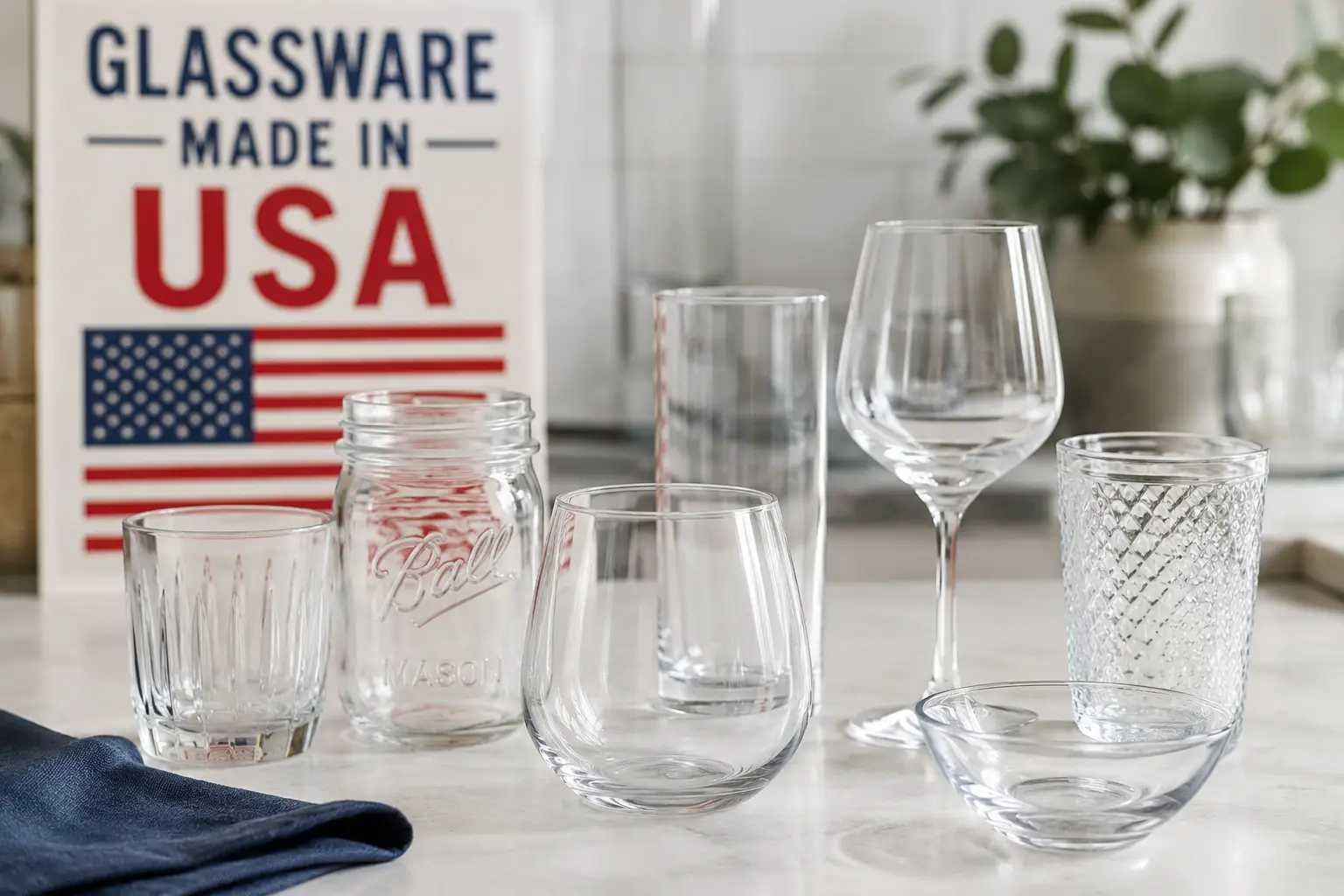
If you’ve ever pulled a “dishwasher safe, break-resistant” drinking glass out of the cabinet only to watch it shatter on the counter a month later, you already understand why glassware made in usa has become such a popular search. It’s not nostalgia — it’s a practical response to inconsistent quality from overseas suppliers, unclear lead-safety standards, and a general fatigue with products that don’t hold up. Glassware made in usa refers to drinkware, stemware, and glass kitchenware manufactured domestically, typically in long-running glass factories in Ohio, Pennsylvania, and New York, rather than imported from Mexico, China, or Eastern Europe.
The good news: American glassmaking never actually went away. Companies like Anchor Hocking, headquartered in Lancaster, Ohio, have been melting sand into tumblers for well over a century, and smaller operations are quietly keeping the tradition alive in New York and Oregon. The tricky part is figuring out which specific products are genuinely domestic, since even well-known brands split their manufacturing between US and international plants.
This guide walks through seven real, verifiable american made glassware brands and products you can find on Amazon, compares them head-to-head, and — more importantly — explains what actually matters when you’re choosing glassware manufactured in america for your kitchen, bar, or restaurant. We’ll cover care and maintenance, common buying mistakes, how domestic glass stacks up against imported alternatives, and the safety standards that separate a good glass from a risky one. By the end, you’ll know exactly which usa made drinkware fits your household, your budget, and how you actually use your glasses.
Quick Comparison: Top Glassware Made in USA at a Glance
Before diving into the full breakdown, here’s a snapshot of how these seven picks stack up on price range, durability, and best use case.
| Product | Type | Price Range | Best For |
|---|---|---|---|
| Anchor Hocking Rio 16-Piece Set | Tumblers + rocks glasses | Under $30 | Everyday family use |
| Libbey Gibraltar DuraTuff Cooler Glasses | Commercial-grade tumblers | $35–$55 | Restaurants, home bars |
| Ball Wide Mouth Mason Jar Glasses | Multipurpose jar-glasses | Under $25 | Casual entertaining |
| Anchor Hocking Manchester Rocks Glasses | Whiskey / old-fashioned | Under $20 | Small households, gifting |
| North Drinkware Mountain Pint Glass | Hand-blown pint glass | $40–$60 | Gifts, collectors |
| Liberty Tabletop Glassware | Small-batch stemware | $50–$90 | Formal dining, weddings |
| Anchor Hocking Heavy Base Rocks Glasses (Set of 12) | Bar-style rocks glasses | $30–$45 | Cocktail enthusiasts |
Looking at the table, there’s a clear split between everyday mass-produced sets from Anchor Hocking and Libbey, which trade novelty for reliability and value, and smaller-batch options like North Drinkware and Liberty Tabletop, which cost more but deliver a distinct look and story. If you just need solid daily drinkware, start with the top three rows; if you’re buying a gift or upgrading your bar cart, the bottom half of the table deserves a closer look.
💬 One click helps other shoppers make an informed choice too! 😊
Top 7 Glassware Brands Made in the USA: Expert Analysis
We selected these seven products to cover entry-level, mid-range, and premium price points, while sticking strictly to brands and factories that manufacture in the United States. Each one below includes real specs, honest analysis, and — where verifiable — a summary of actual aggregated customer sentiment rather than invented reviews.
1. Anchor Hocking Rio 16-Piece Drinking Glasses Set — best everyday value
This set pairs eight rocks glasses with eight tumblers, giving you a complete everyday lineup without buying two separate sets. Both styles are made from tempered soda-lime glass at Anchor Hocking’s Lancaster, Ohio facility, and the company has manufactured this style of glassware domestically for more than a century. In practice, the tempering process matters more than it sounds — tempered glass resists thermal shock, so pulling a glass straight from a hot dishwasher into cold tap water is far less likely to cause a hairline crack than it would with cheap imported glass.
Who it’s for: this is the set to buy if you’re furnishing a first apartment, replacing a mismatched cabinet of glasses, or just want a reliable “grab whatever’s clean” option that won’t chip after three washes. Reviews for this style consistently mention that the glasses survive years of dishwasher cycles better than big-box imported equivalents, though a small number of buyers note that a handful of pieces occasionally arrive with minor base imperfections — a normal quality-control variance in any mass-manufactured glass line.
Pros:
- ✅ Two glass styles in one affordable set
- ✅ Tempered glass resists thermal cracking
- ✅ Dishwasher, microwave, and fridge safe
Cons:
- ❌ Basic design with no decorative detailing
- ❌ Occasional minor base imperfections reported
At around $20–$30 for 16 pieces, this is one of the best per-glass values in domestic glassware — hard to beat if budget is the priority.
2. Libbey Gibraltar DuraTuff Cooler Glasses (Set of 12) — restaurant-grade toughness
Libbey built its Gibraltar line for commercial foodservice, which is exactly why it holds up so well at home. The faceted, paneled design isn’t just aesthetic — those ridges add structural rigidity and make the glass easier to grip with wet hands, a detail restaurant buyers care about far more than home shoppers typically do. Each glass goes through Libbey’s proprietary DuraTuff treatment, a heat-strengthening process that measurably increases resistance to both thermal and mechanical shock.
What most buyers overlook with this line is that “commercial grade” isn’t marketing fluff here; it’s the same glass used in bars and diners that run thousands of wash cycles a year. That makes it a smart pick for anyone who entertains often or has kids prone to knocking glasses off the counter. Aggregated reviews consistently praise the weight and durability of the Gibraltar line, with long-time restaurant-supply customers frequently noting they’ve replaced almost none of their set after years of use; a smaller number of reviewers mention the faceted pattern shows water spots more visibly than smooth glass.
Pros:
- ✅ Commercial-grade DuraTuff shock resistance
- ✅ Textured grip stays secure with wet hands
- ✅ Proven track record in restaurants and bars
Cons:
- ❌ Faceted pattern shows water spots easily
- ❌ Higher price than basic everyday sets
Expect to pay in the $35–$55 range for a set of 12 — a reasonable trade-off for glassware built to outlast typical consumer-grade sets by years.
3. Ball Wide Mouth Mason Jar Drinking Glasses (16 oz, Set of 12) — the most versatile pick
Ball mason jars were designed for home canning, but their thick, ribbed glass and wide mouth have made them a genuine crossover hit as everyday drinking glasses. Unlike thin-walled tumblers, mason jar glass is engineered to survive boiling-water canning baths, which means it shrugs off ordinary kitchen use without much thought. The wide mouth also happens to be ideal for iced drinks loaded with fruit, mint, or a full scoop of ice.
The honest trade-off here is versatility over polish: these were never designed to look like stemware, and they won’t pass for it. But for iced coffee, cocktails, smoothies, or simply repurposing jars you already own for canning, the dual-use functionality is hard to match. Reviews frequently mention that these jars double as storage containers for leftovers, dry goods, or homemade candles once the drinking-glass phase of ownership ends — a practical bonus that pure drinkware doesn’t offer.
Pros:
- ✅ Extremely thick, shock-resistant canning glass
- ✅ Doubles as food storage or preserving jars
- ✅ Wide mouth ideal for ice and garnishes
Cons:
- ❌ Casual look, not suited for formal settings
- ❌ Heavier than standard drinking glasses
Typically priced under $25 for a dozen, this is arguably the best dollar-for-dollar value in the entire lineup if you don’t need a refined aesthetic.
4. Anchor Hocking Manchester Rocks Old Fashioned Whiskey Glasses (Set of 4) — best small-batch starter set
Not every household needs 16 glasses at once, and that’s where the Manchester line earns its spot. This 10.5-ounce old-fashioned glass has a clean, unfussy silhouette with a slightly heavier base than Anchor Hocking’s basic tumbler lines, giving it a more substantial feel in hand without stepping up to premium bar glass pricing. It’s manufactured at the same Lancaster, Ohio plant as the rest of Anchor Hocking’s core drinkware.
Because it ships in a set of four rather than a dozen-plus, it’s a low-commitment way to try American-made glass before buying a larger set, or to top off an existing collection that’s down a glass or two. Based on comparing the specs against Anchor Hocking’s other rocks glasses, the Manchester’s slightly heavier base makes it marginally more tip-resistant on uneven bar carts — a small but real advantage for anyone who serves drinks outdoors. Reviewers commonly describe the glass as sturdier than expected for the price, with the main complaint being that four glasses simply isn’t enough for anyone who hosts regularly.
Pros:
- ✅ Heavier base than standard rocks glasses
- ✅ Small set size keeps upfront cost low
- ✅ Same Ohio factory as Anchor Hocking’s core line
Cons:
- ❌ Only four glasses per set
- ❌ No matching tumbler or highball option
At under $20, it’s an easy, low-risk way to add domestic glassware to your bar without committing to a full set.
5. North Drinkware Mountain Pint Glass — most distinctive gift option
North Drinkware takes a completely different approach: each pint glass is hand-blown in Portland, Oregon, with a 3D topographic impression of a real mountain — think Mount Hood, Mount Rainier, or Denali — molded into the base. This isn’t mass-produced tempered glass; it’s individually blown, which means slight variations in bubble placement and thickness are part of the product, not a defect.
This is squarely a gift-and-collector product rather than an everyday-use workhorse, and it’s priced accordingly. What sets it apart from every other product on this list is the storytelling angle: outdoor enthusiasts, hikers, and beer drinkers who care about where a glass comes from tend to treat these as display pieces as much as functional pint glasses. Aggregated customer feedback frequently highlights the “wow factor” when people notice the mountain silhouette for the first time, while a smaller number of reviewers note that hand-blown glass requires gentler handling than tempered tumblers — it’s not built to survive a dishwasher-cycle-after-cycle lifestyle the way Anchor Hocking’s line is.
Pros:
- ✅ Individually hand-blown in Portland, Oregon
- ✅ Genuine 3D topographic mountain detail
- ✅ Strong gift and collector appeal
Cons:
- ❌ Premium price relative to capacity
- ❌ Less shock-resistant than tempered glass
Expect to pay in the $40–$60 range for a single glass — a fair price for hand-blown craftsmanship, but not a fit if you need everyday, abuse-proof drinkware.
6. Liberty Tabletop Glassware — best for formal dining and gifting
Liberty Tabletop is better known for its flatware, manufactured in Sherrill, New York, but the company’s glassware line follows the same domestic-first philosophy: tumblers, wine glasses, and champagne flutes produced entirely in the United States rather than sourced overseas and rebranded. The stemware in particular leans toward a classic, understated silhouette that works for both everyday dinners and more formal table settings.
What the spec sheet doesn’t say, but the brand’s positioning makes clear, is that Liberty Tabletop is aimed at buyers who specifically want to trace their tableware back to a domestic factory — often for weddings, registries, or heirloom-quality purchases rather than casual replacement glasses. Because the company is smaller than Anchor Hocking or Libbey, review volume is lower, but the available feedback consistently points to solid build quality and a genuinely American supply chain, which is precisely what this buyer is shopping for.
Pros:
- ✅ Fully domestic manufacturing, including stemware
- ✅ Classic silhouette suited to formal settings
- ✅ Popular for weddings and registries
Cons:
- ❌ Smaller company means fewer style options
- ❌ Premium pricing versus mass-market brands
Pricing generally falls in the $50–$90 range depending on the set, positioning it as a considered purchase rather than an impulse buy.
7. Anchor Hocking Heavy Base Rocks Old Fashioned Whiskey Glasses (Set of 12) — best for home bartenders
Rounding out the list is Anchor Hocking’s 8-ounce Heavy Base rocks glass, sold in a larger set of 12 for buyers who want a full bar-cart rotation rather than a starter set. The defining feature is right in the name: a noticeably heavier base than the brand’s standard tumblers, which lowers the glass’s center of gravity and gives it a reassuring weight when you’re muddling cocktails or serving whiskey neat.
Home bartenders benefit from this weight distribution in a very practical way — a heavier base means less tipping on a moving bar cart or an uneven outdoor table, and the added glass mass also helps insulate drinks from hand warmth slightly longer than thin-walled glasses. Reviews consistently describe the Heavy Base line as feeling more “substantial” than typical rocks glasses at a similar price, with the most common complaint being that the wider silhouette takes up more cabinet space than slimmer tumblers.
Pros:
- ✅ Heavier base improves stability and grip
- ✅ Full 12-glass set for regular entertaining
- ✅ Proven Anchor Hocking durability track record
Cons:
- ❌ Bulkier shape uses more storage space
- ❌ Not stackable like slimmer tumbler styles
At roughly $30–$45 for a dozen, this is one of the better values for anyone building out a serious home bar with domestic glass.
Getting Started With American-Made Glassware: A Care Guide
Buying quality glassware made in usa is only half the equation — how you treat it in the first few months determines whether it lasts five years or fifty. Most of Anchor Hocking’s and Libbey’s tempered lines are technically dishwasher safe, but loading them incorrectly is the single most common cause of early chips. Keep glasses away from the direct spray of the dishwasher’s center arm, and avoid stacking them touching each other in the rack — glass-on-glass contact during the wash cycle is where most hairline cracks originate, not the wash itself.
For hand-blown pieces like the North Drinkware pint glass, skip the dishwasher entirely for the first several washes and hand-wash with a soft sponge; hand-blown glass has more natural thickness variation than machine-tempered glass, and thin spots are more vulnerable to thermal shock from a hot dishwasher cycle. A common first-30-days mistake is pouring boiling liquid into any cold glass straight from the fridge — even tempered glass has limits, and a sudden 100-plus-degree swing is exactly the kind of thermal shock that causes spontaneous cracking. Let glasses reach room temperature before adding hot liquids, and avoid setting a cold glass directly on a hot stovetop or dishwasher-fresh surface.
Long-term, rotate your glasses rather than always reaching for the same two or three — even durability-focused designs like Libbey’s DuraTuff line wear more evenly when usage is spread across the full set, which noticeably extends the life of the collection as a whole.
Real-World Scenarios: Which USA-Made Glassware Fits Your Life
Matching a product to your actual habits matters more than chasing the “best” glass on paper. Here are three common buyer profiles and the picks that make sense for each.
The budget-conscious young professional furnishing a first apartment: the Anchor Hocking Rio 16-Piece Set covers both rocks glasses and tumblers in one purchase, at a price low enough that breakage doesn’t sting. Add the Ball Wide Mouth Mason Jar set for iced coffee and smoothies, and you’ve got a complete, budget-friendly glassware wardrobe for well under $60 combined.
The home bartender who entertains most weekends: the Anchor Hocking Heavy Base Rocks Glasses and the Libbey Gibraltar DuraTuff Cooler Glasses together give you a rocks-and-highball combination built to survive frequent use, ice, and the occasional overzealous guest. Both lines are engineered for exactly this kind of repeat-use punishment.
The gift-giver shopping for a wedding, housewarming, or outdoor enthusiast: the North Drinkware Mountain Pint Glass and Liberty Tabletop Glassware both lean into craftsmanship and story — one through hand-blown mountain artistry, the other through small-batch domestic stemware — making either a far more memorable gift than a generic big-box glass set.
How to Choose Glassware Made in the USA
Sorting genuinely domestic products from vaguely “American brand” marketing takes a bit of diligence. Use this checklist:
- Check the manufacturing claim, not just the brand’s headquarters. A company can be headquartered in the US while manufacturing overseas — always look for an explicit “Made in USA” statement on the specific product, not just the parent company.
- Look for a named US facility. Brands proud of domestic manufacturing, like Anchor Hocking’s Lancaster, Ohio plant, will usually say so directly on the packaging or product page.
- Understand what “Made in USA” legally requires. The FTC’s Made in USA labeling standard requires that “all or virtually all” of a product be made domestically for the claim to be used — a useful benchmark when brands make vague sourcing statements.
- Match glass type to how you’ll use it. Tempered glass (Anchor Hocking, Libbey) suits everyday, dishwasher-heavy use; hand-blown glass (North Drinkware) suits display and gifting.
- Check set size against your household. Smaller households rarely need 16-piece sets; a four-glass starter set reduces both cost and cabinet clutter.
- Read aggregated review themes, not star ratings alone. Recurring complaints (like water-spotting on faceted glass) tell you more than an average score.
- Compare price per glass, not just set price. A 12-glass set at $40 often beats a 4-glass set at $20 on a per-unit basis.
Common Mistakes to Avoid When Buying Glassware Made in the USA
Even careful shoppers trip over a few recurring pitfalls. First, assuming an entire product line from a company is domestic just because some of it is — as one Anchor Hocking retrospective notes, the company’s core glass drinkware is largely American-made, but a handful of “non-core” imported items exist in its broader catalog, so it pays to check each specific listing. Second, buying based on price alone and ending up with thin, non-tempered glass that chips within weeks — tempered glass typically costs a little more up front but saves money in replacements over a year of regular use. Third, ignoring capacity: an 8-ounce rocks glass and a 16-ounce cooler glass serve very different purposes, and buying the wrong size for your typical drink is a common source of post-purchase regret. Finally, overlooking care instructions — hand-blown pieces and heat-tempered commercial glass don’t always follow the same washing rules, and treating them identically shortens the lifespan of whichever one is more delicate.
Glassware Made in the USA vs Imported Glassware
| Factor | USA-Made Glassware | Typical Imported Glassware |
|---|---|---|
| Thermal shock resistance | Often tempered (DuraTuff, etc.) | Varies widely, often untempered |
| Supply chain transparency | Named US facility, traceable | Frequently unclear or unlisted |
| Price | Slightly higher on average | Often lower upfront |
| Lead-safety consistency | Standardized US quality control | Inconsistent across suppliers |
| Availability of replacements | Often sold as open stock | Frequently discontinued sets |
The upfront price gap is real — imported glassware is often a few dollars cheaper per set — but the comparison changes once you factor in breakage rates and replacement availability. Domestic manufacturers like Libbey frequently sell open-stock replacements for individual glasses in a pattern, so a single broken piece doesn’t force you to replace an entire set, something budget imported lines rarely offer. For buyers prioritizing consistency and long-term value over the lowest sticker price, the domestic option tends to win on total cost of ownership even though it loses on day-one price.
What to Expect: Everyday Performance
On paper, tempered soda-lime glass and hand-blown glass sound similar, but the everyday experience differs noticeably. Tempered lines like the Anchor Hocking Rio Set and Libbey Gibraltar glasses feel slightly heavier in hand than cheap imported tumblers of the same size — that extra mass is a byproduct of the tempering and DuraTuff processes, and it’s part of why these glasses survive accidental counter bumps that would crack thinner glass. Expect a faint but audible “clink” rather than a dull thud when tempered glasses touch, a small but real indicator of glass density and quality.
Hand-blown pieces like the North Drinkware pint glass feel different entirely: slightly irregular in thickness, warmer to the touch initially, and noticeably lighter for their size in some spots than others. That’s not a flaw — it’s the nature of individually blown glass — but it does mean you should expect (and appreciate) some visible variation from piece to piece rather than the exact uniformity of machine-pressed sets.
Features That Actually Matter (and Ones That Don’t)
Marketing copy tends to bury the features that actually affect your daily experience under ones that sound impressive but rarely matter. Actually matters: thermal tempering (prevents cracking from hot-to-cold swings), base weight and width (affects tip resistance on uneven surfaces), and open-stock availability (lets you replace one broken glass instead of a whole set). Rarely matters for most buyers: exotic etched patterns (nice to look at, but adds no functional durability), oversized capacity beyond what you typically drink, and “lifetime guarantee” language that, in practice, rarely covers ordinary breakage from drops or dishwasher accidents. Reviews consistently reflect this split — buyers report satisfaction tied to durability and replaceability far more often than to decorative detail.
✨ Don’t miss these picks for your kitchen!
🔍 Take your glassware collection to the next level with this carefully curated lineup of American-made drinkware. Click a highlighted item to check current pricing and availability on Amazon. These picks will help you build a durable, genuinely domestic set the whole family will use for years!
Long-Term Cost and Maintenance
Total cost of ownership tells a different story than sticker price alone. A $22 set of imported glasses that needs full replacement every 12–18 months due to chipping and cracking can cost more over five years than a $35 set of Libbey Gibraltar glasses that only needs occasional single-glass replacement. Libbey markets its Gibraltar line specifically around durability and timeless appeal for everyday enjoyment, and that durability claim holds up in practice through the open-stock replacement model — you’re not locked into rebuying a full set every time one glass breaks.
Maintenance costs stay low across nearly every product on this list: none require special detergents, and dishwasher-safe designs dominate the lineup except for the hand-blown North Drinkware piece, which benefits from hand-washing but doesn’t strictly require it. For a deeper look at how domestic glass manufacturers have evolved over the decades, see Libbey Glass’s company history — a scale that helps keep replacement parts and open stock consistently available, a real long-term cost advantage over smaller or discontinued imported lines.
Safety, Regulations, and Standards
US-manufactured glassware is subject to domestic consumer-safety oversight that doesn’t always apply consistently to imported products. The Consumer Product Safety Commission monitors consumer glassware for hazards like unexpected breakage and unsafe materials, and US-based manufacturers are directly subject to its recall and safety-reporting authority — a layer of accountability that’s harder to enforce on glassware sourced through long, opaque overseas supply chains. Most reputable American glass, including Anchor Hocking and Libbey’s core lines, is explicitly marketed as lead-free and dishwasher-safe, meeting standard US food-contact safety expectations for everyday drinkware.
If you’re buying glassware specifically for children or for daily heavy use, prioritize brands that clearly state lead-free composition and tempered construction, and be cautious of ultra-cheap imported glass with no clear country-of-origin labeling — vague sourcing is often a proxy for inconsistent quality control.
Glassware Made in the USA for Restaurants, Bars, and Home Entertainers
Commercial buyers have different priorities than casual home shoppers, and it shows in which products make sense for each. Restaurants and bars should lean toward Libbey Gibraltar DuraTuff glasses and Anchor Hocking’s Heavy Base line — both are built and tested for exactly this kind of high-frequency, high-breakage-risk environment, and both offer open-stock replacement, which matters enormously when you’re managing dozens of glasses across a busy service. Home entertainers who host occasionally but aren’t running a commercial operation get more value from the Anchor Hocking Rio Set or Ball Wide Mouth Mason Jars — durable enough for guest use, but without paying a commercial-grade premium you don’t need. Gift-focused buyers, meanwhile, should look past pure durability specs toward North Drinkware and Liberty Tabletop, where craftsmanship and story matter more than wash-cycle counts.
Frequently Asked Questions
❓ Is Libbey glassware actually made in the USA?
❓ Is Anchor Hocking glass lead-free?
❓ Why is American-made glassware more expensive than imported glass?
❓ Can I buy replacement glasses if one breaks from a USA-made set?
❓ Are mason jars a good substitute for drinking glasses?
Conclusion
Choosing glassware made in usa comes down to matching the right manufacturing approach — mass-produced tempered glass versus small-batch hand-blown glass — to how you actually live and entertain. If you want dependable, everyday drinkware that survives years of dishwasher cycles without complaint, the Anchor Hocking Rio 16-Piece Set and Libbey Gibraltar DuraTuff Cooler Glasses are hard to beat, and both come from factories with over a century of domestic glassmaking behind them. If you’re building a serious home bar, the Anchor Hocking Heavy Base Rocks Glasses add the weight and stability cocktail enthusiasts appreciate, while the versatile Ball Wide Mouth Mason Jars cover everything from iced coffee to casual entertaining at one of the lowest price points on this list.
For gifting or a genuinely distinctive centerpiece, the hand-blown North Drinkware Mountain Pint Glass and the small-batch craftsmanship of Liberty Tabletop Glassware offer something mass production simply can’t replicate. Whichever you choose, prioritize a clear, specific “Made in USA” claim on the product itself, check for tempering or DuraTuff-style treatment if you plan to use the glass daily, and remember that open-stock replacement availability often matters more to long-term cost than the sticker price on day one.
Recommended for You
- Plastic Container With Lid and Handle 1 Gallon: 7 Best Picks (2026)
- 7 Best Food Storage Containers Stainless Steel Picks (2026)
- 7 Best Commercial Food Storage Containers (2026 Buying Guide)
Disclaimer: This post contains affiliate links. As an Amazon Associate, I earn from qualifying purchases made through these links, at no additional cost to you.
✨ Found this article helpful? Share it with someone who needs it! 💬🤗