
In This Article
Why Bento Stainless Steel Lunch Containers Are Worth a Look in 2026
If you’ve ever opened a lunch box to find yogurt glued to a sandwich, or tossed a third cracked plastic container in one school year, you already know why bento stainless steel lunch containers have gone from niche to mainstream. They promise a simple deal: buy once, pack daily, and stop replacing warped, stained, smelly plastic.
What Is a Bento Stainless Steel Lunch Container?
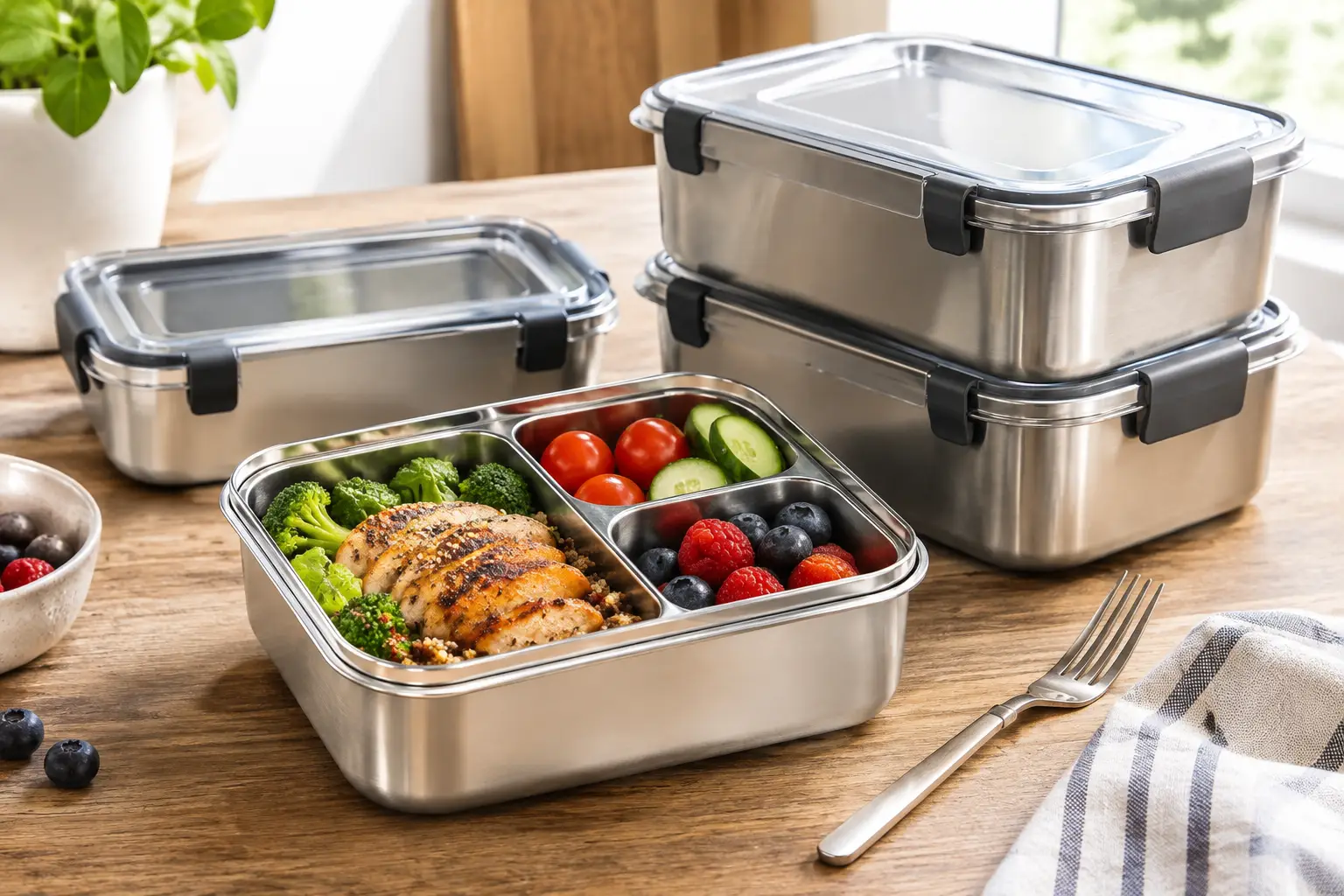
A bento stainless steel lunch container is a compartmentalized lunch box made from food-grade steel (usually 18/8, also called 304) that keeps foods separated without plastic touching your meal. Inspired by the Japanese bento tradition, it favors variety and portion control, and it’s built to last for years.
That definition sounds tidy, but the category is anything but uniform. Some boxes are basically sturdy steel trays that should only carry dry foods. Others use silicone-lined lids that can handle hummus and cut fruit. A few rely on vacuum valves for genuinely wet meals, and one popular model is designed to go into a microwave — something most metal containers absolutely can’t do.
That’s why this guide doesn’t just list features. We compared real spec sheets, manufacturer care instructions, and the recurring themes in customer reviews to explain what each difference means at 7 a.m. when you’re packing, and at noon when someone is actually eating. You’ll find seven real models available on amazon.com, from a kid-proof five-compartment tray to an airtight metal bento box for adults who carry soup-adjacent leftovers.
Along the way, we’ll cover how to choose, how to keep food safe, what “leakproof” really means, and where the long-term value actually lies. Let’s dig in. 🍱
Quick Comparison: Bento Stainless Steel Lunch Containers at a Glance
| Product | Capacity (approx.) | Compartments | Leak Handling | Best For |
|---|---|---|---|---|
| PlanetBox Rover | Kid-size tray + 2 dippers | 5 + 2 lidded pods | Dry/moist in tray; dippers seal | PlanetBox Rover: variety-loving kids |
| LunchBots Medium Trio | 20 fl oz | 3 | Dry foods only | LunchBots Medium Trio: preschoolers, small appetites |
| Bentgo Kids Stainless Steel | ~4 cups across tray | 3 + silicone cup | Leak-resistant between sections | Bentgo Kids Stainless Steel: kids who pack juicy fruit |
| Yumbox Prêt | 3.4 cups (800 ml) | 4 incl. dip well | Leakproof for thick foods, not water | Yumbox Prêt: sandwich-and-sides eaters |
| Bentgo MicroSteel | 5 cups (40 oz) | 1–2 (removable divider) | Airtight lid with valve | Bentgo MicroSteel: office reheating |
| Black+Blum Stainless Steel Lunch Box (Large) | 1 L (34 oz) | 1–2 (slider divider) | Vacuum-valve seal | Black+Blum Stainless Steel Lunch Box: wet meals, plastic-free |
| ECOlunchbox Three-in-One Classic | ~31 oz across 3 pieces | 3 nesting containers | Not leakproof | ECOlunchbox Three-in-One Classic: zero-plastic purists |
Looking at the table, the big dividing line isn’t size — it’s how each box handles moisture. The LunchBots Medium Trio and ECOlunchbox Three-in-One Classic are fully metal and wonderfully simple, but they’re built for dry and damp foods, not dressings. If your lunches lean saucy, the silicone-sealed Yumbox Prêt or the valve-sealed Black+Blum Stainless Steel Lunch Box belong at the top of your list, and the Bentgo MicroSteel stands alone for anyone who wants to reheat in the same container.
💬 One click helps other shoppers make an informed choice too! 😊
Top 7 Bento Stainless Steel Lunch Containers: Expert Analysis
Every pick below is a real product sold on amazon.com at the time of writing. Price ranges are approximate and change often, so always check the current price on the listing.
1. PlanetBox Rover — the five-compartment classic built for variety
The PlanetBox Rover is the box many parents graduate to once they want real variety without juggling loose containers. It pairs a five-compartment tray with two small lidded “Dipper” pods that nest inside the wells.
According to PlanetBox, the tray is made from certified 49% post-consumer recycled 18/8 (304) stainless steel, while the lid is 18/0 (430) stainless — and that detail matters. The 430 lid is magnetic, which is why the kit’s decorative magnets stick to it, turning a plain steel box into something kids actually want to carry. The rounded wells are also a practical choice: fewer tight corners means less scrubbing, and the whole box is dishwasher safe.
Based on the design, the PlanetBox Rover suits kids roughly in the kindergarten-to-middle-school range who eat “a little bit of everything.” It’s less ideal for toddlers, since a fully loaded steel tray plus carry bag adds noticeable weight to a small backpack.
Reviews consistently praise how well the box survives drops and repeated dishwasher cycles, and parents often mention the compartments encourage balanced lunches. The most common caveat is weight and bag fit — several parents note it’s heavier than plastic and only just fits some third-party lunch bags.
Pros:
- ✅ Recycled 18/8 tray with no plastic touching food
- ✅ Five wells plus two sealed dippers for variety
- ✅ Magnetic lid makes it fun to personalize
Cons:
- ❌ Main tray isn’t leakproof for wet foods
- ❌ Heavier than plastic for very young kids
Expect roughly $50–$80 depending on the kit and bag bundle; it’s a premium buy that makes sense if you’ll use it daily for several school years.
2. LunchBots Medium Trio — the simplest all-steel box for small appetites
The LunchBots Medium Trio is proof that “less” can be the right amount. It’s a compact, three-section steel box designed around half a sandwich and two small sides.
The container measures about 6″ x 5″ x 1.75″, holds roughly 20 fl oz, and weighs around 9.6 oz, according to LunchBots. In practice, that footprint slides into almost any lunch bag, and the weight is manageable for preschoolers. It’s made from 18/8 stainless steel, and even the optional colorful snap-on cover never touches food. LunchBots also backs it with a lifetime warranty — a strong signal of confidence in a product with no moving parts to fail.
The honest trade-off: LunchBots itself says the lids and dividers are not leakproof and recommends dry foods only. That makes the LunchBots Medium Trio best for crackers, cheese cubes, sandwiches, and whole fruit rather than applesauce.
Customer feedback repeatedly highlights sturdiness and easy cleanup. A recurring complaint is exactly what the brand warns about: a small amount of moisture can migrate between sections if you pack juicy foods.
Pros:
- ✅ Compact size fits nearly any lunch bag
- ✅ Lifetime warranty on a simple, durable design
- ✅ Light enough for preschool backpacks
Cons:
- ❌ Not leakproof, so dry foods only
- ❌ Too small for older kids or adults
At around $25–$35, it’s one of the best-value entry points into all-steel lunches.
3. Bentgo Kids Stainless Steel — the leak-resistant upgrade for juicy fruit
The Bentgo Kids Stainless Steel lunch box targets the biggest frustration with metal bentos: food bleeding between compartments. Its contoured lid presses a silicone seal onto each well.
Per Bentgo’s specs, the 18/8 tray splits into a large 2¼-cup section, a medium 1⅓-cup section, and a small ½-cup section, plus a removable silicone container for a fourth option. The box measures about 9.8″ x 7.6″ x 2.2″ and weighs roughly 1.5 lbs. Translation: it holds a real lunch for a hungry grade-schooler, but it’s one of the larger footprints here. Two double-hinged clips are designed for small hands.
Based on the specs, this is a strong fit for kids who want berries next to crackers without soggy results. Keep in mind the “leak-resistant” wording: it’s about keeping compartments separate, not about carrying soup.
Aggregated reviews on major retailers say it’s durable and easy to clean, and that the separation between compartments works well. The most frequent complaint is size — many buyers describe it as heavy and too large for some standard lunch bags and backpacks.
Pros:
- ✅ Sealed compartments stop fruit juice from migrating
- ✅ Generous capacity for growing appetites
- ✅ Kid-friendly clips that little hands can open
Cons:
- ❌ Bulky footprint may not fit every bag
- ❌ Hand washing recommended to protect the seal
At around $35–$45, it’s fair value if leak control between sections is your top priority.
4. Yumbox Prêt — the lightest-feeling sandwich-friendly steel option
The Yumbox Prêt brings Yumbox’s well-known leakproof layout into a stainless steel tray, with a clear focus on fitting a full sandwich.
The tray is 18/8 (304) stainless steel, and the lid uses a molded silicone seal that compresses over each compartment when the single latch closes. Capacity is about 3.4 cups (800 ml) in a 9″ x 7″ x 2″ footprint, with one sandwich-sized section, two sides, and a dip well. Yumbox markets it as one of the lightest stainless steel bento boxes available, which matters if a child carries it all day.
Here’s what to weigh: Yumbox says it’s leakproof for thick dips and sauces but not for water or very thin liquids. That’s a realistic promise, and it makes the Yumbox Prêt ideal for hummus, yogurt, and sliced fruit — just not broth. It also works well for adults who want portion control.
Because the Prêt is a newer model, review volume is thinner than for older boxes, so we can’t point to a large body of long-term feedback. Early retailer reviews note that even preschoolers can manage the latch.
Pros:
- ✅ Fits a standard sandwich plus sides
- ✅ Silicone seal handles dips and thick sauces
- ✅ Single easy latch suits young kids
Cons:
- ❌ Not leakproof with water or thin liquids
- ❌ Hand washing advised to protect the finish
Expect around $35–$45; it’s excellent value for families who pack a sandwich most days.
5. Bentgo MicroSteel — the rare steel box you can microwave
The Bentgo MicroSteel solves the one thing stainless steel normally can’t do: reheating. Bentgo says its patented container is designed to go into a microwave safely.
The container is 304 (18/8) stainless steel with a 5-cup (40 oz) capacity, a removable divider, and an airtight lid with a silicone seal and a pressure-release valve. The fine print is important: the container (never the lid) is microwave-safe for up to 10 minutes in a microwave of 1,000 watts or less, and you shouldn’t heat two stainless items at once. It’s also oven-safe to 350°F for up to an hour and freezer-safe.
On paper, that makes the Bentgo MicroSteel the obvious metal bento box for adults who eat leftovers at the office. It’s single-walled, though, so Bentgo notes it won’t hold temperature on its own — pair it with an ice pack and insulated bag.
The reviews we could find mostly praise the flexibility of heating leftovers without dirtying a second dish, and the size for wraps and grain bowls. We couldn’t verify a large volume of long-term durability feedback, so treat the lid seal as a part to baby with hand washing.
Pros:
- ✅ Reheat directly in the container, no transfers
- ✅ Airtight valve lid for commuting
- ✅ Big 5-cup capacity for adult portions
Cons:
- ❌ Strict microwave limits you must follow
- ❌ Only one or two compartments, not a true multi-well bento
At around $30–$40, it’s strong value if reheating is non-negotiable.
6. Black+Blum Stainless Steel Lunch Box (Large) — the airtight choice for genuinely wet meals
The Black+Blum Stainless Steel Lunch Box takes a different route to leak protection: a vacuum valve on the lid that pulls the seal tight.
It’s a 1-liter (34 oz) box in 304/18-8 steel with an overmolded silicone lid, a steel slider divider, and a steel travel fork held by a silicone strap. Black+Blum calls it leakproof when the lid is pressed down on all sides and the valve is closed. The base is oven-safe (it may discolor), but it’s not microwave-safe, and the brand warns you to let hot food cool before sealing, or it could leak.
That last instruction is revealing: the vacuum seal works because of air pressure, and hot food changes the pressure. Based on that design, the Black+Blum Stainless Steel Lunch Box is best for adults packing curries, dressed salads, or saucy noodles — cooled first.
Review sentiment (much of it from UK reviewers, since this is a British brand) is consistently positive about no leaks with wet foods, easy cleaning, and a minimalist look that feels less “industrial” than clip-heavy boxes.
Pros:
- ✅ Vacuum valve delivers top-tier leak protection
- ✅ Completely plastic-free box, fork, and divider
- ✅ Sleek design that works for the office
Cons:
- ❌ Not microwave-safe
- ❌ Hot food must cool before sealing
Expect roughly $35–$50; it’s a smart buy for anyone who carries wet meals daily.
7. ECOlunchbox Three-in-One Classic — nesting, zero-plastic, and refreshingly simple
The ECOlunchbox Three-in-One Classic isn’t a tray at all — it’s three stainless containers that nest and clip together, so you can separate foods and even split components across bags.
The Amazon listing describes about 31 oz of capacity spread across a roomy base, a mid tier, and a small snack pod, all secured by steel clips. There’s no silicone and no plastic anywhere, which is the entire point for zero-waste households. The brand is also a certified B Corp. One detail worth noting: ECOlunchbox’s own product page describes the steel as grade 201 food-grade stainless, a lower-nickel alloy that is generally less corrosion-resistant than 304.
That grade detail lines up with what reviewers report. The ECOlunchbox Three-in-One Classic is excellent for sandwiches, crackers, and cut veggies, but the brand clearly states it isn’t leakproof, and it rewards prompt drying after washing.
In aggregated feedback, users praise its toughness and portability (it’s a favorite for hiking lunches), while some mention faint rust spots when left wet and lids that fit a touch loosely.
Pros:
- ✅ Absolutely no plastic or silicone
- ✅ Nesting pieces can be packed separately
- ✅ Durable enough for camping and trails
Cons:
- ❌ Not leakproof — dry or damp foods only
- ❌ Needs prompt drying to avoid spotting
At around $30–$40, it’s a fair price for a genuinely plastic-free kit.
✨ Don’t miss these lunch-changing picks!
🔍 Take your packed lunches to the next level with this carefully curated lineup. Click any highlighted product name to check current pricing and availability. These picks will help you pack fresher, tidier lunches the whole family will actually enjoy! 🍱
Side-by-Side: Materials, Care, and Price Ranges
| Product | Steel Grade (per brand) | Seal Type | Dishwasher | Price Range | Best For |
|---|---|---|---|---|---|
| PlanetBox Rover | 18/8 tray, 18/0 lid | None (dippers sealed) | Yes | ~$50–$80 | PlanetBox Rover: multi-year school use |
| LunchBots Medium Trio | 18/8 | None | Yes | ~$25–$35 | LunchBots Medium Trio: budget, dry snacks |
| Bentgo Kids Stainless Steel | 18/8 | Silicone lid | Top rack (hand wash advised) | ~$35–$45 | Bentgo Kids Stainless Steel: juicy sides |
| Yumbox Prêt | 18/8 (304) | Molded silicone | Hand wash advised | ~$35–$45 | Yumbox Prêt: sandwich lunches |
| Bentgo MicroSteel | 304 (18/8) | Silicone + valve | Top rack | ~$30–$40 | Bentgo MicroSteel: reheating |
| Black+Blum Stainless Steel Lunch Box | 304/18-8 | Silicone + vacuum valve | Base, fork, divider | ~$35–$50 | Black+Blum Stainless Steel Lunch Box: wet meals |
| ECOlunchbox Three-in-One Classic | 201 food-grade | None | Yes | ~$30–$40 | ECOlunchbox Three-in-One Classic: zero plastic |
Two patterns jump out. First, every box that adds a silicone seal also adds a care instruction — hand wash the lid, or at least keep it on the top rack — because the seal is the part that wears out first. Second, the all-steel, no-seal boxes (LunchBots Medium Trio, ECOlunchbox Three-in-One Classic, and the PlanetBox Rover tray) are the most “set and forget” for cleaning, but they limit what you can pack.
How to Choose Bento Stainless Steel Lunch Containers
Here’s a quick, snippet-friendly framework for picking the right box:
- Start with your wettest food. If you pack dips, cut melon, or dressing, you need a silicone seal; if you pack broth, you need a valve or an insulated jar.
- Check the steel grade. 18/8 (also sold as 304 stainless steel) resists corrosion well; lower-nickel grades can spot if left wet.
- Match capacity to appetite. Roughly 2–3 cups suits young kids, 3–4 cups most grade-schoolers, and 4–5+ cups hungry teens and adults.
- Measure your lunch bag. A great box that doesn’t fit your bag becomes a daily annoyance.
- Test the latch for the user. Young kids need a latch they can open alone at a crowded lunch table.
- Decide on reheating. Only a purpose-built box like the Bentgo MicroSteel belongs in a microwave.
- Read the care instructions. Dishwasher-friendly boxes save time; seal-heavy boxes last longer with hand washing.
The order matters. Food type narrows the field fastest, which is why so many “best” lists feel useless — they rank boxes without asking what you’ll actually put inside them.
Stainless Steel Bento Box for Kids: What Parents Should Know
Choosing a stainless steel bento box for kids is less about the steel and more about the child. A four-year-old and a ten-year-old need very different boxes, even if both are “kid” products.
Age and Hand Strength
Preschoolers need a light box and a latch they can operate alone. The LunchBots Medium Trio (about 9.6 oz empty) and the single-latch Yumbox Prêt make sense here. By early grade school, kids can manage double clips like those on the Bentgo Kids Stainless Steel box.
Weight in the Backpack
Steel is heavier than plastic, and several PlanetBox Rover reviewers mention this directly for very young children. If your child walks to school with a full backpack, weigh the loaded box plus ice pack before committing.
Picky Eaters and Presentation
Here’s what the spec sheet doesn’t say: compartments are a psychological tool. Kids who resist “mixed” food often eat more when items are separated and visible. A stainless steel bento box for kids with five wells, like the PlanetBox Rover, invites small portions of many foods, which can make trying something new feel less risky.
School Rules and Allergies
Some classrooms have nut-free tables or shared microwave rules. A dedicated, labeled steel box is easy to identify and easy to sanitize, which matters when allergens are involved. Label the lid and the carry bag — steel boxes look alike, and they tend to walk off.
Leakproof Stainless Steel Lunch Box: What “Leakproof” Really Means
Few words on a listing cause more disappointment than “leakproof.” When you shop for a leakproof stainless steel lunch box, you’ll see at least three different promises hiding behind similar wording.
Level 1: Not Leakproof (All-Steel Lids)
Metal-on-metal lids, like those on the LunchBots Medium Trio and ECOlunchbox Three-in-One Classic, can’t form a liquid-tight seal. Brands are upfront about this. These boxes are ideal for dry and damp food.
Level 2: Leak-Resistant Between Compartments
The Bentgo Kids Stainless Steel and Yumbox Prêt use silicone to keep compartments separate. Yumbox specifically says its design handles thick dips but not water or very thin liquids. Think hummus, yogurt, and sliced oranges — not soup.
Level 3: Airtight or Vacuum-Sealed
The Black+Blum Stainless Steel Lunch Box and Bentgo MicroSteel use a sealed lid plus a valve. These come closest to a true leakproof stainless steel lunch box for wet meals, but even here, instructions matter: Black+Blum warns that hot food sealed immediately can cause leaks.
The Practical Rule
If a liquid would pour off a spoon, pack it in a sealed dipper or insulated jar, regardless of what the main box claims. That single habit prevents most backpack disasters, no matter which level of box you own.
Metal Bento Box for Adults: Office Lunches, Meal Prep, and Reheating
Adults ask different questions than parents. Will it fit a real portion? Can I reheat it? Will it look okay on a conference-room table? A metal bento box for adults needs to answer all three.
Capacity
Most adult lunches need 4–5 cups. The Bentgo MicroSteel (5 cups) and Black+Blum Stainless Steel Lunch Box (1 L/34 oz) are sized for grown-up appetites, while the Yumbox Prêt suits lighter eaters or anyone practicing portion control.
The Reheating Question
This is the dealbreaker. Most stainless steel should never go into a microwave. The Bentgo MicroSteel is the exception because it’s engineered for it — within strict limits (container only, 10 minutes max, 1,000W or less). If your office has a microwave but not a toaster oven, that single feature may outweigh everything else.
Meal Prep Workflow
Steel shines for batch cooking: it doesn’t stain from tomato sauce or hold onto curry smells the way plastic often does. Prep on Sunday, refrigerate, and grab one each morning. The oven-safe bases on the Bentgo MicroSteel and Black+Blum Stainless Steel Lunch Box also let you reheat at home without transferring food.
Professional Look
Brushed steel reads as intentional, not childish. A metal bento box for adults with a clean silhouette and no cartoon prints is an easy upgrade from takeout containers.
Stainless Steel vs. Plastic and Glass: Choosing Plastic-Free Lunch Containers
If you’re switching to plastic-free lunch containers, steel isn’t the only option. Glass is the other big contender, and plastic still dominates on price. Here’s how they stack up.
| Factor | Stainless Steel | Plastic | Glass |
|---|---|---|---|
| Durability | Survives drops; may dent | Cracks, warps over time | Can shatter |
| Weight | Moderate | Lightest | Heaviest |
| Stains/odors | Resists both | Stains and holds odors | Resists both |
| Microwave | Only special models | Often yes | Yes (usually lid off) |
| Kid-friendly | Excellent | Good | Risky |
| Best for | Daily school and work carry | Tight budgets, light loads | Home reheating, desk lunches |
The table shows why steel wins for anything that travels: it survives drops like plastic but resists stains like glass. Glass is the better pick only when reheating matters more than portability, and plastic mainly wins on up-front cost and weight. For most families building a set of plastic-free lunch containers, steel is the most practical all-rounder.
Where Steel Still Loses
Steel is opaque, so you can’t see what’s inside without opening it — a small but real annoyance in a crowded fridge. It’s also generally more expensive up front, and most steel isn’t microwaveable. Being honest about those trade-offs helps you decide whether your plastic-free lunch containers should be all steel or a steel-and-glass mix.
Getting Started: Packing, Cleaning, and Care for Your First 30 Days
A steel lunch box is only “buy it for life” if you treat it right from day one. Here’s a practical routine.
Before First Use
Wash every piece in warm, soapy water and dry it fully. Check that clips, seals, and dipper lids seat properly — a misaligned silicone gasket is the number-one reason a leak-resistant box leaks.
Packing for Food Safety
The USDA’s guidance on keeping bag lunches safe is clear: bacteria multiply fast between 40°F and 140°F, so perishable lunches need at least two cold sources, such as two frozen gel packs, in an insulated bag. Steel doesn’t insulate on its own, so this step isn’t optional. Pre-chilling the empty box in the fridge overnight gives cold food a head start.
Daily Cleaning
- ✅ Empty and rinse the box the same day — dried-on food is what causes scrubbing.
- ✅ Remove silicone seals weekly (if removable) and wash them separately.
- ✅ Dry completely before closing, especially lower-grade steel boxes.
Common First-Month Mistakes
Overfilling is the big one: packed-to-the-brim compartments push against the seal and break it. Another is using steel wool or abrasive powder, which scratches the surface and makes future cleaning harder. Finally, don’t store the box sealed while damp — trapped moisture leads to odors in the silicone.
Real-World Scenarios: Matching the Right Box to Your Routine
Specs make more sense when you picture an actual day. Here are three common profiles.
Scenario 1: The Kindergartner with Small Hands
Maya is five, eats in a 20-minute lunch period, and struggles with tight clips. Her parents pack crackers, cheese, and grapes. The LunchBots Medium Trio is a natural fit: light, compact, and easy to open, and her foods are dry enough that the lack of a seal doesn’t matter. Budget: around $25–$35.
Scenario 2: The Fourth-Grader Who Loves Fruit
Jordan is nine, eats a bigger lunch, and always wants cut watermelon next to a sandwich. Juice creeping into bread would be a dealbreaker. The Bentgo Kids Stainless Steel box or the Yumbox Prêt both separate compartments with silicone. If Jordan’s backpack is already heavy, the lighter-feeling Yumbox Prêt has the edge; if appetite is the priority, the Bentgo’s bigger compartments win.
Scenario 3: The Office Worker with Leftovers
Sam commutes by train, eats leftovers four days a week, and uses the office microwave. The Bentgo MicroSteel eliminates a second dish entirely. If Sam’s meals are cold salads with dressing instead, the vacuum-sealed Black+Blum Stainless Steel Lunch Box is the stronger pick, since it’s built around leak protection rather than reheating.
The Takeaway
Notice that none of these decisions came down to “which box is best.” They came down to food type, user strength, and whether a microwave is involved.
Problem → Solution: Fixing the Most Common Bento Box Headaches
Even great boxes create small frustrations. Here’s how to solve the ones reviewers mention most.
Problem 1: Juice leaks between compartments. Solution: Pack wet foods in a sealed dipper or silicone cup — like the pods included with the PlanetBox Rover or the silicone container in the Bentgo Kids Stainless Steel kit — and avoid overfilling.
Problem 2: The box doesn’t fit the lunch bag. Solution: Measure your bag’s interior before buying. The Bentgo Kids Stainless Steel box is about 9.8″ x 7.6″, while the Yumbox Prêt is about 9″ x 7″. Brand-matched bags remove the guesswork.
Problem 3: Small rust spots appear. Solution: These are usually surface spots from standing water or contact with other metals in the dishwasher. Dry promptly, especially with lower-nickel steel like the ECOlunchbox Three-in-One Classic, and gently clean spots with a baking-soda paste.
Problem 4: The lid is hard to open. Solution: On valve lids like the Black+Blum Stainless Steel Lunch Box and Bentgo MicroSteel, lift the valve first to release pressure. For young kids, choose a single-latch design.
Problem 5: Lunch is warm by noon. Solution: Steel won’t keep food cold by itself. Use two frozen cold sources and an insulated bag every time perishables are packed.
Common Mistakes to Avoid When Buying Bento Stainless Steel Lunch Containers
Most buyer’s remorse with bento stainless steel lunch containers comes from a handful of predictable mistakes.
Trusting “Leakproof” Without Reading the Fine Print
As covered above, “leakproof” can mean anything from “separates compartments” to “vacuum-sealed.” Always look for what the brand says about water and thin liquids.
Buying for the Child You Have Today, Not Next Year
Kids’ appetites grow fast. A box that fits a preschooler perfectly may be too small by second grade. If budget is tight, choose a mid-size box and pad it with extra snacks now.
Ignoring Weight
A loaded steel box plus two ice packs adds up. For kids who walk to school or carry heavy backpacks, weight deserves as much attention as capacity.
Assuming All Steel Is Equal
18/8 (304) steel resists corrosion better than lower-nickel grades. That doesn’t make other grades unsafe, but it affects how carefully you’ll need to dry the box.
Microwaving the Wrong Box
This is the most dangerous mistake. Unless a container is explicitly designed for it, like the Bentgo MicroSteel, stainless steel does not belong in a microwave. Even then, follow the wattage and time limits exactly.
Features That Actually Matter (and Ones That Don’t)
Marketing copy can make every feature sound essential. Here’s an honest filter.
Features That Matter
- ✅ Seal design — It determines what food you can pack; nothing affects daily usability more.
- ✅ Steel grade — 18/8 is the practical standard for easy care. Stainless steel resists corrosion because of its chromium content, and nickel adds further resistance.
- ✅ Latch usability — A box a child can’t open is a box that comes home full.
- ✅ Replaceable parts — Seals and dipper lids wear out first; being able to replace them extends the life of the whole box.
Features That Matter Less Than You’d Think
- ❌ Number of compartments beyond four or five — More wells mean smaller portions and more cleaning corners.
- ❌ “Insulated” claims on single-walled steel — Single-wall steel doesn’t insulate meaningfully; your bag and ice packs do that job.
- ❌ Novelty accessories — Fun extras are nice, but they shouldn’t outweigh fit and seal quality.
The bottom line: seal, steel, and latch decide whether you’ll love a box after six months. Almost everything else is packaging.
Long-Term Cost and Value: Is Stainless Steel Worth It?
The up-front price of bento stainless steel lunch containers is higher than plastic, so the fair question is whether they pay off over time.
| Product | Price Range | Warranty (per brand/listing) | Likely Wear Parts | Best For |
|---|---|---|---|---|
| LunchBots Medium Trio | ~$25–$35 | Lifetime | Optional snap cover | LunchBots Medium Trio: lowest long-term cost |
| PlanetBox Rover | ~$50–$80 | Check current listing | Dipper lids, bag | PlanetBox Rover: multi-kid hand-me-downs |
| Bentgo MicroSteel | ~$30–$40 | 2-year | Lid seal, valve | Bentgo MicroSteel: replaces takeout |
| Black+Blum Stainless Steel Lunch Box | ~$35–$50 | Check current listing | Silicone lid, strap | Black+Blum Stainless Steel Lunch Box: wet-meal commuters |
The math favors durable, simple designs. A lifetime-warranted all-steel box like the LunchBots Medium Trio can realistically outlast several rounds of plastic containers, which often need replacing after cracks or permanent stains. Premium kits like the PlanetBox Rover cost more, but they’re also frequently handed down between siblings — spreading that cost across multiple children.
For adults, the value case is even simpler: if a Bentgo MicroSteel replaces a couple of takeout lunches a week, it pays for itself quickly. The main ongoing cost for any sealed box is the silicone, so check whether replacement seals are sold before you buy.
Safety, Materials, and Standards
“Food-grade stainless steel” is a reassuring phrase, but it helps to know what’s behind it.
Steel Grades Explained
18/8 steel contains roughly 18% chromium and 8% nickel. Chromium forms a thin, protective oxide layer that resists rust; nickel improves corrosion resistance and gives the steel its smooth finish. 18/0 steel (like the PlanetBox Rover lid) has little to no nickel, which makes it magnetic. Grade 201 substitutes manganese for some nickel, lowering cost at the expense of some corrosion resistance.
Plastic-Free vs. Plastic-Touching
Several boxes pair steel with silicone seals or plastic outer covers. In the LunchBots Medium Trio, for example, the optional colorful cover doesn’t touch food. If your goal is truly plastic-free lunch containers, check what touches food, not just what the box is “made of.”
Nickel Sensitivity
People with a diagnosed nickel allergy sometimes ask whether 18/8 steel is a concern for food contact. That’s a question for an allergist, not a lunch box listing; if it applies to you, discuss it with your doctor before switching.
Heat and Microwave Safety
Standard steel containers should never go into a microwave. Oven-safe claims usually apply only to the base — lids with silicone are typically excluded. Always follow the manufacturer’s temperature limits.
Food Temperature Safety
Material doesn’t replace temperature control. Keep perishables cold with ice packs and an insulated bag, as outlined in the USDA guidance linked above.
FAQ: Bento Stainless Steel Lunch Containers
❓ Are bento stainless steel lunch containers worth the extra cost?
❓ Can I put a stainless steel lunch box in the dishwasher?
❓ Do stainless steel bento boxes keep food cold?
❓ What's the best stainless steel bento box for a toddler or preschooler?
❓ What size stainless steel lunch container should an adult buy?
Conclusion: Finding Your Best Bento Stainless Steel Lunch Container
The best bento stainless steel lunch containers aren’t the ones with the longest feature lists — they’re the ones matched honestly to what you pack and who’s carrying it.
For small kids and dry snacks, the LunchBots Medium Trio is simple, light, and backed by a lifetime warranty. For variety-loving grade-schoolers, the PlanetBox Rover remains the multi-year workhorse. If juicy fruit is the enemy, the Bentgo Kids Stainless Steel and Yumbox Prêt keep compartments separate. Adults who reheat should look straight at the Bentgo MicroSteel, while wet-meal commuters will appreciate the vacuum seal of the Black+Blum Stainless Steel Lunch Box. And if zero plastic is your line in the sand, the ECOlunchbox Three-in-One Classic delivers.
Whatever you choose, start with your wettest food, measure your bag, keep perishables cold, and dry the box after washing. Do that, and your steel lunch box can genuinely outlast a drawer full of plastic.
🚀 Ready to upgrade lunchtime for good?
🍱 Pick the box that fits your routine, click the highlighted name to check current pricing and availability, and say goodbye to cracked, stained plastic. Fresher, tidier lunches start with your next packing session!
Recommended for You
- Microwave Safe Metal Containers: 7 Best Picks That Won’t Spark (2026)
- Meal Kits That Accept EBT: 7 Best SNAP-Smart Picks for 2026
- Stainless Steel Bento Box Lunch Box: 7 Brilliant Picks for 2026
Disclaimer: This post contains affiliate links. As an Amazon Associate, I earn from qualifying purchases made through these links, at no additional cost to you.
✨ Found this article helpful? Share it with someone who needs it! 💬🤗