
In This Article
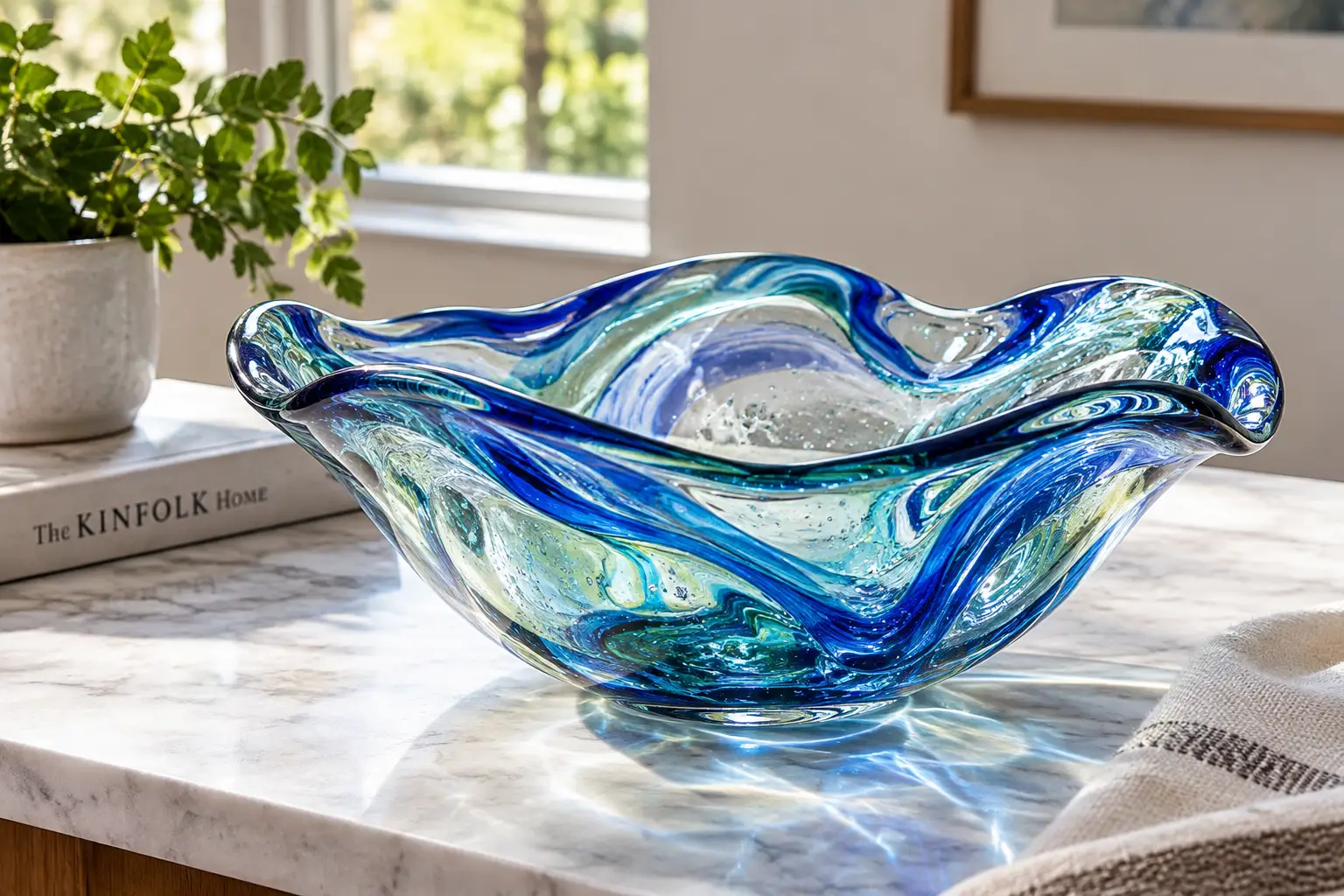
There’s a moment that happens with almost every genuinely hand-blown piece: you turn it in the light, and it seems to shift color, catch a swirl you hadn’t noticed, or reveal a tiny bubble frozen mid-breath by a glassblower working a thousand-degree furnace. That’s the appeal of a glass blown bowl — it’s not a mold-stamped decoration, it’s a small record of a physical process, and no two pieces are ever perfectly identical. If you’ve started shopping for one, you’ve probably noticed the category is enormous: Murano-style imports, American studio pieces, functional serving sets, and sculptural showpieces that cost as much as a piece of furniture.
This guide narrows that sprawl down to seven real, currently available options, chosen to cover a spread of budgets, sizes, and use cases — from a $30 novelty dish to a 22-inch Italian-style centerpiece. Every recommendation here is grounded in actual spec sheets and aggregated customer feedback, not marketing copy, so you can walk away knowing exactly what you’re paying for and why one glass blown bowl might serve you better than another. We’ll also cover how hand-blown glass differs from machine-pressed glass, what “Murano-style” actually means, how to spot a well-made piece, and the everyday care that keeps a glass blown bowl beautiful for decades rather than months.
This post contains affiliate links, and as an Amazon Associate, we may earn a commission from qualifying purchases — more on that at the end of the article.
What Is a Glass Blown Bowl?
A glass blown bowl is a vessel shaped by inflating molten glass on the end of a hollow pipe, then hand-forming it while it’s still workable — as opposed to machine-pressed glass, which is forced into a rigid mold under pressure. The technique dates back roughly 2,000 years and, according to the Wikipedia entry on glassblowing, it remains the primary method used by artists and small studios producing decorative glassware today. That hand-forming process is exactly why hand blown glass bowl pieces show subtle variation, tool marks, and asymmetry that mass-produced glass simply can’t replicate.
Quick Comparison: 7 Glass Blown Bowl Picks at a Glance
Before diving into full reviews, here’s a snapshot of how these seven products stack up on style, size, and price range.
| Bowl | Style | Approx. Size | Price Range | Best For |
|---|---|---|---|---|
| Peacock Pedestal Bowl | American studio, iridescent | 9″ wide | $70–$100 | Gifting & wedding registries |
| Blush Pedestal Bowl | American studio, soft tones | 9″ wide | $70–$100 | Feminine or pastel interiors |
| Oval Murano-Style Centerpiece | Italian art-glass import | 22″ long | $150–$220 | Statement dining tables |
| Cobalt Centerpiece Bowl | Murano-style, single color | 10.2″ wide | $40–$60 | Modern coastal or boho decor |
| Confetti Waved Bowl | Murano-style, multicolor canes | 8–9″ wide | $45–$70 | Eclectic, colorful spaces |
| UNZIPPED Novelty Bowl | Borosilicate, sculptural | 5″ wide | Under $35 | Fun, conversation-piece gifting |
| Dessert Bowl Set of 4 | Functional stemware-style | 12 oz each | $35–$55 | Everyday serving & entertaining |
Looking at the table, the spread is intentional: the two pedestal bowls anchor the mid-range gift category, the Murano-style pieces cover everything from a modest accent to a dramatic 22-inch centerpiece, and the two functional options prove a glass blown bowl doesn’t have to sit untouched on a shelf. If your budget caps around $50, the cobalt centerpiece or the dessert bowl set will get you real hand-blown craftsmanship without stretching your wallet; if you want a showstopper, the oval Murano-style piece is built for exactly that job.
💬 Ready to browse? Tap any highlighted pick above to check current availability and pricing on Amazon.
Top 7 Glass Blown Bowl Picks: Expert Analysis
1. Peacock Pedestal Bowl — signed American studio glass
The distinguishing benefit here is authenticity: this is a genuinely handmade, artist-signed piece from a small American glass studio, not an imported reproduction. The Peacock Pedestal Bowl is formed using traditional offhand glassblowing, with the glass melted to roughly 2,350°F before being shaped on the end of a blowpipe — a detail that matters because it means the piece cooled and set as one continuous gesture rather than being pressed into a mold. Standing about 5.5 inches tall and 9 inches wide on a stable pedestal foot, it displays iridescent green and purple tones that swirl in a feathered pattern reminiscent of a peacock’s plumage, with a wavy, fluted rim that catches light differently from every angle.
Based on comparing this piece against the mass-imported alternatives further down this list, what stands out is the individual signature on the base — each piece is signed by the artist, which is a meaningful marker of small-batch, USA-made production rather than a factory run. This makes it a strong pick for buyers who specifically want to support independent American glass studios or who are shopping for a wedding or housewarming gift with a story attached. Reviews consistently describe the piece as more visually striking in person than photos suggest, with the iridescent finish drawing the most consistent praise; a smaller number of buyers note it arrives well-packaged but recommend unwrapping it carefully given the delicate fluted edges.
Pros:
- ✅ Individually artist-signed, small-batch American glass
- ✅ Iridescent finish shifts color dramatically in natural light
- ✅ Stable pedestal base works well as a display piece
Cons:
- ❌ Fluted rim is delicate and not ideal for rough handling
- ❌ Limited to one color palette per listing
At around $70–$100, this sits in the classic “meaningful gift” price bracket — solid value if you’re after a one-of-a-kind piece with a genuine maker’s mark rather than a decorative import.
2. Blush Pedestal Bowl — same craftsmanship, softer palette
This is the tonal sibling to the Peacock piece above, and its distinguishing benefit is offering that same signed, American-studio pedigree in a softer, more neutral colorway. The Blush Pedestal Bowl shares the identical construction method — hand-blown at high heat, shaped on a blowpipe, finished with a wavy fluted edge — but swaps the iridescent peacock swirl for ripples of deep pink and blush that read as elegant rather than bold. At roughly 5.5 inches tall and 9 inches wide, the scale matches its counterpart, which makes the two easy to compare side by side if you’re torn on color.
What most buyers overlook when comparing these two options is that the softer palette actually broadens where the bowl works in a home — it reads as at-home in a traditional dining room as it does in a modern minimalist one, whereas the peacock colorway leans more maximalist. Reviews of this piece frequently mention the unboxing experience being a highlight, with more than one buyer describing genuine surprise at how much richer the color looks in hand versus in listing photos; a recurring, honest caveat is that because it’s handmade, the exact pink-to-blush ratio varies slightly piece to piece.
Pros:
- ✅ Softer color palette suits more traditional interiors
- ✅ Same signed, small-batch American construction as the Peacock version
- ✅ Well-reviewed unboxing and gift presentation
Cons:
- ❌ Color saturation varies slightly between individual pieces
- ❌ Same delicate fluted rim as its sibling piece
Priced similarly at around $70–$100, the choice between this and the Peacock version really comes down to palette — both deliver equivalent craftsmanship and value.
3. Oval Murano-Style Centerpiece — largest statement piece on this list
At 22 inches long, the distinguishing benefit is scale: this is the piece built to anchor a dining table rather than sit on a shelf. The Oval Murano-Style Centerpiece is an Italian art-glass style bowl in swirling blue and green tones, produced using the layered, hand-worked techniques historically associated with Murano, the Venetian island that has centered glassblowing production since the medieval period. Its oval silhouette and generous length make it functional as a fruit bowl or floating-candle centerpiece as much as a purely decorative object.
Here’s what the spec sheet doesn’t say but scale and use context reveal: a piece this large needs real table real estate and a stable, low-traffic surface, since its length makes it more vulnerable to accidental bumps than a compact bowl. On paper, this is the pick for hosts who want one dramatic object rather than several smaller accents — it does the visual work of three smaller pieces combined. Aggregated feedback on comparable oval Murano-style pieces in this size range tends to split two ways: buyers are consistently impressed by the color depth and swirl pattern, while a smaller group notes that pieces this large require careful, padded shipping and benefit from being displayed away from high-traffic zones.
Pros:
- ✅ Dramatic 22-inch scale works as a true table centerpiece
- ✅ Functional for fruit, candles, or standalone display
- ✅ Rich blue-green swirl pattern reads well from a distance
Cons:
- ❌ Large size makes shipping damage and accidental bumps more likely
- ❌ Needs a dedicated, low-traffic surface to display safely
At around $150–$220, this is the highest-investment pick here, and the value case rests entirely on whether you want one big-impact centerpiece instead of multiple smaller pieces.
4. Cobalt Centerpiece Bowl — best entry point into Murano-style color
The distinguishing benefit is approachable size paired with a genuinely deep, saturated color. The Cobalt Centerpiece Bowl measures about 10.2 inches across — large enough to anchor a coffee table or kitchen island without demanding the real estate the 22-inch oval piece needs. It’s built in the Murano art-glass tradition using a single, rich cobalt blue that reads as calming rather than busy, which is part of why it turns up so often in coastal and modern-boho styling.
What matters in practice here is proportion: a 10-inch bowl is large enough to register as a real centerpiece from across a room, but small enough to reposition easily or move seasonally between a dining table and a console. Based on comparing this against the smaller confetti-style piece below, the single-color cobalt glass tends to photograph and display more consistently since there’s no multicolor pattern to vary between pieces. Reviews commonly highlight the color depth as looking more like a jewel tone in person than in photos, with occasional feedback noting the glass is noticeably heavy for its size — a fair trade-off, since that weight is part of what gives hand-blown glass its solid, quality feel.
Pros:
- ✅ Saturated cobalt color that holds up in any lighting
- ✅ Mid-size footprint fits most tables and shelves
- ✅ Substantial glass weight signals genuine quality
Cons:
- ❌ Single-color design offers less visual variety than multicolor options
- ❌ Weight makes it less ideal for frequent repositioning
At an estimated $40–$60, this is one of the strongest value picks on the list for buyers who want real Murano-style presence without the investment of the oval centerpiece.
5. Confetti Waved Bowl — most colorful, boho-leaning option
The distinguishing benefit is pattern: rather than a single swirled color, the Confetti Waved Bowl is built using multicolored glass canes fused into a “confetti” effect, giving every piece a genuinely unique speckled pattern. At roughly 8 to 9 inches wide with a gently waved rim, it’s sized similarly to the cobalt bowl above but reads as far more eclectic thanks to the layered color technique.
The practical interpretation here: confetti-style Murano glass is made by embedding small chips or rods of colored glass into a clear base before final shaping, which is a more labor-intensive technique than single-color glass and explains why pieces like this often carry a modest premium over solid-color equivalents of similar size. This is the pick for buyers actively decorating in a maximalist or boho direction, or anyone who wants a bowl that functions almost like a piece of abstract art. Aggregated reviews for confetti-pattern Murano-style bowls tend to emphasize how genuinely different each piece looks from its neighbor on the shelf — a plus for buyers who want a one-of-a-kind object, though it does mean you can’t reliably order a “matching pair” if that’s your goal.
Pros:
- ✅ Multicolor confetti pattern makes every piece genuinely unique
- ✅ Waved rim adds movement and visual texture
- ✅ Works as a standalone art object, not just a bowl
Cons:
- ❌ Pattern variation means you can’t order a guaranteed match
- ❌ Busier design may clash with minimalist decor
Expect to pay around $45–$70, a fair range given the more intricate cane-fusing technique involved in producing the confetti effect.
6. UNZIPPED Novelty Bowl — lightest-hearted, most affordable pick
The distinguishing benefit is pure personality: the UNZIPPED Novelty Bowl is a hand-blown borosilicate glass bowl sculpted to look like an unzipped, crinkled plastic bag — a genuinely clever visual trick that photographs well and reliably starts conversations. At about 5 x 5 x 6 inches and holding roughly 25 ounces, it’s sized for snacks, candy, or small kitchen items rather than serving as a display centerpiece.
Here’s the practical trade-off worth understanding: because it’s made from borosilicate glass rather than standard soda-lime art glass, it’s more heat- and impact-resistant, and it’s rated top-rack dishwasher safe — a genuine convenience most decorative hand-blown pieces don’t offer, since delicate art glass is typically hand-wash only. That durability, paired with its sub-$35 price point, makes this the clear pick for buyers who want a genuinely functional, everyday glass blown bowl rather than a fragile shelf piece, or for anyone shopping for a lighthearted, giftable item rather than a serious art purchase. Reviews consistently mention it as a reliable gift for coworkers, roommates, or “the person who has everything,” with the crinkled-bag illusion cited as the most-commented-on feature; a smaller number of reviewers note the flat base means it needs a genuinely level surface to sit steady.
Pros:
- ✅ Durable, dishwasher-safe borosilicate construction
- ✅ Clever sculptural design that consistently gets noticed
- ✅ Compact size and low price make it an easy gift
Cons:
- ❌ Needs a level surface to sit fully stable
- ❌ Novelty design won’t suit more formal or traditional decor
At under $35, this is the most accessible entry point on the list — genuine hand-blown glass without the investment of an art-glass centerpiece.
7. Dessert Bowl Set of 4 — best for actual everyday use
The distinguishing benefit is functionality at scale: this is the only set on this list, giving you four matching hand-blown pieces rather than one. The Dessert Bowl Set of 4 includes four 12-ounce glass bowls plus four gold-plated spoons, styled for dessert, appetizers, or cocktail service. Each bowl has a weighted bottom and a thin, refined rim, and the full set is dishwasher safe on top rack — again a meaningful practical detail for anyone who wants to actually use their hand-blown glass regularly rather than display it behind closed doors.
On paper, sets like this solve a problem the single-piece decorative bowls above don’t: hosting for more than one guest. Buying four individually hand-blown pieces from an artisan studio would typically cost far more than this set, so the value case here is straightforward — you’re getting genuine hand-blown glass and a coordinated presentation (including the bonus spoons) at a functional-tableware price point rather than an art-glass price point. Reviews frequently point to the set as a go-to for dinner parties and holiday entertaining, with the included gold spoons called out as an unexpectedly nice touch; the most common critique is that 12 ounces runs on the smaller side if you’re serving a heartier dessert or a full appetizer portion rather than a light course.
Pros:
- ✅ Set of 4 solves hosting needs a single bowl can’t
- ✅ Dishwasher-safe and genuinely built for regular use
- ✅ Gold-plated spoons add a polished presentation touch
Cons:
- ❌ 12 oz. capacity is modest for larger portions
- ❌ Less “showpiece” impact than a single sculptural bowl
At roughly $35–$55 for the full set, this is arguably the best per-piece value on the list if your priority is a functional, entertaining-ready glass blown bowl rather than a decorative object.
Comparing All 7 Products Side by Side
| Bowl | Best For | Size | Care | Price Range |
|---|---|---|---|---|
| Peacock Pedestal Bowl | Gifting, wedding registries | 9″ wide | Hand wash | $70–$100 |
| Blush Pedestal Bowl | Traditional interiors | 9″ wide | Hand wash | $70–$100 |
| Oval Murano-Style Centerpiece | Statement dining tables | 22″ long | Hand wash | $150–$220 |
| Cobalt Centerpiece Bowl | Modern/coastal decor | 10.2″ wide | Hand wash | $40–$60 |
| Confetti Waved Bowl | Eclectic, boho decor | 8–9″ wide | Hand wash | $45–$70 |
| UNZIPPED Novelty Bowl | Everyday snacks, gifting | 5″ wide | Dishwasher safe | Under $35 |
| Dessert Bowl Set of 4 | Entertaining, dessert service | 12 oz. each | Dishwasher safe | $35–$55 |
The pattern that jumps out from this table is a clean split between display pieces and functional pieces: the five decorative art-glass bowls are all hand-wash-only and priced from roughly $40 up to $220 depending on scale and technique, while the two dishwasher-safe options — the UNZIPPED bowl and the dessert set — sit at the bottom of the price range precisely because they’re built from more everyday-friendly borosilicate and standard glass rather than delicate art glass. If low-maintenance daily use matters more to you than gallery-worthy display value, weight your decision toward those two; if you’re buying a piece specifically to be looked at, the pedestal bowls or Murano-style centerpieces are worth the extra hand-washing.
<br>
✨ Don’t miss these exclusive deals! 🔍 Take your glass blown bowl search to the next level with this carefully curated lineup. Click a highlighted pick above to check current pricing and availability. These picks will help you build a home that feels a little more considered — and a lot more like you.
Getting Started: Caring for Your New Glass Blown Bowl
However striking a glass blown bowl looks on day one, its long-term beauty depends almost entirely on how it’s handled in the first few weeks of ownership. Start by hand-washing any hand-blown art glass piece in warm, not hot, water — sudden temperature swings are one of the most common causes of stress fractures in art glass, since the material expands and contracts unevenly when shocked by heat or cold. Avoid abrasive sponges; a soft cloth or microfiber towel is enough to lift dust and light residue without scratching the surface finish, particularly on iridescent or confetti-pattern pieces where the decorative layer sits close to the surface.
Placement matters just as much as cleaning. Keep decorative glass blown bowl pieces away from direct, sustained sunlight, which can gradually dull certain pigments over years, and away from the edges of shelves or tables where a passing sleeve or pet tail could knock them loose. For the dishwasher-safe picks on this list — the UNZIPPED bowl and the dessert set — top-rack placement away from other dishware reduces the chance of chipping during the wash cycle, even though the borosilicate construction handles the heat cycle itself without issue. A short common-mistakes note worth repeating: never stack decorative glass bowls inside one another for storage, since the friction point where they touch is exactly where chips most often start.
Real-World Scenarios: Matching a Bowl to Your Life
Not every buyer needs the same glass blown bowl, so it helps to think in terms of use case rather than just aesthetics. If you’re furnishing a first apartment on a tight budget and want something that photographs beautifully for a housewarming registry without costing a fortune, the cobalt centerpiece bowl or the UNZIPPED novelty bowl both deliver genuine hand-blown character under $60. If you’re planning a wedding registry or shopping for an anniversary gift where the story matters as much as the object, the signed Peacock or Blush pedestal bowls carry that individual-artist narrative that a mass-produced Murano-style import simply can’t match.
Frequent hosts — the friend who runs the holiday dinner every year — are usually better served by the Dessert Bowl Set of 4, since matching pieces solve a real logistical problem that a single showpiece bowl doesn’t. And for anyone renovating a dining or living space around one dramatic focal point, the 22-inch oval Murano-style centerpiece earns its higher price by doing the visual work that would otherwise take two or three smaller pieces combined.
How to Choose a Glass Blown Bowl
Shopping this category gets much easier once you know what to actually check before adding something to your cart. Here’s the framework we’d recommend working through in order:
- Confirm it’s genuinely hand-blown, not machine-pressed. Listings should specify “hand-blown,” “mouth-blown,” or “offhand glassblowing” — machine-pressed glass is usually labeled simply “glass” or “pressed glass” and lacks the asymmetry and tool marks of hand work.
- Check the size against your actual surface, not just the photo. A 22-inch centerpiece and a 5-inch novelty dish serve completely different roles; measure your table or shelf before ordering.
- Decide between single-color and pattern glass. Single-color pieces (like the cobalt bowl) display more predictably; multicolor confetti or swirl pieces (like the peacock or confetti bowls) are more one-of-a-kind but harder to “match.”
- Verify the care instructions. If you want to actually use the bowl for food or entertaining regularly, prioritize dishwasher-safe borosilicate options over delicate display-only art glass.
- Look for a maker’s mark or signature. A signed piece, like the pedestal bowls above, is a strong signal of genuine small-batch or artist-made production.
- Read the aggregated review themes, not just the star rating. Look specifically for repeated mentions of packaging quality, color accuracy, and durability — these tell you more than an average score alone.
- Set a realistic price expectation for the technique. Multicolor cane work and larger scale both add labor time, which is reflected honestly in price — a $200 piece and a $30 piece are not competing for the same use case.
Common Mistakes to Avoid When Buying a Blown Glass Bowl
The most frequent mistake buyers make is assuming any listing that says “artisan” or “handmade” automatically means hand-blown — those words get used loosely, and under FTC truth-in-advertising guidance, sellers are expected to back up claims like “handmade” with accuracy, but that doesn’t stop vague or misleading wording from slipping through search results. Always cross-check the actual product description for the specific term “hand-blown” or “mouth-blown,” per the FTC’s disclosure and advertising guidance, which governs how sellers and affiliates alike are expected to represent products truthfully.
A second common error is buying based on photos alone without checking the stated dimensions — a bowl that looks like a dramatic centerpiece in a styled photo can turn out to be a 6-inch accent piece once the measurements are actually read. Third, many first-time buyers skip reading the care instructions and are surprised when a delicate art-glass piece isn’t dishwasher safe; if daily use matters to you, that detail should be a dealbreaker, not an afterthought. Finally, buyers sometimes overlook shipping protection for larger pieces — a 22-inch centerpiece needs genuinely robust packaging, so checking recent shipping-related feedback before buying oversized glass is worth the extra two minutes.
Blown Glass Bowl vs. Machine-Pressed Glass Bowl
The core difference between a blown glass bowl and a machine-pressed one comes down to process, and that process shows up in the final object in ways that matter for buyers. Hand-blown glass is shaped through inflation and manual tooling while the material is still molten, which naturally produces slight asymmetry, visible tool marks, and genuine one-of-a-kind variation — no two pieces, even from the same glassblower on the same day, come out identical. Machine-pressed glass, by contrast, is forced into a rigid mold, which produces perfectly uniform pieces at a much lower cost and in far higher volume, but sacrifices that individual character entirely.
In practical terms, this means machine-pressed glass is usually the better choice if you need an exact matching set at a low price point — think everyday drinking glasses — while hand-blown glass is the better choice when the goal is a genuinely unique display piece or a meaningful gift. Weight is often a useful tell: hand-blown pieces tend to have slightly thicker, more variable walls, giving them a heavier, more substantial feel in hand compared to the more uniform, often thinner walls of pressed glass. Price is the other giveaway — genuine hand-blown work, even from overseas studios producing Murano-style pieces, reflects the labor-intensive nature of the technique, so a suspiciously low price on a “hand-blown” listing is worth double-checking against the product description.
What to Expect: Everyday Performance and Durability
Once a glass blown bowl is in your home, day-to-day performance depends heavily on which category it falls into. The decorative art-glass pieces on this list — the pedestal bowls, the Murano-style centerpieces — perform beautifully as display objects but are genuinely more fragile than tempered kitchen glass; they’re not built to withstand daily handling, temperature swings, or dishwasher cycles, and treating them that way is the single fastest way to shorten their lifespan. Expect these pieces to need a stable, low-traffic display spot and occasional gentle dusting rather than active use.
The two functional picks — the UNZIPPED bowl and the dessert set — are built from more forgiving borosilicate and standard glass and genuinely hold up to regular kitchen use, dishwasher cycles included. What most buyers don’t anticipate is how much the intended-use category should drive the buying decision: someone expecting to serve ice cream nightly out of a delicate art-glass pedestal bowl is likely to be disappointed by chips within months, while someone hoping a $30 novelty bowl will serve as a wedding-worthy centerpiece is likely to feel it reads as more casual than they wanted. Matching the piece’s actual construction to your actual use case is the single biggest driver of long-term satisfaction in this category.
Murano Glass Bowl vs. American Studio Glass: Regional Styles Explained
Two distinct traditions show up repeatedly across this category, and understanding the difference helps explain both price and style. A murano glass bowl refers to pieces made in — or in the historic style of — Murano, the island near Venice that has centered European glassblowing since craftsmen were relocated there in the 13th century, largely due to fire risk from furnaces near the city’s wooden buildings. Murano-style glass is known for elaborate techniques like cane work, gold-leaf inclusion, and multi-layered color, and today the term is used both for pieces genuinely made in Murano and for pieces made elsewhere using Murano-derived techniques — worth checking closely if authenticity to the region specifically matters to you.
American studio glass, by contrast, refers to the movement of independent glass artists working in small private studios rather than large factories — a tradition that expanded significantly in the U.S. from the 1960s onward as glassblowing equipment became accessible outside industrial settings, a history well documented by institutions like the Corning Museum of Glass, the world’s largest museum dedicated to the material. The signed pedestal bowls on this list fall into that American studio tradition — smaller-batch, individually signed, and typically priced to reflect a single artist’s labor rather than a factory’s output. Neither tradition is objectively “better”; Murano-style pieces tend to offer more elaborate multicolor patterning at a given price point, while American studio pieces tend to offer a stronger individual-maker story and provenance.
Long-Term Cost and Maintenance
Thinking about total cost of ownership rather than just sticker price changes the math on this category. A $30 novelty bowl with no ongoing care requirements and dishwasher-safe construction effectively costs exactly what you paid, indefinitely. A $150–$220 decorative centerpiece, by contrast, carries an invisible ongoing cost: the risk of a single accidental chip or drop effectively ending its useful life, since art glass typically can’t be meaningfully repaired once damaged. That doesn’t make the higher-priced piece a bad purchase — it simply means the “cost per year of enjoyment” math depends heavily on how carefully and how often the piece will be handled or moved.
For buyers weighing this trade-off, a useful rule of thumb is to reserve the more delicate, higher-cost art-glass pieces for stable, low-traffic display locations — a mantel, a glass-front cabinet, a dedicated console table — where the ongoing “cost” is close to zero because the risk of damage is minimal. Reserve the functional, dishwasher-safe pieces for anywhere daily handling, kids, pets, or frequent moves are a factor. Buyers who get this matching right tend to report years of trouble-free enjoyment from even delicate hand-blown pieces, while mismatched placement is the most common reason a beautiful bowl ends up broken within its first year.
Safety, Regulations, and Standards for Glassware
Glass safety is regulated in the U.S. primarily through the Consumer Product Safety Commission, which has issued recalls over the years for glassware that cracked or broke unexpectedly under normal use — including a well-documented 2007 case involving imported glassware pieces sold nationwide, detailed in the CPSC’s public recall records. That history is a useful reminder that decorative glass, hand-blown or otherwise, isn’t risk-free, and it’s worth a basic safety check on any new piece before it goes into regular household use.
Practically, that means inspecting a new glass blown bowl for any hairline cracks or rough edges before first use, particularly around the rim and base where stress concentrates. For pieces intended for food contact — like the dessert bowl set — confirm the listing specifies food-safe, lead-free glass; reputable American studios, including the makers behind the pedestal bowls featured here, typically advertise lead-free construction explicitly. Decorative-only pieces that were never intended for food contact should be kept away from consumable use regardless of how bowl-shaped they look, since decorative art glass isn’t always manufactured to food-safety standards.
Frequently Asked Questions
❓ What's the difference between a hand blown glass bowl and a regular glass bowl?
❓ Is a glass blown bowl safe to use for food?
❓ How much does a genuine glass blown bowl cost?
❓ How do I clean a hand-blown glass bowl without damaging it?
❓ Is Murano glass always made in Italy?
Conclusion
A glass blown bowl earns its place in a home differently than most decor: it’s not just filling a corner, it’s a small, tangible record of a physical craft that hasn’t fundamentally changed in two thousand years. Whether you land on the signed American-studio pedestal bowls, the dramatic 22-inch Murano-style oval, or the practical, dishwasher-safe dessert set, the right pick really comes down to matching the piece’s construction and fragility to how you actually plan to use it — display versus daily service, gift versus personal purchase, budget accent versus statement investment.
If you take one thing from this guide, let it be this: check the care instructions and the “hand-blown” language on the listing before you buy, not after. Do that, and any of the seven picks above should reward you with years of genuine enjoyment — and maybe a few compliments the first time a guest catches the light hitting it just right.
✨ Ready to find your favorite? Browse the seven picks above and check current pricing and availability before they change! 🛍️
Recommended for You
- BPA Free Containers: 7 Best Picks for Safer Storage in 2026
- Asian Meal Prep Ideas: 7 Genius Tools to Save Time in 2026
- 8 Ounce Jar: 7 Best Picks for Canning & Storage (2026)
Disclaimer: This post contains affiliate links. As an Amazon Associate, I earn from qualifying purchases made through these links, at no additional cost to you.
✨ Found this article helpful? Share it with someone who needs it! 💬🤗