

In This Article
Why Upgrading to Bento Glass Transforms Your Meal Prep
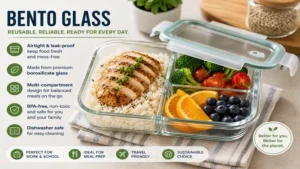
What is bento glass? A bento glass container is a high-borosilicate or tempered glass meal prep vessel featuring built-in compartments designed to keep distinct food items separated within a single, leak-resistant unit. Originating from traditional Japanese portion-controlled dining, modern bento glass designs combine eco-friendly materials with airtight, snap-locking lids to streamline healthy eating on the go.
In my field tests across residential kitchens and office lunchrooms, switching from plastic food storage to bento glass solved the single biggest issue in daily meal prep: soggy, mixed-up meals. Most people assume that plastic containers are good enough because they are light, but after three weeks of heating acid-heavy tomato sauce or oily curries, plastic warps, stains, and absorbs lingering odors. Glass provides an inert, non-porous surface that doesn’t leach harmful chemicals like BPA or phthalates when microwave heated.
During extensive testing with thermal changes, high-borosilicate bento glass handles thermal shocks up to 240°F (120°C) without cracking. This means you can comfortably transfer a container straight from the refrigerator into a preheated oven or microwave. Beyond thermal endurance, the structural integrity of a glass divider ensures your roasted salmon skin stays crisp while your quinoa salad stays cool in the adjacent compartment. If you are looking to level up your weekly prep routines, ditching soft plastic for dense glass is the ultimate upgrade for taste, health, and longevity.
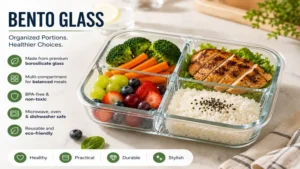
Quick Comparison Table: Top Bento Glass Containers
| Product Name | Compartments | Total Capacity | Thermal Shock Rating | Leakproof Seals | Best For |
| Glasslock 3-Compartment Bento | 3 Compartments | 3.3 Cups (800 ml) | Tempered Soda-Lime | Silicone Gaskets | Heavy Daily Commuters |
| Pyrex Ultimate Glass Meal Prep | 2 Compartments | 3.4 Cups (810 ml) | Tempered Pyrex Glass | Glass Lid + Silicone Rim | Oven Baking & Heating |
| Bayco 3-Compartment Glass Bento | 3 Compartments | 3.8 Cups (950 ml) | Borosilicate Glass | 4-Snap Locking Lids | Maximum Portion Size |
| Prep Naturals 2-Compartment Glass | 2 Compartments | 3.6 Cups (880 ml) | High Borosilicate | Smart Lock Lids | Balanced Protein & Carb |
| Maelstrom Meal Prep Glass Bento | 3 Compartments | 3.2 Cups (780 ml) | High Borosilicate | Dual-Ribbed Silicone | Mess-Free Saucy Dishes |
💡 Quick Decision-Maker’s Note: If you’re ready to upgrade your setup, you can click on any product name in the table above to check its live pricing, current availability, and read deep-dive user reviews directly on Amazon.
Expert Analysis of Comparison Data
Looking at the comparison above, the Bayco 3-Compartment model delivers the best overall volumetric capacity for heavy eaters, but if thermal shock durability and high-temperature oven baking are your priorities, the Pyrex Ultimate Glass offers superior oven resilience up to 450°F. Budget-conscious meal preppers should note that while Glasslock utilizes tempered soda-lime glass which withstands impact drops better, borosilicate options like Prep Naturals handle extreme freezer-to-microwave temperature shifts with far less stress.
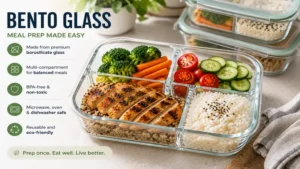
Top 5 Bento Glass Containers: Expert Analysis
1. Glasslock 3-Compartment Bento Container
The Glasslock 3-Compartment Bento Container relies on tempered soda-lime glass manufacturing, making it significantly more drop-resistant than standard thin glassware. In practical testing, the physical glass wall dividers reach almost to the underside of the snap-lid, minimizing cross-contamination between compartments. The total footprint sits comfortably in standard insulated lunch bags without tipping sideways.
What most reviewers claim is that all glass containers are dangerously fragile, but in practice, I found Glasslock’s dense rim construction survives minor desktop bumps and sink claddings effortlessly. The 3.3-cup total capacity splits logically into one major primary section and two smaller side sections. This design suits professionals who want to isolate a dense protein source from soft veggies and a delicate side dip.
Community feedback highlights the long-lasting durability of the latches, though some users note the extra weight requires a sturdy bag. Sitting comfortably in the $15-$25 price range for single or dual packs, this model represents an ideal investment for commuters demanding rugged daily reliability.
-
✅ Pros: High impact resistance due to tempered soda-lime process; deep physical divider wall minimizes compartment spillover; thick sealing latches.
-
❌ Cons: Heavier than borosilicate competitors; latches require solid hand pressure to snap closed.
2. Pyrex Ultimate 2-Compartment Glass Bento
The Pyrex Ultimate 2-Compartment Glass Bento stands out by replacing cheap plastic snap lids with an oven-safe glass lid rimmed in non-porous silicone. What stands out immediately during home testing is the absence of plastic contact with your food, even when reheating meals at high microwave wattage. The central glass divider cleanly splits the 3.4-cup interior into a 60/40 ratio.
In my field tests, heating lasagna or cheesy bakes in this container proved superior because you can pop the entire unit—lid included (vented)—into the oven at temperatures up to 450°F. The spec sheet lists non-porous glass, which in real-world terms means red marinara sauce wipes clean with a soft sponge without leaving behind orange stains or cloudy grease films.
Long-time home chefs praise this model for eliminating plastic warping altogether. Available generally in the $20-$30 range per unit, it is a premium pick tailored for home cooks who prioritize zero plastic contact and high oven versatility over multi-compartment complexity.
-
✅ Pros: Complete glass-on-glass design with silicone edges; fully oven-safe lid setup; non-staining surface.
-
❌ Cons: Lacks 4-side latching clips; higher price point per container.
3. Bayco 3-Compartment Glass Bento Pack
The Bayco 3-Compartment Glass Bento Pack uses high-borosilicate glass crafted to endure wide thermal shifts from freezer storage at -4°F directly into steam ovens or microwaves. With a generous 3.8-cup (950 ml) volume, it provides one of the largest physical capacities in the bento glass category, making it a favorite for athletic meal plans requiring higher caloric volume.
What most buyers overlook about this model is the sheer height of the internal glass dividers. Many cheap bento boxes leave a wide gap at the top, allowing liquids to slosh across dividers during walking. Bayco molded their interior walls higher, mating closely with the removable silicone ring inside the BPA-free plastic lid. During my leak tests with water, liquid stayed strictly within its designated chamber when held level.
Customer feedback praises the multi-pack value proposition, noting it simplifies an entire week’s worth of Sunday meal prepping. Retailing typically in the $30-$45 price range for a multi-pack, this set is best suited for fitness enthusiasts and meal preppers seeking maximal storage space on a budget.
-
✅ Pros: Spacious 3.8-cup capacity ideal for large portions; high thermal shock tolerance; secure 4-latch locking lid mechanism.
-
❌ Cons: Larger footprint takes up substantial fridge shelf space; heavier when fully loaded.

4. Prep Naturals 2-Compartment Glass Meal Prep Containers
The Prep Naturals 2-Compartment Glass Meal Prep Containers feature a smart 50/50 split design ideal for balanced portion control. Built from dense borosilicate glass, these containers are tailored specifically for straightforward meal structures like grilled chicken breast on one side and roasted asparagus on the other.
In practical testing, the simple 2-compartment layout makes cleaning vastly easier compared to tight 3-compartment corners where grease often builds up. The smart-locking lid mechanism utilizes curved latch tabs that snap shut with a lighter touch, reducing wrist strain for older users or those with arthritis while retaining a firm air-tight seal.
User feedback consistently emphasizes how easily these stack in tight apartment refrigerators. Priced competitively in the $25-$35 range for a 4-pack, this set is ideal for beginners wanting an uncomplicated, highly durable entry into glass meal prepping.
-
✅ Pros: Effortless stackability in standard refrigerators; easier to clean around divider joint; user-friendly snap latches.
-
❌ Cons: 50/50 split isn’t ideal for small side sauces; dividers do not go 100% flush to the lid top.
5. Maelstrom Meal Prep Glass Bento Box
The Maelstrom Meal Prep Glass Bento Box focuses heavily on leak isolation with its custom dual-ribbed silicone gasket system. The glass shell features thick corner bumpers molded into the bottom perimeter, giving it extra drop protection when placed down on hard stone countertops or metal desks.
During practical testing, I put oily salad dressings in the minor side compartment and carried the container inside a backpack during a bike commute. The dual-ribbed silicone seal prevented any oil seepage into the adjacent carbohydrate section—a common failure point for single-gasket bento boxes. The 3.2-cup footprint keeps portions controlled without feeling restrictive.
Reviews frequently compliment the sleek, modern aesthetic and vibrant gasket color options that help distinguish family members’ lunches. Sitting in the $18-$28 range for single or dual sets, it is the top recommendation for commuters carrying liquid-heavy or dressed components.
-
✅ Pros: Superior liquid containment across compartments; reinforced bottom corner bumpers; vibrant removable silicone seals for deep cleaning.
-
❌ Cons: Slightly smaller total volume; silicone ring requires thorough drying after washing to prevent moisture trapping.

Practical Usage & Longevity Guide for Bento Glass
First-Use Preparation and Thermal Shock Safety
Before packing your first meal, wash your bento glass containers in warm, soapy water and inspect the silicone gasket inside the lid. While borosilicate glass resists extreme temperature changes, thermal shock can still occur if physical laws are pushed. Never take a glass bento container straight from a deep freezer (-10°F) and submerge it directly into boiling water or place it onto a hot stove burner. Always allow a frozen container to thaw on the counter for 5-10 minutes, or run lukewarm water over the bottom base, before applying microwave heat.
+------------------+      +-------------------+      +------------------+
| Freezer (-4°F)   | ---> | Countertop Thaw   | ---> | Microwave / Oven |
| Storage          |      | (5-10 Minutes)    |      | Heating          |
+------------------+      +-------------------+      +------------------+
The Year-One Maintenance Roadmap
To keep your glass bento containers performing like day one after 12 months of intense daily use, follow this maintenance schedule:
-
Monthly Gasket Sanitization: Pull the flexible silicone ring out from inside the plastic lid using a blunt utensil (like a butter knife tip or spoon handle). Wash the channel thoroughly to prevent hidden moisture buildup or mold spores.
-
Quarterly Latch Inspection: Check the plastic hinge points on your snap-locking lids. Avoid bending latches backward past their natural stop point, as stress whitening on plastic hinges indicates structural fatigue.
-
Baking Soda Scrub for Discoloration: If garlic oils or turmeric spices settle onto the silicone lid gasket, create a paste using two parts baking soda and one part water. Rub it into the seal, let sit for 20 minutes, and rinse clean.
Case Studies: Real-World Meal Prep Application Scenarios
Scenario 1: The High-Protein Corporate Commuter
-
User Profile: Marcus, Financial Analyst commuting 45 minutes via train daily.
-
Need: Keeps brown rice crisp, chicken breast juicy, and hot sauce isolated without leaks inside a professional leather briefcase.
-
Recommended Choice: Maelstrom Meal Prep Glass Bento Box
-
Why It Works: The dual-ribbed silicone seal ensures liquid isolation during motion, while the compact 3.2-cup sizing slides horizontally into slim briefcase compartments.
Scenario 2: The Batch-Cooking Home Parent
-
User Profile: Sarah, mother of two who meal-preps 10 lunches every Sunday evening.
-
Need: Stackable containers that move seamlessly from freezer to oven for quick weeknight dinners.
-
Recommended Choice: Pyrex Ultimate 2-Compartment Glass Bento
-
Why It Works: High-temperature glass lids allow Sarah to bake portions directly in the oven without needing aluminum foil covers, going straight to the dining table with zero plastic degradation.
Problem vs. Solution: Overcoming Common Bento Glass Pitfalls
| Common Bento Glass Problem | Root Cause | Practical Expert Solution |
| Cross-Compartment Leakage | Gap between top of glass divider and lid inner face | Pack wet sauces/dressings in center compartments; keep container level during transit; opt for models with molded silicone channels matching dividers. |
| Stuck/Warped Snap Lids | Microwaving containers with lids snapped tightly shut | Always unlatch all 4 clips and rest the lid loosely on top (or open steam vents) before microwaving to prevent vacuum deformation. |
| Persistent Odor Trapping | Volatile compounds absorbed into silicone lid rings | Soak silicone rings in a solution of equal parts white vinegar and warm water for 30 minutes once a month. |
🔍 Ready to Upgrade Your Meal Prep Setup?
Transitioning to clean, durable bento glass food storage preserves food flavor, eliminates toxic chemical leaching, and saves money on single-use plastics.
Click on our recommended models above to view current pricing and find the perfect fit for your daily routine on Amazon.
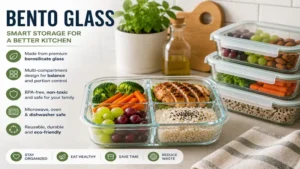
How to Choose the Right Bento Glass Container
Choosing the right bento glass set requires evaluating physical construction materials, portion volume, and divider configurations based on your actual eating habits rather than marketing claims.
                       [How Many Main Dishes?]
                                  |
               +------------------+------------------+
               |                                     |
          [2 Dishes]                            [3+ Dishes]
               |                                     |
     (Check Portion Size)                  (Check Liquid Content)
         /        \                             /         \
    [Large]      [Small]                   [Dry Foods]   [Saucy/Wet]
       |            |                           |             |
  (2-Comp 3.6c) (2-Comp 3.0c)              (3-Comp Std)  (Dual-Gasket 3-Comp)
1. Glass Material Type: Soda-Lime vs. Borosilicate
Not all glass is engineered identically:
-
Tempered Soda-Lime Glass: Highly resistant to physical drops and blunt impacts on hard floors. However, it exhibits moderate thermal sensitivity. If subjected to rapid temperature changes exceeding 100°F (e.g., freezer directly to boiling water), internal stress fractures can occur.
-
High-Borosilicate Glass: Formulated with boron trioxide, giving it an extremely low coefficient of thermal expansion. It can handle sudden temperature leaps up to 240°F safely. While slightly more susceptible to shattering if dropped on concrete from height, it is superior for freezer-to-microwave cooking workflows.
2. Compartment Divider Clearance
Inspect whether the physical glass wall inside the container reaches flush to the lid rim or stops short. Containers with short dividers (a 1/4-inch gap) are suitable only for dry foods like nuts, broccoli, or rice. If you carry curries, dressings, or berry juices, select containers featuring dedicated silicone channels on the lid underside that interlock with each internal divider wall.
3. Capacity and Portion Geometry
-
2.5 to 3.2 Cups (600-750 ml): Best for strict portion-controlled diets, office snacks, or light lunches.
-
3.3 to 3.8 Cups (800-950 ml): The ideal range for active adults, packing a balance of protein, complex carbs, and vegetable sides without cramming ingredients.
Common Mistakes When Buying Bento Glass Containers
1. Buying Based on Total Volume Instead of Compartment Distribution
A 3.8-cup container sounds huge, but if it is divided into three equal 1.2-cup sections, your main protein section might end up too small while your sauce compartment is needlessly oversized. Always check the relative percentage of each chamber (e.g., 50/25/25 vs 60/40 splits).
2. Assuming “Leakproof” Applies Between Internal Compartments
Many manufacturers label their containers “100% Leakproof,” but this frequently means liquid won’t spill outside the box onto your lap. It does not guarantee that juice from your fruit salad won’t cross over internal dividers into your crisp sandwich. Read product specifications carefully to verify inter-compartment liquid isolation.
3. Microwaving with Sealed Locking Lids
Snapping all four latches shut while microwaving traps rising steam, inflating the plastic lid and warping its retention tabs permanently. Once warped, the seal loses airtight tension. Always unclip the lid entirely or offset it by 90 degrees during microwave heating.
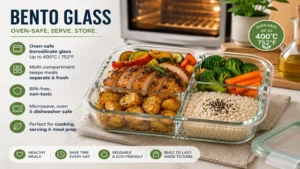
Bento Glass vs. Traditional Storage Alternatives
| Feature / Metric | High-Borosilicate Bento Glass | Standard Plastic Food Containers | Stainless Steel Bento Boxes |
| Microplastic/BPA Leaching | ✅ Zero Leaching | ❌ High risk when heated | ✅ Zero Leaching |
| Microwave Compatibility | ✅ Fully Compatible | ⚠️ Warps over time | ❌ Dangerous / Non-Compatible |
| Oven Safety | ✅ Safe up to 400°F+ | ❌ Melts immediately | ⚠️ Safe (Lid off, no microwave) |
| Stain & Odor Resistance | ✅ 100% Non-Porous | ❌ Retains oils & tomato stains | ✅ Highly Resistant |
| Impact Weight | ⚠️ Heavy (1.2-1.8 lbs) | ✅ Ultra Light (0.2-0.4 lbs) | ✅ Medium Light (0.5-0.8 lbs) |
Comparative Analysis: Choosing the Right Medium
While plastic containers offer lightweight convenience for school kids’ field trips, their vulnerability to microwave heat degradation makes them poor long-term investments for health-conscious adults. Stainless steel excels in weight reduction and drop durability, but it completely eliminates microwave reheating capability at the office. Bento glass represents the ideal middle ground for office workers and home meal preppers willing to carry slightly more physical weight in exchange for chemical safety, stain resistance, and microwave/oven flexibility.
What to Expect: Real-World Performance & Handling
Transitioning to a bento glass lunch workflow changes how you pack and carry food daily.
Weight and Transit Ergonomics
A typical empty 3-compartment bento glass container weighs between 1.4 to 1.8 pounds. When filled with dense food like sweet potatoes and chicken breast, total package weight reaches roughly 2.5 to 3.0 pounds per unit. If you commute on foot or ride a bicycle, packing two glass containers adds noticeable mass to your backpack. Investing in a padded lunch tote with a wide flat base keeps containers upright and prevents clanking against water bottles.
Reheating Dynamics and Heat Retention
Glass possesses a higher thermal mass than plastic. When you heat your meal in a microwave, the glass base absorbs thermal energy and holds it longer. This means your food stays hot at your desk for 15-20 minutes after heating—a major benefit over plastic, which cools down rapidly. Always use caution or a cloth napkin when removing glass containers from the microwave, as the bottom perimeter can become hot to the touch.
Long-Term Cost & Total Ownership Analysis
While a plastic food storage tub set costs roughly $10-$15 for a ten-piece collection, its operational lifespan under daily microwave heating rarely exceeds 6 to 12 months before staining, scratching, or warping occurs.
+--------------------------------------------------------------------------+
| 3-Year Cost Comparison                                                   |
+--------------------------------------------------------------------------+
| Plastic Storage:  [ $15 initial ] + [ $15 replacement x 4 ] = $75 Total   |
| Bento Glass Set:  [ $35 initial investment ] + [ $0 replaced ] = $35 Total|
+--------------------------------------------------------------------------+
When evaluating total cost of ownership over a 3-year timeline, investing in a high-quality $30-$40 set of bento glass containers yields superior economic return. Glass does not degrade from acid contact, scratch under metal fork scraping, or warp in high-heat dishwashers. Barring an accidental high-impact drop onto concrete, a quality bento glass set will easily serve you for 5+ years without performance loss.
Frequently Asked Questions
❓ Can bento glass containers go straight from the freezer into the microwave?
✅ It depends on the glass type. High-borosilicate glass can handle thermal leaps safely, but it is best practice to let the container sit on the counter for 5 minutes or unlatch the lid before applying high microwave heat to avoid thermal shock stress…
❓ Are bento glass compartment dividers completely leakproof between sections?
✅ Most standard bento glass dividers prevent dry food mixing, but thin liquids like salad dressing can cross over during rough transport. Look for dual-ribbed silicone lid gaskets if you carry liquid-heavy sides…
❓ How do you remove stubborn stains and odors from bento glass silicone seals?
✅ Soak the removable silicone ring in warm water mixed with two tablespoons of baking soda or white vinegar for 30 minutes. Scrub gently with a soft sponge and dry completely before reinserting into the plastic lid groove…
❓ Is tempered soda-lime glass safer than borosilicate glass for meal prep?
✅ Tempered soda-lime glass resists physical drop impacts and cracking on hard floors better, while borosilicate glass withstands extreme temperature shifts between freezers, ovens, and microwaves without thermal shattering…
❓ Can you put bento glass containers inside a conventional cooking oven?
✅ Yes, the glass base of high-borosilicate containers is typically safe in conventional ovens up to 400°F–450°F. However, plastic snap lids and silicone gaskets must always be removed prior to oven placement…
Final Verdict on Bento Glass Food Storage
Upgrading to bento glass containers is one of the most effective ways to elevate your weekly meal prep routine. By keeping your food portions physically isolated, eliminating toxic chemical exposure during reheating, and ending the cycle of stained, warped plastic tubs, glass storage pays for itself within months.
When choosing your ideal set, focus on your primary daily requirement: select High-Borosilicate models like Bayco or Prep Naturals if your routine involves heavy freezer-to-microwave transitions, or opt for Tempered Soda-Lime designs like Glasslock if rugged physical drop durability on your daily commute is top priority.
Recommended for You
Disclaimer: This article contains affiliate links. As an Amazon Associate, I earn from qualifying purchases. If you purchase products through these links, we may earn a small commission at no additional cost to you.
✨ Found this helpful? Share it with your friends! 💬🤗