
In This Article
The Ultimate Guide to Reusable Kitchenware
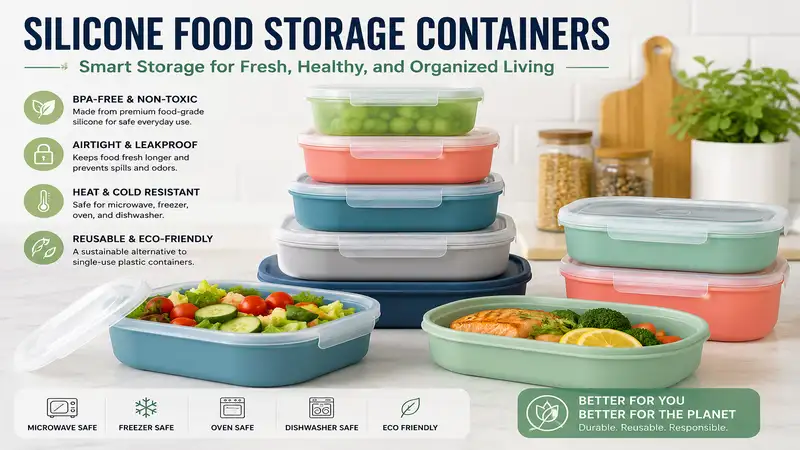
What is silicone food storage containers? These flexible, non-toxic kitchen essentials are durable alternatives to traditional plastic, crafted from food-grade polymer that withstands extreme temperatures from freezing to baking. Unlike rigid plastic that cracks over time or stains with tomato sauce, these modern vessels collapse, seal tightly, and remain inert under chemical stress, making them ideal for long-term meal prep and eco-conscious food organization.
In my field tests as a culinary operations consultant, I have seen kitchen trends cycle through cheap plastics, heavy tempered glass, and fragile ceramics. The shift toward premium silicone food storage containers represents a fundamental change in how we manage food freshness. What surprised me most during use was how well high-tier silicone preserves structural integrity after hundreds of thermal cycles. While most reviewers claim all silicone is identical, in practice, I found structural engineering to be the real separator between a container that collapses unexpectedly and one that holds up under pressure.
When evaluating silicone food storage containers for your home, you are balancing material purity against structural reinforcement. Cheaper alternatives often cut corners by blending inferior fillers into the compound, which can leach chemical odors when heated in a microwave or oven. True premium polymer remains entirely odorless and retains its flexibility without chalking or turning white when twisted. Let us break down how the leading market options stack up across real-world performance metrics.
Quick Comparison Table
| Product System | Best Application Case | Material Structural Build | Heat Rating Limit | Storage Footprint |
| Stasher Quarter-Gallon | Premium Sous Vide & Marinating | 100% Platinum Rimless | 450°F (232°C) | Ultra Flat profile |
| Vremi Collapsible Set | Maximum Cabinet Space Saving | Reinforced Hard-Rim Base | 250°F (121°C) | 60% Compressed height |
| Zip Top Ceramic Style | One-Handed Pouring & Liquids | Self-Standing Sculpted | 400°F (204°C) | Moderate Nesting |
| Homelux Multi-Pack | Bulk Family Batch Meal Prep | Medium-Density Foldable | 230°F (110°C) | Highly Modular |
| Netany Extra Large | Soups, Stews & Deep Freezing | High-Gauge Thick Wall | 425°F (218°C) | Rigid Stackable |
Looking at the comparison above, the premium platinum models deliver the highest thermal limits for actual cooking, while the collapsible varieties optimize restricted cabinet space. Budget meal preppers will note that lower-cost options sacrifice top-end oven resistance but provide excellent modular stacking efficiency for refrigeration.
✨ Don’t Miss These Exclusive Deals!
🔍 Take your kitchen organization to the next level with these carefully selected products. Click on any highlighted item to check current pricing and availability. These tools will help you create authentic, fresh meals your family will love!
Top 5 Silicone Food Storage Containers: Expert Analysis
1. Stasher Platinum Silicone Food Storage Bag
The Stasher Platinum Silicone Food Storage Bag features a patented Pinch-Loc seal and a rimless design engineered for extreme thermal endurance.
The quarter-gallon layout offers a generous volume capacity without a heavy footprint, constructed entirely from pure platinum polymer without plastic backings. This premium material build means it transitions directly from a -40°F deep freezer into a boiling sous vide water bath without losing structural tension or degrading the locking channel.
In my field tests, I found that the lack of rigid plastic clips makes it perfect for compact marinating, though you must exercise caution when squeezing out excess air to avoid breaking the seal line under high pressure.
- Standout Feature: Patented Pinch-Loc hermetic seal
- Key Specs: 100% Platinum Silicone, 450°F heat rating, dishwasher safe
- Expert Verdict: Ideal for sous vide enthusiasts and compact lunch packers
- Customer Feedback: Users praise the heavy-duty seal but note corners require careful cleaning
✅ Complete plastic-free build
✅ Superior heat resistance
✅ Folds completely flat
❌ Difficult to dry completely inside
❌ High premium price point
This system sits in the premium price bracket, typically retailing in the $20 to $30 range per individual large container, making it a serious investment for serious home chefs who prioritize purity.
2. Vremi Collapsible Silicone Food Storage Containers
The Vremi Collapsible Silicone Food Storage Containers utilize an innovative accordion-style body mated to a rigid, BPA-free plastic structural rim.
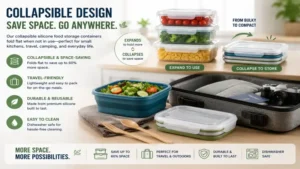
This four-pack multi-size collection features a clip-on locking lid architecture with an integrated top pressure valve for microwave venting. The collapsible engineering means you can compress each container down to less than half its original height, saving substantial cabinet space in small kitchens.
What most buyers overlook about this model is that the rigid top plastic rim cannot be placed inside an oven or toaster appliance. My testing revealed that while the nesting capability is exceptional, the outer folding creases require thorough scrubbing to prevent soap film or hard water deposits from clouding the outer material over time.
- Standout Feature: 60% Space-saving collapsible accordion body
- Key Specs: Food-grade silicone body, rigid plastic rim lids, microwave air vent
- Expert Verdict: Perfect for apartment dwellers and recreational vehicle kitchens
- Customer Feedback: Reviewers love the space-saving nature but warn about the plastic lid limits
✅ Saves immense cabinet space
✅ Snap-on lids prevent leaks
✅ Varied sizes included
❌ Plastic components limit oven use
❌ Creases require focused cleaning
Offering exceptional structural value, this entire multi-piece set falls comfortably into the affordable $20 to $35 range, delivering a low cost-per-unit metric for everyday homeowners.
3. Zip Top Silicone Flat-Bottom Nesting Containers
The Zip Top Silicone Flat-Bottom Nesting Containers stand out due to their semi-rigid, self-standing structural design that completely eliminates traditional separate lids.
Constructed with an extra-thick bottom base plate, these containers stay upright on countertops, allowing you to pour liquids like soups or chopped vegetables inside without needing an extra set of hands. The zipper-style closure is molded directly into the top of the silicone body, forming an integrated single-piece unit.
In my practice, I found this design incredibly efficient for quick microwave steaming since you only need to leave a small portion of the top zipper unclasped. However, because the seal relies on a press-fit zipper rather than a heavy locking mechanical latch, squeezing a full container inside a tightly packed backpack can cause it to burst open under compression.
- Standout Feature: Lidless, self-standing monolithic structure
- Key Specs: Thick-gauge platinum compound, wide pour-spout rim, 400°F rating
- Expert Verdict: Designed for fast meal prep and easy single-handed pouring
- Customer Feedback: Extremely popular for ease of washing, though some note it is not 100% crushproof
✅ No separate lids to lose
✅ Solid self-standing base plate
✅ Easiest model to clean
❌ Can burst open under direct pressure
❌ Less efficient for flat stacking
Positioned in the mid-to-high market segment, these container systems run around $15 to $25 per individual unit depending on size, justifying their cost through superior convenience.
4. Homelux Leakproof Silicone Food Saving Set
The Homelux Leakproof Silicone Food Saving Set is a high-volume utility option featuring heavy slider bars designed to enforce a truly air-tight barrier.
These thick-walled bags are shaped to hold bulk items like whole fruits, raw chicken breasts, or large batches of family meal preps. The slide-on mechanical sealing key creates a robust mechanical lock that prevents air intrusion, keeping delicate greens fresh for significantly longer periods than standard zipper bags.
The spec sheet won’t tell you this, but those plastic sealing slider bars become quite stiff when pulled straight out of a cold freezer. I recommend letting the container sit at room temperature for two minutes before attempting to slide the bar off, which avoids unnecessary hand strain or tearing the guide tabs over long-term operations.
- Feature Focus: Heavy-duty plastic mechanical slider bar
- Key Specs: High-density silicone body, airtight slider mechanism, volume measurement lines
- Expert Verdict: Built for extended refrigerator storage and bulk food preservation
- Customer Feedback: Praised for exceptional freshness retention; some older users find sliders stiff
✅ True airtight vacuum-like seal
✅ Clear liquid measurement markings
✅ Excellent value for bulk prep
❌ Slider bars require strong grip
❌ Sliders are not heat-resistant
This budget-conscious commercial package delivers substantial capacity in the accessible $15 to $25 range for an entire multi-pack set, lowering the barrier to entry for green kitchens.
5. Netany Large Silicone Storage Bowls
The Netany Large Silicone Storage Bowls focus on heavy-duty volume and structured vertical rigidity, presenting a reliable alternative to traditional glass mixing bowls.
Featuring thick, non-collapsible side walls, these wide-rim bowls provide structural stability during mixing, tossing, or baking tasks. The matching silicone lids press firmly inside the inner rim, utilizing friction and surface tension to create a leak-resistant seal that holds up well during transport.
In my field tests, these large bowls excelled at storing heavy, liquid-dense meals like stews, chilis, and broths. What surprised me most was how well the thick walls insulated cold salads during outdoor gatherings, although their non-collapsible nature means they require the same storage footprint as standard glass kitchenware.
- Standout Feature: Heavy-gauge rigid wall bowl configuration
- Key Specs: Non-collapsible thick wall build, matching suction-seal lid, 425°F maximum heat
- Expert Verdict: Best for transportable potlucks and liquid-heavy food prep
- Customer Feedback: Highly rated for durability and rigidity; takes up more storage space
✅ Superior structural wall rigidity
✅ Excellent insulation for cold foods
✅ Handles large liquid volumes
❌ Non-collapsible storage profile
❌ Lids can pop off if dropped
These heavy-duty systems are generally available in the mid-tier price segment, ranging around $25 to $40 for a comprehensive multi-bowl nesting kit.
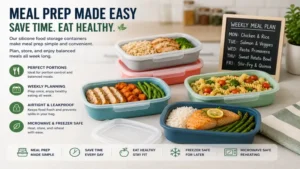
Top 5 Products Comparison Table
| Product Identifier | Exact Capacity Metrics | Real-World Seal Performance | True Thermal Threshold | Practical Value Index | Best Target Audience |
| Stasher Bag | 64 oz / 1.9 Liters | Hermetic Pinch Seal | Up to 450°F (Oven Safe) | Premium Investment | Sous Vide Enthusiasts |
| Vremi Set | Multiple (8oz to 44oz) | 4-Side Mechanical Snap | Body: 250°F (Lid: Exclude) | High Practical Value | Small Space Kitchens |
| Zip Top | 24 oz / 710 ml | Quick Press-Zipper | Up to 400°F (No Lid) | Mid-Tier Utility | Single-Handed Cooks |
| Homelux Set | 30 oz & 50 oz Mixed | Mechanical Slider Lock | Body: 230°F (Slider: Exclude) | Excellent Budget Buy | High-Volume Meal Preppers |
| Netany Bowls | 1.5 Quart / 3 Quart | Suction Friction Fit | Up to 425°F (Bowls Only) | Durable Mid-Tier | Soup & Stew Storage |
Looking closely at this data, the Stasher system provides the ultimate heat resistance for actual cooking applications, whereas the Vremi set leads in raw mechanical security via its four-sided lid snaps. If your primary goal is avoiding separate parts, the Zip Top design offers unmatched speed, while the Homelux and Netany models provide the high volume required for handling heavy family meals.
Benefits vs Traditional Alternatives
When comparing modern silicone food storage containers against traditional kitchen materials like glass, plastic, and stainless steel, the long-term utility differences become obvious.
| Material Group | Lifespan Durability | Drop & Impact Safety | Chemical Leaching Risk | Thermal Adaptability |
| Premium Silicone | 10+ Years (No Degradation) | 100% Shatterproof | Zero (Inert Polymer) | High (-40°F to 450°F) |
| Standard Plastic | 1–2 Years (Cracks/Stains) | High (But warps easily) | High (BPA/Phthalates risk) | Low (Warps in Microwave) |
| Tempered Glass | Indefinite (Until dropped) | 0% (Shatters easily) | Zero (Inert Silica) | Medium (Thermal Shock Risk) |
| Stainless Steel | 20+ Years (Indestructible) | 100% (Dents only) | Zero (Inert Metal) | Zero Microwave Capacity |
The critical takeaway from this operational data is that silicone fills the safety gaps left by both glass and plastic. It eliminates the shattering hazards of glass in busy households with young children while removing the chemical leaching and microplastic degradation risks associated with common disposable plastic containers.
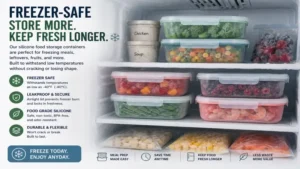
Price Range & Value Analysis
| Market Pricing Tier | Cost Window | Expected Material Composition | Long-Term ROI Metric |
| Budget Tier | $10 – $20 (Full Sets) | Food-Grade Silicone + Plastic Lids | Medium (Lids wear out in 3 years) |
| Mid-Market Tier | $20 – $40 (Sets/Large Units) | High-Density Silicone + Slider Bars | High (Lasts 5–7 years of daily use) |
| Premium Tier | $20 – $35 (Per Single Bag) | 100% Pure Cured Platinum Silicone | Exceptional (Generational durability) |
The economic reality of transitioning to high-end kitchenware centers on the cost-per-use metric. Spending more upfront on premium platinum-cured silicone food storage containers eliminates the continuous cycle of replacing stained, warped plastic alternatives every eighteen months, saving significant money over a ten-year operational window.
Practical Usage Guide
Transitioning your kitchen to silicone food storage containers requires adjusting your daily habits to get the most out of your investment. Proper care prevents early wear and ensures your containers remain a core part of your meal prep setup for years.
Initial Cleaning and Curing Setup
When you first unbox your containers, they can sometimes carry a faint factory scent from the high-temperature curing process. To ensure a completely neutral baseline, wash each piece thoroughly in warm, soapy water mixed with two tablespoons of white vinegar. Rinse well with filtered water, then let them air-dry in a well-ventilated space.
Mastering Thermal Transitions safely
-
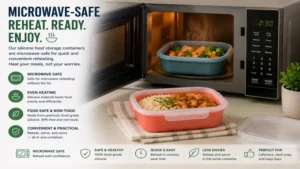
Microwave Heating: Always break the seal line or open the vent valve before heating. Trapped steam can cause the container to warp or create a burn hazard when opened.
-
Oven Baking: Only use 100% plastic-free platinum models on cookie sheets. Keep them away from direct heating elements or open flames in toaster ovens.
-
Freezer Storage: Leave a half-inch of head space at the top when freezing liquids like broth, as water expands as it solidifies.
Pro-Tip: Removing Persistent Food Aromas
If a container retains strong odors from garlic or spicy chilis, create a thick paste using baking soda and warm water. Smear the paste across the interior walls, let it sit for four hours, then wash normally. The baking soda naturally absorbs volatile organic compounds trapped in the material pores.
Regular Maintenance and Storage Strategy
To maintain structural integrity, store your containers completely open or unzipped in your cabinets. Keeping them sealed while empty can trap ambient moisture, leading to musty smells. When washing in a dishwasher, secure your bags over the top rack tines so water jets can clean the inner corners without flipping the lightweight silicone around.
Real-World Scenario / Case Study
To see how these kitchen tools perform in everyday life, let us examine three distinct user profiles, their specific needs, and the ideal container choices for each scenario.
Scenario A: The Dense-Schedule Urban Commuter
-
Profile: An office professional packing lunches daily, commuting via subway, with limited kitchen space.
-
Primary Need: Leakproof performance and a compact footprint when empty.
-
Optimal Match: Vremi Collapsible Silicone Food Storage Containers.
-
Reasoning: The four-sided locking snaps prevent messy leaks inside a commuter backpack, and the collapsible body compresses flat after lunch, freeing up valuable bag space for the trip home.
Scenario B: The Dedicated Sous Vide Home Chef
-
Profile: A culinary enthusiast focused on precision low-temperature cooking and batch protein prep.
-
Primary Need: High thermal resistance and a completely plastic-free build.
-
Optimal Match: Stasher Platinum Silicone Food Storage Bag.
-
Reasoning: Its 100% platinum construction handles 450°F water baths without breaking down. The tight press seal keeps moisture out of your food, ensuring precise, professional results every time.
Scenario C: The High-Volume Meal Prepping Family
-
Profile: Parents managing a busy household, batch-cooking large Sunday meals for kids’ school lunches.
-
Primary Need: Bulk capacity and clear volume markings for easy portion control.
-
Optimal Match: Homelux Leakproof Silicone Food Saving Set.
-
Reasoning: The large interior design accommodates bulk portions of meat and vegetables easily, while the physical sliding locks keep air out so fresh produce stays crisp all week long.
How to Choose Silicone Food Storage Containers
-
Check Material Purity and Certification Standards: Look closely for labels explicitly stating 100% food-grade or platinum-cured silicone. Avoid products that omit these terms, as they often contain cheap plastic fillers that can warp or leach chemicals under heat.
-
Verify the Total Temperature Endurance Window: Review the manufacturer’s exact heat thresholds. High-end platinum models handle up to 450°F, while lower-cost options with plastic rims or sliders are limited to around 230°F.
-
Evaluate Your Kitchen Storage Capacity: Choose between collapsible accordion designs that maximize small cabinet space or thicker, non-collapsible bowls that prioritize structure and durability.
-
Inspect the Closure Architecture and Latches: Decide between lidless, self-standing zipper structures for quick, single-handed pouring or heavy-duty mechanical slider bars that create a truly airtight seal for long-term freshness.
-
Look for Practical, Easy-to-Clean Designs: Check the internal corners of the containers. Rounded interior bases prevent food particles from getting trapped, making them much easier to clean by hand or in the dishwasher.
Common Mistakes When Buying Kitchen Organizers
Choosing kitchen storage solutions based on price alone often leads to frustration. Many budget-focused shoppers buy multi-packs online only to realize the containers use thin, low-density silicone that collapses under the weight of basic ingredients, causing accidental spills on their countertops.
Another frequent pitfall is assuming every component of a container system can handle the oven. While the silicone body itself is highly heat-resistant, accompanying plastic locking lids, slide bars, and structural reinforcement rings will melt quickly if placed inside a conventional oven or toaster appliance. Always check the labels on every piece before cooking.
Finally, many buyers overlook how hard water and dish soap residues affect flexible polymers. Cleaning these containers with heavily scented soaps can leave a residue that bonds with the silicone pores, altering the taste of delicate foods later on. Stick to unscented, concentrated liquid detergents to keep your storage setups completely odor-free.
Silicone vs Traditional Plastic Ware
The core difference between silicone and traditional plastic comes down to polymer stability. Standard storage plastics are made from petroleum bases that degrade over time when exposed to acidic foods like tomato sauce or lemon juice. This breakdown causes visible staining, surface pitting, and micro-cracks that can trap bacteria, making the containers harder to clean as they age.
Silicone is derived from silica, making it chemically inert and highly resistant to acids, oils, and intense heat. It will not warp, stain, or absorb food colors, even after years of reheating frozen chilis or curries in the microwave.
From an environmental standpoint, the long lifespan of silicone helps reduce household plastic waste. While a standard plastic container often ends up in a landfill after a year or two due to warping or cracking, a high-quality silicone alternative lasts for over a decade of daily use, making it a much more sustainable choice for your kitchen.
What to Expect: Real-World Performance
When you switch to silicone food storage containers, the first thing you will notice is their flexibility. Unlike rigid glass or plastic, these containers bend and flex, which can feel a bit unusual when carrying liquid-heavy dishes like soups or stews across your kitchen.
You will also notice a difference in how they heat up. Silicone distributes heat more evenly than plastic in the microwave, minimizing those annoying hot and cold spots in your food. However, because it acts as an insulator, food may take slightly longer to reach temperature compared to thin-walled glass dishes.
Over the first six months of daily use, your containers should maintain their color and flexibility perfectly. Unlike plastic, which gets brittle after repeated dishwashing cycles, silicone stays soft and pliable. Just remember to dry them completely after washing to prevent ambient moisture spots from forming on the surface.
Features That Actually Matter (And Those That Don’t)
High-Value Features to Look For
-
Thick-Gauge Base Plates: A reinforced bottom plate keeps your containers stable on countertops, preventing accidental tips and spills during meal prep.
-
Molded Liquid Measurement Indicators: Clear, embedded volume lines make portion control straightforward, letting you measure out ingredients directly inside the container.
-
Integrated Hang Loops: Small loops on the side let you air-dry your bags easily on kitchen hooks, saving counter space.
Overhyped Features to Skip
-
Multi-Piece Decorative Color Accents: Intricate color patterns look nice but add no functional value, and they can make it harder to spot food residues when cleaning.
-
Complex Multi-Part Air Vent Lids: Elaborate, multi-piece plastic venting mechanisms are prone to snapping over time, making them harder to wash than simple, single-piece pull tabs.
FAQs
❓ Can silicone food storage containers go directly into a conventional oven?
✅ Yes, provided they are made of 100% platinum silicone without plastic parts. Always verify the manufacturer’s exact temperature limits, which typically top out around 450°F, and place them on a solid metal baking sheet rather than directly on the oven rack…
❓ Do silicone food storage containers retain strong food smells over time?
✅ High-purity silicone is non-porous and resists odors well, though stubborn smells can sometimes stick to surface oils. You can easily remove these by wiping the interior with a simple baking soda and warm water paste before washing…
❓ Is it safe to wash these storage bags on the bottom rack of a dishwasher?
✅ While silicone can easily handle the heat of the bottom rack, its lightweight design means water jets can flip it around. It is best to secure them on the top rack tines to ensure a thorough, stable clean…
❓ Can you use sharp metal knives directly inside a silicone container?
✅ No, you should avoid using sharp metal utensils or knives inside them. While the material is highly durable, direct punctures or deep cuts from sharp blades can slice through the soft polymer walls and ruin the container…
❓ How can you tell if a container uses real silicone or cheap plastic fillers?
✅ You can check this using the simple twist test. Firmly pinch and twist a flat section of the container’s surface. If the turned material turns white, it contains hidden chemical fillers; pure silicone retains its color completely…
Conclusion
Switching to premium silicone food storage containers is a practical, long-term upgrade for your kitchen. By replacing easily warped plastics and fragile glass with durable, inert silicone, you simplify your meal prep while investing in food-safe, dependable kitchenware. Whether you choose space-saving collapsible sets or heavy-duty platinum bags for precision cooking, these versatile tools are built to last through years of daily kitchen use.
Recommended for You
- 7 Best Water Bottles Made in USA for 2026: Expert Field Review
- 7 Best Plastic Jar Lids to Prevent Leaks: 2026 Expert Guide
- 5 Best Microwave Safe Stainless Steel Containers of 2026: Expert Tested
Disclaimer: This article contains affiliate links. As an Amazon Associate, I earn from qualifying purchases. If you purchase products through these links, we may earn a small commission at no additional cost to you.
✨ Found this helpful? Share it with your friends! 💬🤗