
In This Article
Why Plastic Pint Containers Are the Unsung Heroes of Your Kitchen
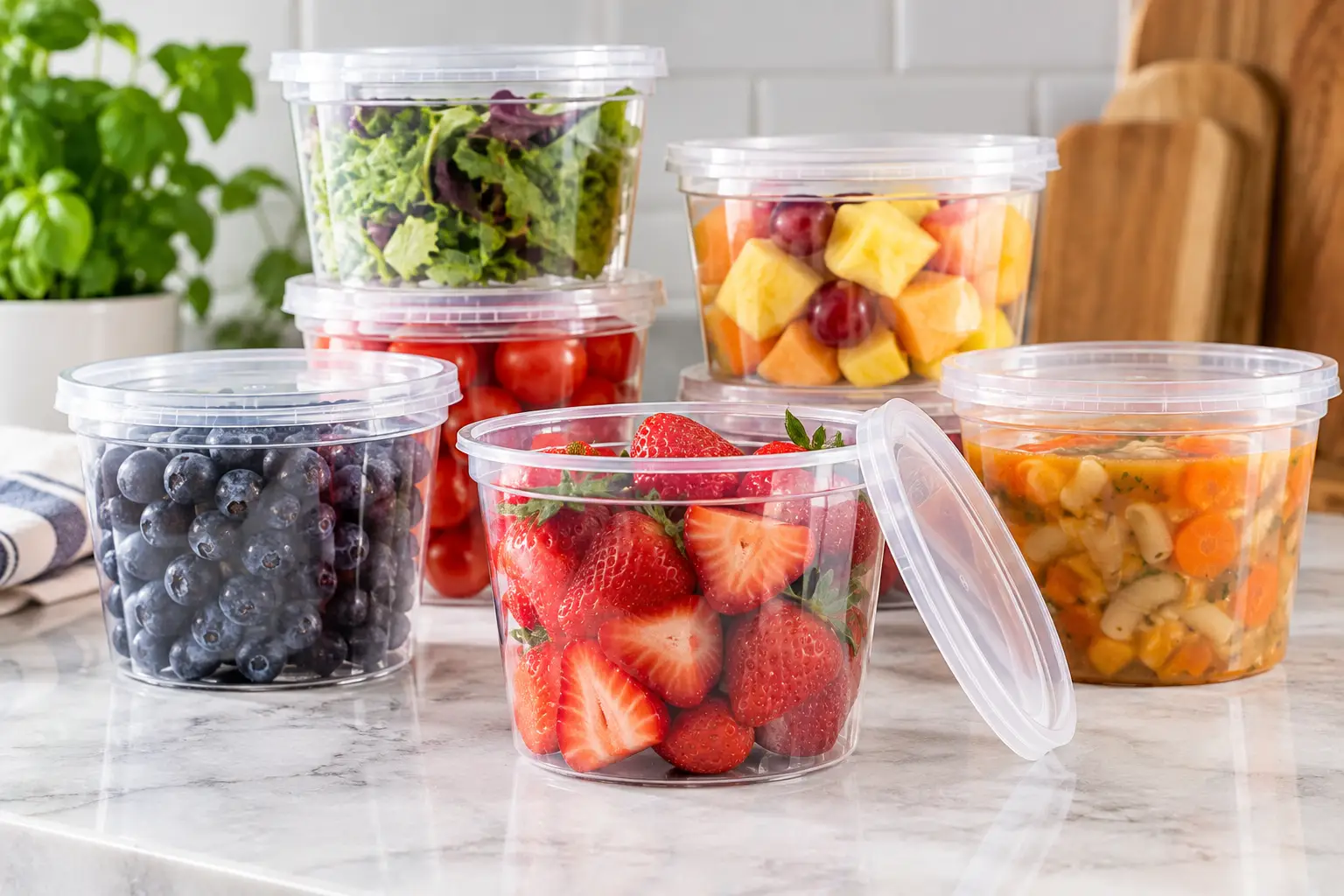
Peek inside almost any restaurant walk-in cooler and you’ll spot the same thing: towers of clear, round tubs holding everything from chicken stock to pickled onions. Those humble plastic pint containers aren’t there because they’re pretty. They’re there because they’re cheap, stackable, see-through, and they survive the freezer-to-fridge-to-microwave shuffle better than plenty of “premium” storage sets.
Home cooks caught on fast. Meal preppers portion lunches into them, soup lovers freeze broth by the pint, and parents use them for everything from cut fruit to homemade slime. But here’s the catch: not all plastic pint containers are created equal. Some lids pop off at the slightest squeeze. Some walls crack the first time you pry them open straight out of the freezer. And some “16 oz” tubs ship without lids at all — a surprise nobody wants after ordering a case of 500.
This guide cuts through that noise. We compared spec sheets, materials, lid designs, and the aggregated customer feedback we could actually verify for seven real options sold on amazon.com — from bargain bulk packs to twist-top meal prep sets and a restaurant-grade case. Along the way, you’ll get a first-30-days how-to, real-world buyer scenarios, a problem-solving guide, and straight answers on food safety.
One honest note before we dive in: we haven’t run these containers through a personal torture test. What you’ll read is analysis — grounded in manufacturer specs, published federal food-safety guidance, and real review themes — so you can make the call that fits your kitchen. Ready? Let’s find your perfect pint. 🥣
What Are Plastic Pint Containers?
Plastic pint containers are lidded food storage tubs that hold 16 US fluid ounces — two cups, or about 473 mL. Most are round “deli-style” cups made from polypropylene, a lightweight plastic that handles freezing and moderate heat. People use them for soups, sauces, leftovers, meal prep portions, and pantry organization.
That’s the snippet answer. The longer answer is that “pint container” covers three fairly different product families, and knowing which one you need saves you money:
- ✅ Classic 16 oz deli containers — thin-walled, press-on lids, sold in packs of 24 to 240. Cheap, stackable, and semi-disposable.
- ✅ Twist-top pint containers — thicker walls with screw-on lids. Fewer per pack, but far more secure in a lunch bag.
- ✅ Freezer jars — squarish pint jars designed around a fill line for expansion, ideal for freezer jam and fruit.
Flip any of them over and you’ll usually find a small triangle with a number inside. That’s the resin identification code, and on most pint containers with lids it’s a #5, meaning polypropylene (PP). That little number tells you more about heat tolerance and recyclability than any marketing claim on the box — which is why it shows up again in our buying advice below.
Quick Comparison: The 7 Best Plastic Pint Containers at a Glance
| Product | Style | Pack Size | Price Range* | Best For |
|---|---|---|---|---|
| Freshware 16 oz Deli Containers | Press-on lid deli cup | 36 or 50 sets | ~$15–$30 | Freshware — everyday all-rounder |
| Stack Man 16 oz Deli Containers | Press-on lid deli cup | 48 or 240 sets | ~$15–$25 (48 sets) | Stack Man — bulk batch cooking |
| DuraHome 16 oz Deli Containers | Heavy-duty deli cup | 40 sets | ~$15–$25 | DuraHome — mixed-size systems |
| Bentgo Prep 16 fl oz Twist-Top Containers | Twist-top | 10 sets | ~$15–$25 | Bentgo Prep — leakproof lunches |
| Stock Your Home 16 oz Twist Top Containers | Twist-top | 10 sets | ~$10–$20 | Stock Your Home — twist-tops on a budget |
| Ball Plastic Freezer Jars (16 oz) | Freezer jar | 2 jars | Under $10 | Ball — freezer jam and fruit |
| Fabri-Kal Pro-Kal 16 oz Deli Containers (9505102) | Commercial deli cup (lids sold separately) | 500 bases | ~$45–$90 per case | Fabri-Kal Pro-Kal — caterers and food sellers |
*Prices change constantly — figures are approximate ranges at the time of writing. Check the current price on Amazon.
Looking at the table, the real split isn’t price — it’s lid style. The three press-on deli cups (Freshware 16 oz Deli Containers, Stack Man 16 oz Deli Containers, and DuraHome 16 oz Deli Containers) win on cost per container, while the twist-tops (Bentgo Prep 16 fl oz Twist-Top Containers and Stock Your Home 16 oz Twist Top Containers) cost more per unit but are far less likely to leak in a bag. The Ball Plastic Freezer Jars (16 oz) and the Fabri-Kal Pro-Kal 16 oz Deli Containers (9505102) sit at opposite extremes: a two-jar specialty pack versus a 500-count commercial case.
💬 One click helps other shoppers make an informed choice too! 😊
Top 7 Plastic Pint Containers for 2026: Expert Analysis
Each pick below includes what the specs actually mean in your kitchen, who it suits, what real buyers report (where we could verify it), and an honest value verdict.
1. Freshware 16 oz Deli Containers — best all-around value pack
If you want a reliable stack of plastic pint containers without overthinking it, this is the safe default. The Freshware 16 oz Deli Containers come in 36- and 50-set packs, are labeled BPA-free, and are listed as microwave, freezer, and dishwasher safe. Freshware also sells matching 8 oz and 32 oz sizes, and that matters more than it sounds: building a system from one brand is the easiest way to avoid the “this lid almost fits” problem that plagues mixed drawers.
Based on the specs, this is the container for households that cycle through a lot of soup, leftovers, and lunch portions and want cups they won’t mourn if one goes home with a guest. It’s also popular for non-food uses like craft supplies and slime, which tells you something about how cheap each unit is.
At the time of research, Amazon flagged the 50-set as a best seller with thousands of units bought in a single week — a strong popularity signal. We couldn’t verify a detailed, theme-by-theme breakdown of its reviews, so treat it as a proven mainstream choice rather than a heavy-duty specialist.
Pros:
- ✅ Multiple pack sizes let you test before scaling up
- ✅ Matching 8 oz and 32 oz sizes build a tidy system
- ✅ Listed as microwave, freezer, and dishwasher safe
Cons:
- ❌ Thin deli-cup walls aren’t built for rough lunch-bag commutes
- ❌ Press-on lids are less secure than twist-tops
Usually priced in the $15–$30 range depending on pack size (check the current price), it delivers excellent value per container.
2. Stack Man 16 oz Deli Containers — budget bulk built for stacking
The Stack Man 16 oz Deli Containers lean hard into volume: a 48-set pack for most homes and a 240-set bulk pack for serious batch cooks. The listing describes an airtight, leak-resistant seal, BPA-free plastic, and microwave and freezer safety — the core checklist for any pint container meant for soup.
What does a 240-count pack really mean? If you freeze stock every weekend, run a small meal-prep side hustle, or host big family gatherings where everyone leaves with leftovers, you’ll never ration containers again. On paper, that’s the biggest practical advantage here: abundance. Like most budget deli cups, though, these trade wall thickness for price, so support the base when carrying one full of hot soup rather than squeezing the sides.
We couldn’t verify a detailed set of review themes for this product, so we’re not going to pretend otherwise. What’s verifiable is its positioning — a no-frills, high-count pint option — and its spot among Amazon’s best-selling deli containers at the time of research.
Pros:
- ✅ Huge pack options for batch cooking and freezing
- ✅ Leak-resistant lid design according to the listing
- ✅ Clear walls make freezer inventory quick
Cons:
- ❌ Limited verifiable detail on long-term durability
- ❌ Thinner walls flex when full of hot liquid
At around $15–$25 for 48 sets (prices may vary), it’s one of the cheapest ways to stock up.
3. DuraHome 16 oz Deli Containers — one lid fits every size
The standout feature of the DuraHome 16 oz Deli Containers isn’t the cup — it’s the lid. DuraHome states its lids are interchangeable across its 8, 16, 24, and 32 oz deli containers, which means one stack of lids covers your whole system. The 40-pack is marketed as heavy-duty, food-grade, BPA-free polypropylene, and the brand says its deli containers withstand temperatures up to 250°F.
In practice, a universal lid saves real frustration: you grab a 16 oz cup and any lid works, rather than digging through a drawer. That makes the DuraHome 16 oz Deli Containers ideal for households that store mixed portion sizes — a pint of soup next to a quart of chili next to a cup of dressing.
Reviews consistently praise the universal lid and a tight seal that doesn’t leak. The flip side shows up repeatedly too: the lids fit so snugly that yanking one off — especially cold — can crack the rim, so buyers recommend working it loose around the edge. A few reviewers on related DuraHome packs questioned their suitability for long-term freezing, and a third-party review-analysis site found roughly three in four reviews positive for the brand’s combo pack, with odor among the noted complaints.
Pros:
- ✅ One lid size fits 8, 16, 24, and 32 oz cups
- ✅ Tight seal earns consistent praise for leak resistance
- ✅ Containers nest compactly when empty
Cons:
- ❌ Snug lids can crack rims if pried carelessly
- ❌ Some buyers question long-term freezer durability
Typically $15–$25 for 40 sets (check the current price), it’s strong value for a mixed-size kitchen.
4. Bentgo Prep 16 fl oz Twist-Top Containers — the twist seal you can trust in a lunch bag
The Bentgo Prep 16 fl oz Twist-Top Containers bring a lunchbox brand’s thinking to the classic pint. The 20-piece set includes 10 round containers and 10 leakproof twist-top lids, and Bentgo specifies the material as free of PFAS and BPA. Each 16 oz container measures about 4.5 x 4.5 x 3.9 inches and weighs roughly 1.8 ounces — noticeably sturdier than a typical deli cup.
Why does a twist-top matter? A press-on lid seals by friction around the rim; squeeze the cup and the seal can pop. A screw-on lid seals by threads, so a jostled backpack won’t turn your lentil soup into a laptop disaster. Bentgo also notes the lids should come off before microwaving, and the containers are top-shelf dishwasher safe.
On Walmart, the 16 oz set held a small but very positive rating pool at the time of research, with reviewers praising sturdiness and the twist seal; one recurring tip is to double-check the size before ordering. Coverage of the Costco version noted that shoppers often buy the set specifically to replace mismatched takeout tubs.
Pros:
- ✅ Threaded twist-top lids resist leaks in transit
- ✅ PFAS- and BPA-free material per the manufacturer
- ✅ Nests when empty and stacks with lids on
Cons:
- ❌ Higher cost per container than deli-cup packs
- ❌ Lids must come off for microwave reheating
At around $15–$25 for 10 sets (prices may vary), the Bentgo Prep 16 fl oz Twist-Top Containers are worth it if leaks are your biggest headache.
5. Stock Your Home 16 oz Twist Top Containers — twist-top security on a tighter budget
The Stock Your Home 16 oz Twist Top Containers offer the same screw-on concept at a friendlier price point. You get 10 two-cup containers with twist-lock lids, listed as microwave, dishwasher, and freezer safe, and designed to stack inside one another when empty. A marketplace listing puts each one at roughly 4.5 x 4.5 x 3.25 inches — a slightly shorter profile than the Bentgo.
That shorter, wide shape is handy for freezer doors and crowded fridge shelves. The brand also sells 4 oz and 32 oz versions, bigger multipacks (up to 120 containers), and colored-lid options, which help with color-coding — red for spicy, say, or one color per family member.
Here’s a small reality check worth noting: one retail listing for this product described the 16 oz size as “1/2 cup,” while the brand’s own Amazon listing correctly calls it a 2-cup container. It’s a harmless typo, but it’s a good reminder to verify capacity in ounces, not cup labels. We couldn’t verify detailed review themes, though Amazon showed hundreds of units bought per month at the time of research.
Pros:
- ✅ Screw-on lids at a lower price than premium brands
- ✅ Wide, short shape suits freezer doors
- ✅ Available in several sizes and lid colors
Cons:
- ❌ Limited verified review detail on long-term wear
- ❌ Only 10 containers in the standard pack
At about $10–$20 for a 10-pack (check the current price), the Stock Your Home 16 oz Twist Top Containers are the value pick for twist-top fans.
6. Ball Plastic Freezer Jars (16 oz) — best for freezer jam and fresh fruit
The Ball Plastic Freezer Jars (16 oz) are specialists, and that’s exactly the point. Each two-pack includes pint-size BPA-free jars with Ball’s EverSeal flexible lid, designed to stay leak-free yet come off easily. A molded fill line shows how far to fill so food has room to expand as it freezes — that’s the single most useful freezer feature on this list. A restaurant-supply listing puts each jar at about 4.5 inches across and 4.25 inches tall.
Translate that into real life: freezer jam, berries, peach slices, pesto, and baby food portions. The fill line removes guesswork, and the jars nest when empty. One crucial limit: these are not for home canning. They’re freezer and fridge containers — never put them in a water-bath canner.
We couldn’t verify a detailed theme-by-theme review summary for this product. What’s verifiable is that it’s a longstanding part of Ball’s freezer line and carried Amazon’s Choice status at the time of research.
Pros:
- ✅ Built-in fill line prevents freezer overflow
- ✅ Flexible EverSeal lid is easy to open cold
- ✅ Top-rack dishwasher safe and BPA-free
Cons:
- ❌ Only two jars per pack raises the per-unit cost
- ❌ Not suitable for home canning
Generally under $10 per two-pack (prices may vary), the Ball Plastic Freezer Jars (16 oz) earn their spot for freezer-first cooks.
7. Fabri-Kal Pro-Kal 16 oz Deli Containers (9505102) — restaurant-grade case for serious volume
The Fabri-Kal Pro-Kal 16 oz Deli Containers (9505102) are the real-deal commercial cups many delis use. A case holds 500 clear polypropylene bases (sold as 10 sleeves of 50), measuring 4.6 inches across the top, 3.5 inches at the base, and 3 inches tall. The manufacturer rates them from 0°F to 212°F and lists them as safe in freezers, refrigerators, microwaves, and under heat lamps, with smooth rolled rims for a leak-resistant lid fit.
Two commercial features matter here. First, they’re shrink-band compatible for tamper-evident packaging — important if you sell food. Second, one lid size fits six container sizes, which keeps inventory simple. They’re also made in the USA from globally sourced materials.
The most common confusion, visible in supplier Q&A sections, is simple: lids are sold separately. Order the matching PP lids or you’ll have 500 open cups. We couldn’t verify consumer review themes beyond that recurring lid question.
Pros:
- ✅ Lowest cost per container at commercial volume
- ✅ Shrink-band compatible for tamper-evident sales
- ✅ One lid fits six Pro-Kal sizes
Cons:
- ❌ Lids are not included with the bases
- ❌ A 500-count case is overkill for most homes
Expect roughly $45–$90 for a case of bases (lids extra; check the current price) — unbeatable per unit, but only if you’ll truly use 500.
Side-by-Side Specs: How These Pint Containers Really Compare
| Product | Lid Type | Material | Microwave Notes | Lids Included? | Best For |
|---|---|---|---|---|---|
| Freshware 16 oz Deli Containers | Press-on | BPA-free plastic | Listed microwave safe | Yes | Freshware — daily leftovers |
| Stack Man 16 oz Deli Containers | Press-on | BPA-free plastic | Listed microwave safe | Yes | Stack Man — high-count freezing |
| DuraHome 16 oz Deli Containers | Press-on, universal | Food-grade PP | Brand states up to 250°F | Yes | DuraHome — mixed sizes |
| Bentgo Prep 16 fl oz Twist-Top Containers | Twist-top | PFAS/BPA-free | Remove lid first | Yes | Bentgo Prep — commuting lunches |
| Stock Your Home 16 oz Twist Top Containers | Twist-top | Food-grade plastic | Listed microwave safe | Yes | Stock Your Home — budget twist-tops |
| Ball Plastic Freezer Jars (16 oz) | Flexible snap/twist | BPA-free plastic | Freezer/fridge focus | Yes | Ball — fruit and jam |
| Fabri-Kal Pro-Kal 16 oz Deli Containers (9505102) | Press-on (separate) | PP, 0–212°F | Rated microwave safe | No | Fabri-Kal Pro-Kal — food businesses |
Reading this table, the “Lids Included?” column is the sleeper detail: every consumer pack ships with lids, but the Fabri-Kal Pro-Kal 16 oz Deli Containers (9505102) don’t, so budget for them. The microwave column also reveals a pattern — twist-top makers like Bentgo explicitly tell you to remove the lid before reheating, and that’s smart practice for every container here. If you want the most heat headroom on paper, the DuraHome 16 oz Deli Containers and the Fabri-Kal case publish the clearest temperature figures.
✨ Don’t miss these kitchen-saving picks!
🔍 Take your food storage to the next level with this carefully curated lineup. Click a highlighted container to check current pricing and availability — these picks will help you cut food waste and keep leftovers fresh for the whole family! 🥡
How to Get the Most From Your Plastic Pint Containers: A First-30-Days Guide
New containers are only as good as your habits. Here’s a simple 30-day playbook that turns a stack of plastic pint containers into a working storage system.
Week 1 — Set up your system. Wash everything before first use (top rack if dishwasher safe). Decide on zones: one shelf for pints, one for quarts. Keep lids stacked vertically in a bin so they don’t vanish into the back of the cabinet.
Week 2 — Master cooling. Hot soup straight into a sealed pint traps steam and can warp thin lids. Let food cool briefly, then lid and refrigerate. The USDA’s leftovers and food safety guidance says leftovers should be refrigerated within two hours, and small, shallow portions cool faster — exactly what a pint is good at.
Week 3 — Freeze smart. Leave about half an inch of headspace for liquids; water expands as it freezes and can split a rim or pop a lid. Freeze upright, then stack once solid.
Week 4 — Label and rotate. Painter’s tape and a marker beat any fancy label system. Write the contents and date, and put older containers in front.
⚡ Common first-month mistakes: microwaving with the lid sealed, prying cold lids straight up (work around the rim instead), and washing thin deli cups on the bottom rack, where the heating element can warp them.
Real-World Scenarios: Matching the Right Pint Container to Your Kitchen
Specs are abstract. People aren’t. Here are three common buyer profiles and the reasoning behind each match.
🚶 Scenario 1: The commuting meal prepper. Maya preps five lunches every Sunday — grain bowls, soups, overnight oats — and carries them on a 40-minute bus ride. Her budget is around $25. A press-on deli lid is a gamble in a tilted backpack, so the Bentgo Prep 16 fl oz Twist-Top Containers make sense: threaded lids, sturdier walls, and a PFAS- and BPA-free material spec. If she’d rather spend less, the Stock Your Home 16 oz Twist Top Containers offer the same concept at a lower price.
🍲 Scenario 2: The weekend soup-and-stock maker. Dan simmers a big pot of stock every Saturday and freezes it in pints for weeknight cooking — roughly 8–12 containers a week, many of which get given away. He needs volume, not perfection. The DuraHome 16 oz Deli Containers are a strong fit because the universal lid also covers quart containers for chili, while the Freshware 16 oz Deli Containers win if he simply wants the cheapest reliable stack.
🧁 Scenario 3: The cottage-food seller. Priya sells salsa and soups at a weekend farmers market and goes through hundreds of containers a month. Cost per unit and tamper-evidence matter most. The Fabri-Kal Pro-Kal 16 oz Deli Containers (9505102) — with separately purchased lids and shrink bands — give her commercial-grade packaging at the lowest per-unit cost. (She should also check her state’s cottage food rules.)
Bonus: If your freezer is full of summer berries or homemade jam, the Ball Plastic Freezer Jars (16 oz) are purpose-built for that job.
Problem → Solution: Fixing the Most Common Pint Container Headaches
Even good containers cause trouble when used the wrong way. Here are five frequent problems and precise fixes.
❌ Problem 1: The lid won’t come off a frozen container. ✅ Run warm tap water around the rim for 10–15 seconds. Then lift one edge and work around the circumference. This is exactly the issue DuraHome reviewers describe — snug lids crack when yanked.
❌ Problem 2: Soup leaks in your lunch bag. ✅ Press-on lids rely on friction; switch soups to twist-tops like the Bentgo Prep 16 fl oz Twist-Top Containers or the Stock Your Home 16 oz Twist Top Containers, and keep the container upright in a zip-top bag as backup.
❌ Problem 3: Containers crack in the freezer. ✅ Overfilling is the usual culprit. Leave headspace, or use the Ball Plastic Freezer Jars (16 oz), whose molded fill line shows you exactly where to stop.
❌ Problem 4: Orange stains from tomato sauce or curry. ✅ Polypropylene absorbs pigments from oily, tomato-based foods, especially when hot. Let sauces cool before storing, and lightly coat the inside with cooking spray first. Sunlight can fade existing stains over a few days.
❌ Problem 5: Lids never match the cup. ✅ Standardize on one brand per size family. The DuraHome 16 oz Deli Containers and the Fabri-Kal line are designed around shared lids, so stick within one system and recycle orphans.
How to Choose Plastic Pint Containers
Here’s a seven-step framework for choosing the right pint containers with lids for your needs.
- Confirm the true capacity. A pint is 16 US fluid ounces (about 473 mL). Check ounces, not “cups,” since retail listings sometimes contain typos.
- Pick your lid style first. Press-on lids are cheap and fast; twist-tops are better for transport. This single choice narrows your options more than any other.
- Check the material. Look for a #5 (PP) resin code and food-contact language. In the US, the FDA regulates substances that touch food — you can read how in its consumer guide to food packaging and food contact substances.
- Match the temperature range to your habits. If you reheat often, favor containers with published heat ratings, like the Fabri-Kal (up to 212°F) or DuraHome’s stated 250°F.
- Think in systems. Do you also need 8 oz and 32 oz sizes? Choose a brand with shared lids.
- Buy the right count. A single cook rarely needs 240 containers; a batch cook will burn through 10 in a week.
- Calculate cost per container. Divide the pack price by the count. That number — not the sticker price — tells you the real deal.
16 oz Deli Containers vs Twist-Top Containers vs Glass Pint Jars
This is the comparison most shoppers are really making, so let’s be direct about it.
16 oz deli containers are the economy class of food storage: light, nesting, and so cheap that losing one doesn’t sting. Their weakness is the press-on lid and the thin wall. They’re perfect for fridge leftovers, freezing stock, sending food home with guests, and organizing small items.
Twist-top containers cost more per unit but behave more like a true reusable storage set. The threaded lid resists leaks, and thicker walls hold up to lunch-bag life. Choose them for anything that travels.
Glass pint jars (like regular-mouth canning jars) don’t stain or absorb odors and can go in the oven or a canner when designed for it, but they’re heavy, breakable, and riskier in the freezer if overfilled.
| Feature | 16 oz Deli Containers | Twist-Top Plastic | Glass Pint Jars |
|---|---|---|---|
| Cost per unit | Lowest | Moderate | Moderate–High |
| Leak resistance in transit | Fair | Excellent | Excellent |
| Freezer friendliness | Very good (with headspace) | Very good | Fair (breakage risk) |
| Stain/odor resistance | Fair | Fair | Excellent |
| Best for | Leftovers, stock, bulk | Lunches, soups on the go | Long-term pantry, canning |
The table makes the trade-off clear: deli cups like the Freshware 16 oz Deli Containers win on cost and freezer volume, twist-tops like the Bentgo Prep 16 fl oz Twist-Top Containers win on portability, and glass wins only when staining or canning matters. For most homes, a mix of deli cups for the freezer and a few twist-tops for lunches is the sweet spot.
Features That Actually Matter (and Ones That Don’t)
Container listings love buzzwords. Here’s how to separate signal from noise.
Features that matter:
- ✅ Lid style and fit. It determines leaks, convenience, and frustration more than anything else.
- ✅ Published temperature range. A specific number (like 0–212°F) is more useful than a vague “microwave safe” badge.
- ✅ Shared lids across sizes. This turns a pile of containers into an organized system.
- ✅ Fill lines. On freezer containers like the Ball Plastic Freezer Jars (16 oz), a fill line prevents cracked rims.
- ✅ Nesting design. Empty containers that nest save more cabinet space than you’d think.
Features that matter less than you think:
- ❌ “Airtight” claims on cheap deli cups. Most press-on lids are leak-resistant, not truly airtight. Fine for the fridge, not for a tumbling bag.
- ❌ “Eco-friendly” labels without specifics. Reusability is the real eco-win; look for a resin code and use the container many times.
- ❌ Huge piece counts as a selling point. A “480-piece” set is 240 containers plus 240 lids. Count containers, not pieces.
The takeaway: pay for lid quality and clear specs, not adjectives.
Freezer Pint Containers: Getting Soups, Stocks, and Sauces Through the Deep Freeze
Freezing is where plastic pint containers really earn their keep, and where most mistakes happen. The pint size is ideal because it thaws quickly and matches a typical recipe portion — two cups of stock, one family-size serving of soup, a batch of sauce for pasta night.
According to the USDA’s freezing and food safety guidance, food kept at 0°F stays safe indefinitely, and recommended freezer times exist for quality, not safety. That’s good news: a forgotten pint of chili from three months ago is safe, though it may taste a bit flatter. What hurts quality is air contact, which causes freezer burn. The fix is to fill containers close to the top while still leaving enough headspace for expansion — roughly half an inch for liquids.
A few freezer-specific tips for freezer pint containers:
- 🧊 Cool first, then freeze. It protects lids and reduces ice crystals.
- 🧊 Freeze upright, then stack. Liquid shouldn’t touch the lid until it’s solid.
- 🧊 Thaw in the fridge, not on the counter. Or run the outside under cool water to pop the frozen block into a pot.
- 🧊 Avoid brittle cold handling. Polypropylene gets stiffer when frozen; pry lids gently.
For freezer-heavy households, the DuraHome 16 oz Deli Containers (universal lids) and the Ball Plastic Freezer Jars (16 oz) (fill line) are the most freezer-friendly designs on our list.
Safety, Regulations, and Standards
Food safety is where honest information matters most, so here are the facts without the hype.
Federal oversight. In the US, the FDA regulates food contact substances — the plastics and additives in containers that touch food — under a safety standard of “reasonable certainty of no harm” for the intended use. That’s why the intended use printed on a container matters: a cup rated for cold deli salads isn’t necessarily designed for boiling liquids.
Resin codes. Most quality pint containers are #5 polypropylene, which handles freezing and moderate heat well. The code itself isn’t a safety certification, but it tells you what material you’re dealing with.
BPA-free and PFAS-free claims. BPA is mainly associated with polycarbonate, not polypropylene, so most PP containers are naturally BPA-free. PFAS-free claims, like Bentgo’s, are increasingly common as buyers ask about “forever chemicals.” These claims come from manufacturers; we’re reporting them, not independently verifying them.
Microwave best practices. Remove or vent the lid, use microwave-safe dishes for long reheats when possible, and stir halfway through. USDA guidance recommends reheating leftovers to 165°F, checked with a food thermometer.
Canning. Plastic freezer jars are not canning jars. Ball explicitly labels its plastic freezer jars as not for canning.
Commercial use. If you sell food, check your state’s cottage food or health department rules; containers marketed as NSF-listed or tamper-evident-compatible may be required.
Long-Term Cost and Maintenance
The sticker price is a misleading way to judge plastic pint containers. Cost per container — and how long each one lasts — tells the real story.
| Product | Approx. Pack Price* | Containers | Approx. Cost per Container | Best For |
|---|---|---|---|---|
| Freshware 16 oz Deli Containers (50) | $15–$30 | 50 | ~$0.30–$0.60 | Freshware — low-cost reuse |
| Stack Man 16 oz Deli Containers (48) | $15–$25 | 48 | ~$0.30–$0.50 | Stack Man — bulk |
| DuraHome 16 oz Deli Containers | $15–$25 | 40 | ~$0.40–$0.65 | DuraHome — mixed systems |
| Bentgo Prep 16 fl oz Twist-Top Containers | $15–$25 | 10 | ~$1.50–$2.50 | Bentgo Prep — durable reuse |
| Stock Your Home 16 oz Twist Top Containers | $10–$20 | 10 | ~$1.00–$2.00 | Stock Your Home — value twist-top |
| Ball Plastic Freezer Jars (16 oz) | Under $10 | 2 | ~$2.50–$5.00 | Ball — specialty freezing |
| Fabri-Kal Pro-Kal 16 oz Deli Containers (9505102) | $45–$90 + lids | 500 | ~$0.10–$0.20 (bases only) | Fabri-Kal Pro-Kal — commercial |
*Rough estimates derived from price ranges at the time of writing; actual prices vary.
The math reveals a simple truth: deli cups like the Stack Man 16 oz Deli Containers cost pennies each, so it’s fine to treat them as semi-disposable, while twist-tops like the Bentgo Prep 16 fl oz Twist-Top Containers only pay off if you reuse them dozens of times. If a twist-top lasts a year of weekly lunches, its cost per use drops below a nickel.
Maintenance tips that extend lifespan: wash on the top rack, avoid abrasive scrubbers (scratches trap odors), air-dry with lids off, and retire containers with cracks, deep scratches, or warping. A small baking-soda soak handles lingering smells.
Common Mistakes to Avoid When Buying Plastic Pint Containers
A few buying errors come up again and again — and all of them are easy to avoid.
Mistake 1: Buying a commercial case without lids. Restaurant-supply listings like the Fabri-Kal Pro-Kal 16 oz Deli Containers (9505102) sell bases and lids separately. Read the listing title twice.
Mistake 2: Counting pieces instead of containers. “120-piece” usually means 60 cups and 60 lids. Always divide by two.
Mistake 3: Choosing press-on lids for travel. If your soup rides in a bag, the cheaper deli cup becomes the expensive one when it leaks on your laptop.
Mistake 4: Mixing brands. Diameters differ slightly between manufacturers, and “almost fits” lids are the leading cause of fridge spills. Build one system.
Mistake 5: Ignoring the size you actually use. Many cooks discover they need quarts for big batches and half-pints for sauces. Variety packs or brands with matching 8, 16, and 32 oz options solve that.
Mistake 6: Buying the biggest pack by default. A 240-count pack is a bargain only if you’ll use it. Otherwise, it’s clutter. Start with 36–50 containers, and scale up once you know your rhythm.
Mistake 7: Trusting vague heat claims. “Microwave safe” without a temperature number tells you little. Favor brands that publish specific ranges.
FAQ: Plastic Pint Containers
❓ Are plastic pint containers microwave safe?
❓ Can you reuse 16 oz deli containers?
❓ Do pint container lids fit other brands?
❓ Are plastic pint containers recyclable?
❓ How many pint containers do I need for meal prep?
Conclusion: Find the Pint That Fits Your Kitchen
The best plastic pint containers aren’t the fanciest — they’re the ones that match how you actually cook, store, and carry food. If you want an everyday stack that won’t break the bank, the Freshware 16 oz Deli Containers are the easy default, and the Stack Man 16 oz Deli Containers cover high-volume freezing. Mixed-size kitchens will love the universal lids on the DuraHome 16 oz Deli Containers.
For lunches on the go, spend a little more on twist-tops: the Bentgo Prep 16 fl oz Twist-Top Containers for maximum confidence, or the Stock Your Home 16 oz Twist Top Containers for a budget version. Freezer-jam makers should grab the Ball Plastic Freezer Jars (16 oz), and anyone selling food will get the best per-unit value from the Fabri-Kal Pro-Kal 16 oz Deli Containers (9505102) — lids sold separately.
Whatever you pick, the habits matter as much as the hardware: leave headspace, cool before lidding, label everything, and vent lids in the microwave. Do that, and a humble pint becomes one of the hardest-working tools in your kitchen.
🛒 Ready to upgrade your food storage?
✨ Your fridge and freezer deserve better than mismatched lids and mystery leftovers. Click any highlighted product above to check today’s price and availability — and start storing smarter this week! 🥡💪
Recommended for You
- Dash Diet Food Delivery: 7 Best Low-Sodium Picks for 2026
- Clean Eatz Protein Powder Review 2026: 7 Smart Picks Compared
- Food Tins: 7 Best Picks That Keep Treats Fresh in 2026
Disclaimer: This post contains affiliate links. As an Amazon Associate, I earn from qualifying purchases made through these links, at no additional cost to you.
✨ Found this article helpful? Share it with someone who needs it! 💬🤗