
In This Article
What Is a Lunch Lock Box? (And Why You Might Finally Need One)
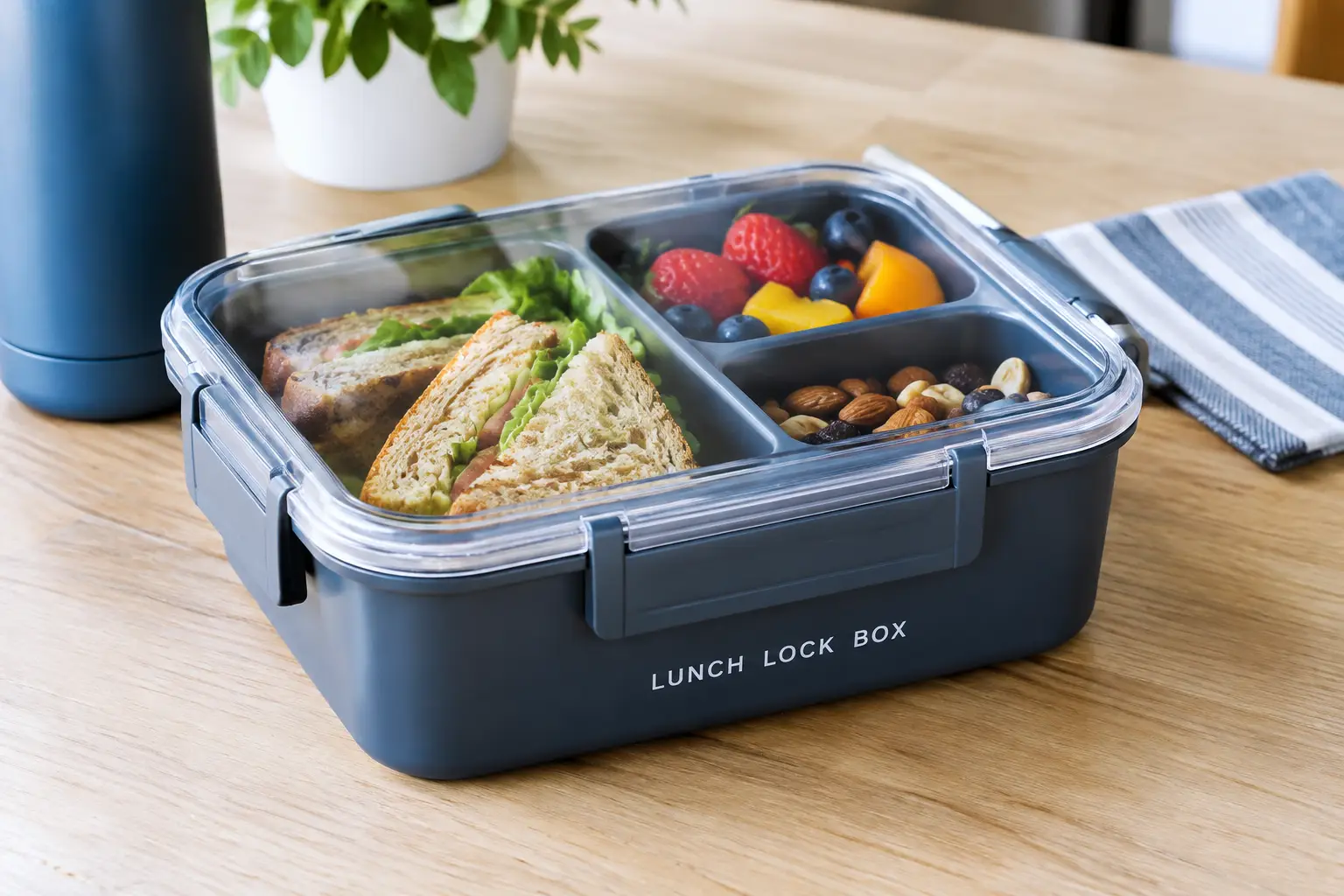
A lunch lock box is a food container or insulated lunch bag with a built-in or detachable lock, usually a 3- or 4-digit combination, that keeps your meal from being opened by anyone who doesn’t know the code. It’s designed for shared refrigerators at work, in dorms, and in busy family kitchens.
If you’ve ever walked into the break room at 12:15, opened the fridge, and found your leftover pad thai reduced to a lonely fork, you already understand the appeal. Office fridge food theft is one of those small workplace injustices that nobody wants to escalate to HR, yet it quietly ruins afternoons. A lunch lock box solves it without a confrontation: no passive-aggressive sticky notes, no detective work, just a code only you know.
Here’s the thing most buyers don’t realize, though. “Lunch lock box” covers four very different product types: rigid polycarbonate fridge boxes, lockable insulated lunch bags, ventilated wire cages, and time-locking containers built for self-control rather than theft prevention. Each one solves a slightly different problem, and picking the wrong type is the most common reason people end up disappointed.
There’s also a food-safety wrinkle. The USDA’s guidance on keeping bag lunches safe says that if you put an insulated bag in the fridge, you should leave it open so cold air can reach the food. A zipped, locked bag can’t do that, which changes how you should pack it. We’ll cover that in detail below.
In this guide, you’ll find seven real products available on amazon.com, honest analysis of who each one suits, comparison tables, and practical setup advice so your lunch stays both secure and safe to eat.
Quick Comparison: The Best Lunch Lock Box Options at a Glance
| Product | Type | Lock | Best for |
|---|---|---|---|
| Lockabox One | Rigid polycarbonate box (10L) | 3-digit combination | Lockabox One: shared office fridges, full meals |
| Urban August Dual Combination & Keyed Lock Box | Rigid polycarbonate box | 4-digit combination + key | Urban August Dual Combination & Keyed Lock Box: people who fear forgetting codes |
| Konclusive Container | Lockable food container (~69 fl oz) | Detachable combination lock | Konclusive Container: putting food directly in a locked, microwave-safe container |
| SafeDelux Lockable Lunch Box | Insulated lunch bag | Built-in combination lock | SafeDelux Lockable Lunch Box: commuters without fridge access |
| GLORIEROO Lockable Lunch Box Bag | Insulated lunch bag (7L) | 3-digit combination | GLORIEROO Lockable Lunch Box Bag: light, budget-friendly everyday carry |
| 5 Star Super Deals Fridge Safe Box Locker | Ventilated wire cage | Chrome combination lock | 5 Star Super Deals Fridge Safe Box Locker: airflow and visibility on a tight budget |
| Kitchen Safe kSafe (Medium) | Time-locking container | Timer (1 minute to 10 days) | Kitchen Safe kSafe (Medium): locking snacks away from yourself |
Looking at the table, the split is clear: the Lockabox One and the Urban August Dual Combination & Keyed Lock Box are the strongest pure fridge solutions, while the SafeDelux Lockable Lunch Box and the GLORIEROO Lockable Lunch Box Bag make more sense if your lunch travels with you all day. The Kitchen Safe kSafe (Medium) is the outlier, because it protects your snacks from your own 3 p.m. cravings rather than from a coworker.
💬 One click helps other shoppers make an informed choice too! 😊
Top 7 Lunch Lock Box Picks: Expert Analysis
1. Lockabox One — the benchmark shared-fridge box
The Lockabox One is the product most shared-fridge setups end up measuring against, because it’s purpose-built for exactly this job. It’s a 10-liter clamshell box made from medical-grade polycarbonate with a resettable 3-digit combination lock, and it’s manufactured in Britain with a 2-year warranty.
The external footprint is 12″ x 8″ x 6.6″, with internal space of 11.1″ x 7.6″ x 6.3″. In practice, that fits a standard rectangular meal-prep container plus a yogurt and a piece of fruit, while still sliding onto most fridge shelves. Polycarbonate matters here: it’s shatter-resistant in cold temperatures, which cheaper acrylic boxes aren’t, and the brand says the box can go in the freezer too.
Based on the specs, this is the pick for office workers who store lunch in a communal fridge every day and want a single box that simply works. Parents also use it to ration treats or secure refrigerated medication. Reviews on the brand’s reviews page frequently mention keeping medication away from kids and snacks away from teenagers, and several praise quick replacements from customer service. A third-party hands-on review reported that it survived drops and fridge/freezer use, while noting it isn’t built to resist brute force.
Pros:
- ✅ Shatter-resistant polycarbonate handles fridge and freezer temperatures
- ✅ Arrives fully assembled with an easily resettable code
- ✅ Two-year warranty signals real manufacturer confidence
Cons:
- ❌ Takes up a full shelf slot in crowded fridges
- ❌ A deterrent, not a safe, against determined force
Expect roughly $30 to $45 at the time of writing (check the current price); for daily users, it’s the best value-to-reliability ratio here. Need something smaller? The Lockabox Mini (3L, 8.8″ x 6.1″ x 4.7″) suits snacks or medication.
2. Urban August Dual Combination & Keyed Lock Box — code and key backup
The Urban August Dual Combination & Keyed Lock Box solves the most common lock box headache: forgetting your code. It pairs a 4-digit combination with a physical key, so you have two independent ways in.
That 4-digit dial is a real upgrade over 3-digit locks. Going from 1,000 possible codes to 10,000 means a bored coworker can’t realistically sit and cycle through combinations during a lunch break. The body is shatter-resistant polycarbonate, and the brand says it was sized to fit refrigerators, car interiors, large desk drawers, and cabinets.
On paper, this is the smartest choice if you’re forgetful, if you share a box between two people (one uses the code, one uses the key), or if you’re storing refrigerated medication where getting locked out would be a genuine problem. Notably, the brand itself warns buyers not to forget the combination, which tells you the key is a backup, not a substitute for remembering it.
We couldn’t verify detailed, recurring customer review themes for this model at the time of writing; it’s sold on both Amazon and Walmart, so read the most recent reviews on the product page, especially comments about setting and resetting the code.
Pros:
- ✅ Four-digit dial gives ten times more possible codes
- ✅ Keyed backup prevents lockouts from forgotten combinations
- ✅ Available in several colors, including clear and graphite
Cons:
- ❌ Keys can be lost or copied, adding a weak point
- ❌ Priced above basic 3-digit lock boxes
Priced around $40 at the time of writing (prices may vary), it’s worth the premium if lockouts would cost you more than lunch.
3. Konclusive Container — lock it, then microwave it
The Konclusive Container is the rare lunch lock box that’s also the container you actually eat from. You put food directly inside, snap on the detachable combination lock, and later unlock it and reheat.
It measures 9″ x 7″ x 4″ with roughly 69 fluid ounces of internal volume, weighs about a pound, and is made in the USA from BPA-free material. The listing says it’s safe for the refrigerator, freezer, microwave, and dishwasher (with the lock removed, obviously). That combination of features is what sets it apart: rigid lock boxes like the Lockabox One hold your container, while the Konclusive Container is your container.
This design suits meal-preppers who want to skip the extra layer. Pack Monday’s chicken and rice in it Sunday night, lock it, and reheat it at work with no transfer step. The trade-off is capacity: 69 ounces is a generous single meal but not a meal plus drinks and snacks.
Verifiable review data was limited at the time of writing, so we can’t honestly summarize a customer consensus. What we can verify is the brand’s origin story: it was created specifically to mitigate food theft and tampering in shared environments, not repurposed from a medicine box.
Pros:
- ✅ Food goes straight in, with no second container required
- ✅ Microwave and dishwasher safe once the lock is off
- ✅ Made in the USA from BPA-free material
Cons:
- ❌ Holds one meal, with little room for extras
- ❌ Detachable lock is easy to misplace in a drawer
Typically in the $25 to $40 range (check the current price), it’s a good value for meal-preppers who want one fewer container.
4. SafeDelux Lockable Lunch Box — insulated security for commuters
The SafeDelux Lockable Lunch Box is built for people who don’t have a trustworthy fridge at all, or who keep their lunch with them from home to desk. It’s a soft insulated bag with a built-in combination lock on the zipper.
The main compartment measures 10″ W x 9″ D x 4″ H, with thick foam insulation, waterproof Oxford fabric, and a leak-resistant aluminum-style inner lining. Practically, that 4-inch height is the detail to notice: it favors flat containers and sandwiches over tall soup jars. The lock stops casual snooping, but keep expectations realistic: any fabric bag can be cut, so it deters opportunists rather than determined thieves.
This is the right fit for field workers, commuters, nurses on long shifts, and anyone whose lunch sits in a locker or under a desk rather than in a shared fridge. Pair it with two frozen cold sources and it becomes a self-contained mini cooler that also locks.
Detailed, verifiable customer review themes were thin at the time of writing. Independent roundups that feature it highlight the thick foam insulation and the lock-code privacy, but those are editorial summaries, not aggregated customer reviews.
Pros:
- ✅ Insulation plus lock in a single carry-along bag
- ✅ Wipe-clean lining handles minor spills easily
- ✅ Works without any fridge access at all
Cons:
- ❌ Shallow 4-inch height rules out tall containers
- ❌ Fabric construction deters but can’t truly resist cutting
At roughly $20 to $30 (prices may vary), it’s solid value for commuters who need portability first.
5. GLORIEROO Lockable Lunch Box Bag — lightest budget carry
The GLORIEROO Lockable Lunch Box Bag is the lightweight entry point into lockable lunch bags. At 0.7 lbs, it’s barely heavier than the food inside it.
It measures 10″ x 6″ x 8″ with a 7-liter capacity, a PEVA lining, and a 3-digit combination lock. The 8-inch height is the practical advantage over the shallower SafeDelux Lockable Lunch Box: taller containers, a drink bottle, and snacks fit upright. The full open-top design with dual zippers also makes packing faster, since you’re not sliding containers in sideways.
Based on the specs, this suits office workers who carry lunch in a tote or backpack, students, and anyone who wants a lockable lunch box without paying for rigid construction. It’s also a sensible “try the concept” purchase before committing to a hard-shell box.
Two independent 2026 roundups single out this bag as a lightweight, accessible pick for shared environments. That’s editorial consensus rather than aggregated customer sentiment, and we couldn’t verify recurring durability complaints or praise from buyers at the time of writing.
Pros:
- ✅ Very light at 0.7 lbs for easy carrying
- ✅ Taller interior fits upright bottles and containers
- ✅ Open-top dual zippers make packing quick
Cons:
- ❌ Thinner build than premium rigid lock boxes
- ❌ Three-digit code is easier to brute-force
Usually under $25 at the time of writing (check the current price), it’s the best budget entry here.
6. 5 Star Super Deals Fridge Safe Box Locker — airflow meets visibility
The 5 Star Super Deals Fridge Safe Box Locker takes a different approach: instead of a sealed box, it’s a ventilated wire-style cage with a chrome combination lock.
That ventilation is the headline feature, and it matters more than it sounds. Cold fridge air flows freely around your food, so it chills as fast as anything on an open shelf. Solid boxes and zipped bags slow that down. The combination lock is chrome metal, which the listing says won’t rust or corrode in the damp fridge environment, and you set your own code.
This is the pick if food safety is your top priority, or if you store items that need to cool down quickly, such as leftovers packed warm in the morning. The open design also means everyone can see what’s inside, which some people find reassuring (no one can claim it’s “their” container) and others find tempting. Keep in mind that bars stop grabbing, but they don’t hide anything.
We couldn’t verify consistent customer review themes for this specific listing. Cage-style fridge lockers do appear in mainstream food-publication roundups of lunch-thief solutions, which suggests the format itself has broad appeal.
Pros:
- ✅ Open ventilation keeps food at true fridge temperature
- ✅ Rust-resistant chrome lock suits damp fridge conditions
- ✅ Visible contents make shared-fridge disputes unlikely
Cons:
- ❌ Visible food may still tempt would-be thieves
- ❌ Small items can slip or be pulled through gaps
Typically under $30 (prices may vary), it’s excellent value where airflow matters most.
7. Kitchen Safe kSafe (Medium) — locks snacks away from you
The Kitchen Safe kSafe (Medium) flips the concept: it’s a lunch lock box that protects your food from your own willpower. Set a timer, press the dial, and the lid stays locked until the countdown hits zero, with no override.
The timer runs from 1 minute to 10 days on a high-contrast LCD, powered by two AA batteries the brand says last about six months. It’s made from BPA-free, food-grade plastic, and the manufacturer says the walls are about three times thicker than a typical plastic container. In practical terms, this is a precommitment device: you decide in the morning that the cookies stay locked until 6 p.m., and your afternoon self has no choice.
This one suits people doing intermittent fasting, portion control, or trying to stop grazing through their desk snacks. It’s not great for theft protection, since anyone can walk off with the whole container, and it’s not meant to be.
The kSafe gained visibility after appearing on ABC’s Shark Tank, and the brand cites coverage from USA Today and TIME. We didn’t find verifiable aggregated customer review data to summarize honestly, so treat its value as reasoning from the design, not buyer consensus.
Pros:
- ✅ True no-override timer enforces your own commitments
- ✅ Thick-walled, BPA-free, food-grade construction
- ✅ Long battery life of roughly six months
Cons:
- ❌ Doesn’t stop anyone from taking the entire container
- ❌ Most expensive option in this lineup
Roughly $50 to $70 at the time of writing (check the current price), it’s worth it only for self-control goals.
Side-by-Side: Comparing the 7 Lunch Lock Box Picks
| Product | Size | Material | Lock | Fridge airflow | Approx. price | Best for |
|---|---|---|---|---|---|---|
| Lockabox One | 10L (12″ x 8″ x 6.6″) | Medical-grade polycarbonate | 3-digit | Low | $30–$45 | Lockabox One: daily office use |
| Urban August Dual Combination & Keyed Lock Box | One size | Polycarbonate | 4-digit + key | Low | Around $40 | Urban August Dual Combination & Keyed Lock Box: forgetful users, medication |
| Konclusive Container | ~69 fl oz (9″ x 7″ x 4″) | BPA-free plastic | Detachable combo | Low | $25–$40 | Konclusive Container: meal-prep reheating |
| SafeDelux Lockable Lunch Box | 10″ x 9″ x 4″ | Oxford fabric, foam | Built-in combo | Insulated | $20–$30 | SafeDelux Lockable Lunch Box: no-fridge commuters |
| GLORIEROO Lockable Lunch Box Bag | 7L (10″ x 6″ x 8″) | Fabric, PEVA lining | 3-digit | Insulated | Under $25 | GLORIEROO Lockable Lunch Box Bag: budget carry |
| 5 Star Super Deals Fridge Safe Box Locker | Fridge-shelf size | Metal cage | Chrome combo | High | Under $30 | 5 Star Super Deals Fridge Safe Box Locker: fast cooling |
| Kitchen Safe kSafe (Medium) | Medium | BPA-free plastic | Timer | Low | $50–$70 | Kitchen Safe kSafe (Medium): self-control |
The airflow column is the one most buyers skip, and it’s arguably the most important for food safety. Sealed rigid boxes like the Lockabox One trade airflow for security, so they work best when food goes in already cold, while the 5 Star Super Deals Fridge Safe Box Locker cools food fastest but hides nothing. If your lunch leaves the fridge, the insulated bags win; if it never leaves, a rigid box or cage wins.
✨ Don’t let a lunch thief win another round!
🔍 Protect your meals with a lunch lock box that matches how you actually eat at work. Click a highlighted product to check current pricing and availability, and enjoy the simple pleasure of finding your lunch exactly where you left it!
How to Set Up and Use a Lunch Lock Box the Right Way
A lunch lock box is simple, but a few setup habits separate “works great” from “why is my salad warm and why can’t I open this?”
Day one: set your code properly
- ✅ Read the reset instructions before touching the dial. Most combination locks ship at 0-0-0, and resetting usually requires the box to be open and a reset button or lever to be held.
- ✅ Avoid obvious codes: 000, 123, your birthday, or your desk number. Coworkers know more about you than you think.
- ✅ Save the code in your phone’s notes app under an unrelated name.
Packing for temperature, not just security
The USDA recommends at least two cold sources for perishable lunches, such as frozen gel packs or a frozen water bottle, and its guidance on using an insulated lunch bag explains why: bacteria multiply rapidly between 40°F and 140°F. For a locked insulated bag, that’s non-negotiable, because you can’t leave it unzipped in the fridge. For a rigid box, refrigerate your food overnight so it goes in already cold.
Your first 30 days: common early mistakes
- ❌ Locking the box before checking the lid is seated, then discovering it popped open.
- ❌ Scrambling the dial while the box is open, which on some models changes the code.
- ❌ Leaving crumbs and drips inside; closed boxes trap odors fast.
Weekly maintenance
Wipe the interior with hot, soapy water every Friday and let it air-dry open over the weekend. Check the lock mechanism for sticky wheels, which cold, damp environments encourage. A quick drop of food-safe silicone lubricant on metal parts once a season keeps dials turning smoothly.
Real-World Scenarios: Matching the Right Lunch Lock Box to Your Life
Specs mean little until you map them onto an actual day. Here are three common profiles and the reasoning behind each match.
Scenario 1: The office meal-prepper (budget: $30–$45)
Maria works a hybrid schedule, in the office three days a week, and meal-preps grain bowls every Sunday. Her office fridge is packed, and her labeled containers have gone missing twice. For her, the Lockabox One is the logical choice. It holds a full meal-prep container plus a drink, stacks with other boxes, and lives in the office fridge permanently, so she only carries the food, not the box. Because her bowls go in cold from home, the limited airflow of a sealed box isn’t a concern.
Scenario 2: The long-shift nurse with no reliable fridge (budget: under $30)
Devon works 12-hour hospital shifts. The staff fridge is overloaded, and his lunch often ends up in a locker. He needs portability and temperature control more than hard-shell security. The SafeDelux Lockable Lunch Box fits best if he packs flat containers, or the GLORIEROO Lockable Lunch Box Bag if he carries a tall water bottle. Either way, two frozen cold sources are mandatory, since a 12-hour shift is long for any insulated bag.
Scenario 3: The parent managing snacks and medication (budget: $40–$70)
Priya has two teenagers who treat the fridge like an open buffet, plus a refrigerated prescription. The Urban August Dual Combination & Keyed Lock Box handles the medication, because a keyed backup means she’s never locked out of something she genuinely needs. For her own late-night snacking habit, which she’s candid about, the Kitchen Safe kSafe (Medium) adds a timer-based line in the sand.
Notice the pattern: the right lunch lock box depends less on the box and more on where your lunch lives between breakfast and noon.
Problem → Solution: Fixing Common Lunch Lock Box Frustrations
Even the right lock box can create small headaches. Here are the most common ones and how to fix them.
Problem 1: “I forgot my combination.”
Solution: Check whether your model has a keyed override; the Urban August Dual Combination & Keyed Lock Box does. For 3-digit locks, some owners methodically work through combinations from 000 upward, which is tedious but possible with only 1,000 options. Next time, store the code in your phone before you lock anything.
Problem 2: “My food isn’t staying cold enough.”
Solution: Sealed boxes and zipped bags slow down cooling. Pre-chill everything overnight, add two frozen cold sources to insulated bags, and consider a ventilated option like the 5 Star Super Deals Fridge Safe Box Locker if your food goes in warm.
Problem 3: “The box smells, even after washing.”
Solution: Odors cling to closed plastic. Wash with warm water and a baking soda paste, rinse, and dry with the lid open for a full day. Avoid storing strong-smelling foods like fish or curry without a sealed inner container.
Problem 4: “Someone just took the whole locked bag.”
Solution: A lock only protects what’s inside, not the container itself. Keep portable lockable bags in your locker or desk rather than the shared fridge, or choose a heavier rigid box that’s less convenient to walk off with.
Problem 5: “The lock dial is sticking in the cold.”
Solution: Condensation and cold stiffen mechanisms. Let the box warm up for a minute before dialing, dry it after cleaning, and choose rust-resistant metal locks like the chrome one on the 5 Star Super Deals Fridge Safe Box Locker for damp fridges.
How to Choose a Lunch Lock Box: 7 Steps
Use these steps in order; each one narrows the field.
- Decide where the lunch lives. Staying in a shared fridge all day points to a rigid box or cage; traveling with you points to an insulated lockable bag.
- Measure your fridge shelf. A 10-liter box like the Lockabox One needs about 12″ x 8″ of shelf space, and communal fridges are rarely generous.
- Measure your containers. Tall containers won’t fit a 4-inch-high bag like the SafeDelux Lockable Lunch Box; check interior height, not just capacity.
- Choose the lock type. Three digits deter casual snooping; four digits plus a key suit higher stakes, like refrigerated medication.
- Check the material. Polycarbonate resists cracking in cold temperatures; if food touches the container directly, confirm it’s food-grade and BPA-free.
- Think about airflow. If food goes in warm, favor ventilated designs; if it goes in cold, a sealed box is fine.
- Set a realistic budget. Budget bags cost under $25, rigid boxes typically run $30–$45, and specialty time-lock containers cost more.
Following these steps in order prevents the most common regret: buying a beautiful lock box that doesn’t fit your fridge or your containers.
Lunch Lock Box vs Regular Lunch Bag vs Personal Mini Fridge
A lunch lock box isn’t the only way to protect a meal, so it’s worth comparing honestly against the alternatives.
| Option | Security | Food safety | Portability | Approx. cost | Best for |
|---|---|---|---|---|---|
| Lunch lock box (rigid) | High deterrent | Good if pre-chilled | Stays in fridge | $30–$45 | Shared office fridges, e.g., Lockabox One |
| Lockable lunch bag | Moderate | Good with 2 cold sources | Excellent | $15–$30 | Commuters, e.g., GLORIEROO Lockable Lunch Box Bag |
| Regular lunch bag | None | Good with cold sources | Excellent | $10–$30 | Trusted, low-theft offices |
| Personal mini fridge | High (under your desk) | Excellent | None | $60–$150+ | Private offices with outlet access |
A regular lunch bag is cheaper, but it offers zero protection in a fridge where things disappear, and labels are more of a polite request than a barrier. A personal mini fridge solves both security and temperature, but many offices don’t allow them for electrical or space reasons, and it costs several times more than a lunch lock box. For most people in shared workplaces, a lockable box or bag sits in the sweet spot of cost, compliance, and peace of mind.
There’s also a social angle. A mini fridge under your desk can look territorial, while a lock box in the shared fridge signals “this is mine” without any drama. It also tends to prompt conversations about fridge etiquette that clear up misunderstandings.
Common Mistakes to Avoid When Buying a Lunch Lock Box
Most disappointing purchases come down to a handful of avoidable errors.
Buying on capacity alone. “10 liters” sounds huge, but shape matters more than volume. A tall, narrow box won’t hold a wide meal-prep container. Compare interior dimensions against your actual containers before you order.
Confusing a deterrent with a safe. Every product here is a deterrent. Lockabox’s own site describes its boxes as a deterrent to theft rather than a vault, and fabric bags can be cut. If you’re protecting something valuable, a lunch lock box is the wrong tool.
Ignoring food safety. A locked insulated bag in a fridge can’t breathe, and a sealed box slows cooling. Buyers who pack warm leftovers into sealed boxes are putting convenience ahead of safety.
Forgetting the “whole container” problem. A lock keeps people out of the box, but not away from it. Lightweight bags are easy to carry off entirely, which is why portable bags belong in your locker, not the communal fridge.
Choosing a cheap acrylic box for the freezer. Acrylic can crack in cold temperatures. If freezer use is planned, choose polycarbonate.
Skipping the reset instructions. A surprising number of “broken” locks are just codes that were changed accidentally during setup.
Lunch Lock Box for Kids, Students, and Shared Homes
A lunch lock box isn’t only for office workers. Different households use them in very different ways.
For kids at school
Most lockable lunch bags are designed for teens and adults; for example, GLORIEROO notes that some of its lunch bags aren’t suitable for children under 12. For younger kids, a combination lock can create more lunchtime stress than it prevents. A better approach is a standard insulated lunch box with a name label, following USDA back-to-school advice on packing food safely.
For college students and dorms
Shared dorm and apartment fridges are prime territory for food “borrowing.” A rigid box like the Lockabox One or the Urban August Dual Combination & Keyed Lock Box stays in the fridge full-time, protecting groceries worth far more than the box itself. Roommates tend to respect a lock more than a label.
For families with teens
Parents use lock boxes to ration treats, protect special-diet foods (for example, gluten-free items that are expensive to replace), and secure refrigerated medications. Here, a dual-lock design reduces the risk of getting locked out, and clear polycarbonate lets you see what’s inside at a glance.
For people managing their own eating habits
The Kitchen Safe kSafe (Medium) serves a very different purpose: it’s a commitment device for portion control, intermittent fasting, or breaking a snacking habit. It’s an unusual but genuinely useful use of the lunch lock box concept.
Safety, Materials, and Food-Contact Standards
Because a lunch lock box sits next to your food, materials and food safety deserve more attention than they usually get.
Food-contact materials and BPA
Rigid lock boxes are commonly made from polycarbonate, a strong, clear plastic that historically could contain BPA. The FDA’s current position, laid out on its page about BPA in food contact applications, is that BPA is safe at the levels currently occurring in foods, though the agency has removed authorization for BPA in baby bottles, sippy cups, and infant formula packaging. If your food will touch the container directly, as with the Konclusive Container, choose products explicitly labeled BPA-free and food-grade. If your food sits inside its own container within a lock box, material concerns are much smaller.
Temperature and the “Danger Zone”
The USDA defines the Danger Zone as 40°F to 140°F, the range where bacteria grow fastest. Sealed lock boxes slow cold air from reaching food, so always pre-chill. With locked insulated bags, use two cold sources and consider leaving the bag in your locker with ice packs instead of in the fridge.
Lock security expectations
No consumer lunch lock box is certified as a security container. Treat 3-digit locks as privacy locks, 4-digit and keyed locks as stronger deterrents, and none of them as protection for valuables or controlled substances in legally regulated settings.
Microwave caution
Never microwave a lock box unless the manufacturer explicitly allows it, and always remove metal locks first.
Long-Term Cost and Maintenance: Is a Lunch Lock Box Worth It?
Let’s do some simple math. If a stolen lunch forces you to buy a $12 takeout meal just twice a month, that’s roughly $288 a year. A lunch lock box costing $20 to $45 pays for itself after one to four prevented thefts, before you even count the wasted food and the afternoon of simmering resentment.
Cost of ownership by type
- Rigid boxes (Lockabox One, Urban August Dual Combination & Keyed Lock Box): highest upfront cost among theft-focused options but the longest lifespan. Polycarbonate doesn’t absorb stains the way fabric does, and there’s nothing to wear out except the lock. Lockabox’s 2-year warranty is a meaningful tiebreaker.
- Lockable bags (SafeDelux Lockable Lunch Box, GLORIEROO Lockable Lunch Box Bag): lower upfront cost, but zippers, linings, and seams wear with daily carrying. Budget for replacement every year or two with heavy use.
- Cages (5 Star Super Deals Fridge Safe Box Locker): cheap and durable, with virtually no maintenance beyond wiping.
- Time-lock containers (Kitchen Safe kSafe (Medium)): highest upfront cost, plus AA batteries roughly twice a year.
Maintenance that extends lifespan
Clean weekly, dry fully before closing, avoid the dishwasher unless the listing explicitly allows it, and keep the lock mechanism dry. A well-maintained rigid lunch lock box can realistically last many years of daily use.
Features That Actually Matter (and Ones That Don’t)
Marketing copy for lunch lock box products loves big words. Here’s how to cut through it.
Features that matter
- Interior dimensions, not just liters, because they decide whether your containers fit.
- Lock type and digit count: four digits or a keyed backup meaningfully improve security and reduce lockouts.
- Material: polycarbonate for rigid boxes; food-grade and BPA-free if food touches it directly.
- Airflow or insulation, matched to where your lunch lives.
- Warranty: a real warranty, like Lockabox’s two years, reflects confidence in the hinge and lock.
Features that matter less than you’d think
- “Military-grade” or “unbreakable” claims. Nothing here is built to resist a determined person with tools, and that’s fine for lunch.
- Color options. Nice to have, but clear boxes actually help, since you can see what’s inside without unlocking.
- Extra pockets on lockable bags. Outside pockets usually aren’t covered by the lock, so anything in them is unprotected.
- “Keeps food cold for 12 hours” claims. Insulation performance depends heavily on your cold sources and the starting temperature. USDA guidance on cold sources matters more than any marketing number.
Focusing on the first list and ignoring the second saves money and produces better results.
FAQ: Lunch Lock Box Questions Buyers Ask Most
❓ Where can I buy a lunch lock box?
❓ How much does a good lunch lock box cost?
❓ Can you put a lunch lock box in the freezer?
❓ Is a lunch box with lock worth it for an office fridge?
❓ Which lunch lock box has a key backup?
Conclusion: Pick the Lunch Lock Box That Fits Your Day
The best lunch lock box isn’t the most expensive or the most secure; it’s the one that matches where your lunch spends the morning. If your meal sits in a shared office fridge, the Lockabox One is the dependable default, and the Urban August Dual Combination & Keyed Lock Box is the upgrade if a forgotten code would be a real problem. If you’re a meal-prepper who hates extra containers, the Konclusive Container lets you lock, carry, and reheat in one.
If your lunch travels with you, the SafeDelux Lockable Lunch Box and the GLORIEROO Lockable Lunch Box Bag combine insulation with a lock, as long as you pack two cold sources. Want airflow and visibility on a budget? The 5 Star Super Deals Fridge Safe Box Locker delivers. And if the thief you’re worried about is your own afternoon craving, the Kitchen Safe kSafe (Medium) is surprisingly effective.
Whatever you choose, remember the two rules that matter most: keep food out of the 40°F to 140°F Danger Zone, and treat every lock as a deterrent rather than a vault. Do that, and lunchtime becomes what it should be: the best 30 minutes of your workday, not a crime scene.
🔒 Ready to take back your lunch break?
🥪 Choose the lunch lock box that fits your routine and click a highlighted product to check the current price and availability. Your future self, opening the fridge at noon to find everything exactly where you left it, will thank you!
Recommended for You
- Aluminum Lunch Box: 7 Best Lightweight Picks That Last (2026)
- Menu Cardiac Diet: 7 Best Heart-Smart Picks That Work (2026)
- Bento Stainless Steel Lunch Containers: 7 Brilliant Picks for 2026
Disclaimer: This post contains affiliate links. As an Amazon Associate, I earn from qualifying purchases made through these links, at no additional cost to you.
✨ Found this article helpful? Share it with someone who needs it! 💬🤗