
In This Article
Why 32 oz food storage containers Are the Kitchen’s Sweet Spot
Open almost any fridge in America and you’ll find the same problem: a stack of containers that are either too small for tonight’s leftover chili or so big that half a cup of rice rattles around in a sea of air. That’s exactly why 32 oz food storage containers have quietly become the workhorse size for meal preppers, soup lovers, and anyone who packs lunch.
What Are 32 oz food storage containers?
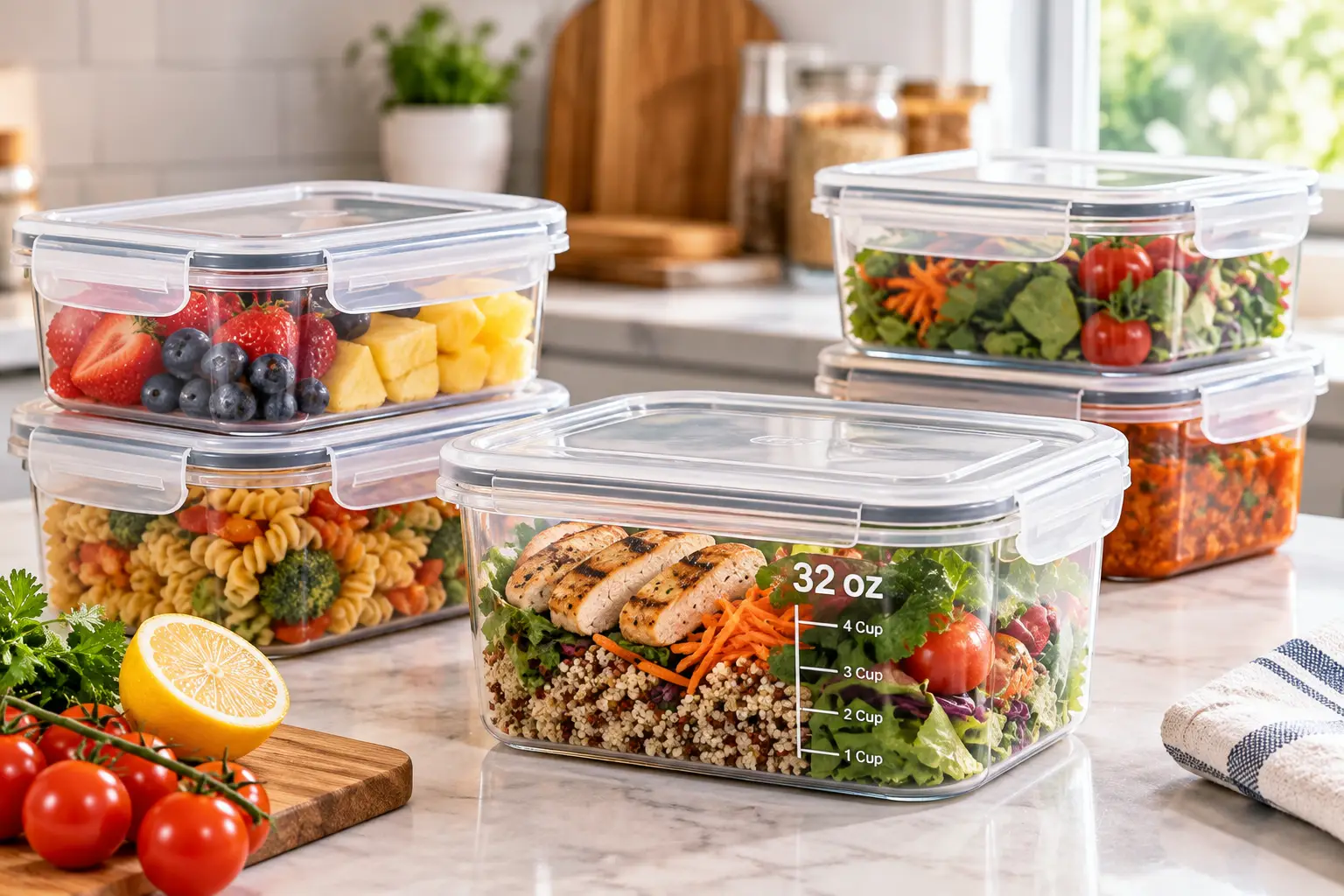
32 oz food storage containers are reusable vessels that hold one US quart—four cups—of food or liquid. They come in glass, plastic, and jar formats, usually with airtight or leakproof lids, and they’re sized to hold one hearty meal, two side portions, or a full batch of soup, sauce, or stock.
Here’s why the quart size works so well. Four cups is roughly one generous dinner portion with room to stir, or two lunch-sized servings of grain bowls. It’s also the classic takeout soup size, which means the shape fits neatly in fridge door shelves and freezer bins. Go smaller and you’re juggling three containers for one pot of stew; go bigger and you waste fridge space.
The material question matters just as much as the size. Glass resists stains and odors, and some premium models use borosilicate glass, which handles temperature swings better than standard glass. Plastic wins on weight and price, while mason jars bring old-school versatility.
In this guide, you’ll get an honest, spec-based comparison of seven real options available on Amazon, plus practical how-to sections that no product listing will give you—so you buy once and stop playing fridge Tetris.
Quick Comparison: The 7 Best 32 oz food storage containers at a Glance
| Product | Material | Lid Style | Oven-Safe Base? | Approx. Price Range | Best for |
|---|---|---|---|---|---|
| Pyrex Simply Store 4-Cup | Tempered glass | Snap-on plastic | Yes (lid off) | Under $10 each | Pyrex Simply Store 4-Cup: budget glass leftovers |
| OXO Smart Seal 4-Cup | Borosilicate glass | 4 locking tabs + gasket | Yes, to 450°F (lid off) | Around $15–$20 | OXO Smart Seal 4-Cup: freezer-to-oven cooks |
| Snapware Total Solution 4-Cup | Pyrex glass | 4 locking tabs | Yes (lid off) | Around $9–$15 | Snapware Total Solution 4-Cup: square, stackable prep |
| Anchor Hocking TrueSeal 4-Cup | Tempered glass | Flexible press-on | Yes, to 425°F (lid off) | Around $10–$15 | Anchor Hocking TrueSeal 4-Cup: thick, sturdy glass |
| Ziploc Twist ‘n Loc Medium | Plastic | Twist-on | No | Roughly $8–$15 per multipack | Ziploc Twist ‘n Loc Medium: soups on the go |
| Stack Man 32 oz Deli Containers | Polypropylene | Snap-on | No | Roughly $20–$35 per 48 sets | Stack Man 32 oz Deli Containers: bulk freezing |
| Ball Wide Mouth Quart Jars | Glass jar | Two-piece metal lid | No | Roughly $15–$25 per 12 | Ball Wide Mouth Quart Jars: pantry and salads |
Looking at the table, the split is clear: if you want to reheat or even bake in the same container, the four glass options are your lane, with the OXO Smart Seal 4-Cup leading on heat tolerance. The Ziploc Twist ‘n Loc Medium and Stack Man 32 oz Deli Containers cost a fraction per unit, which makes them the smarter pick for freezer batches you don’t want to babysit. The Ball Wide Mouth Quart Jars sit in their own category—brilliant for dry goods and jar salads, less ideal for reheating.
💬 One click helps other shoppers make an informed choice too! 😊
Top 7 32 oz food storage containers: Expert Analysis
1. Pyrex Simply Store 4-Cup Round — the budget glass classic
The Pyrex Simply Store 4-Cup Round (model 7201) is the container most American kitchens already own, and for good reason: it’s affordable, honest glass that does the basics well.
It measures about 6 inches across and 2.75 inches tall, weighing roughly 18 ounces empty. That low, wide shape is the practical win—leftovers spread out, so they reheat more evenly in the microwave than in a tall tub. The tempered glass base is oven-safe with the lid removed, while the BPA-free plastic lid is top-rack dishwasher, freezer, and microwave safe. Pyrex states the glass is made in the US and backs both pieces with a 2-year limited warranty.
Based on the specs, this is for the cook who reheats more than they transport. The snap-on lid has no locking tabs, so it’s airtight enough for the fridge, but it isn’t engineered as a commuter-proof seal for soup in a backpack. Replacement lids (7201PC) are sold separately, which extends the container’s life considerably.
Customer reviews broadly praise the glass for resisting stains and odors; the recurring caution is that lids wear out long before the glass does.
Pros:
- ✅ Inexpensive way to switch from plastic to glass
- ✅ Wide, shallow shape reheats food evenly
- ✅ Replacement lids are easy to find
Cons:
- ❌ Lid lacks locking tabs for leakproof travel
- ❌ Heavier than plastic for daily lunch carrying
Typically under $10 for a single container at the time of writing, it’s hard to beat on value for at-home storage.
2. OXO Good Grips 4 Cup Smart Seal Glass Round Container — best freezer-to-oven performer
The OXO Smart Seal 4-Cup is the premium pick for people who want one container to store, freeze, bake, and serve.
The body is borosilicate glass, which tolerates sudden temperature changes better than standard tempered glass. In practice, OXO says you can move it from freezer to oven without fully thawing—handy when tonight’s dinner is still a frozen casserole at 5 p.m. With the lid off, the base is oven-safe to 450°F once the oven is preheated. Four locking tabs plus a removable silicone gasket create the seal, and that removable gasket matters more than it sounds: you can actually clean underneath it instead of letting mystery residue build up.
Here’s what to weigh: this is overkill if you only refrigerate leftovers, but it’s the strongest choice for soup carriers and batch bakers. America’s Test Kitchen’s retail shop highlights the 4-cup round specifically for soups and most lunches, which matches the spec sheet logic.
Review sentiment generally centers on the reliable leakproof seal; the most common trade-off mentioned is price per container.
Pros:
- ✅ Borosilicate glass handles freezer-to-oven moves
- ✅ Locking lid with removable, cleanable gasket
- ✅ Oven-safe base up to 450°F
Cons:
- ❌ Costs noticeably more than basic glass
- ❌ Plastic lid itself cannot go in the oven
Expect around $15–$20 per container; the price is justified if you truly use the oven-to-table versatility.
3. Snapware Total Solution Pyrex Glass 4-Cup Square — best for stackable meal prep
The Snapware Total Solution 4-Cup takes Pyrex glass and pairs it with a four-latch locking lid, giving you square geometry that wastes less shelf space.
The 950 mL container measures roughly 6.75 by 6.75 by 3 inches. Square containers fit side by side with no dead gaps, so a week of lunches lines up like bricks. The lid features a built-in Write + Erase label—small detail, big payoff when you’re guessing whether that lentil soup is from Monday or last month. Lids also fit Total Solution plastic containers of the same shape and size, which simplifies mixed collections.
Based on comparing the specs, this is the most practical glass pick for organized meal preppers. One care note from the manufacturer: unlatch and slightly offset the lid in the microwave, and avoid overheating oily or tomato-heavy foods, which can stain or blister the plastic lid.
Retail reviews are generally positive about reheating in glass; one recurring point of confusion is that it’s sold as a single container, not a set of four.
Pros:
- ✅ Square shape maximizes fridge and freezer space
- ✅ Four locking tabs for airtight storage
- ✅ Built-in label area on the lid
Cons:
- ❌ Corners are harder to scrub than round bowls
- ❌ Lid can stain with tomato sauces
At around $9–$15, it’s a strong mid-range value for prep-focused households.
4. Anchor Hocking TrueSeal 4-Cup Round — thickest, sturdiest feel
The Anchor Hocking TrueSeal 4-Cup wins on heft: it’s tempered glass with a flexible, textured lid that molds onto the rim instead of clipping on.
The round base is about 6.25 inches across and 3 inches tall. Anchor Hocking rates the glass for gas and electric ovens up to 425°F, and the company is clear that you shouldn’t go straight from freezer to oven—thaw first. That’s the key distinction from the OXO Smart Seal 4-Cup: same general job, but less tolerance for thermal shock. The glass is made in the USA, and the line carries a 5-year warranty.
Who is it for? Families who want durable everyday glass and don’t need locking tabs. The press-on lid is easy for kids and older adults to operate, since there are no stiff latches to pry.
Customer reviews often describe the glass as thick and resistant to staining, and buyers frequently mention the 4-cup size as ideal for single-meal prep. Note that the lids are not oven-safe.
Pros:
- ✅ Heavy-duty tempered glass feels built to last
- ✅ Latch-free lid is easy to open
- ✅ Generous 5-year warranty
Cons:
- ❌ Must thaw before oven use
- ❌ Press-on lid is less secure for transport
Typically around $10–$15 each, with multipacks lowering the per-unit cost.
5. Ziploc Twist ‘n Loc Medium Round (32 oz) — best for soups on the go
The Ziploc Twist ‘n Loc Medium solves the number-one plastic container complaint—leaky lids—by screwing on like a jar.
Each container holds 32 oz and measures about 4.5 by 4.5 by 6.1 inches. That taller, narrower profile is perfect for soups, stews, and smoothies, and the twist seal is far less likely to pop open in a bag than a snap lid. Measurement lines on the side help with portioning, and Ziploc states the containers are made without BPA or phthalates. They’re dishwasher, microwave, and freezer safe when used as directed.
Here’s the honest analysis: this is the lightest, most commuter-friendly option on the list, but plastic will eventually stain with turmeric or tomato. For a broth-and-soup person on a budget, it’s a smart buy.
Reviews consistently praise the twist-on leak resistance; a practical note from buyers who freeze soup is to underfill and leave room for expansion.
Pros:
- ✅ Twist-on lid resists leaks during commutes
- ✅ Lightweight and inexpensive per container
- ✅ Measurement lines simplify portion control
Cons:
- ❌ Plastic can stain with oily or red sauces
- ❌ Tall shape reheats less evenly than shallow glass
At roughly $8–$15 per multipack at the time of writing, it’s excellent value for liquid storage.
6. Stack Man 32 oz Deli Containers with Lids (48 Sets) — best for bulk freezing
The Stack Man 32 oz Deli Containers are the restaurant-style quart cups you get with takeout soup, bought in bulk for home use.
The set advertises BPA-free polypropylene, airtight leak-resistant lids, and microwave and freezer safety. The real-world advantage is uniformity: most standard deli lids of this style fit multiple container heights, so lids rarely go missing in the drawer. Polypropylene stays flexible at freezer temperatures, which is why these work so well for stock and chili.
On paper, this is the batch cook’s best friend. You can freeze a dozen quarts of bone broth without worrying about losing an expensive container to a friend’s potluck. Deli cups are also semi-disposable, so you can hand them off with leftovers guilt-free.
I could not verify a consistent body of independent reviews specific to this brand; across 32 oz deli containers generally, buyers tend to praise value and stackability while noting thinner walls than premium containers.
Pros:
- ✅ Very low cost per container
- ✅ Uniform sizing makes stacking effortless
- ✅ Great for gifting leftovers without worry
Cons:
- ❌ Thinner walls than branded storage containers
- ❌ Lids may loosen after many dishwasher cycles
Roughly $20–$35 for 48 sets, it delivers the best per-unit value on this list.
7. Ball Wide Mouth Quart Mason Jars (12-Count) — most versatile pantry pick
The Ball Wide Mouth Quart Jars (model 67000) are 32-ounce glass jars that double as food storage, canning jars, and salad containers.
The wide mouth makes filling and cleaning easy, and the jars include measurement markings in cups and ounces. The two-piece lids are BPA-free, and Ball’s current SureTight lids are designed for canning seals. For dry goods—oats, lentils, flour—the clear glass and screw-band seal keep pantry pests out while showing exactly how much is left.
Here’s what most buyers overlook: Ball’s own guidance notes that straight-sided jars work best for freezing, and the classic quart has a shoulder. If you freeze in one, fill well below the shoulder to give liquids room to expand. Also, the metal lids shouldn’t go in the microwave.
Reviews consistently praise durability and versatility; frustration usually comes from cracked jars after overfilling for the freezer.
Pros:
- ✅ Twelve jars at a low per-unit cost
- ✅ Perfect for dry goods and jar salads
- ✅ Doubles as canning equipment
Cons:
- ❌ Metal lids aren’t microwave-safe
- ❌ Shoulder shape complicates freezer use
Around $15–$25 for a 12-pack, it’s unbeatable value for pantry organization.
✨ Don’t miss these exclusive deals!
🔍 Take your kitchen organization to the next level with this carefully curated lineup. Click a highlighted item to check current pricing and availability. These picks will help you get fresher leftovers and easier meal prep the whole family will enjoy!
Getting Started: Your First 30 Days with 32 oz food storage containers
New containers work best when you build a few habits from day one.
Week 1 – Wash and test. Wash everything before first use, then do a simple leak test: fill each container halfway with water, seal it, and turn it upside down over the sink for 30 seconds. This tells you immediately which lids are “fridge only” and which are “bag-safe.” Expect the Ziploc Twist ‘n Loc Medium and OXO Smart Seal 4-Cup to pass; snap-on lids like the Pyrex Simply Store 4-Cup are designed for storage, not tumbling.
Week 2 – Assign jobs. Give each container type a role. Glass for anything you’ll reheat, plastic and deli cups for freezer liquids, jars for dry goods. This prevents the classic mistake of microwaving tomato sauce in plastic and staining it forever.
Week 3 – Learn your fill lines. For freezing liquids in 32 oz food storage containers, stop around 3 to 3½ cups. Water expands as it freezes, and that extra space protects both glass and lids.
Week 4 – Set a maintenance routine. Remove and wash silicone gaskets weekly (the OXO Smart Seal 4-Cup makes this easy). Air-dry lids fully before sealing to prevent odors.
⚡ Optimization tip: Label everything with the date. A dry-erase marker or the built-in label on the Snapware Total Solution 4-Cup turns “mystery container” into “Tuesday’s chili—eat by Saturday.”
Real-World Scenarios: Matching Containers to Your Lifestyle
Specs only matter in context, so here are three common buyer profiles.
🎒 Profile 1: The office commuter (budget: $30–$50)
Maya packs lunch five days a week and carries it on a train. She needs leakproof seals and microwave-friendly reheating. Her best combination is two OXO Smart Seal 4-Cup containers for solid meals (locking tabs plus glass reheating) and a multipack of Ziploc Twist ‘n Loc Medium for soups. Why both? Glass is heavier, so she uses it only for meals she reheats, and the twist lid handles liquids that would test any snap lid.
👨👩👧 Profile 2: The family meal prepper (budget: $60–$90)
The Johnsons cook twice a week in big batches for four people. Square Snapware Total Solution 4-Cup containers maximize fridge space, while Anchor Hocking TrueSeal 4-Cup rounds handle reheating with easy-open lids the kids can manage. A box of Stack Man 32 oz Deli Containers absorbs overflow for freezer storage. The logic: premium glass for daily rotation, cheap deli cups for long-term freezing where breakage risk and loss don’t matter.
🥫 Profile 3: The pantry organizer (budget: $20–$30)
Daniel buys rice, beans, and oats in bulk. A 12-pack of Ball Wide Mouth Quart Jars gives him uniform, pest-resistant pantry storage at the lowest per-unit cost. He adds a few Pyrex Simply Store 4-Cup containers for the occasional leftovers.
The pattern across all three: no single container wins every job, so mix materials by task.
Problem → Solution: Fixing Common Container Headaches
Problem 1: Stained plastic. Tomato sauce and curry leave orange rings. Solution: Reheat those foods only in glass like the Pyrex Simply Store 4-Cup. For existing stains, a baking soda paste and a few hours of sunlight often fade discoloration.
Problem 2: Lingering odors. Garlic and fish smells can cling to lids and gaskets. Solution: Remove gaskets and wash them separately; soak lids in a vinegar-water mix. Glass bodies don’t retain odors, which is a major argument for the Anchor Hocking TrueSeal 4-Cup and other glass picks.
Problem 3: Cracked glass after freezing. Solution: Leave headspace, and never move tempered glass directly from freezer to a hot oven. Only borosilicate options like the OXO Smart Seal 4-Cup are designed for that move—and even then, follow the preheated-oven rule.
Problem 4: Leaks in your bag. Solution: Use locking or twist-on lids for anything liquid. The Ziploc Twist ‘n Loc Medium is the best low-cost fix.
Problem 5: Lid chaos. Solution: Standardize. Buying one system—such as Stack Man 32 oz Deli Containers or one glass brand—means fewer lid sizes to match. Retire orphan containers ruthlessly.
How to Choose 32 oz food storage containers
Use these seven steps to narrow your options fast:
- Decide where you’ll reheat. If you microwave or bake in the container, choose glass; plastic is best kept for cold storage and freezing.
- Check the lid type. Locking tabs or twist lids are essential for transport; snap or press-on lids are fine for fridge-only use.
- Pick glass type carefully. Borosilicate tolerates temperature shock better; tempered glass is tougher against drops but needs gradual temperature changes.
- Consider shape. Square containers save shelf space; round ones clean more easily and reheat evenly.
- Confirm oven ratings. Look for a stated maximum temperature (e.g., 425°F or 450°F) and remember lids almost never go in the oven.
- Look for replaceable parts. Replacement lids and removable gaskets extend lifespan dramatically.
- Think about cost per use. A container used 300 times a year justifies a higher price than one that lives at the back of the cabinet.
Following these steps prevents the most common regret: buying a beautiful set that leaks the first time you carry soup to work. For many shoppers, the sweet spot is a mix of 32 oz glass food storage containers for reheating and a few plastic ones for liquids on the go.
Glass vs Plastic vs Mason Jars: Which 32 oz Format Wins?
Each format has a clear strength, and understanding them saves money.
Glass containers (Pyrex, OXO, Snapware, Anchor Hocking) don’t stain, don’t absorb odors, and can go in the oven with the lid off. They’re heavier and can break, but for reheating, they’re the most versatile.
Plastic containers (Ziploc, deli cups) are light, cheap, and nearly unbreakable. Most quality options use polypropylene, a durable plastic with a high melting point that’s widely used in food packaging. The trade-off is staining and eventual wear.
Mason jars (Ball) excel at pantry storage and cold foods but aren’t designed for microwaving with metal lids.
| Feature | Glass Containers | Plastic Containers | Mason Jars | Best for |
|---|---|---|---|---|
| Stain/odor resistance | Excellent | Fair | Excellent | Glass: OXO Smart Seal 4-Cup |
| Weight | Heavy | Very light | Heavy | Plastic: Ziploc Twist ‘n Loc Medium |
| Oven use (base) | Yes | No | No | Glass: Anchor Hocking TrueSeal 4-Cup |
| Cost per unit | Moderate | Low | Low | Plastic: Stack Man 32 oz Deli Containers |
| Pantry storage | Good | Good | Excellent | Jars: Ball Wide Mouth Quart Jars |
The table shows why “glass vs plastic” is the wrong question—the better question is “which job?” Glass dominates reheating and long-term hygiene, while plastic wins any category involving weight or cost. Mason jars quietly beat both for pantry organization, especially when you want to see what’s inside at a glance.
Features That Actually Matter (and Ones That Don’t)
Marketing copy loves buzzwords, so let’s separate signal from noise.
Features that matter:
- ✅ Locking or twist seals. This is the single biggest factor in whether a container survives a commute. The OXO Smart Seal 4-Cup and Snapware Total Solution 4-Cup use four-tab locks; the Ziploc Twist ‘n Loc Medium uses threads.
- ✅ Removable gaskets. Fixed gaskets trap moisture and odors. Removable ones can be cleaned properly.
- ✅ Stated temperature limits. A specific number (450°F, 425°F) beats vague “oven-safe” claims.
- ✅ Replacement lid availability. Lids fail first. Brands like Pyrex sell lids separately, saving you from replacing perfectly good glass.
Features that matter less:
- ❌ “Airtight” with no detail. Nearly every listing says it. Look for the mechanism instead—tabs, gaskets, threads.
- ❌ Huge piece counts. A “24-piece set” counts lids as pieces, so it’s really 12 containers—often in sizes you won’t use.
- ❌ Fancy colors. Colored lids help with organization but say nothing about seal quality.
The takeaway: spend on the seal, not the sizzle. A plain container with a great lid outperforms a stylish one that leaks.
What to Expect: Everyday Performance
Specs translate into daily life in a few predictable ways.
Reheating: Shallow, wide glass like the Pyrex Simply Store 4-Cup heats food more evenly than tall containers, because less food sits in the cool center. With the taller Ziploc Twist ‘n Loc Medium, stir halfway through reheating to avoid hot edges and a cold middle.
Fridge organization: Square containers like the Snapware Total Solution 4-Cup nest side by side without gaps, which noticeably frees up shelf space in a standard fridge.
Freezing: Plastic and polypropylene handle freezing gracefully. Glass works too, but headspace and gradual thawing are non-negotiable. The Stack Man 32 oz Deli Containers shine here because losing or cracking one is no big deal.
Cleaning: Round glass without corners is the easiest to clean. Containers with gaskets need a little extra attention, but they reward you with better seals.
Transport: Glass adds noticeable weight to a lunch bag—about a pound per container in some cases. If you walk or bike to work, the weight difference between glass and plastic becomes a real factor, not a theoretical one.
Bottom line: your daily routine, not the spec sheet alone, should decide which format earns the front row of your fridge.
Long-Term Cost and Maintenance
The upfront price is only part of the story. What really matters is cost per use over years.
| Product | Approx. Unit Cost | Expected Lifespan* | Main Replacement Cost | Best for |
|---|---|---|---|---|
| Pyrex Simply Store 4-Cup | Under $10 | Years (glass); lids wear sooner | Lids | Pyrex Simply Store 4-Cup: lowest long-term glass cost |
| OXO Smart Seal 4-Cup | Around $15–$20 | Years | Gaskets/lids | OXO Smart Seal 4-Cup: heavy daily use |
| Ziploc Twist ‘n Loc Medium | A few dollars | Moderate | Whole container | Ziploc Twist ‘n Loc Medium: liquid storage |
| Stack Man 32 oz Deli Containers | Under $1 per set | Shorter | Whole container | Stack Man 32 oz Deli Containers: semi-disposable use |
*Lifespan estimates are general expectations based on materials, not manufacturer guarantees.
Looking at the table, glass costs more upfront but often wins over time because only the lid needs replacing. Deli containers are the opposite—cheap to buy, cheap to replace, and perfect when you expect losses. The Ziploc Twist ‘n Loc Medium lands in the middle, offering durability for liquids at a modest cost.
Maintenance tips: Wash lids on the top rack only, avoid abrasive pads on glass, and let containers cool before sealing to reduce warping. A well-maintained glass container can easily outlast several rounds of plastic containers.
Safety, Regulations, and Standards
Food storage safety in the US comes down to materials and handling.
Materials: Food-contact plastics in the US are regulated by the FDA. Many buyers specifically look for BPA-free labels; the FDA explains its current position on BPA use in food contact applications for anyone who wants the regulatory detail. Every product on this list advertises BPA-free plastic components, and Ziploc also states its Twist ‘n Loc line is made without phthalates.
Heat safety: Follow each manufacturer’s oven limits exactly. Lids should come off before the oven, and microwave lids should be vented or offset—Snapware specifically recommends unlatching and offsetting the lid.
Thermal shock: Tempered glass (Pyrex, Anchor Hocking) can shatter if moved from freezer to hot oven. Anchor Hocking explicitly recommends thawing first. Borosilicate glass, used by OXO, is more forgiving.
Food safety timing: The container only protects food if you use it correctly. Cool leftovers promptly, refrigerate them within two hours, and use them within the timeframes recommended by the USDA. The USDA’s guide to leftovers and food safety is the best quick reference for how long foods last in the fridge and freezer.
Using 32 oz food storage containers properly means respecting both the material limits and the food safety clock.
Common Mistakes to Avoid When Buying 32 oz food storage containers
Even experienced cooks make these errors:
- Ignoring lid quality. Most failures start at the lid. Prioritize locking tabs, twist lids, or removable gaskets.
- Buying sets for the piece count. Large sets often include tiny containers you won’t use. Buy quart sizes in the quantity you actually need.
- Using glass without checking ratings. Not all glass is equal. Confirm whether it’s tempered or borosilicate, and check the maximum oven temperature.
- Overfilling for the freezer. Liquids expand. Leave at least half an inch of headspace—especially in shouldered jars like the Ball Wide Mouth Quart Jars.
- Microwaving with the lid sealed. Pressure can warp lids or cause splatter. Vent or offset the lid.
- Mixing too many brands. Every new brand adds new lid sizes. Standardizing makes your cabinet far easier to manage.
- Assuming “leakproof” means “travel-proof.” Some lids are airtight in the fridge but not designed for tumbling in a bag. Test before trusting.
Avoiding these mistakes will save money and frustration—and make your 32 oz meal prep containers last far longer.
FAQ: 32 oz food storage containers
❓ How many cups is a 32 oz food storage container?
❓ Are 32 oz glass food storage containers freezer safe?
❓ Can I microwave 32 oz deli containers with lids?
❓ What's the best 32 oz container for soup?
❓ Are quart size food storage containers worth buying in bulk?
Conclusion: Find the Right 32 oz food storage containers for Your Kitchen
The best 32 oz food storage containers aren’t about one perfect product—they’re about matching the right material and lid to each job.
If you want glass you can trust for years, the OXO Smart Seal 4-Cup is the most versatile, thanks to borosilicate glass and a locking, cleanable seal. For budget glass that covers everyday leftovers, the Pyrex Simply Store 4-Cup remains a classic. Meal preppers who love organized fridges will appreciate the square Snapware Total Solution 4-Cup, while families looking for sturdy, easy-open glass should consider the Anchor Hocking TrueSeal 4-Cup.
On the plastic side, the Ziploc Twist ‘n Loc Medium is the go-to for soups and commutes, and the Stack Man 32 oz Deli Containers are unbeatable for bulk freezing. Finally, the Ball Wide Mouth Quart Jars bring classic versatility to pantries and cold foods.
Start with your habits: Do you reheat, transport, or freeze most often? Answer that, and the right container practically chooses itself. A thoughtful mix of formats will reduce waste, cut clutter, and make every meal easier.
🚀 Ready to upgrade your kitchen storage?
🛒 Click any highlighted product to check current prices and availability—and build a container collection that actually works for the way you cook!
Recommended for You
- Glass Flour Sugar Canisters: 7 Best Airtight Picks for 2026
- Commercial Food Storage Containers with Lids: 7 Best Picks (2026)
- Tupperware Flour Canister: 7 Best Picks That Keep Pests Out (2026)
Disclaimer: This post contains affiliate links. As an Amazon Associate, I earn from qualifying purchases made through these links, at no additional cost to you.
✨ Found this article helpful? Share it with someone who needs it! 💬🤗